School of Biological Sciences, University of East Angliagrid.8273.e, Norwich, United Kingdom.
School of Environmental Sciences, University of East Angliagrid.8273.e, Norwich, United Kingdom.
Appl Environ Microbiol. 2022 Apr 26;88(8):e0247021. doi: 10.1128/aem.02470-21. Epub 2022 Apr 6.
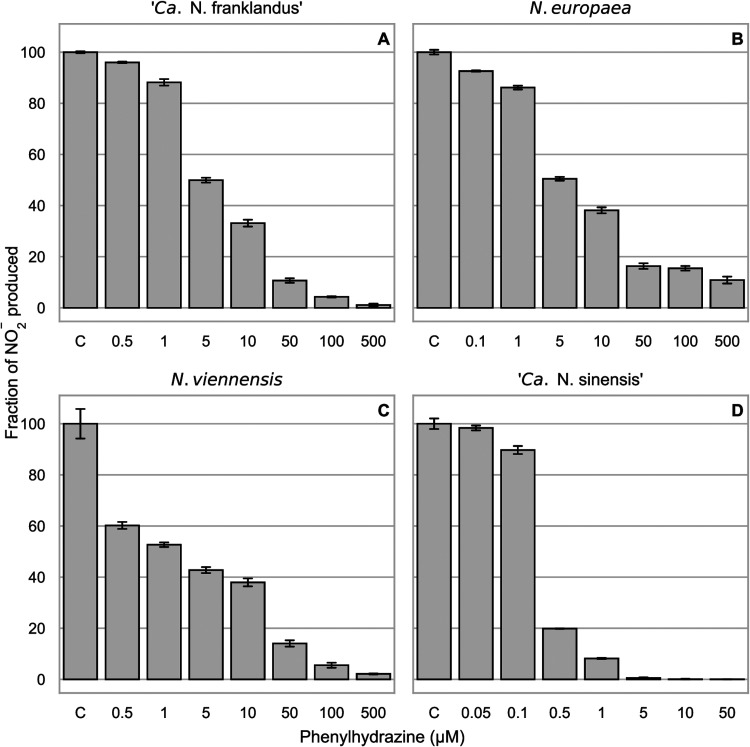
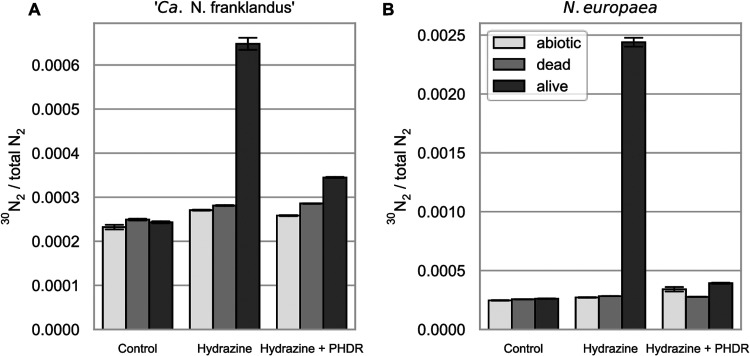
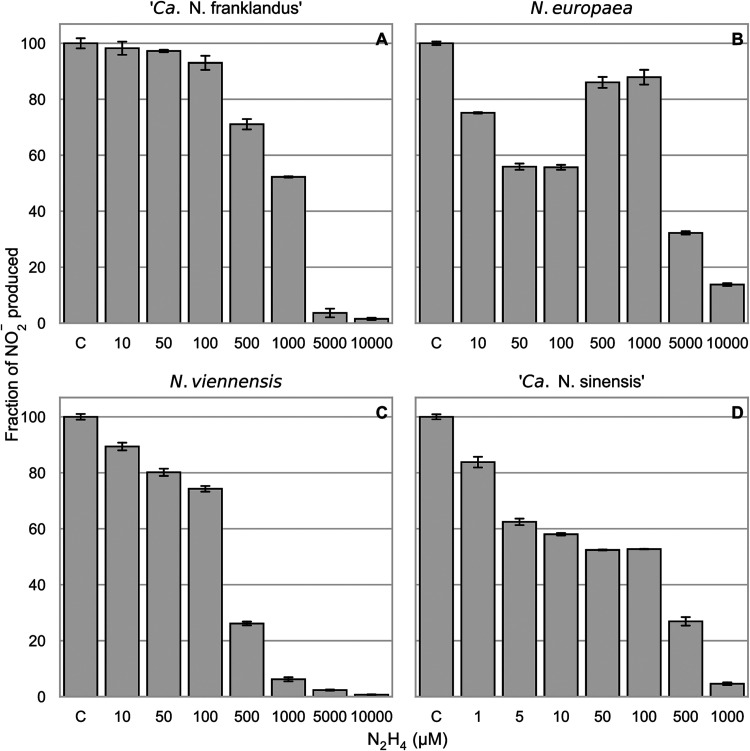
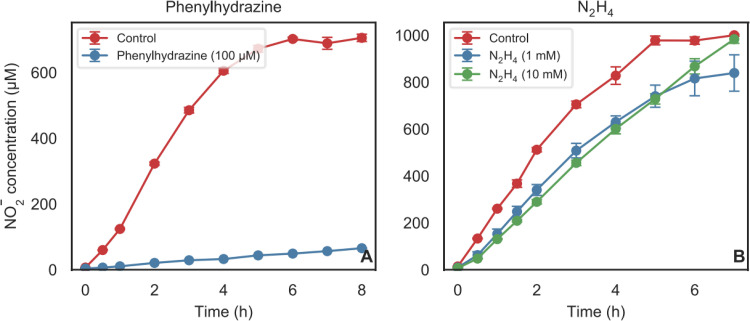
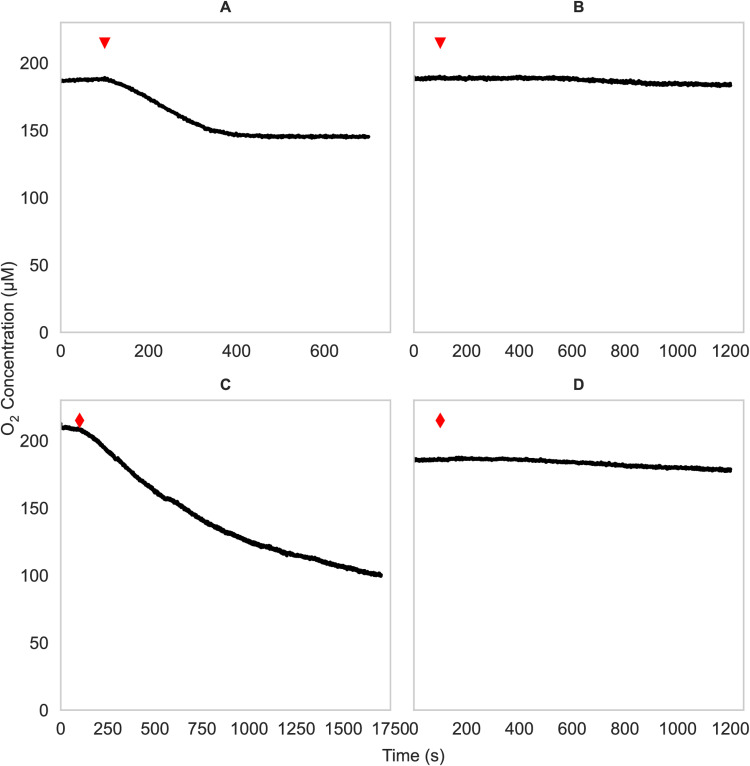
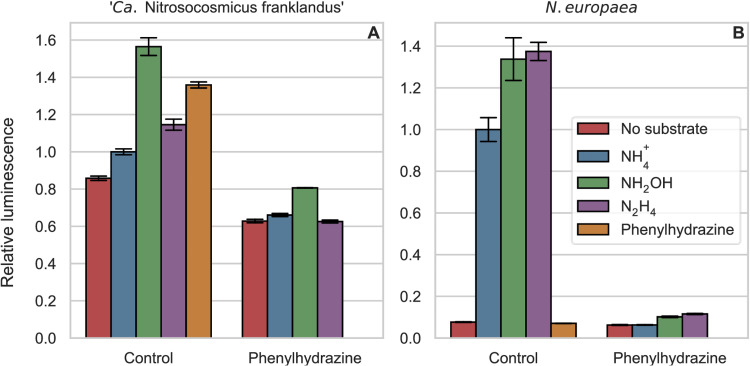
Ammonia-oxidizing archaea (AOA) and bacteria (AOB) perform key steps in the global nitrogen cycle, the oxidation of ammonia to nitrite. While the ammonia oxidation pathway is well characterized in AOB, many knowledge gaps remain about the metabolism of AOA. Hydroxylamine is an intermediate in both AOB and AOA, but homologues of hydroxylamine dehydrogenase (HAO), catalyzing bacterial hydroxylamine oxidation, are absent in AOA. Hydrazine is a substrate for bacterial HAO, while phenylhydrazine is a suicide inhibitor of HAO. Here, we examine the effect of hydrazines in AOA to gain insights into the archaeal ammonia oxidation pathway. We show that hydrazine is both a substrate and an inhibitor for AOA and that phenylhydrazine irreversibly inhibits archaeal hydroxylamine oxidation. Both hydrazine and phenylhydrazine interfered with ammonia and hydroxylamine oxidation in AOA. Furthermore, the AOA " Nitrosocosmicus franklandus" C13 oxidized hydrazine into dinitrogen (N), coupling this reaction to ATP production and O uptake. This study expands the known substrates of AOA and suggests that despite differences in enzymology, the ammonia oxidation pathways of AOB and AOA are functionally surprisingly similar. These results demonstrate that hydrazines are valuable tools for studying the archaeal ammonia oxidation pathway. Ammonia-oxidizing archaea (AOA) are among the most numerous living organisms on Earth, and they play a pivotal role in the global biogeochemical nitrogen cycle. Despite this, little is known about the physiology and metabolism of AOA. We demonstrate in this study that hydrazines are inhibitors of AOA. Furthermore, we demonstrate that the model soil AOA " Nitrosocosmicus franklandus" C13 oxidizes hydrazine to dinitrogen gas, and this reaction yields ATP. This provides an important advance in our understanding of the metabolism of AOA and expands the short list of energy-yielding compounds that AOA can use. This study also provides evidence that hydrazines can be useful tools for studying the metabolism of AOA, as they have been for the bacterial ammonia oxidizers.
氨氧化古菌 (AOA) 和细菌 (AOB) 在全球氮循环中发挥关键作用,将氨氧化为亚硝酸盐。虽然 AOB 的氨氧化途径已经得到很好的描述,但 AOA 的代谢仍有许多知识空白。羟胺是 AOB 和 AOA 中的共同中间体,但催化细菌羟胺氧化的羟胺脱氢酶 (HAO) 同源物在 AOA 中缺失。联氨是细菌 HAO 的底物,而苯肼是 HAO 的自杀抑制剂。在这里,我们研究了联氨对 AOA 的影响,以深入了解古菌氨氧化途径。我们表明,联氨既是 AOA 的底物也是抑制剂,而苯肼不可逆地抑制古菌羟胺氧化。联氨和苯肼都干扰了 AOA 中的氨和羟胺氧化。此外,AOA“ Nitrosocosmicus franklandus”C13 将联氨氧化成氮气 (N),将此反应与 ATP 产生和 O 摄取偶联。这项研究扩展了已知的 AOA 底物,并表明尽管在酶学上存在差异,但 AOB 和 AOA 的氨氧化途径在功能上惊人地相似。这些结果表明,联氨是研究古菌氨氧化途径的有价值工具。氨氧化古菌 (AOA) 是地球上数量最多的生物之一,它们在全球生物地球化学氮循环中起着至关重要的作用。尽管如此,人们对 AOA 的生理学和代谢知之甚少。在本研究中,我们证明联氨是 AOA 的抑制剂。此外,我们证明模式土壤 AOA“ Nitrosocosmicus franklandus”C13 将联氨氧化为氮气,并且该反应产生 ATP。这为我们理解 AOA 的代谢提供了重要进展,并扩展了 AOA 可利用的产能化合物的简短清单。这项研究还提供了证据表明,联氨可以作为研究 AOA 代谢的有用工具,就像它们对细菌氨氧化菌一样。