Zhu Xue, Zou Wenjun, Meng Xinmin, Ji Jiali, Wang Xun, Shu Hong, Chen Yuan, Pan Donghui, Wang Ke, Zhou Fanfan
National Health Commission (NHC) Key Laboratory of Nuclear Medicine, Jiangsu Key Laboratory of Molecular Nuclear Medicine, Jiangsu Institute of Nuclear Medicine, Wuxi, China.
Department of Radiopharmaceuticals, School of Pharmacy, Nanjing Medical University, Nanjing, China.
Front Oncol. 2022 Mar 21;12:788496. doi: 10.3389/fonc.2022.788496. eCollection 2022.
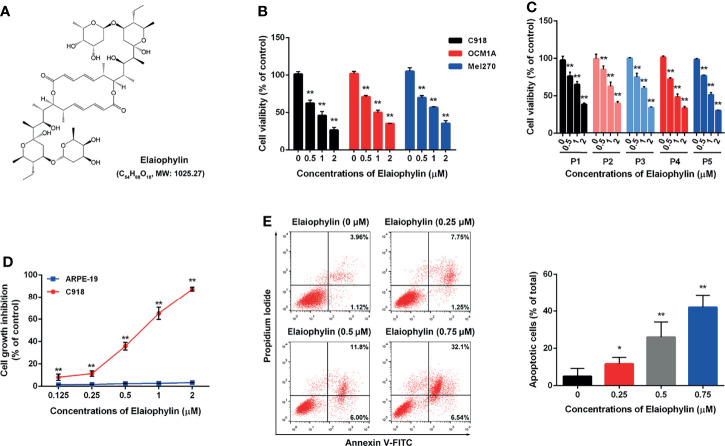
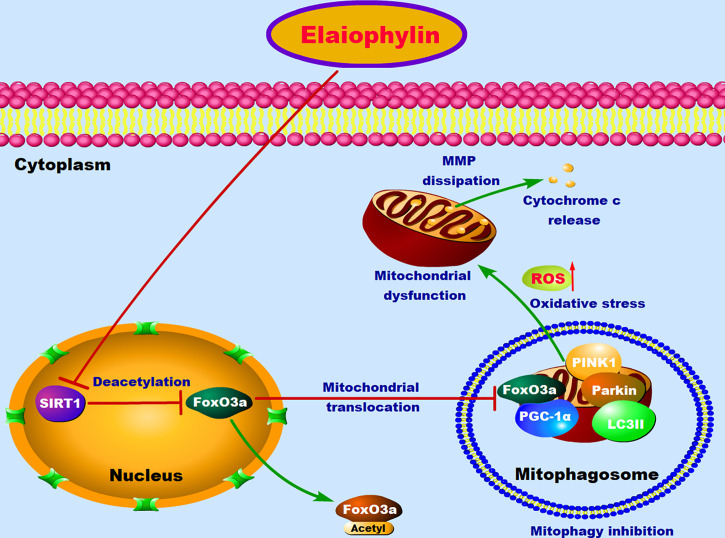
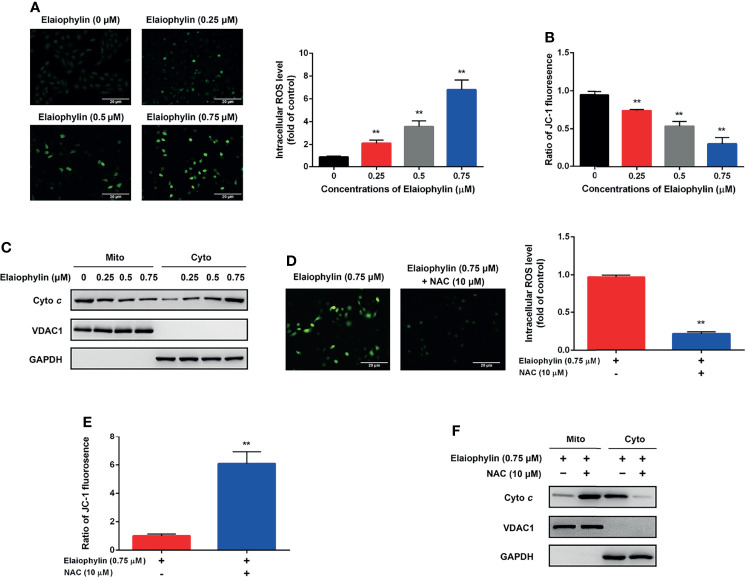
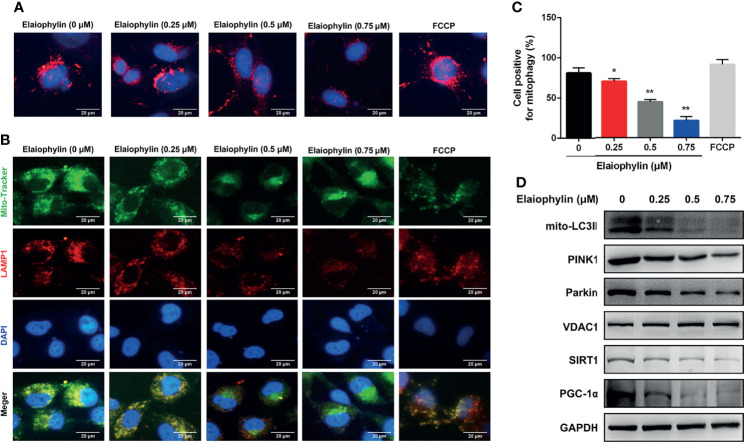
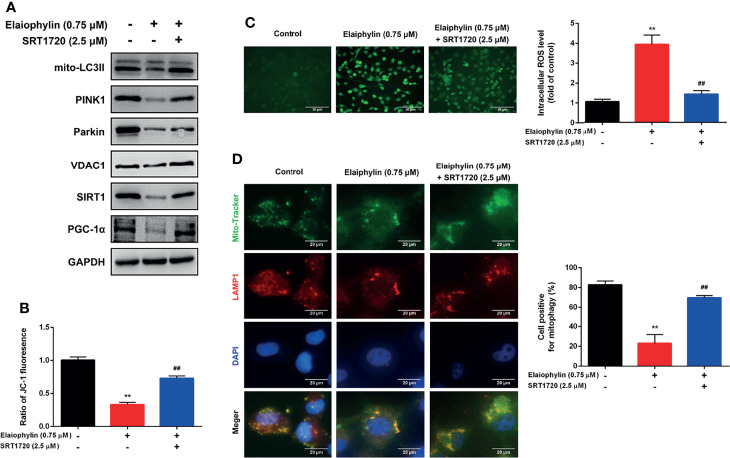
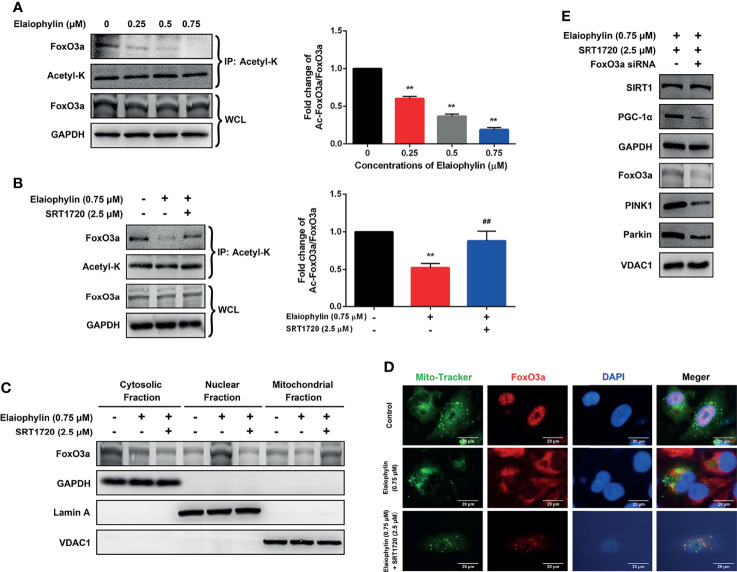
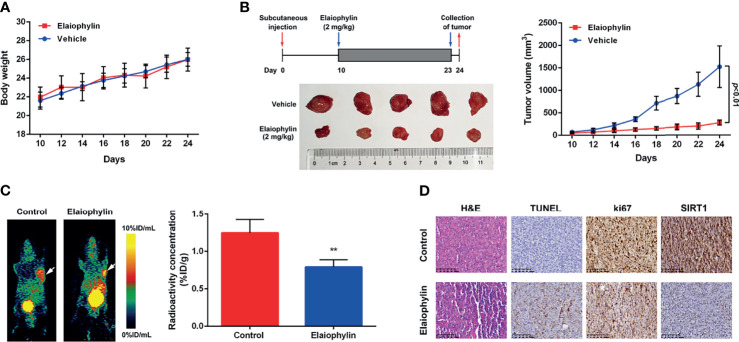
Uveal melanoma (UM) is the most common primary intraocular tumor in adults, which is associated with poor prognosis. Up to 50% of UM patients develop metastasis. Therapeutics that have proven effective in cutaneous melanoma have little success in treating UM, possibly due to its low mutational burden. Therefore, new drug therapies are highly desired for UM. Our studies showed that Elaiophylin, a late-stage autophagy inhibitor, exhibited an outstanding anticancer activity in human UM cell lines and human UM primary cells through suppressing mitophagy, inducing oxidative stress and leading to autophagic cell death. Our mechanistic study revealed that Elaiophylin exerted its effect by down-regulating SIRT1 and thus influencing deacetylation and mitochondrial localization of FoxO3a. In our confirmatory experiments, SRT1720, a SIRT1 specific activator, could attenuate Elaiophylin-induced inhibition of mitophagy and elevation of oxidative stress, and such effects was partly reversed by FoxO3a knockdown. Our further studies showed that Elaiophylin dramatically inhibited tumor growth in the human UM xenograft mouse model, which was accompanied with a decreased SIRT1 expression. Thus, the current study is the first to demonstrate that Elaiophylin has a potent anti-cancer effect against UM, which activity is possibly mediated through regulating SIRT1-FoxO3a signaling axis. And Elaiophylin may be a new and promising drug candidate to treat human UM.
葡萄膜黑色素瘤(UM)是成人中最常见的原发性眼内肿瘤,其预后较差。高达50%的UM患者会发生转移。已被证明对皮肤黑色素瘤有效的治疗方法在治疗UM方面收效甚微,这可能是由于其低突变负荷。因此,UM非常需要新的药物治疗。我们的研究表明,晚期自噬抑制剂伊索茶碱通过抑制线粒体自噬、诱导氧化应激并导致自噬性细胞死亡,在人UM细胞系和人UM原代细胞中表现出出色的抗癌活性。我们的机制研究表明,伊索茶碱通过下调SIRT1发挥作用,从而影响FoxO3a的去乙酰化和线粒体定位。在我们的验证实验中,SIRT1特异性激活剂SRT1720可以减弱伊索茶碱诱导的线粒体自噬抑制和氧化应激升高,而FoxO3a敲低可部分逆转这种作用。我们的进一步研究表明,伊索茶碱在人UM异种移植小鼠模型中显著抑制肿瘤生长,同时伴有SIRT1表达降低。因此,本研究首次证明伊索茶碱对UM具有强大的抗癌作用,其活性可能通过调节SIRT1-FoxO3a信号轴介导。并且伊索茶碱可能是一种治疗人UM的新的有前景的候选药物。