• 文献检索
  • 文档翻译
  • 深度研究
  • 学术资讯
  • Suppr Zotero 插件Zotero 插件
  • 邀请有礼
  • 套餐&价格
  • 历史记录
应用&插件
Suppr Zotero 插件Zotero 插件浏览器插件Mac 客户端Windows 客户端微信小程序
定价
高级版会员购买积分包购买API积分包
服务
文献检索文档翻译深度研究API 文档MCP 服务
关于我们
关于 Suppr公司介绍联系我们用户协议隐私条款
关注我们

Suppr 超能文献

核心技术专利:CN118964589B侵权必究
粤ICP备2023148730 号-1Suppr @ 2026

文献检索

告别复杂PubMed语法,用中文像聊天一样搜索,搜遍4000万医学文献。AI智能推荐,让科研检索更轻松。

立即免费搜索

文件翻译

保留排版,准确专业,支持PDF/Word/PPT等文件格式,支持 12+语言互译。

免费翻译文档

深度研究

AI帮你快速写综述,25分钟生成高质量综述,智能提取关键信息,辅助科研写作。

立即免费体验

单细胞测序联合空间转录组学揭示 M1 巨噬细胞中的 IRF7 基因通过调控脂质代谢相关机制抑制胰腺癌的发生。

Single-cell sequencing combined with spatial transcriptomics reveals that the IRF7 gene in M1 macrophages inhibits the occurrence of pancreatic cancer by regulating lipid metabolism-related mechanisms.

机构信息

Department of Gastroenterology, WuHan Third Hospital (Tongren Hospital of WuHan University), Wuhan, China.

Department of Gastroenterology, Zhongnan Hospital of Wuhan University, Wuhan, China.

出版信息

Clin Transl Med. 2024 Aug;14(8):e1799. doi: 10.1002/ctm2.1799.

DOI:10.1002/ctm2.1799
PMID:39118300
原文链接:https://pmc.ncbi.nlm.nih.gov/articles/PMC11310283/
Abstract

AIM

The main focus of this study is to explore the molecular mechanism of IRF7 regulation on RPS18 transcription in M1-type macrophages in pancreatic adenocarcinoma (PAAD) tissue, as well as the transfer of RPS18 by IRF7 via exosomes to PAAD cells and the regulation of ILF3 expression.

METHODS

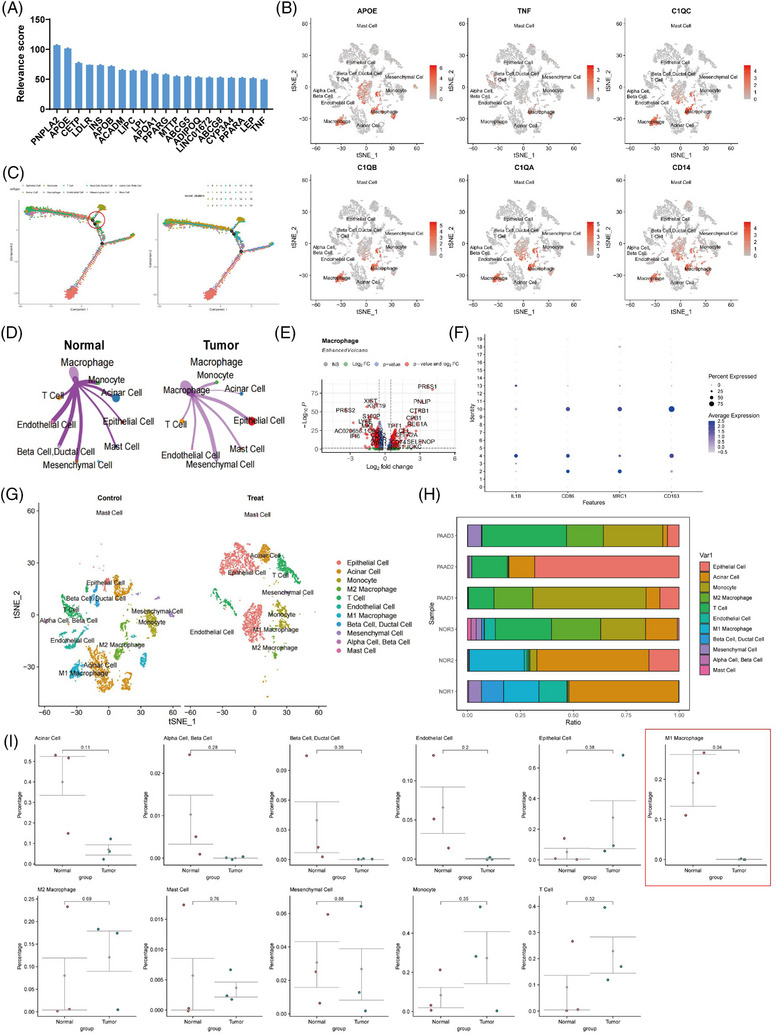
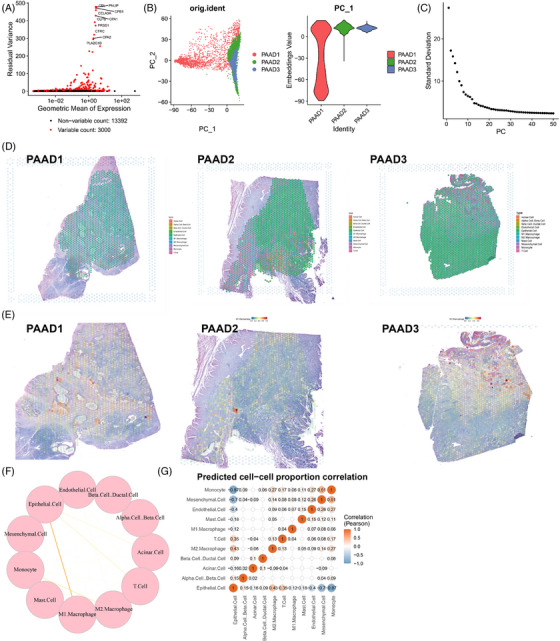
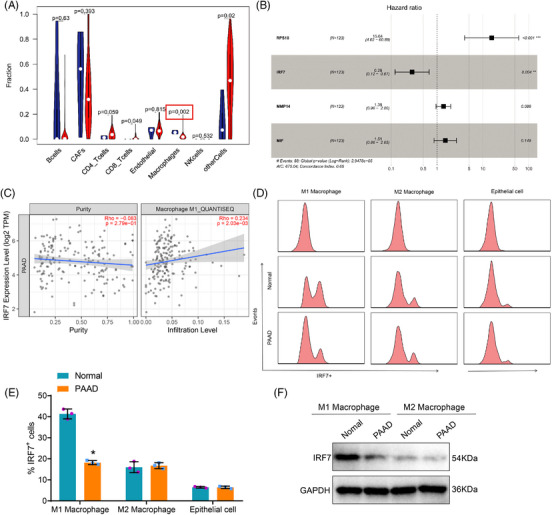
By utilising single-cell RNA sequencing (scRNA-seq) data and spatial transcriptomics (ST) data from the Gene Expression Omnibus database, we identified distinct cell types with significant expression differences in PAAD tissue. Among these cell types, we identified those closely associated with lipid metabolism. The differentially expressed genes within these cell types were analysed, and target genes relevant to prognosis were identified. Flow cytometry was employed to assess the expression levels of target genes in M1 and M2 macrophages. Cell lines with target gene knockout were constructed using CRISPR/Cas9 editing technology, and cell lines with target gene knockdown and overexpression were established using lentiviral vectors. Additionally, a co-culture model of exosomes derived from M1 macrophages with PAAD cells was developed. The impact of M1 macrophage-derived exosomes on the lipid metabolism of PAAD cells in the model was evaluated through metabolomics analysis. The effects of M1 macrophage-derived exosomes on the viability, proliferation, division, migration and apoptosis of PAAD cells were assessed using MTT assay, flow cytometry, EdU assay, wound healing assay, Transwell assay and TUNEL staining. Furthermore, a mouse PAAD orthotopic implantation model was established, and bioluminescence imaging was utilised to assess the influence of M1 macrophage-derived exosomes on the intratumoural formation capacity of PAAD cells, as well as measuring tumour weight and volume. The expression of proliferation-associated proteins in tumour tissues was examined using immunohistochemistry.

RESULTS

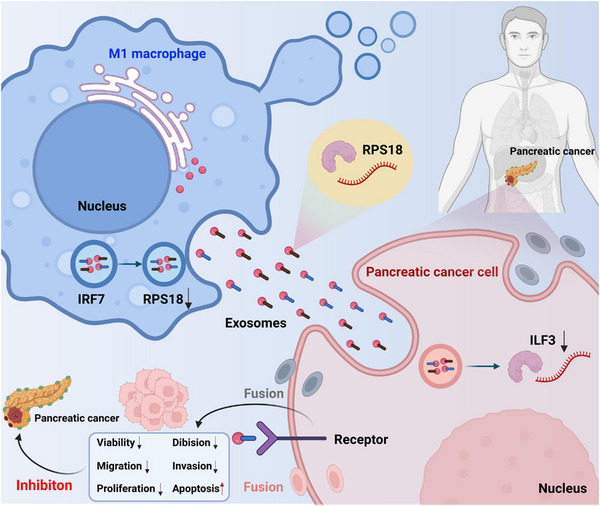
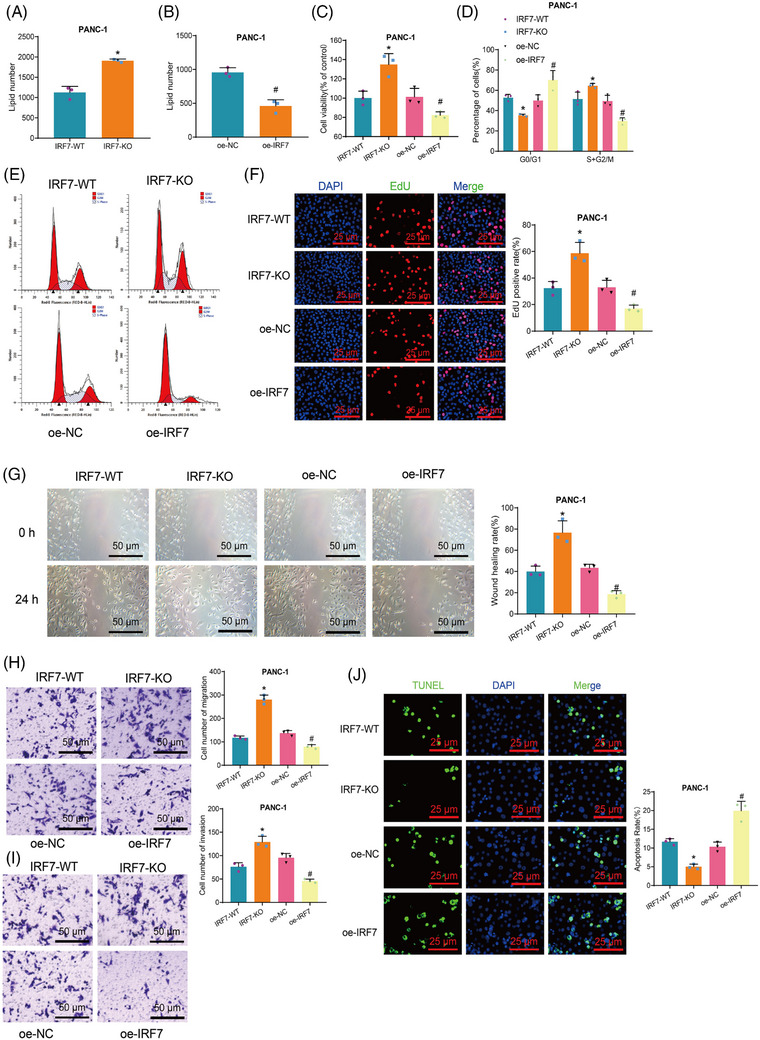
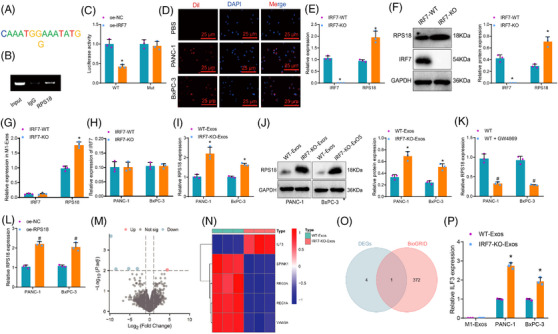
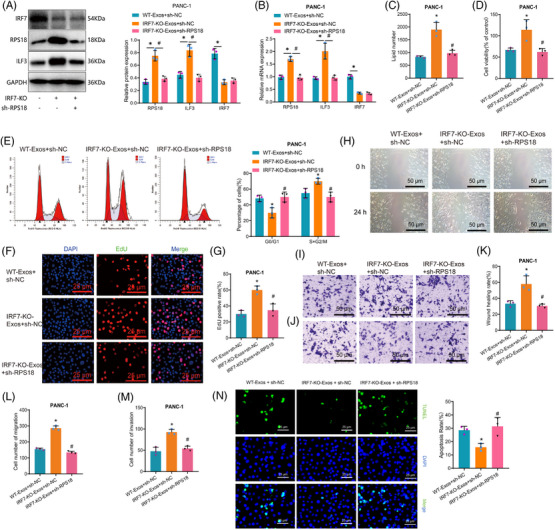
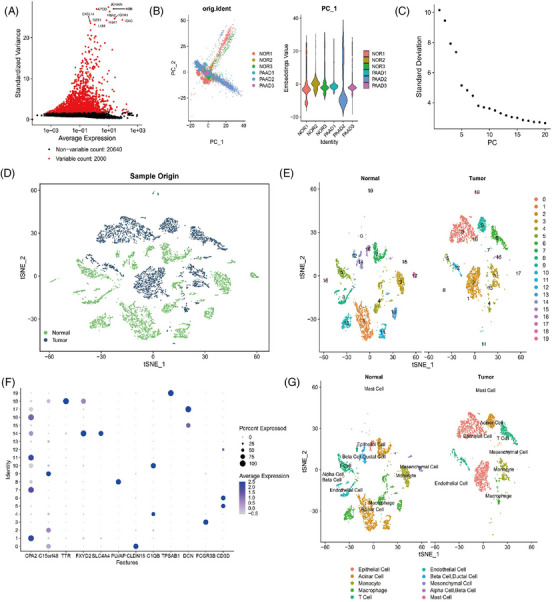
Through combined analysis of scRNA-seq and ST technologies, we discovered a close association between M1 macrophages in PAAD samples and lipid metabolism signals, as well as a negative correlation between M1 macrophages and cancer cells. The construction of a prognostic risk score model identified RPS18 and IRF7 as two prognostically relevant genes in M1 macrophages, exhibiting negative and positive correlations, respectively. Mechanistically, it was found that IRF7 in M1 macrophages can inhibit the transcription of RPS18, reducing the transfer of RPS18 to PAAD cells via exosomes, consequently affecting the expression of ILF3 in PAAD cells. IRF7/RPS18 in M1 macrophages can also suppress lipid metabolism, cell viability, proliferation, migration, invasion and intratumoural formation capacity of PAAD cells, while promoting cell apoptosis.

CONCLUSION

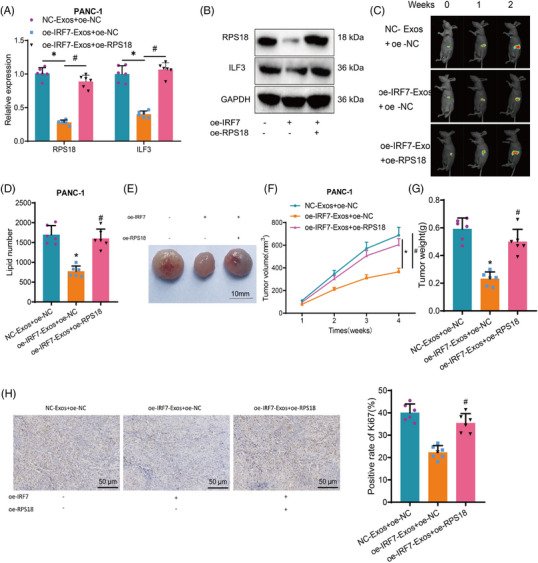
Overexpression of IRF7 in M1 macrophages may inhibit RPS18 transcription, reduce the transfer of RPS18 from M1 macrophage-derived exosomes to PAAD cells, thereby suppressing ILF3 expression in PAAD cells, inhibiting the lipid metabolism pathway, and curtailing the viability, proliferation, migration, invasion of PAAD cells, as well as enhancing cell apoptosis, ultimately inhibiting tumour formation in PAAD cells in vivo. Targeting IRF7/RPS18 in M1 macrophages could represent a promising immunotherapeutic approach for PAAD in the future.

摘要

目的

本研究的主要重点是探索 IRF7 调节胰腺导管腺癌(PAAD)组织中 M1 型巨噬细胞中 RPS18 转录的分子机制,以及 IRF7 通过外泌体将 RPS18 转移到 PAAD 细胞的情况,以及 ILF3 表达的调节。

方法

利用来自基因表达综合数据库的单细胞 RNA 测序(scRNA-seq)数据和空间转录组学(ST)数据,我们鉴定了在 PAAD 组织中具有显著表达差异的不同细胞类型。在这些细胞类型中,我们确定了那些与脂质代谢密切相关的细胞类型。分析这些细胞类型中差异表达的基因,并鉴定与预后相关的靶基因。通过流式细胞术评估 M1 和 M2 巨噬细胞中靶基因的表达水平。使用 CRISPR/Cas9 编辑技术构建具有靶基因敲除的细胞系,使用慢病毒载体构建具有靶基因敲低和过表达的细胞系。此外,还建立了 M1 巨噬细胞来源的外泌体与 PAAD 细胞的共培养模型。通过代谢组学分析评估 M1 巨噬细胞来源的外泌体对模型中 PAAD 细胞脂质代谢的影响。通过 MTT 测定、流式细胞术、EdU 测定、划痕愈合测定、Transwell 测定和 TUNEL 染色评估 M1 巨噬细胞来源的外泌体对 PAAD 细胞活力、增殖、分裂、迁移和凋亡的影响。此外,建立了小鼠 PAAD 原位植入模型,并利用生物发光成像评估 M1 巨噬细胞来源的外泌体对 PAAD 细胞肿瘤内形成能力的影响,同时测量肿瘤重量和体积。通过免疫组织化学检测肿瘤组织中增殖相关蛋白的表达。

结果

通过 scRNA-seq 和 ST 技术的联合分析,我们发现 PAAD 样本中的 M1 巨噬细胞与脂质代谢信号之间存在密切关联,并且 M1 巨噬细胞与癌细胞之间呈负相关。构建预后风险评分模型发现 RPS18 和 IRF7 是 M1 巨噬细胞中两个与预后相关的基因,它们分别呈负相关和正相关。机制上,我们发现 M1 巨噬细胞中的 IRF7 可以抑制 RPS18 的转录,减少 RPS18 通过外泌体向 PAAD 细胞的转移,从而影响 PAAD 细胞中 ILF3 的表达。M1 巨噬细胞中的 IRF7/RPS18 还可以抑制 PAAD 细胞的脂质代谢、细胞活力、增殖、迁移、侵袭和肿瘤内形成能力,同时促进细胞凋亡。

结论

M1 巨噬细胞中 IRF7 的过表达可能抑制 RPS18 的转录,减少 M1 巨噬细胞来源的外泌体中 RPS18 的转移到 PAAD 细胞,从而抑制 PAAD 细胞中 ILF3 的表达,抑制脂质代谢途径,并抑制 PAAD 细胞的活力、增殖、迁移、侵袭,增强细胞凋亡,最终抑制体内 PAAD 细胞的肿瘤形成。针对 M1 巨噬细胞中的 IRF7/RPS18 可能是未来胰腺导管腺癌的一种有前途的免疫治疗方法。
https://cdn.ncbi.nlm.nih.gov/pmc/blobs/03f0/11310283/8f2360d03c35/CTM2-14-e1799-g007.jpg
https://cdn.ncbi.nlm.nih.gov/pmc/blobs/03f0/11310283/846d73672f6f/CTM2-14-e1799-g006.jpg
https://cdn.ncbi.nlm.nih.gov/pmc/blobs/03f0/11310283/b48a4e098eda/CTM2-14-e1799-g010.jpg
https://cdn.ncbi.nlm.nih.gov/pmc/blobs/03f0/11310283/0e7763044d28/CTM2-14-e1799-g008.jpg
https://cdn.ncbi.nlm.nih.gov/pmc/blobs/03f0/11310283/7c8c6a7f6378/CTM2-14-e1799-g004.jpg
https://cdn.ncbi.nlm.nih.gov/pmc/blobs/03f0/11310283/4aae6b72ff0d/CTM2-14-e1799-g003.jpg
https://cdn.ncbi.nlm.nih.gov/pmc/blobs/03f0/11310283/3b3e2407d57a/CTM2-14-e1799-g001.jpg
https://cdn.ncbi.nlm.nih.gov/pmc/blobs/03f0/11310283/b7f7c8a5e45b/CTM2-14-e1799-g002.jpg
https://cdn.ncbi.nlm.nih.gov/pmc/blobs/03f0/11310283/255d57519e70/CTM2-14-e1799-g005.jpg
https://cdn.ncbi.nlm.nih.gov/pmc/blobs/03f0/11310283/8f2360d03c35/CTM2-14-e1799-g007.jpg
https://cdn.ncbi.nlm.nih.gov/pmc/blobs/03f0/11310283/846d73672f6f/CTM2-14-e1799-g006.jpg
https://cdn.ncbi.nlm.nih.gov/pmc/blobs/03f0/11310283/b48a4e098eda/CTM2-14-e1799-g010.jpg
https://cdn.ncbi.nlm.nih.gov/pmc/blobs/03f0/11310283/0e7763044d28/CTM2-14-e1799-g008.jpg
https://cdn.ncbi.nlm.nih.gov/pmc/blobs/03f0/11310283/7c8c6a7f6378/CTM2-14-e1799-g004.jpg
https://cdn.ncbi.nlm.nih.gov/pmc/blobs/03f0/11310283/4aae6b72ff0d/CTM2-14-e1799-g003.jpg
https://cdn.ncbi.nlm.nih.gov/pmc/blobs/03f0/11310283/3b3e2407d57a/CTM2-14-e1799-g001.jpg
https://cdn.ncbi.nlm.nih.gov/pmc/blobs/03f0/11310283/b7f7c8a5e45b/CTM2-14-e1799-g002.jpg
https://cdn.ncbi.nlm.nih.gov/pmc/blobs/03f0/11310283/255d57519e70/CTM2-14-e1799-g005.jpg
https://cdn.ncbi.nlm.nih.gov/pmc/blobs/03f0/11310283/8f2360d03c35/CTM2-14-e1799-g007.jpg

相似文献

1
Single-cell sequencing combined with spatial transcriptomics reveals that the IRF7 gene in M1 macrophages inhibits the occurrence of pancreatic cancer by regulating lipid metabolism-related mechanisms.单细胞测序联合空间转录组学揭示 M1 巨噬细胞中的 IRF7 基因通过调控脂质代谢相关机制抑制胰腺癌的发生。
Clin Transl Med. 2024 Aug;14(8):e1799. doi: 10.1002/ctm2.1799.
2
Integrated bioinformatics analysis identifies PCSK9 as a prognosticator correlated with lipid metabolism in pancreatic adenocarcinoma.整合生物信息学分析鉴定出 PCSK9 是与胰腺腺癌脂质代谢相关的预后标志物。
World J Surg Oncol. 2024 Sep 28;22(1):256. doi: 10.1186/s12957-024-03532-0.
3
VDR promotes pancreatic cancer progression in vivo by activating CCL20-mediated M2 polarization of tumor associated macrophage.VDR 通过激活 CCL20 介导的肿瘤相关巨噬细胞 M2 极化促进体内胰腺癌的进展。
Cell Commun Signal. 2024 Apr 10;22(1):224. doi: 10.1186/s12964-024-01578-x.
4
Revealing a cancer-associated fibroblast-based risk signature for pancreatic adenocarcinoma through single-cell and bulk RNA-seq analysis.通过单细胞和 bulk RNA-seq 分析揭示胰腺癌相关成纤维细胞的风险特征。
Aging (Albany NY). 2024 Sep 26;16(18):12525-12542. doi: 10.18632/aging.206043.
5
miR‑32‑5p suppresses the proliferation and migration of pancreatic adenocarcinoma cells by targeting TLDC1.miR-32-5p 通过靶向 TLDC1 抑制胰腺腺癌细胞的增殖和迁移。
Mol Med Rep. 2021 Nov;24(5). doi: 10.3892/mmr.2021.12392. Epub 2021 Sep 1.
6
Exosomes derived from M1 macrophages inhibit the proliferation of the A549 and H1299 lung cancer cell lines via the miRNA-let-7b-5p-GNG5 axis.M1 巨噬细胞来源的外泌体通过 miRNA-let-7b-5p-GNG5 轴抑制 A549 和 H1299 肺癌细胞系的增殖。
PeerJ. 2023 Jan 9;11:e14608. doi: 10.7717/peerj.14608. eCollection 2023.
7
Ginsenoside Rg3 suppresses vasculogenic mimicry by impairing DVL3-maintained stemness via PAAD cell-derived exosomal miR-204 in pancreatic adenocarcinoma.人参皂苷Rg3通过胰腺腺癌中PAAD细胞衍生的外泌体miR-204损害DVL3维持的干性来抑制血管生成拟态。
Phytomedicine. 2024 Apr;126:155402. doi: 10.1016/j.phymed.2024.155402. Epub 2024 Feb 1.
8
Identification of Transcriptomic Signatures of Pancreatic Ductal Adenocarcinoma-Derived Exosomes That Promote Macrophage M2 Polarization and Predict Prognosis: S100A9 Reveals Tumor Progression.促进巨噬细胞M2极化并预测预后的胰腺导管腺癌来源外泌体的转录组特征鉴定:S100A9揭示肿瘤进展
Clin Med Insights Oncol. 2024 Mar 19;18:11795549241239042. doi: 10.1177/11795549241239042. eCollection 2024.
9
Therapeutic potential of ADSC-EV-derived lncRNA DLEU2: A novel molecular pathway in alleviating sepsis-induced lung injury via the miR-106a-5p/LXN axis.脂肪间充质干细胞外泌体来源长链非编码 RNA DLEU2 通过 miR-106a-5p/LXN 轴缓解脓毒症诱导的肺损伤的治疗潜力。
Int Immunopharmacol. 2024 Mar 30;130:111519. doi: 10.1016/j.intimp.2024.111519. Epub 2024 Mar 4.
10
A prognostic biomarker of disulfidptosis constructed by machine learning framework model as potential reporters of pancreatic adenocarcinoma.基于机器学习框架模型构建的二硫键化程序性死亡生物标志物,作为胰腺腺癌的潜在报告者。
Cell Signal. 2024 Nov;123:111371. doi: 10.1016/j.cellsig.2024.111371. Epub 2024 Aug 28.

引用本文的文献

1
Enhancing natural killer cell anti-tumour activity through macrophage manipulation.通过巨噬细胞调控增强自然杀伤细胞的抗肿瘤活性。
Front Immunol. 2025 Aug 29;16:1656925. doi: 10.3389/fimmu.2025.1656925. eCollection 2025.
2
Dectin-1-targeted pH-responsive liposomal nanoplatform delivering Plantago Asiatica L. acidic polysaccharide for immunomodulation and immunosuppressive breast cancer microenvironment reprogramming.靶向Dectin-1的pH响应性脂质体纳米平台递送车前草酸性多糖用于免疫调节和重编程免疫抑制性乳腺癌微环境
J Nanobiotechnology. 2025 Sep 1;23(1):597. doi: 10.1186/s12951-025-03638-x.
3
Gas Bubbles from Biodegradable Magnesium Implants Convey Mechanical Cues and Promote Immune Cell Stimulation.

本文引用的文献

1
Construction and validation of a RARRES3-based prognostic signature related to the specific immune microenvironment of pancreatic cancer.基于RARRES3构建并验证与胰腺癌特定免疫微环境相关的预后特征
Front Oncol. 2024 Feb 5;14:1246308. doi: 10.3389/fonc.2024.1246308. eCollection 2024.
2
Lipid metabolic reprogramming in tumor microenvironment: from mechanisms to therapeutics.肿瘤微环境中的脂质代谢重编程:从机制到治疗。
J Hematol Oncol. 2023 Sep 12;16(1):103. doi: 10.1186/s13045-023-01498-2.
3
Genome-scale modeling predicts metabolic differences between macrophage subtypes in colorectal cancer.
可生物降解镁植入物产生的气泡传递机械信号并促进免疫细胞刺激。
Adv Sci (Weinh). 2025 Jul;12(28):e2503123. doi: 10.1002/advs.202503123. Epub 2025 May 11.
4
Bioactive lipid signaling and lipidomics in macrophage polarization: Impact on inflammation and immune regulation.巨噬细胞极化中的生物活性脂质信号传导与脂质组学:对炎症和免疫调节的影响
Front Immunol. 2025 Feb 14;16:1550500. doi: 10.3389/fimmu.2025.1550500. eCollection 2025.
5
OSBPL10-CNBP axis mediates hypoxia-induced pancreatic cancer development.OSBPL10-CNBP轴介导缺氧诱导的胰腺癌发展。
Biofactors. 2025 Jan-Feb;51(1):e2124. doi: 10.1002/biof.2124. Epub 2024 Sep 27.
全基因组规模建模预测结直肠癌中巨噬细胞亚型之间的代谢差异。
iScience. 2023 Aug 9;26(9):107569. doi: 10.1016/j.isci.2023.107569. eCollection 2023 Sep 15.
4
IRF7: role and regulation in immunity and autoimmunity.IRF7:在免疫和自身免疫中的作用和调节。
Front Immunol. 2023 Aug 10;14:1236923. doi: 10.3389/fimmu.2023.1236923. eCollection 2023.
5
Metabolomics analysis of mycelial exudates provides insights into fungal antagonists of .菌丝体分泌物的代谢组学分析为……的真菌拮抗剂提供了见解。 (原句中“of”后面缺少具体内容)
Mycology. 2023 Jul 29;14(3):264-274. doi: 10.1080/21501203.2023.2238753. eCollection 2023.
6
Interferon regulatory factor 7 in inflammation, cancer and infection.干扰素调节因子 7 在炎症、癌症和感染中的作用。
Front Immunol. 2023 May 12;14:1190841. doi: 10.3389/fimmu.2023.1190841. eCollection 2023.
7
Single-Cell Transcriptomics Reveals Conserved Regulatory Networks in Human and Mouse Interneuron Development.单细胞转录组学揭示了人类和小鼠中间神经元发育中保守的调控网络。
Int J Mol Sci. 2023 May 1;24(9):8122. doi: 10.3390/ijms24098122.
8
Analysis of Donor Pancreata Defines the Transcriptomic Signature and Microenvironment of Early Neoplastic Lesions.供体胰腺分析定义了早期肿瘤病变的转录组特征和微环境。
Cancer Discov. 2023 Jun 2;13(6):1324-1345. doi: 10.1158/2159-8290.CD-23-0013.
9
The SMARCA4 mutation facilitates chromatin remodeling and confers PRMT1/SMARCA4 inhibitors sensitivity in colorectal cancer.SMARCA4突变促进染色质重塑并赋予PRMT1/SMARCA4抑制剂对结直肠癌的敏感性。
NPJ Precis Oncol. 2023 Mar 15;7(1):28. doi: 10.1038/s41698-023-00367-y.
10
Exosomal IL-8 derived from Lung Cancer and Colon Cancer cells induced adipocyte atrophy via NF-κB signaling pathway.来自肺癌和结肠癌细胞的外泌体 IL-8 通过 NF-κB 信号通路诱导脂肪细胞萎缩。
Lipids Health Dis. 2022 Dec 29;21(1):147. doi: 10.1186/s12944-022-01755-2.