International Institute for Population Sciences, Mumbai, Maharashtra, 400088, India.
BMC Geriatr. 2022 Apr 6;22(1):287. doi: 10.1186/s12877-022-02984-x.
Due to rapid urbanization, Covid-19 pandemic and increasing food prices, a higher rate of food insecurity has been observed in recent years in India. Thus, we aim to study the prevalence of food insecurity among older Indian adults and the association of food insecurity as a modifiable risk factor with late-life cognitive impairment.
Data for this study were obtained from the recent release of the Longitudinal Ageing Study in India (2017-18). The total sample size for the study was 31,464 older adults aged 60 years and above. Cognitive functioning was measured through five broad domains (memory, orientation, arithmetic function, executive function, and object naming) adapted from the cognitive module of the US Health and Retirement Study (HRS). Descriptive statistics along with cross-tabulation were presented in the study. Additionally, multivariable logistic regression analysis was used to fulfil the objectives of the study.
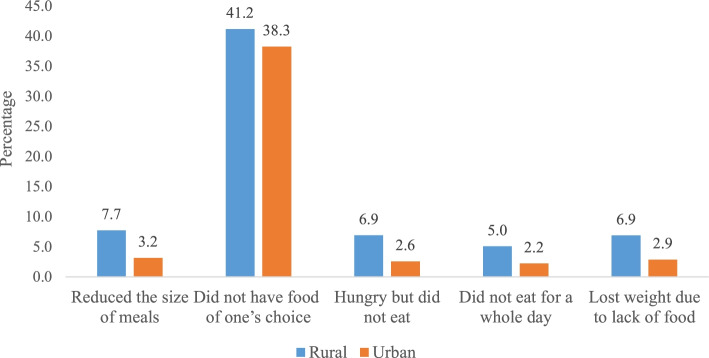
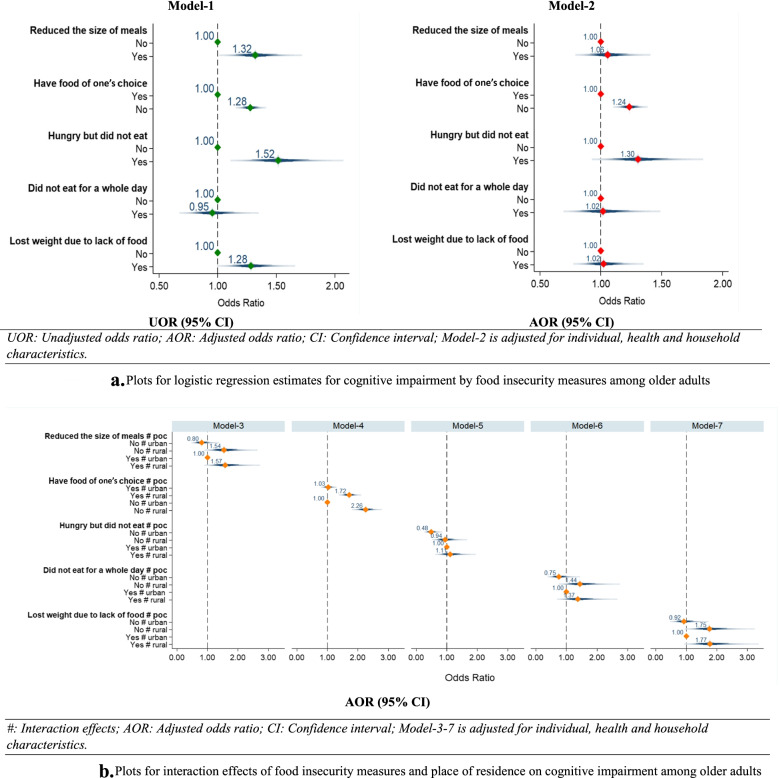
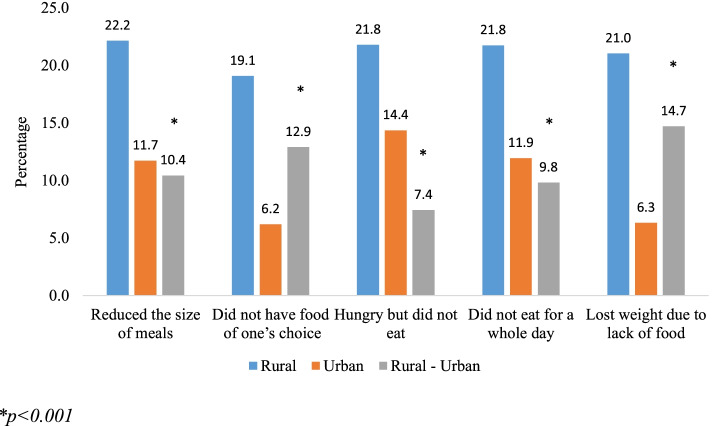
It was found that 7.7% of older adults in rural areas reduced their size of meals due to unavailability (urban, 3.2%), 41.2% of them did not eat enough food of their choice (urban, 38.3%), 6.9% were hungry but did not eat food (urban, 2.6%), 5.0% did not eat for whole day (urban, 2.2%), and 6.9% lost weight due to lack of food in their household (urban, 2.9%). It was found that older adults who did not have enough food of their choice had significantly higher odds [AOR: 1.24; CI: 1.14, 1.35] of suffering from cognitive impairment in reference to their counterparts. Similarly, the older adults who were hungry but did not eat were 30% [AOR: 1.30; CI: 1.02, 1.73] more likely to suffer from cognitive impairment in reference to their counterparts. Interaction model revealed that older adults who had food insecurity in rural areas had higher odds of cognitive impairment than older adults who had food insecurity in urban areas.
The findings of the study highlight that the food security status in older adults may bring about greater challenges due to their limited economic resources. Interventions focusing on food security may have unintended positive impacts on late-life mental wellbeing as the older age is associated with higher cognitive deficits.
由于快速的城市化、Covid-19 大流行和不断上涨的食品价格,近年来印度的粮食不安全率有所上升。因此,我们旨在研究老年印度成年人的粮食不安全状况,以及粮食不安全作为一个可改变的风险因素与晚年认知障碍的关联。
本研究的数据来自印度最近发布的纵向老龄化研究(2017-18 年)。该研究的总样本量为 31464 名 60 岁及以上的老年人。认知功能通过从美国健康与退休研究(HRS)认知模块改编的五个广泛领域(记忆、定向、算术功能、执行功能和物体命名)进行测量。研究中呈现了描述性统计数据和交叉表。此外,还使用多变量逻辑回归分析来实现研究目标。
研究发现,农村地区有 7.7%的老年人由于食物短缺而减少了用餐量(城市地区为 3.2%),41.2%的老年人没有吃到他们选择的足够食物(城市地区为 38.3%),6.9%的老年人感到饥饿但没有吃东西(城市地区为 2.6%),5.0%的老年人整天没有吃东西(城市地区为 2.2%),6.9%的老年人因家庭食物短缺而体重下降(城市地区为 2.9%)。研究发现,没有吃到足够食物的老年人患认知障碍的几率明显更高[优势比(AOR):1.24;置信区间(CI):1.14,1.35],与他们的同龄人相比。同样,感到饥饿但没有吃东西的老年人患认知障碍的几率高出 30%[AOR:1.30;CI:1.02,1.73],与他们的同龄人相比。交互模型显示,农村地区有粮食不安全的老年人比城市地区有粮食不安全的老年人患认知障碍的几率更高。
研究结果表明,由于老年人经济资源有限,他们的粮食安全状况可能带来更大的挑战。关注粮食安全的干预措施可能对晚年心理健康产生意想不到的积极影响,因为随着年龄的增长,认知缺陷的风险更高。