Department of Medical Biology and Central Electron Microscope Laboratory, University of Pécs, Medical School, Szigeti út 12., Pecs, 7624, Hungary.
Signal Transduction Research Group, János Szentágothai Research Centre, Ifjúság útja 20., Pecs, 7624, Hungary.
Sci Rep. 2022 Apr 6;12(1):5808. doi: 10.1038/s41598-022-09763-z.
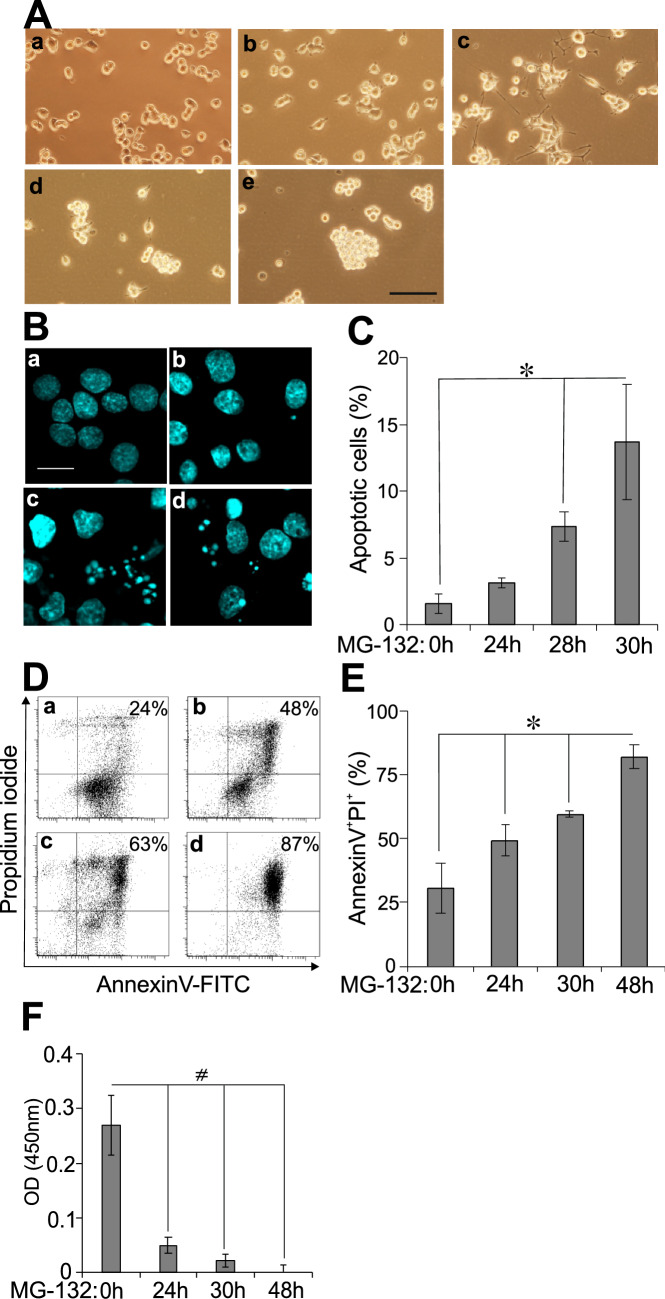
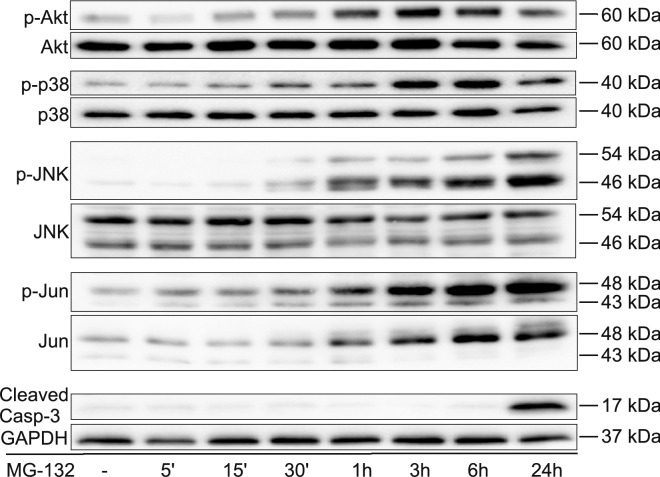
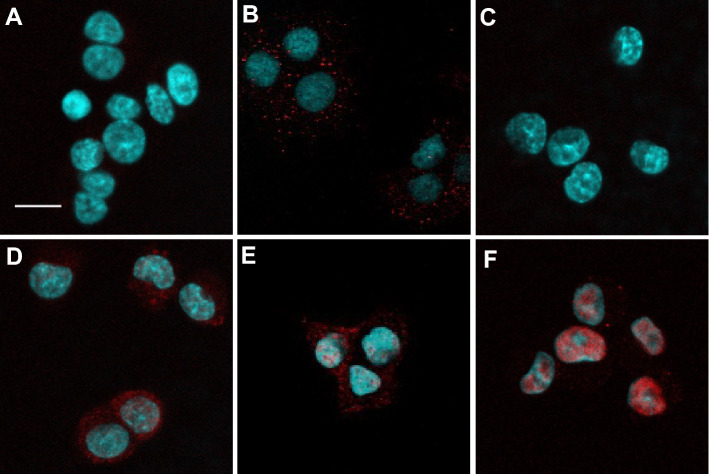
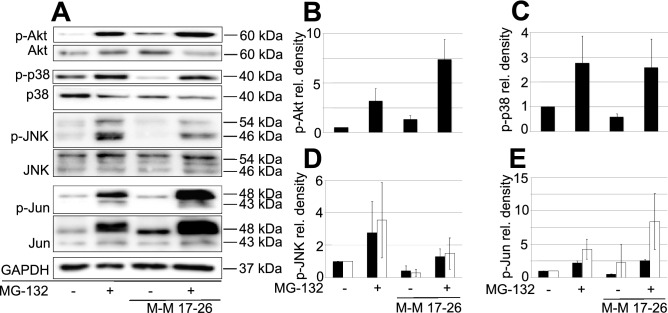
Rat pheochromocytoma (PC12) cells were treated with the proteasome inhibitor MG-132 and morphological changes were recorded. Initially, neuronal differentiation was induced but after 24 h signs of morphological deterioration became apparent. We performed nuclear staining, flow cytometry and WST-1 assay then analyzed signal transduction pathways involving Akt, p38 MAPK (Mitogen-Activated Protein Kinase), JNK (c-Jun N-terminal Kinase), c-Jun and caspase-3. Stress signaling via p38, JNK and c-Jun was active even after 24 h of MG-132 treatment, while the survival-mediating Akt phosphorylation declined and the executor of apoptosis (caspase-3) was activated by that time and apoptosis was also observable. We examined subcellular localization of stress signaling components, applied kinase inhibitors and dominant negative H-Ras mutant-expressing PC12 cells in order to decipher connections of stress-mediating pathways. Our results are suggestive of that treatment with the proteasome inhibitor MG-132 has a biphasic nature in PC12 cells. Initially, it induces neuronal differentiation but prolonged treatments lead to apoptosis.
用蛋白酶体抑制剂 MG-132 处理大鼠嗜铬细胞瘤(PC12)细胞,并记录形态变化。最初诱导神经元分化,但 24 小时后出现形态恶化的迹象。我们进行了核染色、流式细胞术和 WST-1 检测,然后分析了涉及 Akt、p38MAPK(丝裂原激活蛋白激酶)、JNK(c-Jun N 端激酶)、c-Jun 和 caspase-3 的信号转导途径。即使在 MG-132 处理 24 小时后,p38、JNK 和 c-Jun 的应激信号仍然活跃,而生存介导的 Akt 磷酸化下降,凋亡执行器(caspase-3)被激活,此时也可以观察到细胞凋亡。我们检查了应激信号成分的亚细胞定位,应用激酶抑制剂和表达显性负性 H-Ras 突变的 PC12 细胞,以破译应激介导途径的联系。我们的结果表明,用蛋白酶体抑制剂 MG-132 处理 PC12 细胞具有双重性质。最初,它诱导神经元分化,但长期处理会导致细胞凋亡。