Metabolism and Neurophysiology Research Group, Disease Target Structure Research Center, KRIBB, Daejeon, 34141, Korea.
School of Life Sciences, College of Natural Sciences, Kyungpook National University, Daegu, 41566, Korea.
Exp Mol Med. 2022 Apr;54(4):426-432. doi: 10.1038/s12276-022-00752-w. Epub 2022 Apr 6.
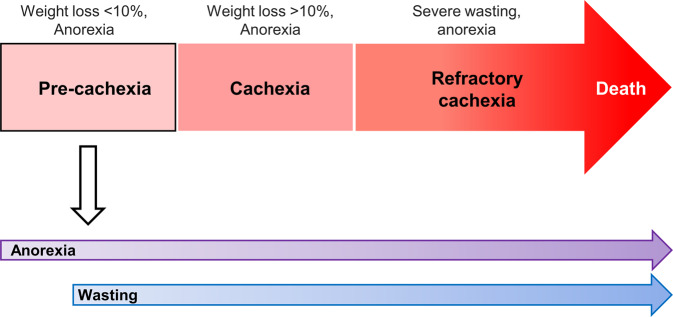
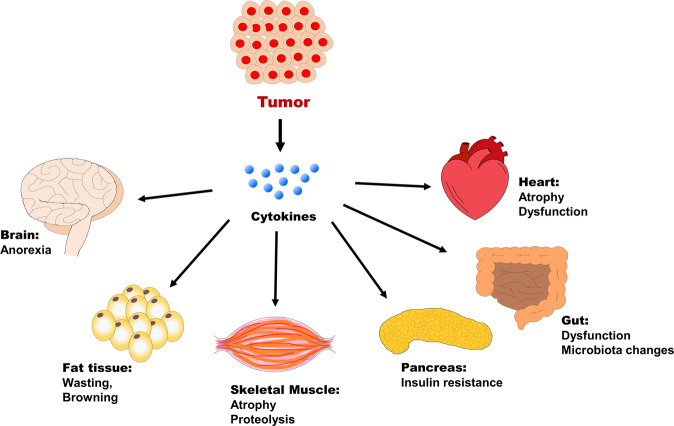
Cancer cachexia syndrome is a major cause of morbidity and mortality in cancer patients in the advanced stage. It is a devastating disorder characterized by nutritional impairment, weakness, and wasting, and it affects treatment success and quality of life. Two major symptoms of cancer cachexia are anorexia and weight loss. Weight loss in cachexia is not reversed through increased food intake, suggesting that anorexia and weight loss in cancer patients are regulated by independent molecular mechanisms. Although the wasting phenotype mostly occurs in skeletal muscle and adipose tissue, other organs, such as the brain, liver, pancreas, heart, and gut, are also involved in cachexia. Thus, cachexia is a multiorgan syndrome. Although the molecular basis of cancer cachexia-induced weight loss is known, the mechanism underlying anorexia is poorly understood. Here, we highlight our recent discovery of a new anorexia mechanism by which a tumor-derived humoral factor induces cancer anorexia by regulating feeding-related neuropeptide hormones in the brain. Furthermore, we elucidated the process through which anorexia precedes tissue wasting in cachexia. This review article aims to provide an overview of the key molecular mechanisms of anorexia and tissue wasting caused by cancer cachexia.
癌症恶病质综合征是晚期癌症患者发病率和死亡率的主要原因。它是一种严重的疾病,其特征是营养损害、虚弱和消瘦,并影响治疗效果和生活质量。癌症恶病质的两个主要症状是厌食和体重减轻。恶病质引起的体重减轻不能通过增加食物摄入来逆转,这表明癌症患者的厌食和体重减轻受独立的分子机制调节。尽管消瘦表型主要发生在骨骼肌和脂肪组织中,但其他器官,如大脑、肝脏、胰腺、心脏和肠道,也参与恶病质。因此,恶病质是一种多器官综合征。虽然已知癌症恶病质引起体重减轻的分子基础,但厌食的机制仍知之甚少。在这里,我们强调了我们最近发现的一种新的厌食机制,即肿瘤衍生的体液因子通过调节大脑中与进食相关的神经肽激素来诱导癌症厌食。此外,我们阐明了厌食在恶病质中先于组织消耗的过程。这篇综述文章旨在概述癌症恶病质引起的厌食和组织消耗的关键分子机制。