Obstetrics and Gynecology Hospital, NHC Key Laboratory of Reproduction Regulation, Shanghai Institute of Planned Parenthood Research, State Key Laboratory of Genetic Engineering at School of Life Sciences, Children's Hospital, Fudan University, Shanghai, China.
Department of Child & Adolescent Psychiatry, Shanghai Mental Health Center, Shanghai Jiao Tong University School of Medicine, Shanghai, China.
Mol Psychiatry. 2022 Jul;27(7):2985-2998. doi: 10.1038/s41380-022-01539-1. Epub 2022 Apr 6.
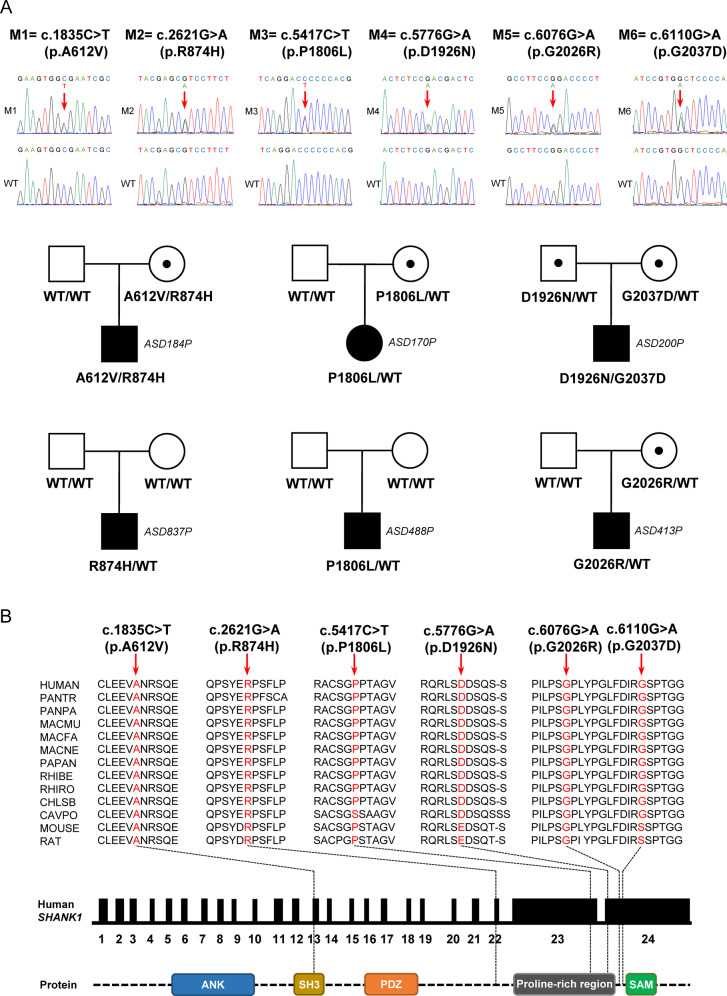
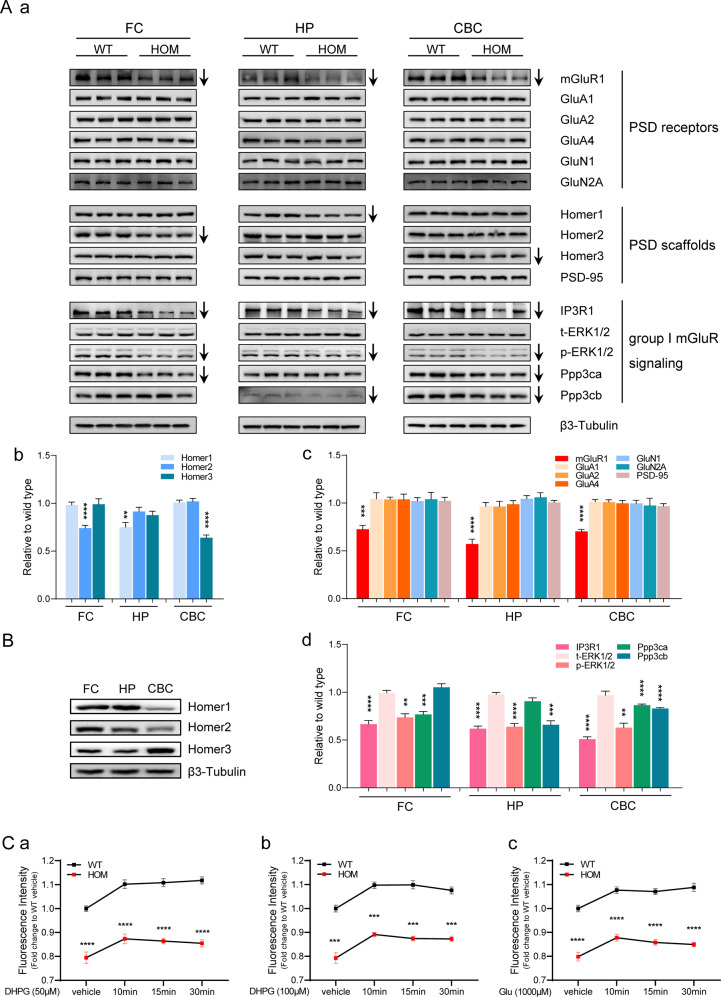
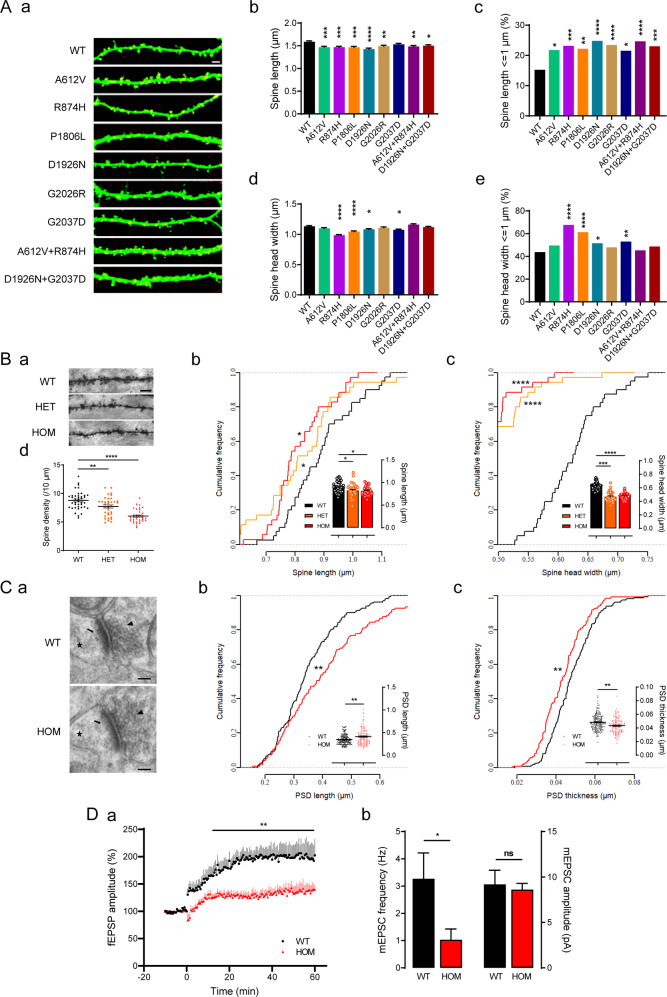
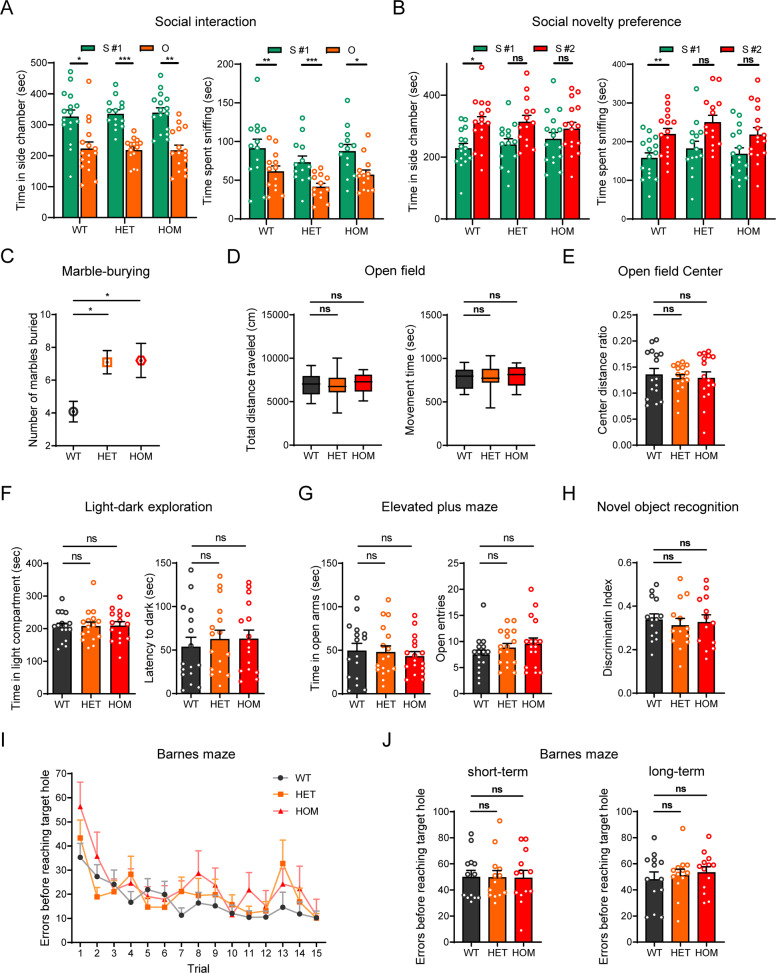
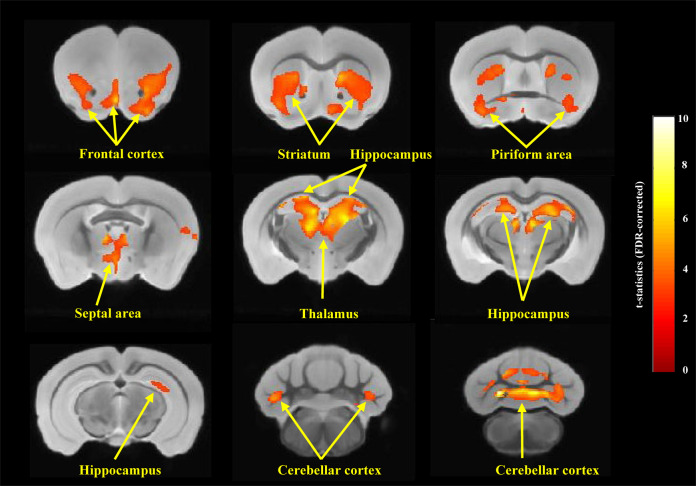
The genetic etiology and underlying mechanism of autism spectrum disorder (ASD) remain elusive. SHANK family genes (SHANK1/2/3) are well known ASD-related genes. However, little is known about how SHANK missense mutations contribute to ASD. Here, we aimed to clarify the molecular mechanism of and the multilevel neuropathological features induced by Shank1 mutations in knock-in (KI) mice. In this study, by sequencing the SHANK1 gene in a cohort of 615 ASD patients and 503 controls, we identified an ASD-specific recurrent missense mutation, c.2621 G > A (p.R874H). This mutation demonstrated strong pathogenic potential in in vitro experiments, and we generated the corresponding Shank1 R882H-KI mice. Shank1 R882H-KI mice displayed core symptoms of ASD, namely, social disability and repetitive behaviors, without confounding comorbidities of abnormal motor function and heightened anxiety. Brain structural changes in the frontal cortex, hippocampus and cerebellar cortex were observed in Shank1 R882H-KI mice via structural magnetic resonance imaging. These key brain regions also showed severe and consistent downregulation of mGluR1-IP3R1-calcium signaling, which subsequently affected the release of intracellular calcium. Corresponding cellular structural and functional changes were present in Shank1 R882H-KI mice, including decreased spine size, reduced spine density, abnormal morphology of postsynaptic densities, and impaired hippocampal long-term potentiation and basal excitatory transmission. These findings demonstrate the causative role of SHANK1 in ASD and elucidate the underlying biological mechanism of core symptoms of ASD. We also provide a reliable model of ASD with core symptoms for future studies, such as biomarker identification and therapeutic intervention studies.
自闭症谱系障碍(ASD)的遗传病因和潜在机制仍难以捉摸。SHANK 家族基因(SHANK1/2/3)是众所周知的与 ASD 相关的基因。然而,人们对 SHANK 错义突变如何导致 ASD 知之甚少。在这里,我们旨在阐明 Shank1 突变在敲入(KI)小鼠中引起的分子机制和多层次神经病理学特征。在这项研究中,我们通过对 615 名 ASD 患者和 503 名对照的 SHANK1 基因进行测序,鉴定出一种 ASD 特异性的反复出现的错义突变,c.2621G>A(p.R874H)。该突变在体外实验中表现出很强的致病潜力,我们生成了相应的 Shank1 R882H-KI 小鼠。Shank1 R882H-KI 小鼠表现出 ASD 的核心症状,即社交障碍和重复行为,而没有异常运动功能和焦虑加剧等混杂的共病。通过结构磁共振成像观察到 Shank1 R882H-KI 小鼠前额叶皮质、海马体和小脑皮质的脑结构变化。这些关键脑区也表现出严重且一致的 mGluR1-IP3R1-钙信号下调,进而影响细胞内钙的释放。Shank1 R882H-KI 小鼠存在相应的细胞结构和功能变化,包括树突大小减小、树突密度降低、突触后密度异常形态以及海马长时程增强和基础兴奋性传递受损。这些发现表明 SHANK1 在 ASD 中的致病作用,并阐明了 ASD 核心症状的潜在生物学机制。我们还为具有核心症状的 ASD 提供了一个可靠的模型,为未来的研究,如生物标志物鉴定和治疗干预研究提供了依据。