Department of Hematopathology, The University of Texas MD Anderson Cancer Center, Houston, TX.
Department of Laboratory Medicine and Pathology, University of Minnesota, Minneapolis, MN.
Blood. 2022 Jul 7;140(1):58-72. doi: 10.1182/blood.2021013983.
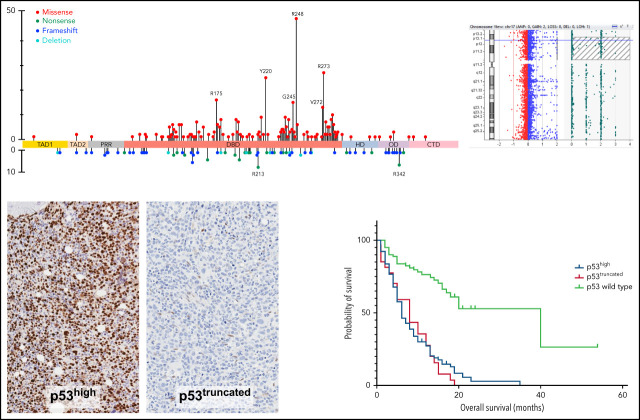
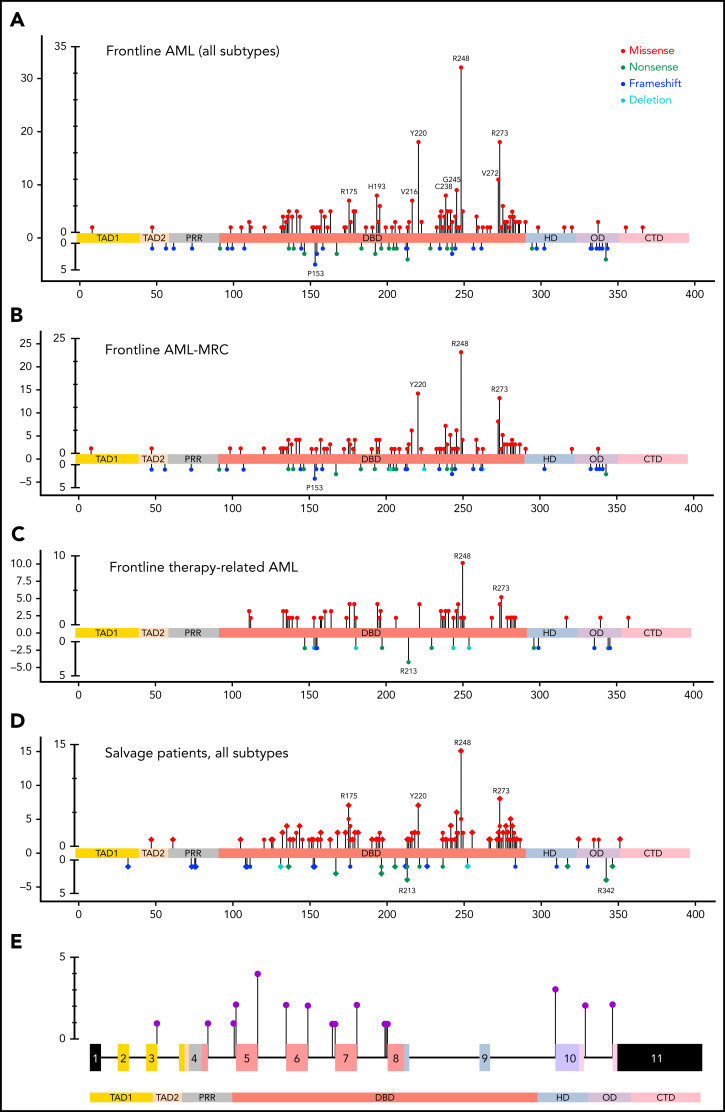
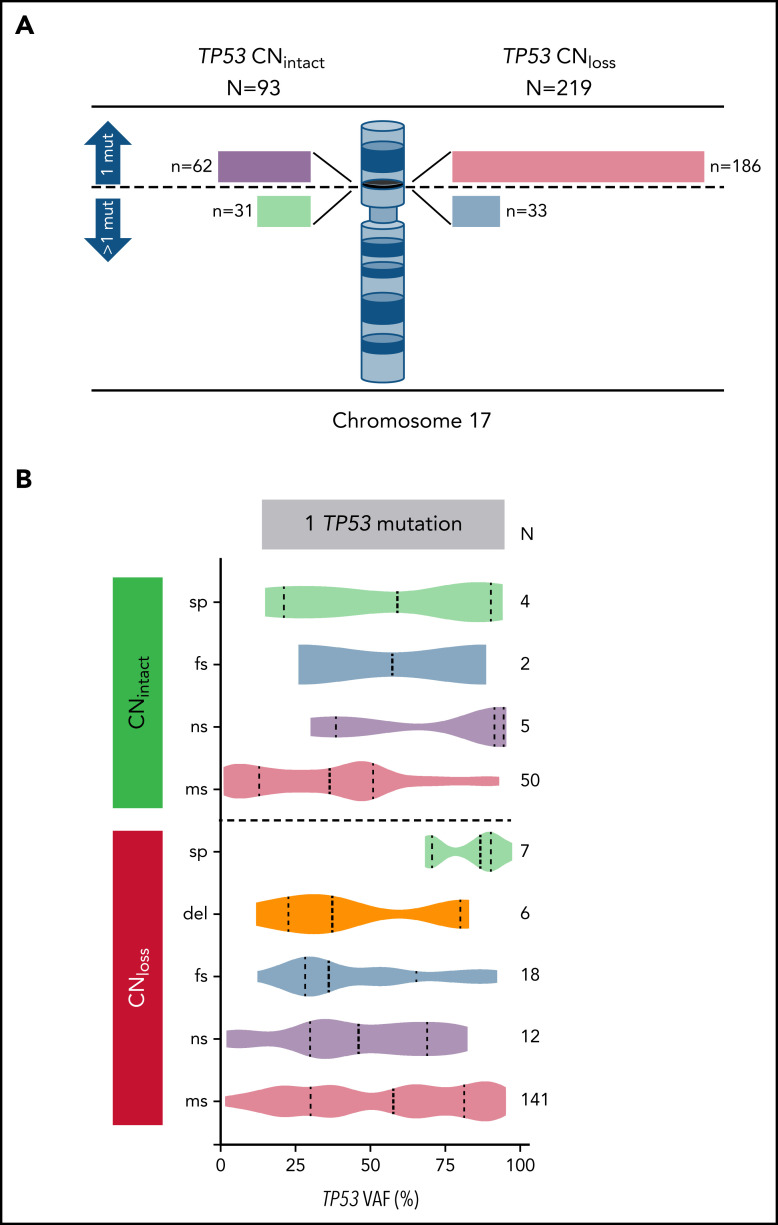
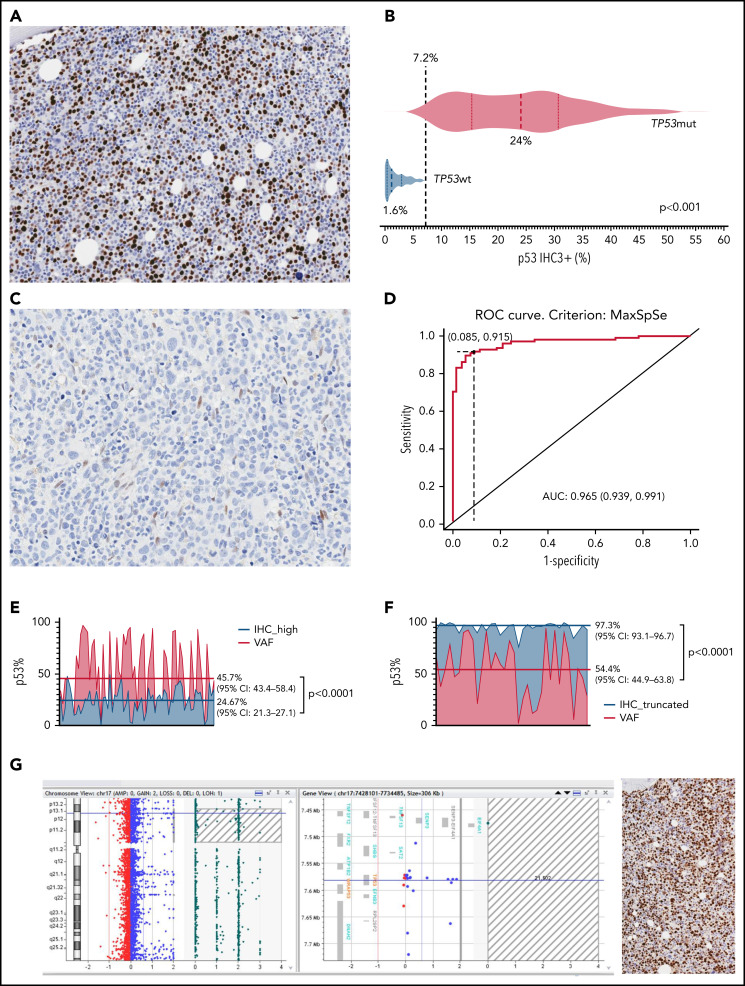
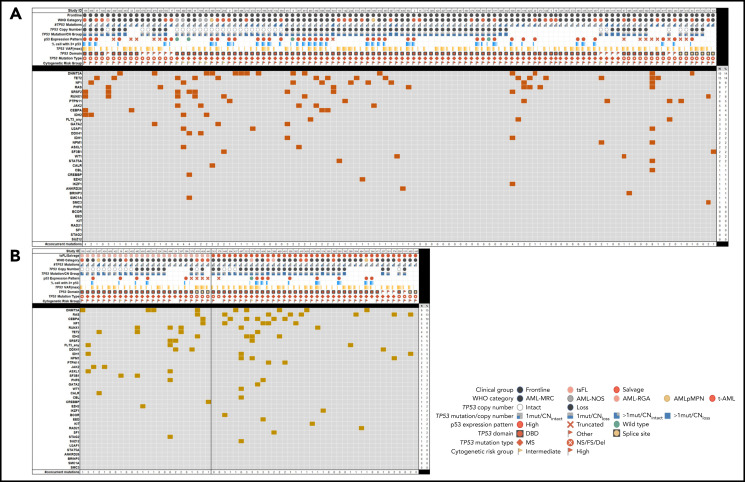
Mutant TP53 is an adverse risk factor in acute myeloid leukemia (AML), but large-scale integrated genomic-proteomic analyses of TP53 alterations in patients with AML remain limited. We analyzed TP53 mutational status, copy number (CN), and protein expression data in AML (N = 528) and provide a compilation of mutation sites and types across disease subgroups among treated and untreated patients. Our analysis shows differential hotspots in subsets of AML and uncovers novel pathogenic variants involving TP53 splice sites. In addition, we identified TP53 CN loss in 70.2% of TP53-mutated AML cases, which have more deleterious TP53 mutations, as well as copy neutral loss of heterozygosity in 5/32 (15.6%) AML patients who had intact TP53 CN. Importantly, we demonstrate that mutant p53 protein expression patterns by immunohistochemistry evaluated using digital image-assisted analysis provide a robust readout that integrates TP53 mutation and allelic states in patients with AML. Expression of p53 by immunohistochemistry informed mutation status irrespective of TP53 CN status. Genomic analysis of comutations in TP53-mutant AML shows a muted landscape encompassing primarily mutations in genes involved in epigenetic regulation (DNMT3A and TET2), RAS/MAPK signaling (NF1, KRAS/NRAS, PTPN11), and RNA splicing (SRSF2). In summary, our data provide a rationale to refine risk stratification of patients with AML on the basis of integrated molecular and protein-level TP53 analyses.
TP53 突变是急性髓系白血病(AML)的不利风险因素,但对 AML 患者中 TP53 改变的大规模综合基因组 - 蛋白质组学分析仍然有限。我们分析了 AML 中 TP53 突变状态、拷贝数(CN)和蛋白质表达数据(N = 528),并提供了治疗和未治疗患者中疾病亚组的突变位点和类型的汇编。我们的分析显示 AML 亚组中的差异热点,并揭示了涉及 TP53 剪接位点的新致病变体。此外,我们发现 70.2%的 TP53 突变 AML 病例中存在 TP53 CN 缺失,这些病例具有更具危害性的 TP53 突变,以及 5/32(15.6%)AML 患者的 TP53 CN 完整情况下的拷贝中性杂合性丢失。重要的是,我们证明了使用数字图像辅助分析评估的免疫组织化学中突变型 p53 蛋白表达模式提供了一种强大的读出,可整合 AML 患者的 TP53 突变和等位基因状态。免疫组织化学中 p53 的表达通过 TP53 CN 状态提供了突变状态的信息。TP53 突变 AML 中的共突变的基因组分析显示出一种柔和的景观,主要包括涉及表观遗传调节(DNMT3A 和 TET2)、RAS/MAPK 信号(NF1、KRAS/NRAS、PTPN11)和 RNA 剪接(SRSF2)的基因中的突变。总之,我们的数据提供了基于综合分子和蛋白质水平 TP53 分析来细化 AML 患者风险分层的依据。