Fink Brian D, Rauckhorst Adam J, Taylor Eric B, Yu Liping, Sivitz William I
Department of Internal Medicine/Endocrinology and Metabolism University of Iowa and the Iowa City Veterans Affairs Medical Center Iowa City Iowa USA.
Department of Molecular Physiology and Biophysics University of Iowa Iowa City Iowa USA.
FASEB Bioadv. 2021 Dec 3;4(3):197-210. doi: 10.1096/fba.2021-00137. eCollection 2022 Mar.
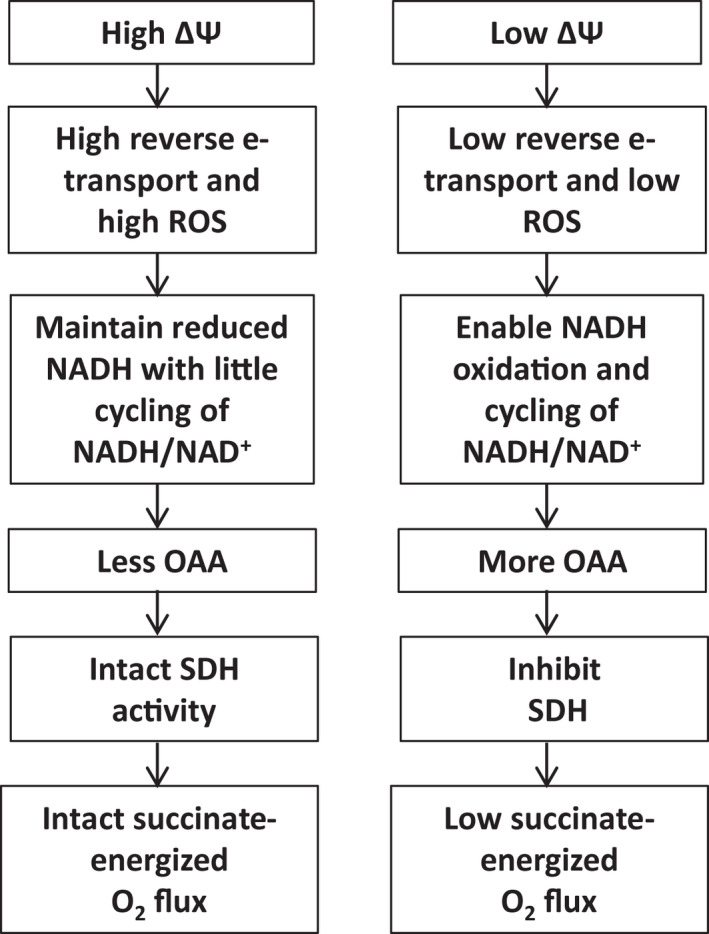
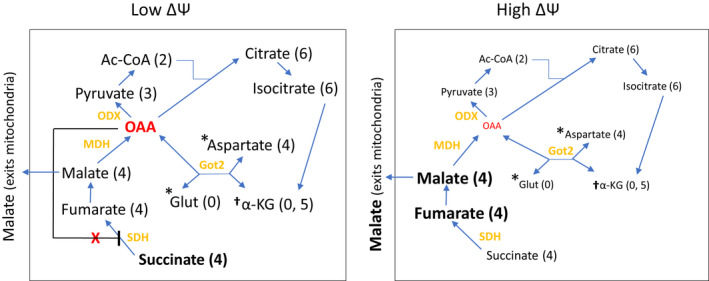
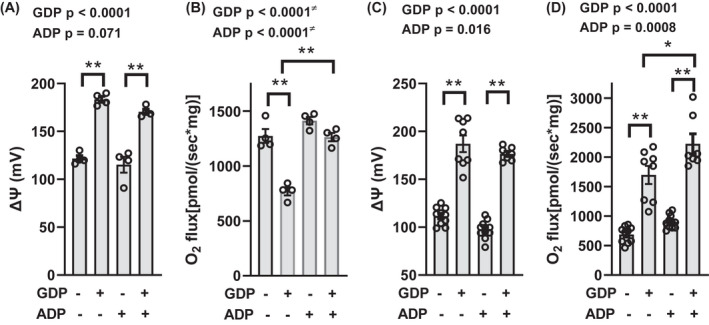
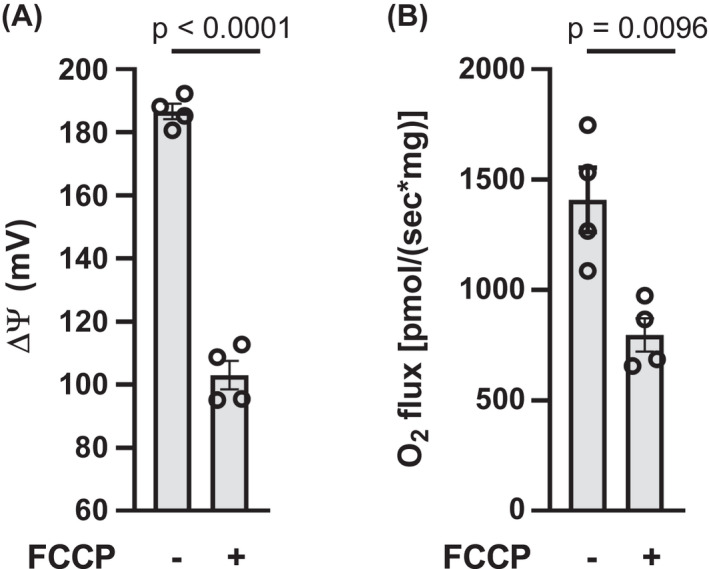
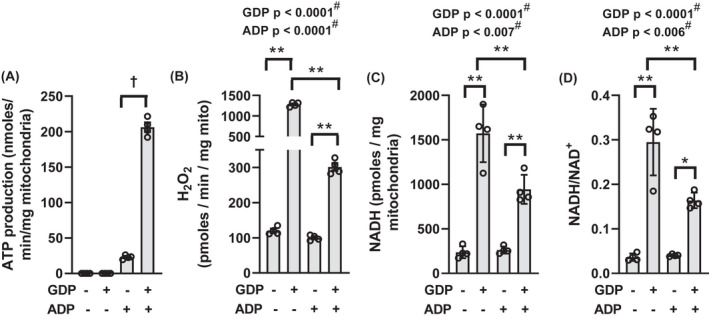
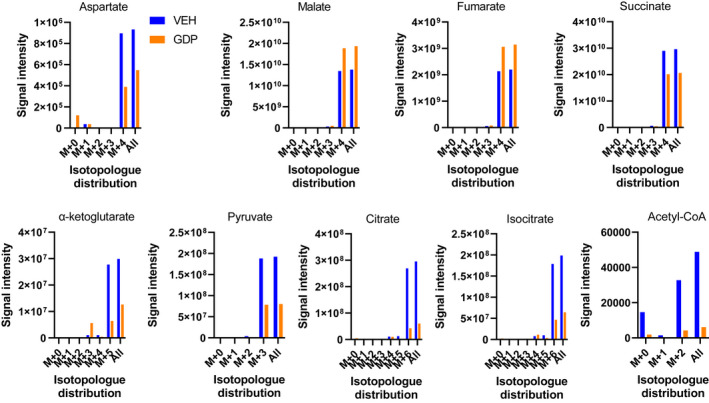
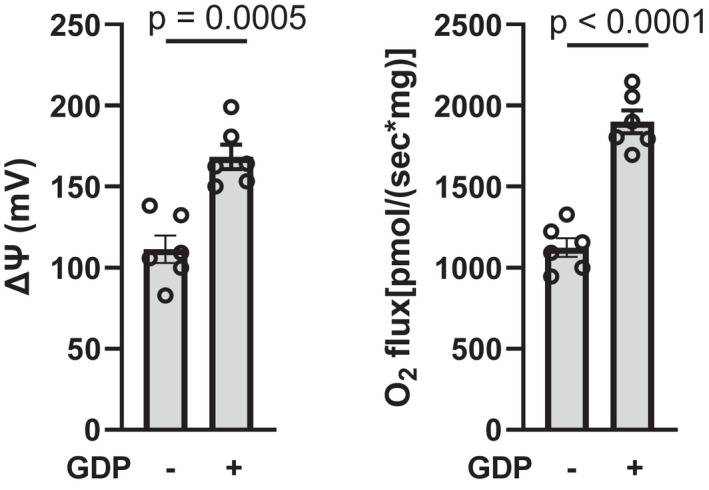
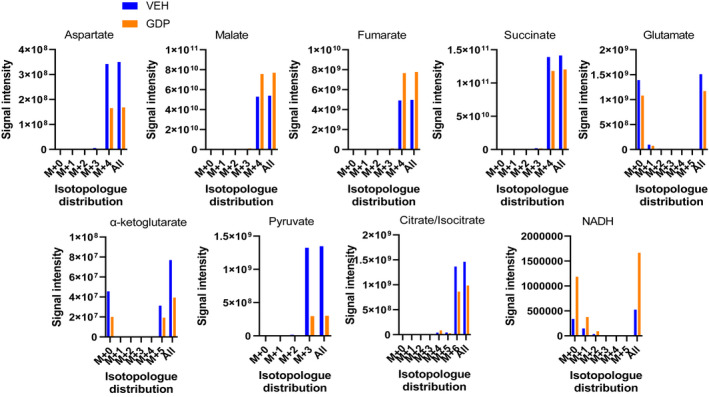
Classically, mitochondrial respiration responds to decreased membrane potential (ΔΨ) by increasing respiration. However, we found that for succinate-energized complex II respiration in skeletal muscle mitochondria (unencumbered by rotenone), low ΔΨ impairs respiration by a mechanism culminating in oxaloacetate (OAA) inhibition of succinate dehydrogenase (SDH). Here, we investigated whether this phenomenon extends to far different mitochondria of a tissue wherein ΔΨ is intrinsically low, i.e., interscapular brown adipose tissue (IBAT). Also, to advance our knowledge of the mechanism, we performed isotopomer studies of metabolite flux not done in our previous muscle studies. In additional novel work, we addressed possible ways ADP might affect the mechanism in IBAT mitochondria. UCP1 activity, and consequently ΔΨ, were perturbed both by GDP, a well-recognized potent inhibitor of UCP1 and by the chemical uncoupler carbonyl cyanide m-chlorophenyl hydrazone (FCCP). In succinate-energized mitochondria, GDP increased ΔΨ but also increased rather than decreased (as classically predicted under low ΔΨ) O flux. In GDP-treated mitochondria, FCCP reduced potential but also decreased respiration. Metabolite studies by NMR and flux analyses by LC-MS support a mechanism, wherein ΔΨ effects on the production of reactive oxygen alters the NADH/NAD ratio affecting OAA accumulation and, hence, OAA inhibition of SDH. We also found that ADP-altered complex II respiration in complex fashion probably involving decreased ΔΨ due to ATP synthesis, a GDP-like nucleotide inhibition of UCP1, and allosteric enzyme action. In summary, complex II respiration in IBAT mitochondria is regulated by UCP1-dependent ΔΨ altering substrate flow through OAA and OAA inhibition of SDH.
传统上,线粒体呼吸通过增加呼吸作用来响应膜电位(ΔΨ)的降低。然而,我们发现,对于骨骼肌线粒体中由琥珀酸供能的复合体II呼吸(不受鱼藤酮阻碍),低ΔΨ通过一种最终导致草酰乙酸(OAA)抑制琥珀酸脱氢酶(SDH)的机制损害呼吸作用。在此,我们研究了这种现象是否扩展到ΔΨ本质上较低的组织的截然不同的线粒体,即肩胛间棕色脂肪组织(IBAT)。此外,为了深化我们对该机制的认识,我们进行了代谢物通量的同位素异构体研究,这在我们之前的肌肉研究中未曾做过。在另一项新工作中,我们探讨了ADP可能影响IBAT线粒体中该机制的可能方式。UCP1活性以及因此的ΔΨ受到GDP(一种公认的UCP1强效抑制剂)和化学解偶联剂羰基氰化物间氯苯腙(FCCP)的干扰。在由琥珀酸供能的线粒体中,GDP增加了ΔΨ,但也增加了而不是减少了(如在低ΔΨ情况下的经典预测)氧气通量。在经GDP处理的线粒体中,FCCP降低了电位,但也降低了呼吸作用。通过核磁共振进行的代谢物研究和通过液相色谱 - 质谱进行的通量分析支持一种机制,其中ΔΨ对活性氧产生的影响改变了NADH/NAD比率,影响OAA积累,从而导致OAA对SDH的抑制。我们还发现,ADP以复杂的方式改变复合体II呼吸,可能涉及由于ATP合成导致的ΔΨ降低、UCP1的类似GDP的核苷酸抑制以及变构酶作用。总之,IBAT线粒体中的复合体II呼吸受UCP1依赖性ΔΨ调节,ΔΨ改变通过OAA的底物流动以及OAA对SDH的抑制。