Lydahl Doris, Britten Nicky, Wolf Axel, Naldemirci Öncel, Lloyd Helen, Heckemann Birgit
Department of Sociology and Work Science, University of Gothenburg, Gothenburg, Sweden.
University of Exeter Medical School, Exeter, UK.
Int J Older People Nurs. 2022 Sep;17(5):e12461. doi: 10.1111/opn.12461. Epub 2022 Apr 8.
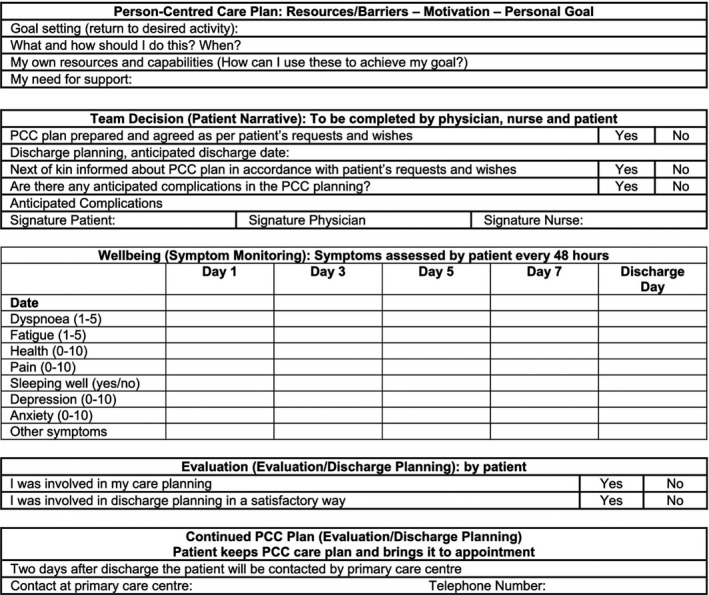
Person-centred care is a growing imperative in healthcare, but the documentation of person-centred care is challenging. According to the Gothenburg Framework of Person-centred Care, care should be documented in continuously revised care plans and based on patients' personally formulated goals and resources to secure a continuous partnership.
This study aimed to examine care plans produced within a randomised controlled trial that tested a person-centred care intervention in older people with acute coronary syndrome. Nurses with training in the theory and practice of person-centred care had written the care plans.
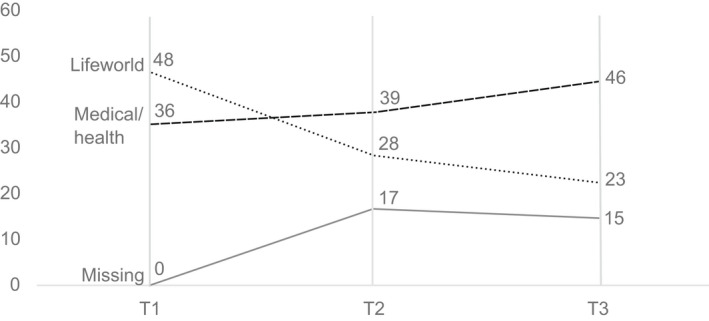
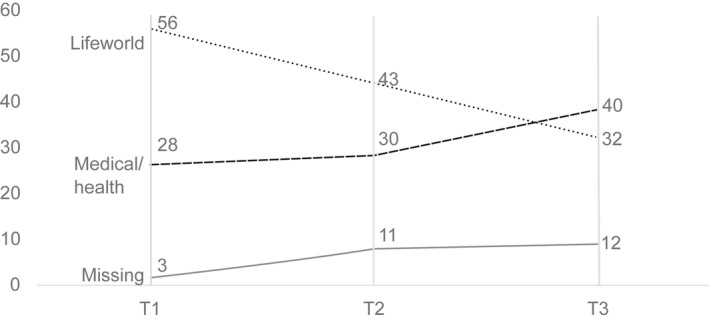
We conducted a secondary analysis of care plans developed in a randomised controlled trial for assessing person-centred care in patients with acute coronary syndrome (Myocardial Infarct [MI] or unstable angina pectoris). The study sample included 84 patients, with three care plans for each patient from inpatient (T1), outpatient (T2) and primary care (T3), that is, a total of 252 care plans. We conducted a descriptive quantitative content analysis of the care plans to examine the reported patients' life-world and medical/health resources and goals.
The analysis illustrates the differences and overlaps between life-world and medical/health goals and resources. The documented goals and resources change over time: life-world goals and resources decreased with time as medical/health goals and resources documentation increased.
This paper illustrates that in the setting of a randomised controlled trial, nurses with training in person-centred care recorded fewer life-world and more medical/health goals over time. Placing life-world goals at the top of the goal hierarchy enables alignment with medical/health goals. Further research should explore whether the goals and resources documented in care plans accurately reflect patients' wishes as they transition along the care chain.
Swedish registry, Researchweb.org, ID NR 65 791.
以患者为中心的护理在医疗保健领域日益成为当务之急,但记录以患者为中心的护理具有挑战性。根据哥德堡以患者为中心的护理框架,护理应记录在不断修订的护理计划中,并基于患者个人制定的目标和资源,以确保持续的伙伴关系。
本研究旨在检查在一项随机对照试验中制定的护理计划,该试验测试了针对急性冠状动脉综合征老年人的以患者为中心的护理干预措施。接受过以患者为中心的护理理论和实践培训的护士撰写了这些护理计划。
我们对一项随机对照试验中制定的护理计划进行了二次分析,该试验用于评估急性冠状动脉综合征(心肌梗死[MI]或不稳定型心绞痛)患者的以患者为中心的护理。研究样本包括84名患者,每位患者有来自住院(T1)、门诊(T2)和初级护理(T3)的三份护理计划,即总共252份护理计划。我们对护理计划进行了描述性定量内容分析,以检查报告的患者生活世界以及医疗/健康资源和目标。
分析说明了生活世界与医疗/健康目标及资源之间的差异和重叠。记录的目标和资源随时间变化:随着医疗/健康目标和资源记录的增加,生活世界目标和资源随时间减少。
本文表明,在随机对照试验的背景下,接受过以患者为中心的护理培训的护士随着时间的推移记录的生活世界目标减少,而医疗/健康目标增多。将生活世界目标置于目标层级的首位能够使其与医疗/健康目标保持一致。进一步的研究应探讨护理计划中记录的目标和资源是否准确反映了患者在护理链中过渡时的意愿。
瑞典注册机构,Researchweb.org,ID编号65 791。