Max Planck Institute for Research on Collective Goods, 53113 Bonn, Germany.
EBS Law School, 65189 Wiesbaden, Germany.
Proc Natl Acad Sci U S A. 2022 Apr 12;119(15):e2122274119. doi: 10.1073/pnas.2122274119. Epub 2022 Apr 8.
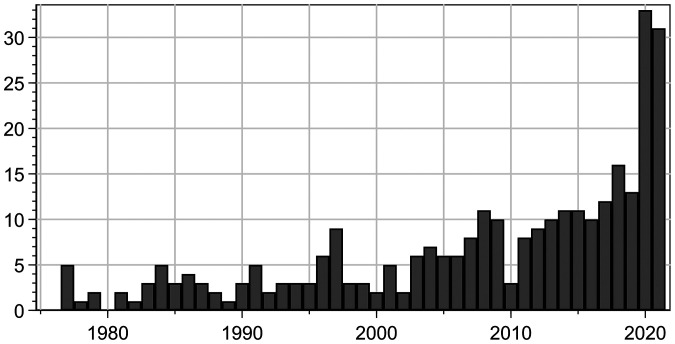
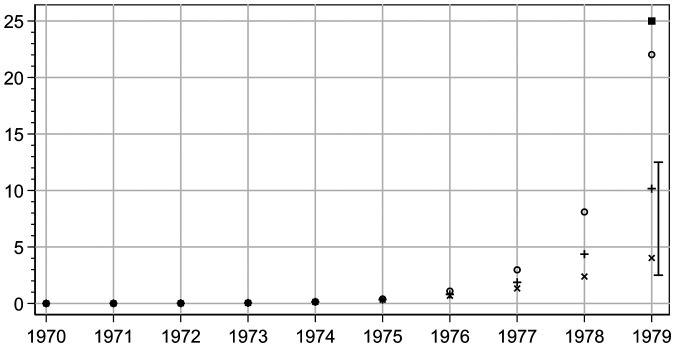
Scientists prominently argue that the COVID-19 pandemic stems not least from people’s inability to understand exponential growth. They increasingly cite evidence from a classic psychological experiment published some 45 years prior to the first case of COVID-19. Despite—or precisely because of—becoming such a canonical study (more often cited than read), its critical design flaws went completely unnoticed. They are discussed here as a cautionary tale against uncritically enshrining unsound research in the “lore” of a field of research. In hindsight, this is a unique case study of researchers falling prey to just the cognitive bias they set out to study—undermining an experiment’s methodology while, ironically, still supporting its conclusion.
科学家们明确指出,COVID-19 大流行至少源于人们无法理解指数增长。他们越来越多地引用 COVID-19 首例病例发生前约 45 年前发表的一项经典心理学实验的证据。尽管(或者正是因为)该实验成为如此经典的研究(引用次数多于阅读次数),但其关键设计缺陷却完全被忽视了。本文将其作为一个警示故事,告诫人们不要不加批判地将有缺陷的研究奉为研究领域的“传说”。事后看来,这是一个研究人员恰好陷入他们试图研究的认知偏差的独特案例研究——在破坏实验方法的同时,讽刺的是,仍然支持其结论。