Department of Neuroscience, Science for Life Laboratory, Uppsala University, POB 593, 75124, Uppsala, Sweden.
Department of Surgical Sciences, Neuroradiology, Uppsala University, Uppsala, Sweden.
Sci Rep. 2022 Apr 9;12(1):5996. doi: 10.1038/s41598-022-07109-3.
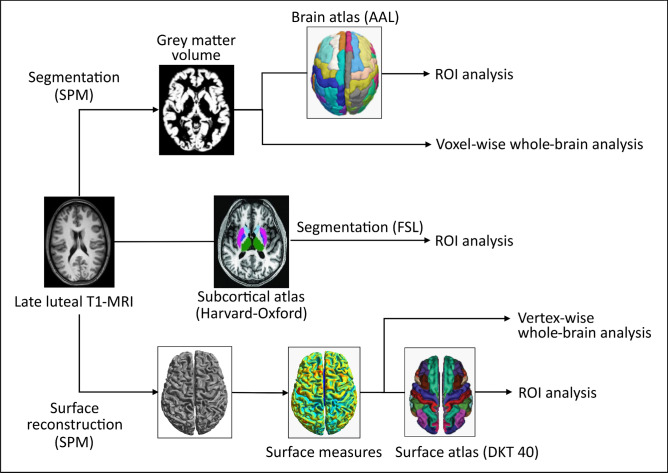
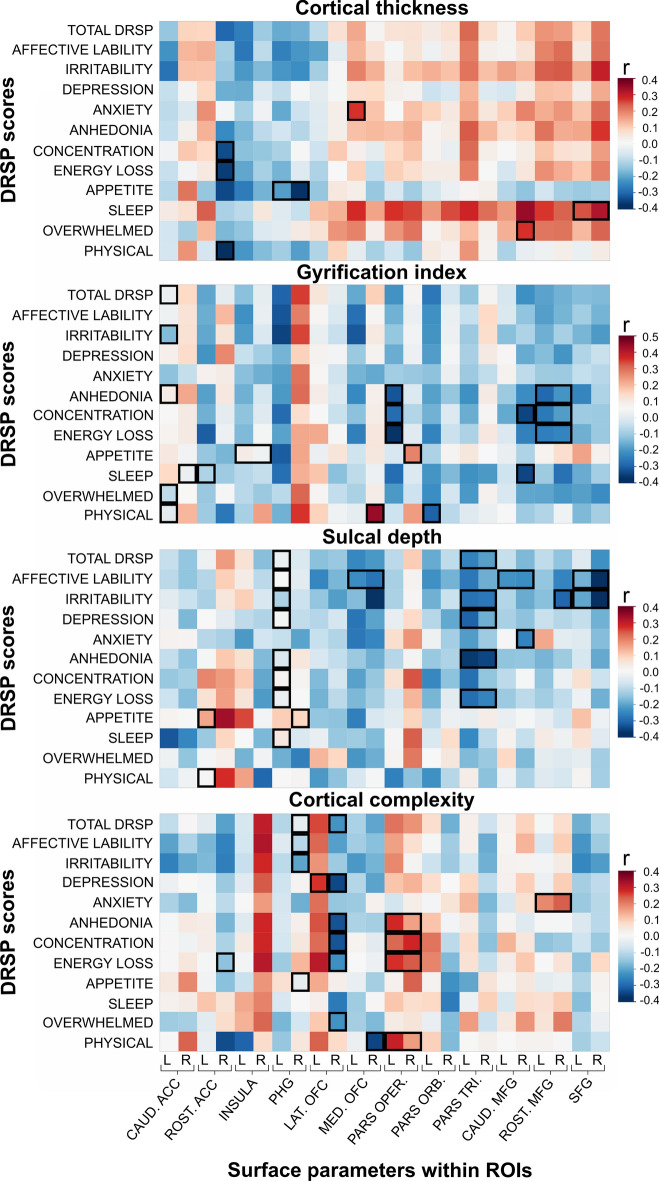
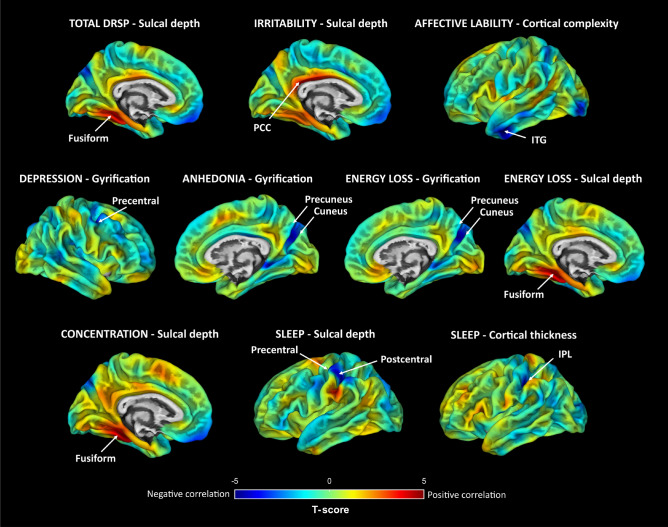
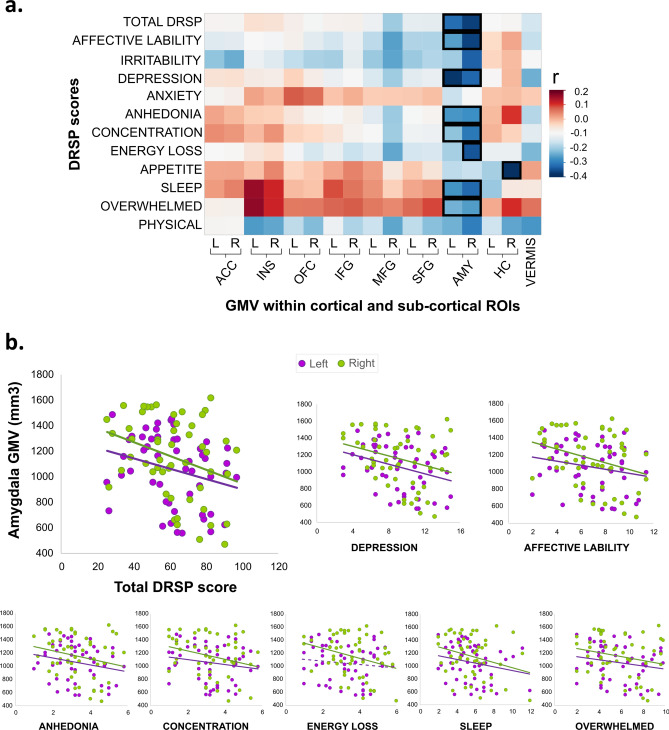
Ovarian hormones fluctuations across the menstrual cycle are experienced by about 58% of women in their fertile age. Maladaptive brain sensitivity to these changes likely leads to the severe psychological, cognitive, and physical symptoms repeatedly experienced by women with Premenstrual Dysphoric Disorder (PMDD) during the late luteal phase of the menstrual cycle. However, the neuroanatomical correlates of these symptoms are unknown. The relationship between grey matter structure and PMDD symptom severity was delineated using structural magnetic resonance imaging during the late luteal phase of fifty-one women diagnosed with PMDD, combined with Voxel- and Surface-Based Morphometry, as well as subcortical volumetric analyses. A negative correlation was found between depression-related symptoms and grey matter volume of the bilateral amygdala. Moreover, the severity of affective and somatic PMDD symptoms correlated with cortical thickness, gyrification, sulcal depth, and complexity metrics, particularly in the prefrontal, cingulate, and parahippocampal gyri. The present findings provide the first evidence of grey matter morphological characteristics associated with PMDD symptomatology in brain regions expressing ovarian hormone receptors and of relevance to cognitive-affective functions, thus potentially having important implications for understanding how structural brain characteristics relate to PMDD symptomatology.
大约 58%的育龄妇女在月经周期中会经历卵巢激素波动。这些变化导致大脑对其产生适应性不良的敏感性,可能导致经前期烦躁障碍(PMDD)患者在月经周期的黄体晚期反复出现严重的心理、认知和身体症状。然而,这些症状的神经解剖学相关性尚不清楚。使用结构磁共振成像在 51 名被诊断患有 PMDD 的女性的黄体晚期进行研究,结合体素和表面形态计量学以及皮质下容积分析,描绘了灰质结构与 PMDD 症状严重程度之间的关系。研究发现,抑郁相关症状与双侧杏仁核的灰质体积呈负相关。此外,情感和躯体 PMDD 症状的严重程度与皮质厚度、脑回和脑沟的复杂度指标相关,特别是在前额叶、扣带回和海马旁回。这些发现首次提供了与卵巢激素受体表达的大脑区域中 PMDD 症状相关的灰质形态特征的证据,与认知情感功能相关,因此可能对理解结构脑特征与 PMDD 症状之间的关系具有重要意义。