Rah Bilal, Rather Rafiq A, Bhat Gh Rasool, Baba Abdul Basit, Mushtaq Ifra, Farooq Muzamil, Yousuf Tahira, Dar Sadaf B, Parveen Sabra, Hassan Rukhsana, Mohammad Fozia, Qassim Iqbal, Bhat Abida, Ali Shazia, Zargar Mahrukh Hamid, Afroze Dil
Advanced Centre for Human Genetics, Sher-I-Kashmir Institute of Medical Sciences, Srinagar, India.
Front Pharmacol. 2022 Mar 24;13:821344. doi: 10.3389/fphar.2022.821344. eCollection 2022.
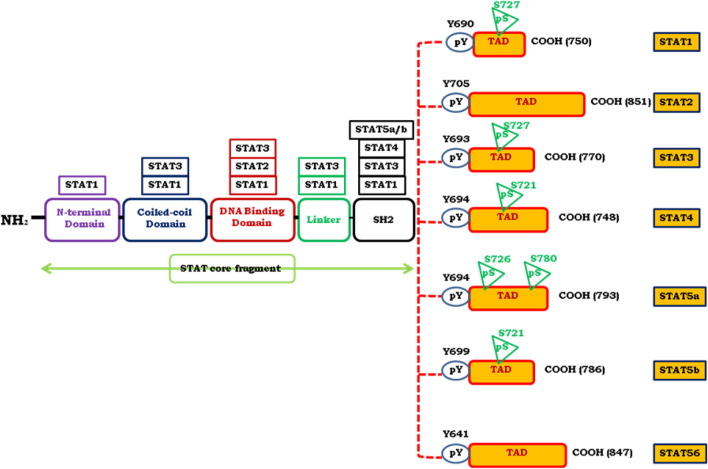
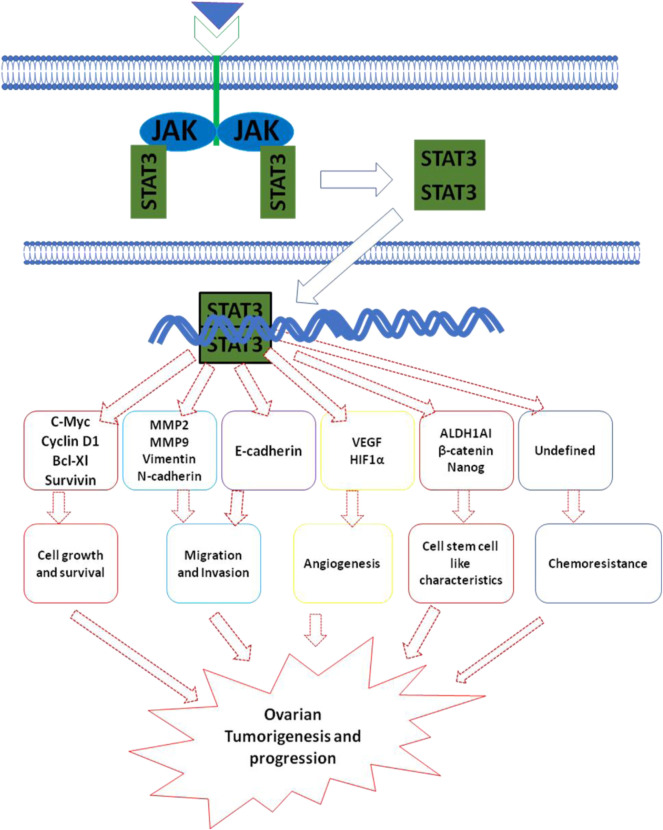
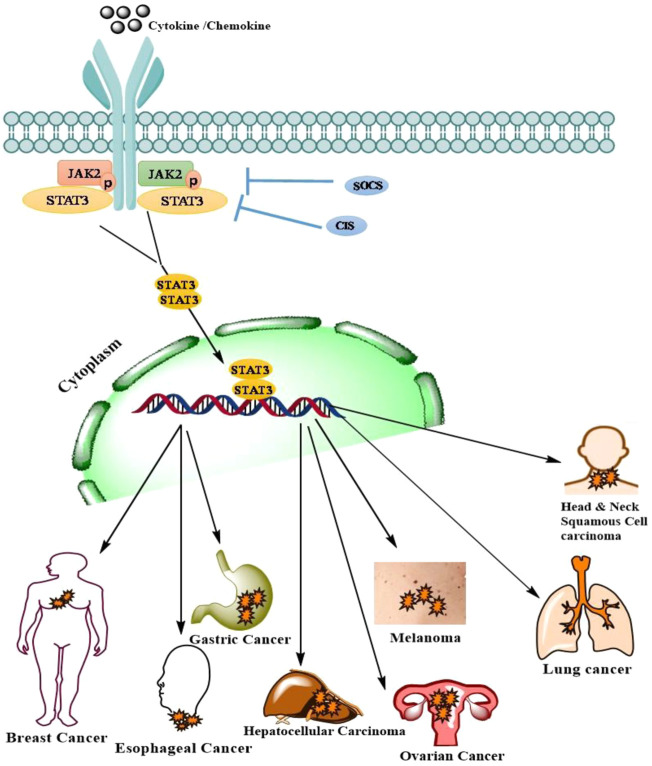
JAK/STAT signaling pathway is one of the important regulatory signaling cascades for the myriad of cellular processes initiated by various types of ligands such as growth factors, hormones, and cytokines. The physiological processes regulated by JAK/STAT signaling are immune regulation, cell proliferation, cell survival, apoptosis and hematopoiesis of myeloid and non-myeloid cells. Dysregulation of JAK/STAT signaling is reported in various immunological disorders, hematological and other solid malignancies through various oncogenic activation mutations in receptors, downstream mediators, and associated transcriptional factors such as STATs. STATs typically have a dual role when explored in the context of cancer. While several members of the STAT family are involved in malignancies, however, a few members which include STAT3 and STAT5 are linked to tumor initiation and progression. Other STAT members such as STAT1 and STAT2 are pivotal for antitumor defense and maintenance of an effective and long-term immune response through evolutionarily conserved programs. The effects of JAK/STAT signaling and the persistent activation of STATs in tumor cell survival; proliferation and invasion have made the JAK/STAT pathway an ideal target for drug development and cancer therapy. Therefore, understanding the intricate JAK/STAT signaling in the pathogenesis of solid malignancies needs extensive research. A better understanding of the functionally redundant roles of JAKs and STATs may provide a rationale for improving existing cancer therapies which have deleterious effects on normal cells and to identifying novel targets for therapeutic intervention in solid malignancies.
JAK/STAT信号通路是由多种类型的配体(如生长因子、激素和细胞因子)引发的众多细胞过程的重要调节信号级联反应之一。JAK/STAT信号通路调节的生理过程包括免疫调节、细胞增殖、细胞存活、细胞凋亡以及髓系和非髓系细胞的造血作用。据报道,在各种免疫疾病、血液系统及其他实体恶性肿瘤中,通过受体、下游介质以及相关转录因子(如信号转导子和转录激活子,STATs)中的各种致癌激活突变,JAK/STAT信号通路出现失调。在癌症背景下研究时,STATs通常具有双重作用。虽然STAT家族的几个成员都与恶性肿瘤有关,然而,包括STAT3和STAT5在内的一些成员与肿瘤的起始和进展有关。其他STAT成员,如STAT1和STAT2,对于抗肿瘤防御以及通过进化保守程序维持有效和长期的免疫反应至关重要。JAK/STAT信号通路的作用以及STATs在肿瘤细胞存活、增殖和侵袭中的持续激活,使得JAK/STAT通路成为药物开发和癌症治疗的理想靶点。因此,深入研究实体恶性肿瘤发病机制中复杂的JAK/STAT信号通路很有必要。更好地理解JAKs和STATs功能冗余的作用,可能为改进对正常细胞有有害影响的现有癌症治疗方法以及确定实体恶性肿瘤治疗干预的新靶点提供理论依据。