Dookie Navisha, Khan Azraa, Padayatchi Nesri, Naidoo Kogieleum
Centre for the AIDS Programme of Research in South Africa (CAPRISA), University of KwaZulu-Natal, Durban, South Africa.
South African Medical Research Council (SAMRC), CAPRISA HIV-TB Pathogenesis and Treatment Research Unit, Durban, South Africa.
Front Microbiol. 2022 Mar 24;13:775030. doi: 10.3389/fmicb.2022.775030. eCollection 2022.
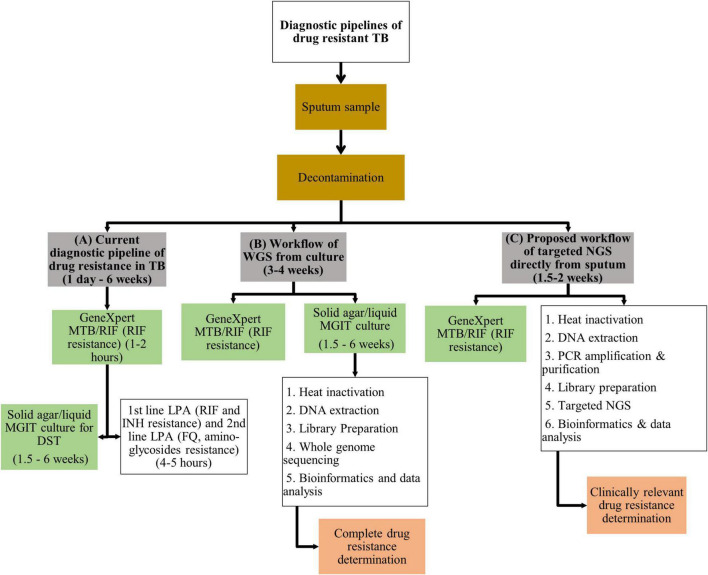
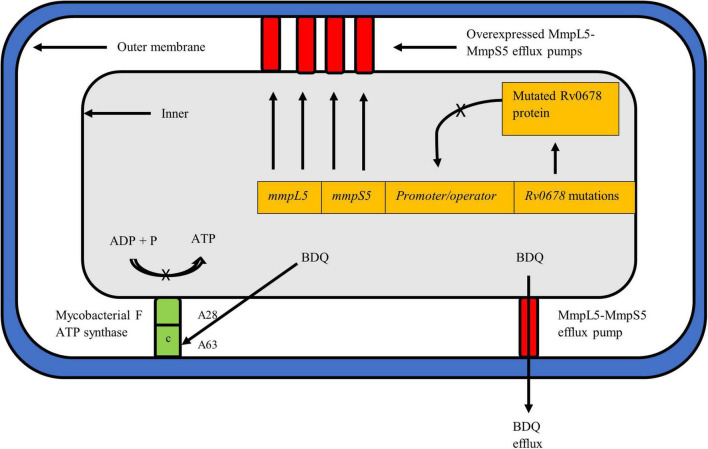
The World Health Organization's End TB Strategy prioritizes universal access to an early diagnosis and comprehensive drug susceptibility testing (DST) for all individuals with tuberculosis (TB) as a key component of integrated, patient-centered TB care. Next generation whole genome sequencing (WGS) and its associated technology has demonstrated exceptional potential for reliable and comprehensive resistance prediction for isolates, allowing for accurate clinical decisions. This review presents a descriptive analysis of research describing the potential of WGS to accelerate delivery of individualized care, recent advances in sputum-based WGS technology and the role of targeted sequencing for resistance detection. We provide an update on recent research describing the mechanisms of resistance to new and repurposed drugs and the dynamics of mixed infections and its potential implication on TB diagnosis and treatment. Whilst the studies reviewed here have greatly improved our understanding of recent advances in this arena, it highlights significant challenges that remain. The wide-spread introduction of new drugs in the absence of standardized DST has led to rapid emergence of drug resistance. This review highlights apparent gaps in our knowledge of the mechanisms contributing to resistance for these new drugs and challenges that limit the clinical utility of next generation sequencing techniques. It is recommended that a combination of genotypic and phenotypic techniques is warranted to monitor treatment response, curb emerging resistance and further dissemination of drug resistance.
世界卫生组织的《终止结核病战略》将为所有结核病患者提供普遍的早期诊断和全面药物敏感性检测(DST)作为以患者为中心的综合结核病护理的关键组成部分。新一代全基因组测序(WGS)及其相关技术已显示出对分离株进行可靠和全面耐药性预测的巨大潜力,有助于做出准确的临床决策。本综述对描述WGS加速提供个性化护理潜力的研究、基于痰液的WGS技术的最新进展以及靶向测序在耐药性检测中的作用进行了描述性分析。我们介绍了近期有关新药物和重新利用药物的耐药机制、混合感染动态及其对结核病诊断和治疗潜在影响的研究最新情况。虽然这里综述的研究极大地增进了我们对该领域近期进展的理解,但也凸显了仍然存在的重大挑战。在缺乏标准化DST的情况下广泛引入新药导致耐药性迅速出现。本综述强调了我们在这些新药耐药机制知识方面的明显差距以及限制下一代测序技术临床应用的挑战。建议采用基因型和表型技术相结合的方法来监测治疗反应、遏制新出现的耐药性以及耐药性的进一步传播。