Tang Yingdan, You Dongfang, Yi Honggang, Yang Sheng, Zhao Yang
Department of Biostatistics, School of Public Health, Nanjing Medical University, Nanjing, China.
Center of Biomedical Big Data and the Laboratory of Biomedical Big Data, Nanjing Medical University, Nanjing, China.
Front Genet. 2022 Mar 24;13:801397. doi: 10.3389/fgene.2022.801397. eCollection 2022.
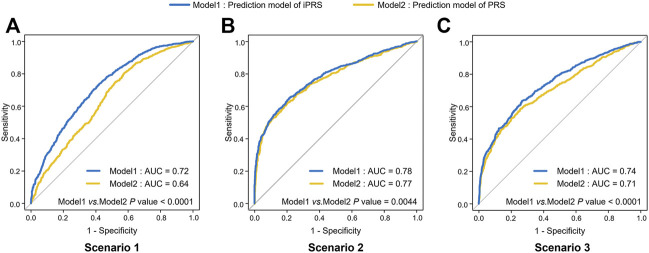
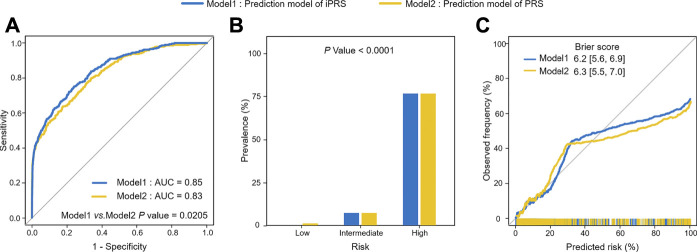
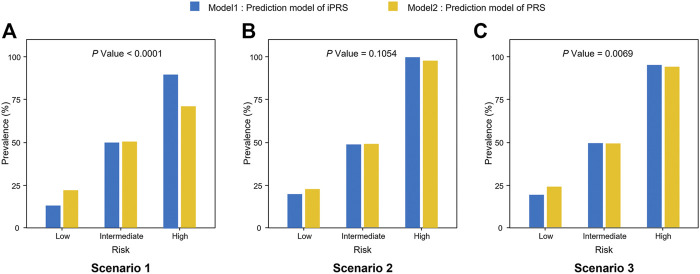
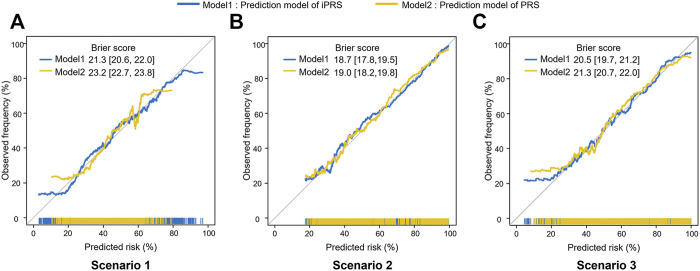
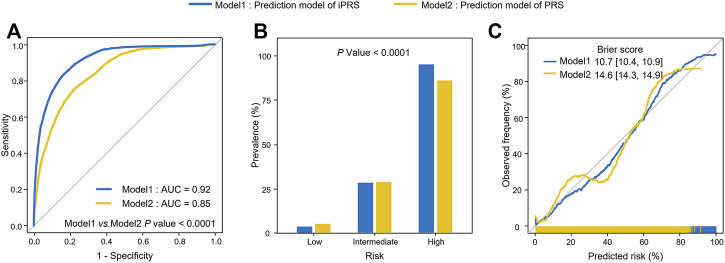
Polygenic risk score (PRS) is widely regarded as a predictor of genetic susceptibility to disease, applied to individuals to predict the risk of disease occurrence. When the gene-environment (G×E) interaction is considered, the traditional PRS prediction model directly uses PRS to interact with the environment without considering the interactions between each variant and environment, which may lead to prediction performance and risk stratification of complex diseases are not promising. We developed a method called interaction PRS (iPRS), reconstructing PRS by leveraging G×E interactions. Two extensive simulations evaluated prediction performance, risk stratification, and calibration performance of the iPRS prediction model, and compared it with the traditional PRS prediction model. Real data analysis was performed using existing data from the Prostate, Lung, Colorectal, and Ovarian (PLCO) Cancer Screening Trial study to predict genetic susceptibility, pack-years of smoking history, and G×E interactions in patients with lung cancer. Two extensive simulations indicated iPRS prediction model could improve the prediction performance of disease risk, the accuracy of risk stratification, and clinical calibration performance compared with the traditional PRS prediction model, especially when antagonism accounted for the majority of the interaction. PLCO real data analysis also suggested that the iPRS prediction model was superior to the PRS prediction model in predictive effect ( = 0.0205). IPRS prediction model could have a good application prospect in predicting disease risk, optimizing the screening of high-risk populations, and improving the clinical benefits of preventive interventions among populations.
多基因风险评分(PRS)被广泛认为是疾病遗传易感性的预测指标,应用于个体以预测疾病发生风险。当考虑基因-环境(G×E)相互作用时,传统的PRS预测模型直接使用PRS与环境进行交互,而不考虑每个变异与环境之间的相互作用,这可能导致复杂疾病的预测性能和风险分层效果不佳。我们开发了一种称为交互PRS(iPRS)的方法,通过利用G×E相互作用来重构PRS。两项广泛的模拟评估了iPRS预测模型的预测性能、风险分层和校准性能,并将其与传统的PRS预测模型进行了比较。使用来自前列腺、肺、结肠和卵巢(PLCO)癌症筛查试验研究的现有数据进行真实数据分析,以预测肺癌患者的遗传易感性、吸烟史包年数和G×E相互作用。两项广泛的模拟表明,与传统的PRS预测模型相比,iPRS预测模型可以提高疾病风险的预测性能、风险分层的准确性和临床校准性能,尤其是当拮抗作用占相互作用的大多数时。PLCO真实数据分析还表明,iPRS预测模型在预测效果方面优于PRS预测模型(P = 0.0205)。iPRS预测模型在预测疾病风险、优化高危人群筛查以及提高人群预防干预的临床效益方面可能具有良好的应用前景。