Wang Ziyang, Chang Ying, Liu Yue, Liu Bing, Zhen Junhui, Li Xiaobing, Lin Jiangong, Yu Qun, Lv Zhimei, Wang Rong
Department of Nephrology, Shandong Provincial Hospital, Shandong University, Jinan, Shandong 250021, China.
Department of Geriatrics, Chongqing General Hospital, Chongqing 401147, China.
Mol Ther Nucleic Acids. 2022 Mar 8;28:136-153. doi: 10.1016/j.omtn.2022.03.001. eCollection 2022 Jun 14.
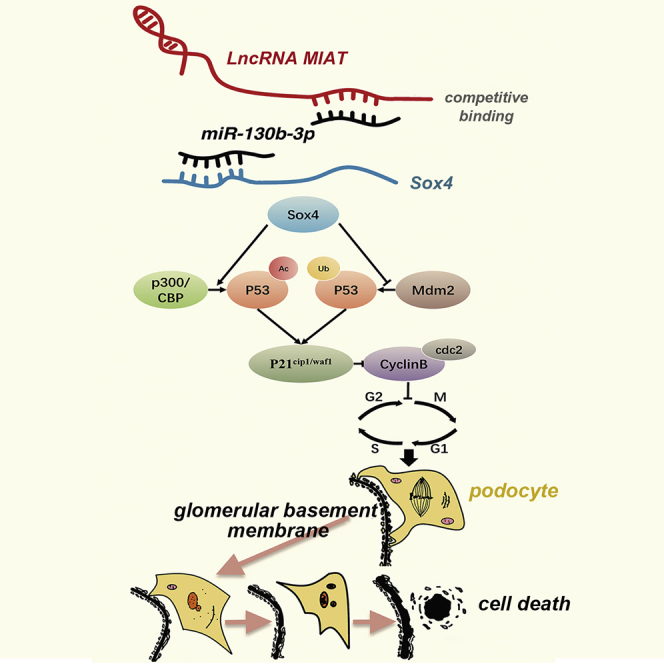
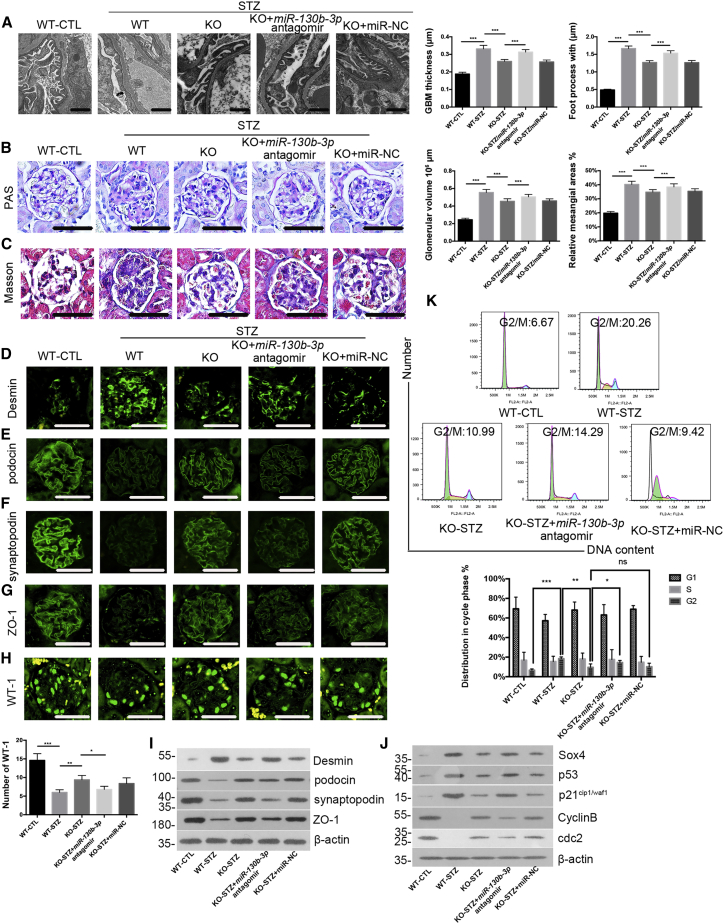
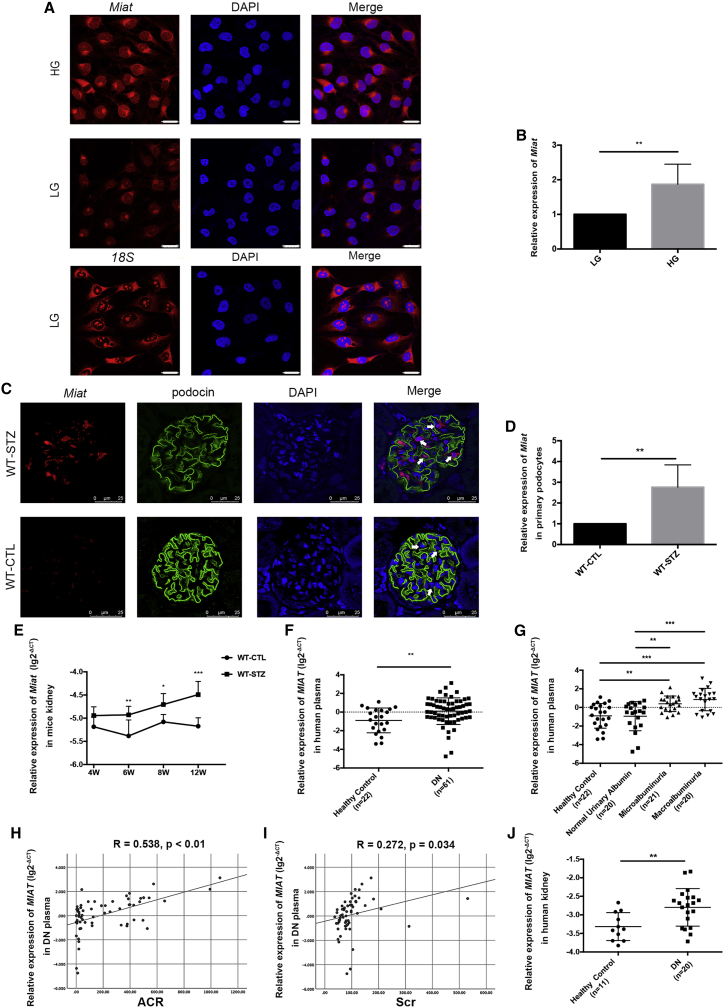
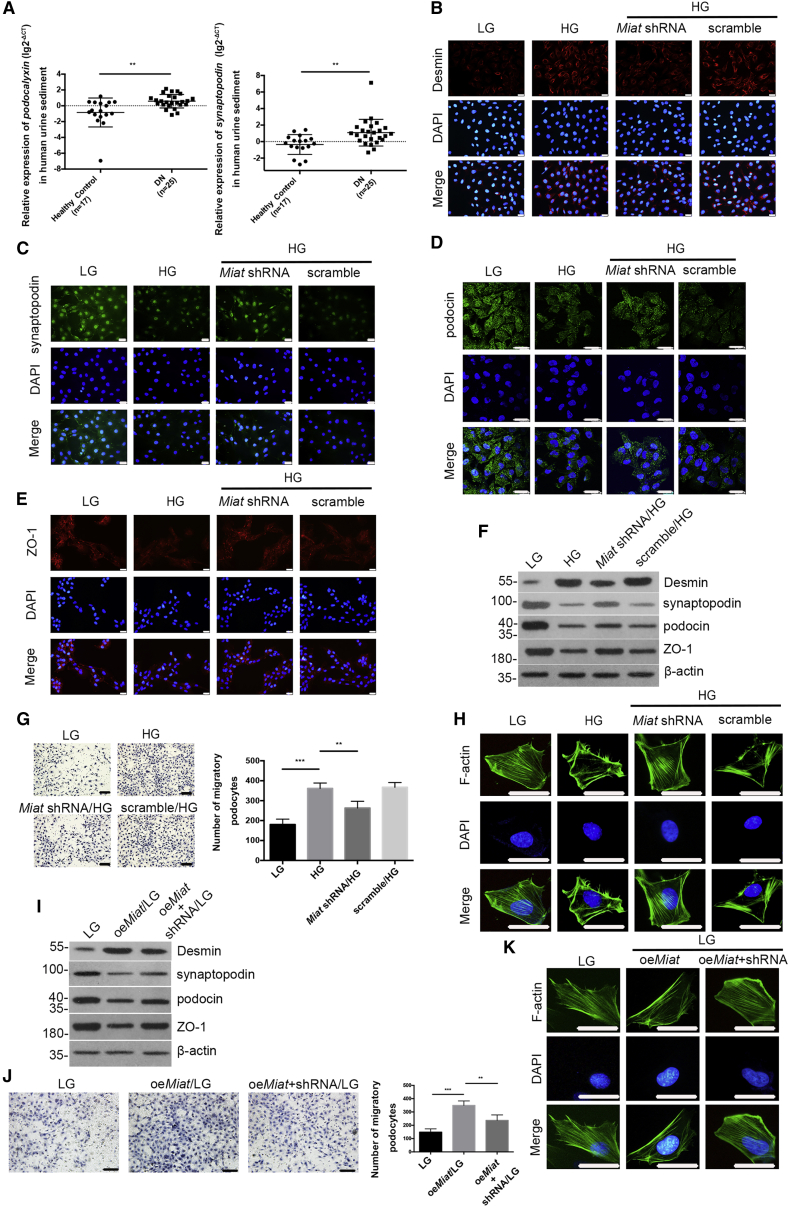
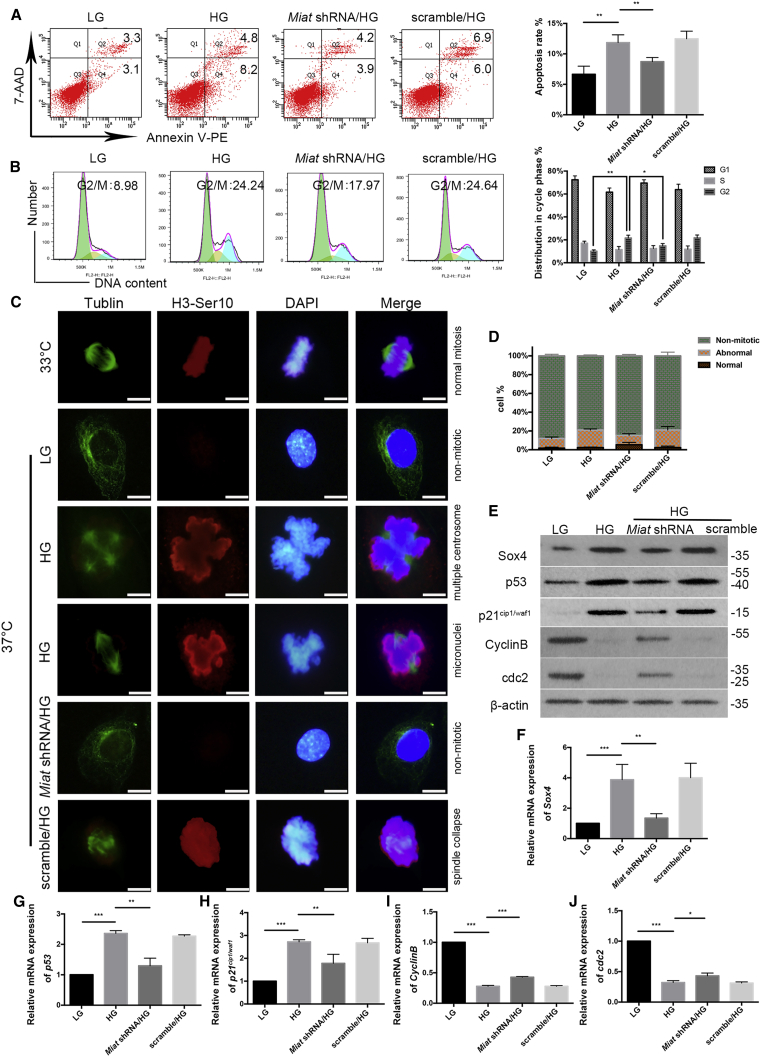
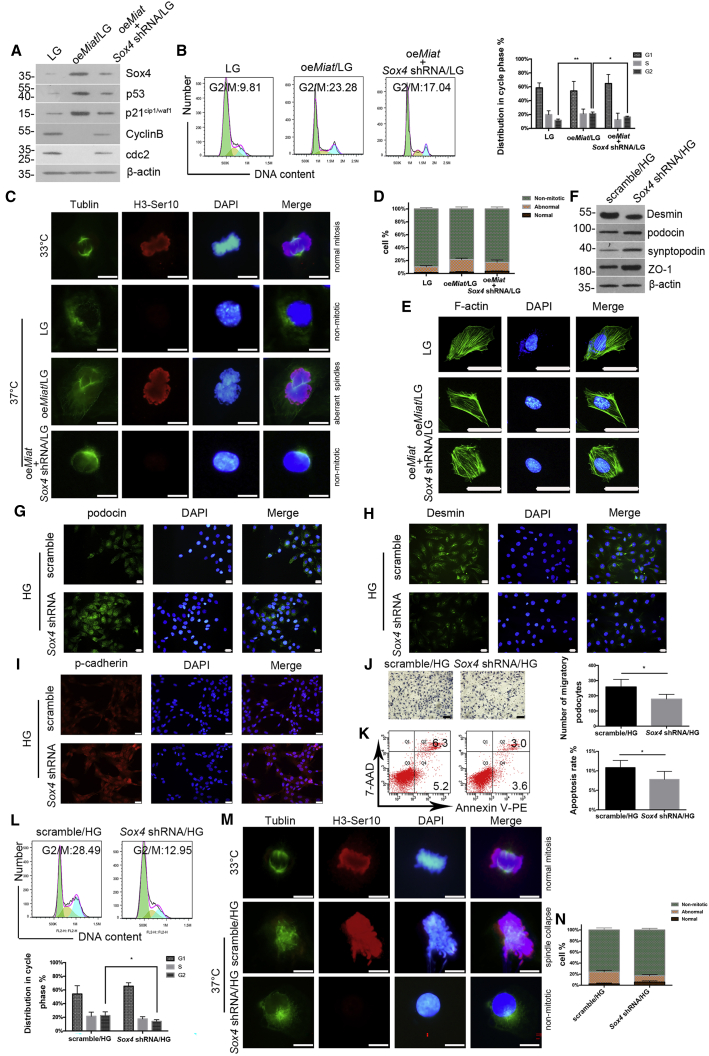
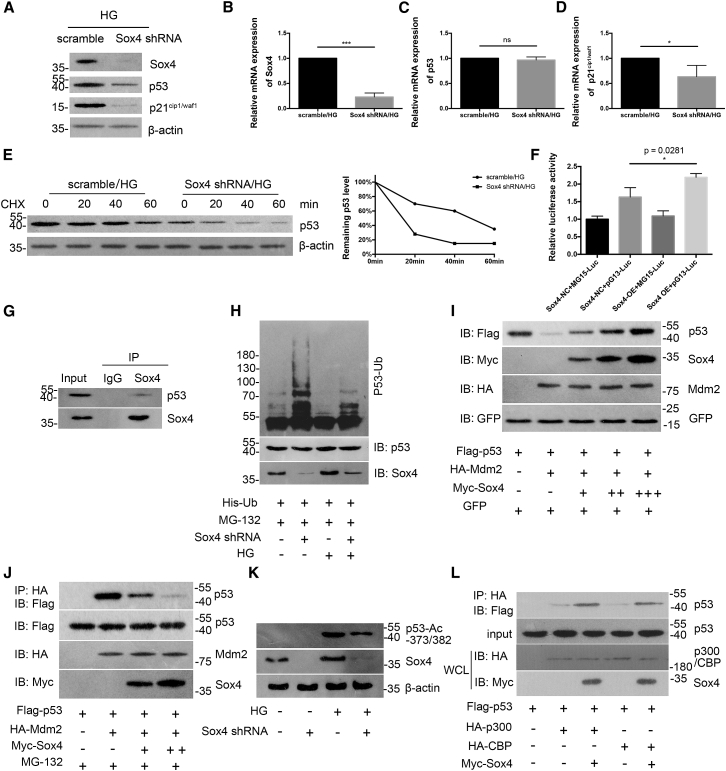
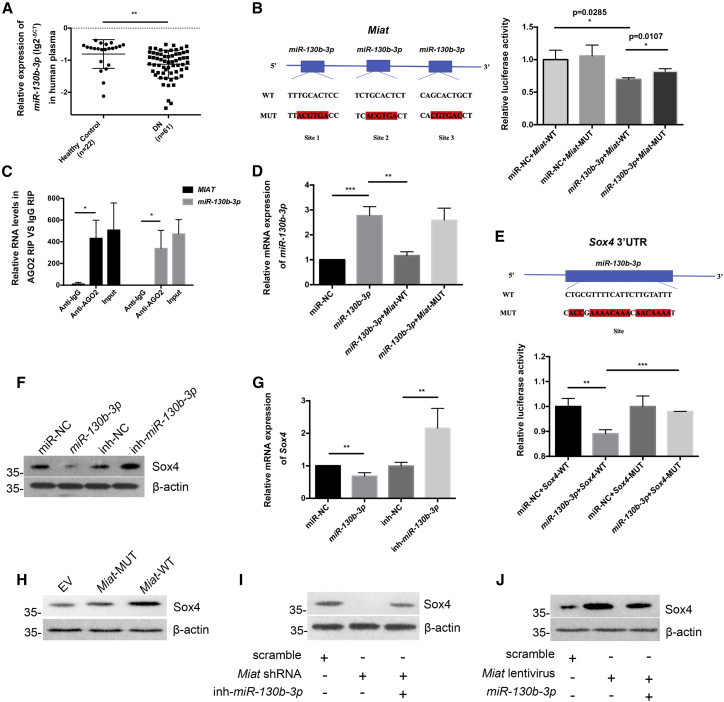
Podocyte damage is strongly associated with the progression of diabetic nephropathy. Mitotic catastrophe plays an essential role in accelerating podocyte loss and detachment from the glomerular basement membrane. In the current study, we observed that the long non-coding RNA (lncRNA) was noticeably upregulated in the plasma and kidney tissues of patients with diabetic nephropathy, and this upregulation was accompanied by higher albumin/creatinine ratios and serum creatinine levels. By generating CRISPR-Cas9 -knockout (KO) mice and employing vectors , we found that the depletion of expression significantly restored slit-diaphragm integrity, attenuated foot process effacement, prevented dedifferentiation, and suppressed mitotic catastrophe in podocytes during hyperglycemia. The mechanistic investigation revealed that increased Sox4 expression and subsequently regulated p53 ubiquitination and acetylation, thereby inhibiting the downstream factors CyclinB/cdc2 by enhancing p21 activity, and that interacted with Sox4 by sponging . Additionally, the inhibition of with an antagomir effectively enhanced glomerular podocyte injury and mitotic dysfunction, eventually exacerbating proteinuria. Based on these findings, may represent a therapeutic target for diabetic nephropathy.
足细胞损伤与糖尿病肾病的进展密切相关。有丝分裂灾难在加速足细胞丢失以及从肾小球基底膜脱离的过程中起关键作用。在本研究中,我们观察到长链非编码RNA(lncRNA)在糖尿病肾病患者的血浆和肾组织中显著上调,且这种上调伴随着更高的白蛋白/肌酐比值和血清肌酐水平。通过构建CRISPR-Cas9基因敲除(KO)小鼠并使用载体,我们发现该基因表达的缺失显著恢复了裂孔隔膜的完整性,减轻了足突消失,防止了去分化,并抑制了高血糖期间足细胞的有丝分裂灾难。机制研究表明,该基因增加了Sox4的表达,随后调节p53的泛素化和乙酰化,从而通过增强p21活性抑制下游因子CyclinB/cdc2,并且该基因通过与Sox4相互作用来发挥作用。此外,用反义寡核苷酸抑制该基因可有效加重肾小球足细胞损伤和有丝分裂功能障碍,最终加剧蛋白尿。基于这些发现,该基因可能是糖尿病肾病的一个治疗靶点。