Laboratory of Cancer Cell Biology, Department of Biochemistry, Gachon University School of Medicine, Incheon 21999, Republic of Korea.
Department of Health Sciences and Technology, GAIHST, Gachon University, Incheon 21999, Republic of Korea.
Neoplasia. 2019 Sep;21(9):882-892. doi: 10.1016/j.neo.2019.07.005. Epub 2019 Aug 3.
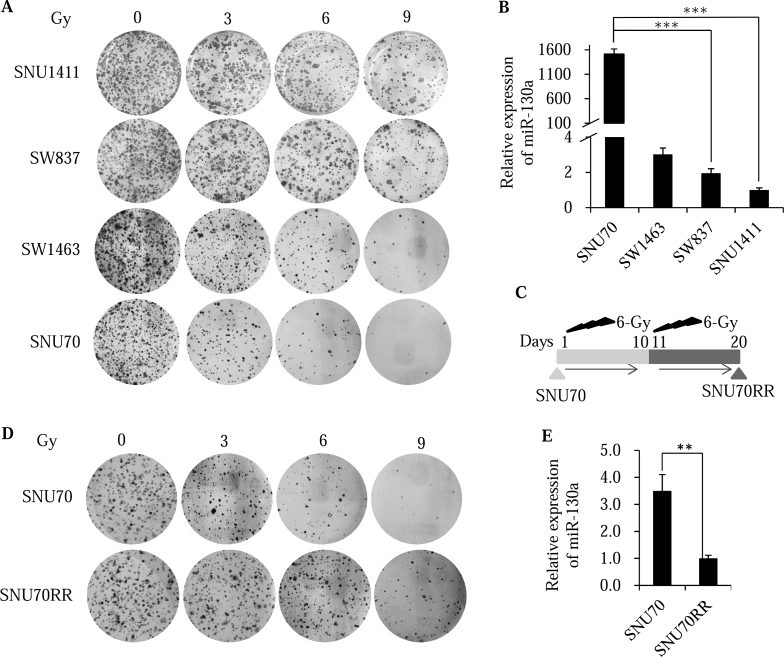
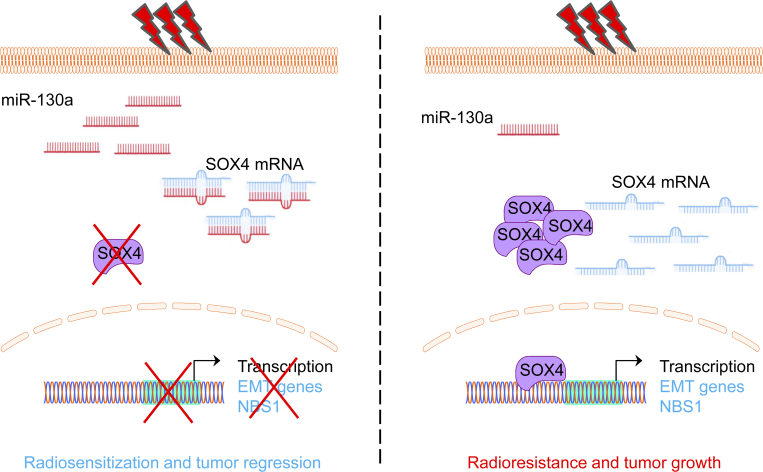
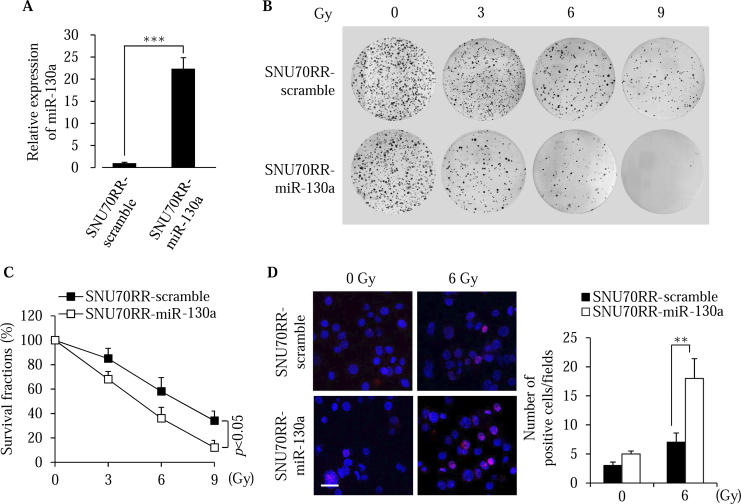
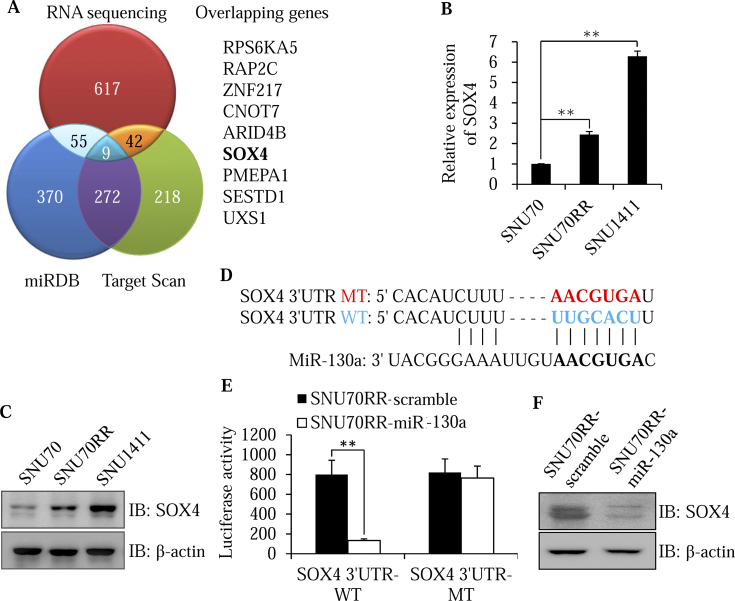
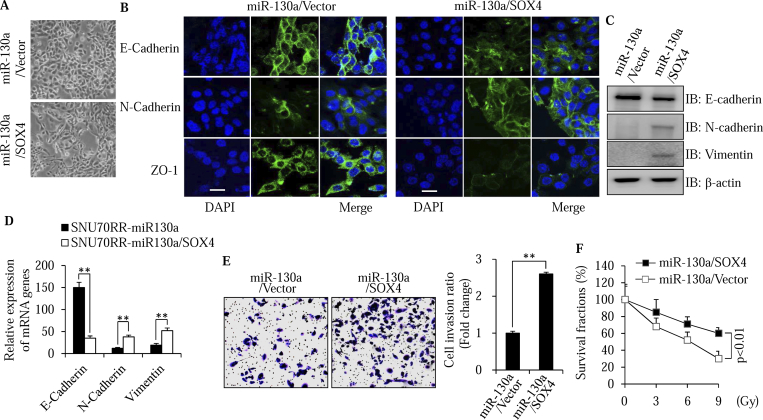
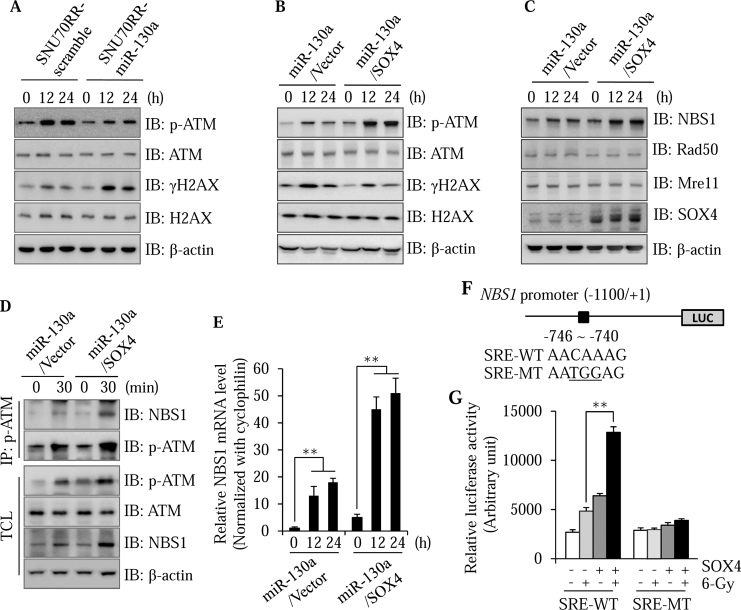
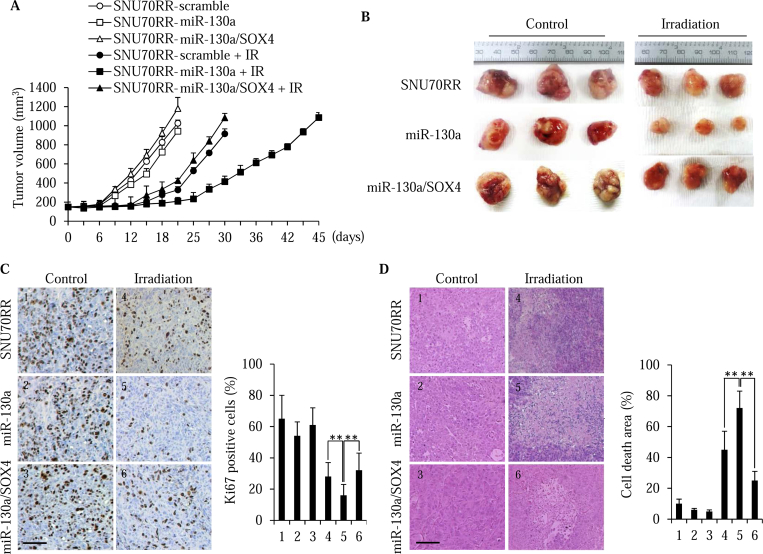
Radioresistance poses a major challenge in the treatment of advanced rectal cancer. Therefore, understanding the detailed mechanisms of radioresistance may improve patient response to irradiation and the survival rate. To identify the novel targets that modulate the radiosensitivity of rectal cancer, we performed small RNA sequencing with human rectal cancer cell lines. Through bioinformatics analysis, we selected microRNA-310a (miR-130a) as a promising candidate to elucidate radioresistance. miR-130a was dramatically upregulated in radiosensitive rectal cancer cells and overexpression of miR-130a promotes rectal cancer cell radiosensitivity. Mechanically, miR-130a reversed the epithelial-mesenchymal transition phenotype of rectal cancer cells following inhibition of cell invasion upon irradiation. Moreover, miR-130a also inhibited the repair of irradiation-induced DNA damage followed by cell death. We identified that SOX4 was a direct target of miR-130a. Overexpression of SOX4 reversed the promotion activity of miR-130a on radiosensitivity. Together, our findings suggest that miR-130a functions as a radiosensitizer in rectal cancer and reveals a potential therapeutic target and preoperative prognostic marker for radiotherapy.
放射抵抗性是治疗晚期直肠癌的主要挑战。因此,了解放射抵抗性的详细机制可能会提高患者对放疗的反应和生存率。为了确定调节直肠癌放射敏感性的新靶标,我们用人直肠癌细胞系进行了小 RNA 测序。通过生物信息学分析,我们选择 microRNA-310a (miR-130a) 作为一个有前途的候选物来阐明放射抵抗性。miR-130a 在放射敏感的直肠癌细胞中显著上调,过表达 miR-130a 可促进直肠癌细胞的放射敏感性。机制上,miR-130a 抑制细胞侵袭后,逆转了照射诱导的直肠癌细胞上皮-间充质转化表型。此外,miR-130a 还抑制了照射诱导的 DNA 损伤的修复,从而导致细胞死亡。我们鉴定出 SOX4 是 miR-130a 的直接靶标。SOX4 的过表达逆转了 miR-130a 对放射敏感性的促进作用。总之,我们的研究结果表明,miR-130a 作为直肠癌的放射增敏剂发挥作用,并揭示了放射治疗的潜在治疗靶点和术前预后标志物。