Department of Thoracic Surgery, Shaoxing People's Hospital, Shaoxing, China.
J Clin Lab Anal. 2022 Jun;36(6):e24419. doi: 10.1002/jcla.24419. Epub 2022 Apr 11.
Integrin β (ITGB) superfamily plays an essential role in the intercellular connection and signal transmission. It was exhibited that overexpressing of ITGB family members promotes the malignant progression of lung adenocarcinoma (LUAD), but the relationship between ITGB superfamily and the LUAD prognosis remains unclear.
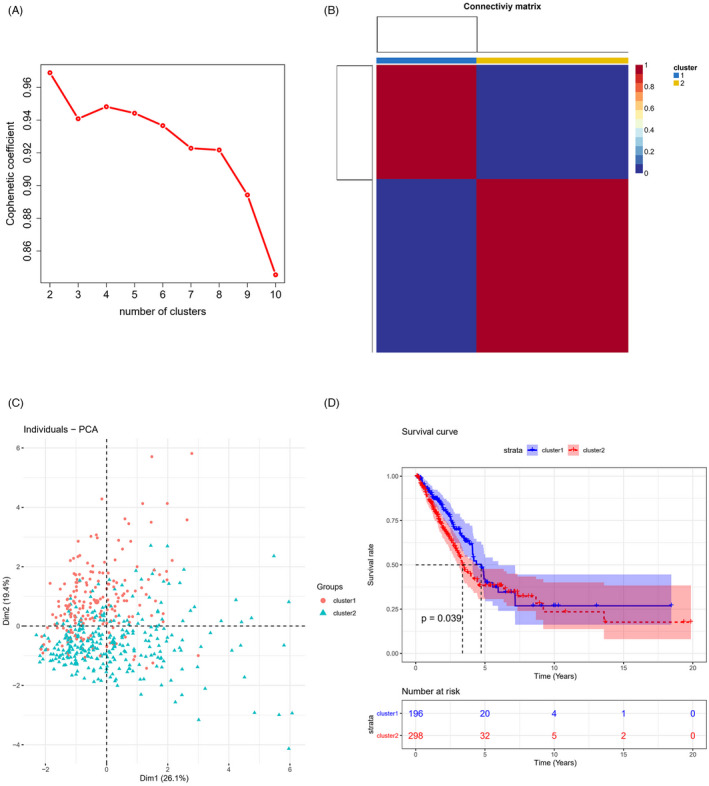
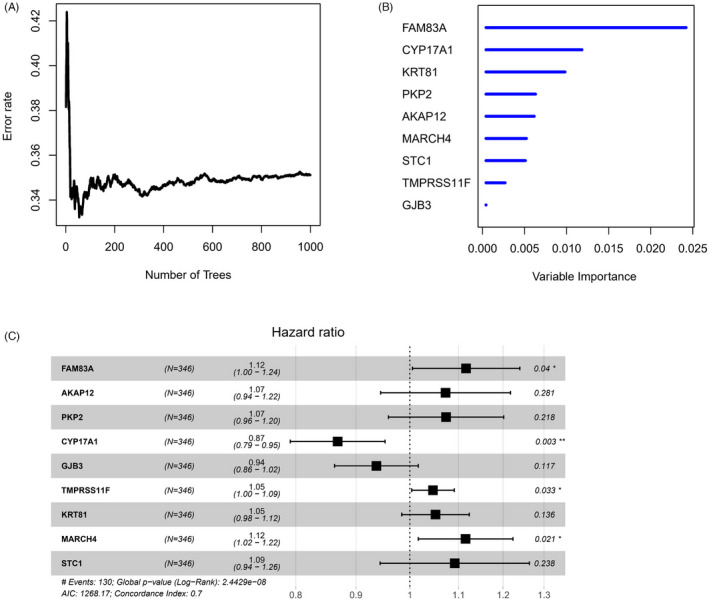
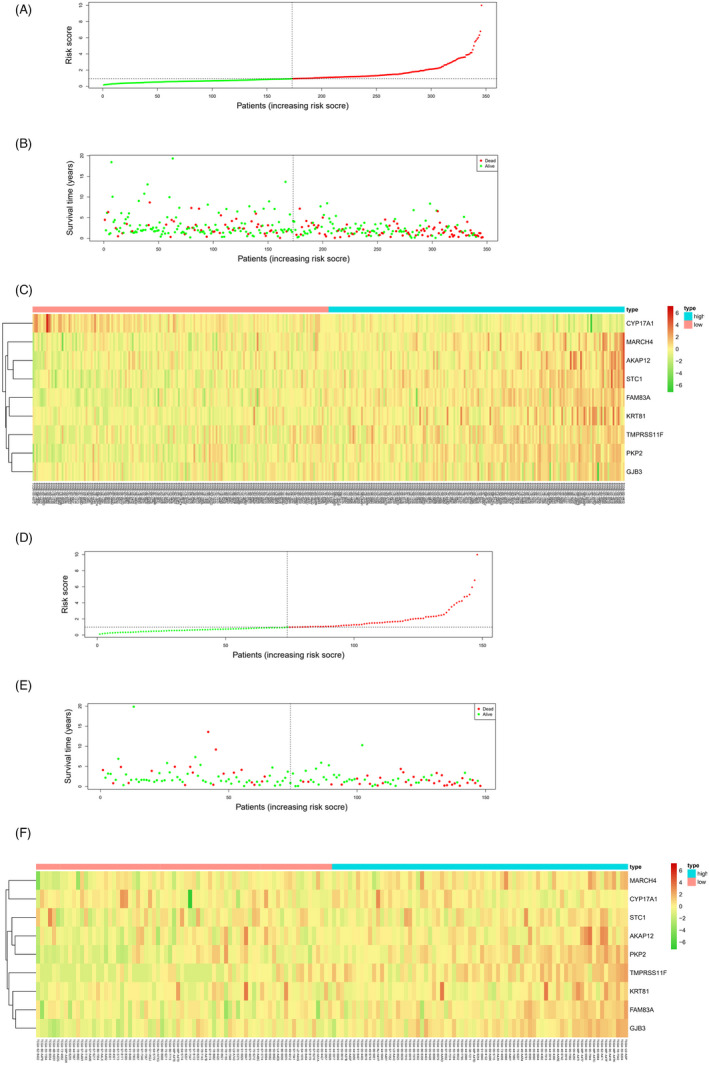
In this study, the samples were assigned to different subgroups utilizing non-negative matrix factorization clustering according to the expression of ITGB family members in LUAD. Kaplan-Meier (K-M) survival analysis revealed the significant differences in the prognosis between different ITGB subgroups. Subsequently, we screened differentially expressed genes among different subgroups and conducted univariate Cox analysis, random forest feature selection, and multivariate Cox analysis. 9-feature genes (FAM83A, AKAP12, PKP2, CYP17A1, GJB3, TMPRSS11F, KRT81, MARCH4, and STC1) in the ITGB superfamily were selected to establish a prognostic assessment model for LAUD.
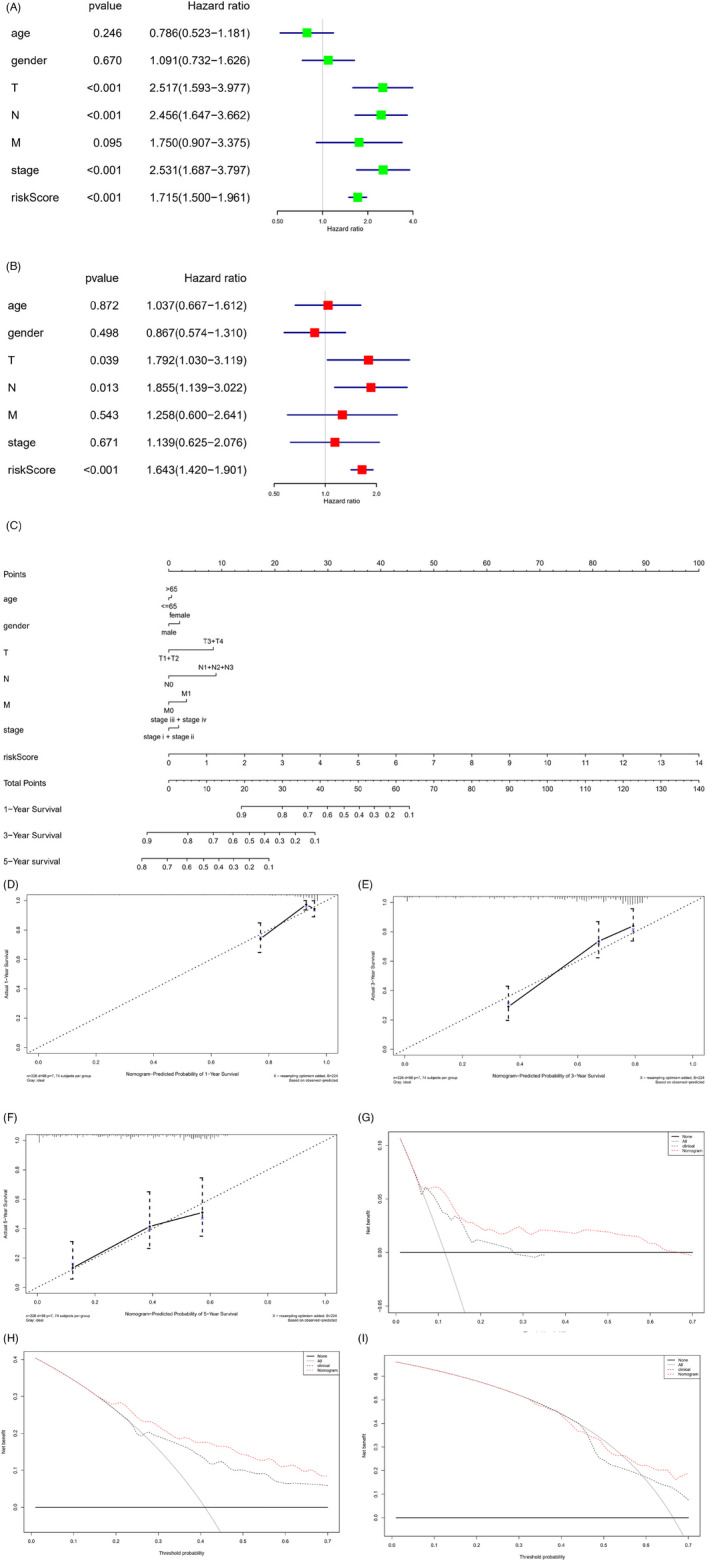
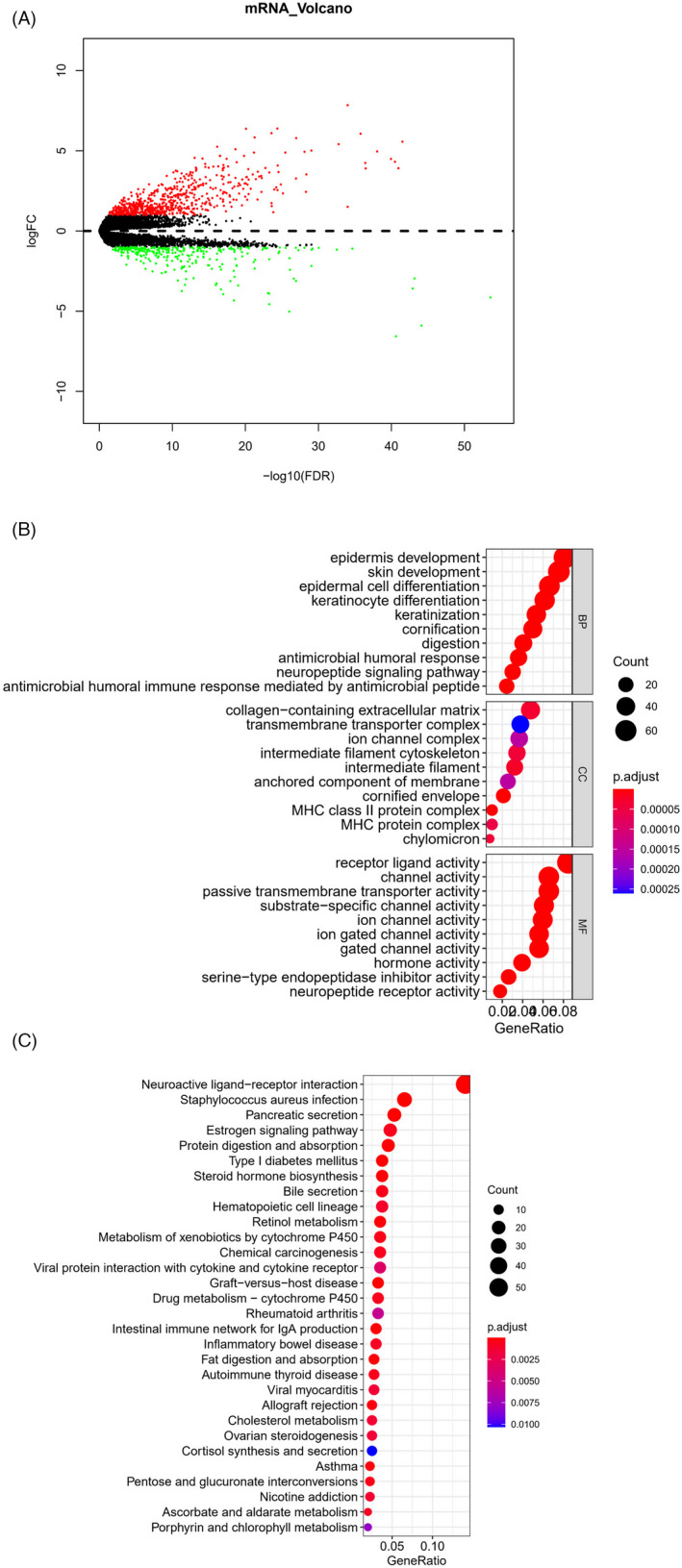
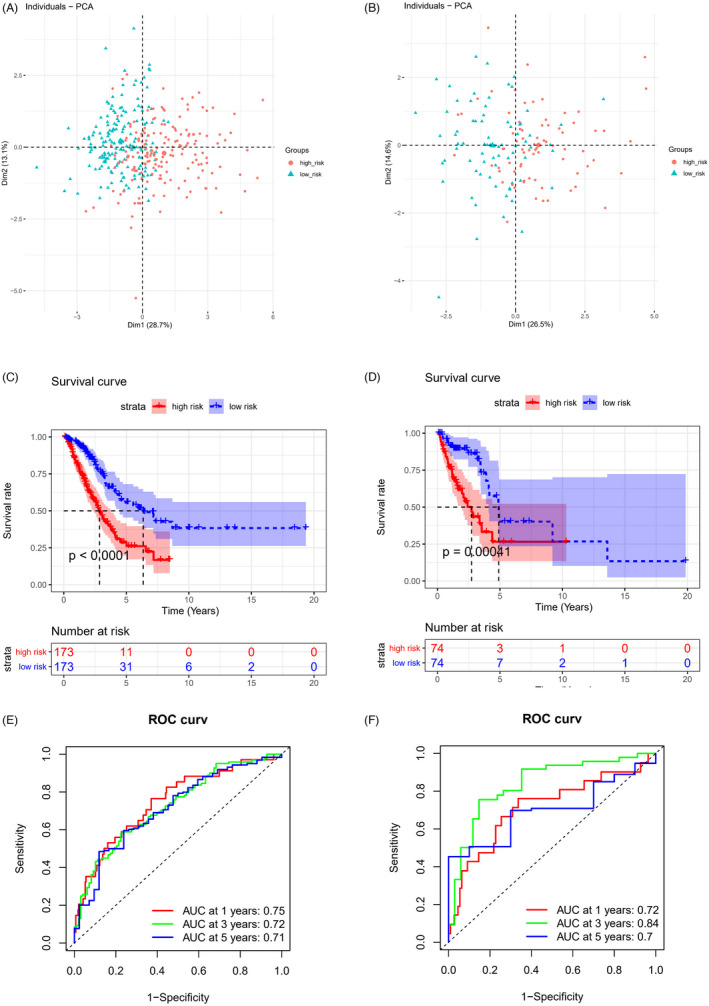
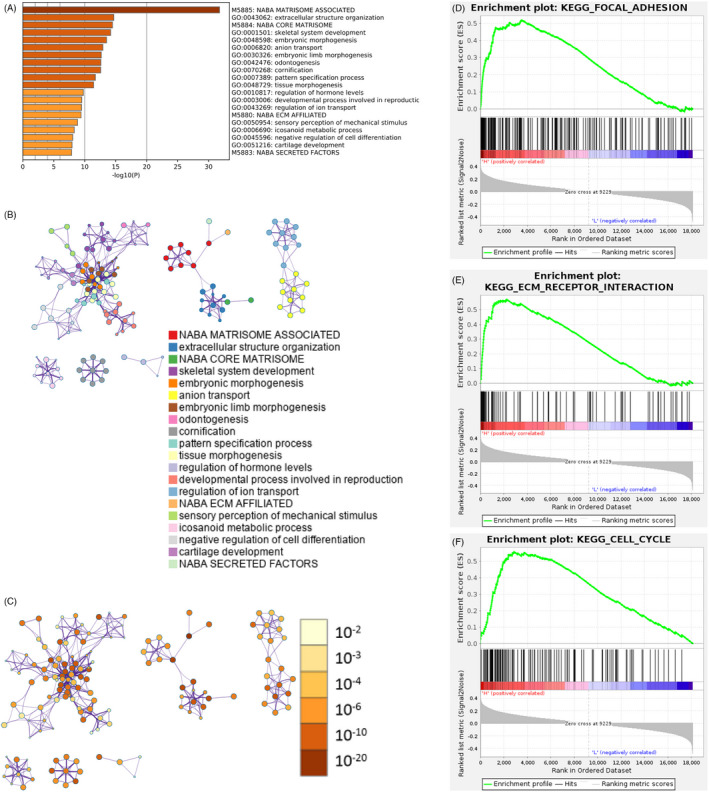
In accordance with the median risk score, LUAD samples were divided into high- and low-risk groups. The receiver operating characteristic (ROC) curve of LUAD patients' survival was predicted via K-M survival curve and principal component analysis dimensionality reduction. This model was found to have a favorable performance in LUAD prognostic assessment. Gene Ontology (GO) and Kyoto Encyclopedia of Genes and Genomes (KEGG) analyses of differentially expressed genes between groups and Gene Set Enrichment Analysis (GSEA) of intergroup samples confirmed that the high- and low-risk groups had evident differences mainly in the function of extracellular matrix (ECM) interaction. Risk score and univariate and multivariate Cox regression analyses of clinical factors showed that the prognostic model could be applied as an independent prognostic factor for LUAD. Then, we draw the nomogram of 1-, 3-, and 5-year survival of LUAD patients predicted with the risk score and clinical factors. Calibration curve and clinical decision curve proved the favorable predictive ability of nomogram.
We constructed a LUAD prognostic risk model based on the ITGB superfamily, which can provide guidance for clinicians on their prognostic judgment.
整合素β(ITGB)超家族在细胞间连接和信号转导中发挥着重要作用。已有研究表明,ITGB 家族成员的过表达促进了肺腺癌(LUAD)的恶性进展,但 ITGB 超家族与 LUAD 预后之间的关系尚不清楚。
本研究根据 LUAD 中 ITGB 家族成员的表达,利用非负矩阵分解聚类将样本分为不同亚组。Kaplan-Meier(K-M)生存分析显示了不同 ITGB 亚组之间预后的显著差异。随后,我们筛选了不同亚组之间差异表达的基因,并进行了单因素 Cox 分析、随机森林特征选择和多因素 Cox 分析。从 ITGB 超家族中选择 9 个特征基因(FAM83A、AKAP12、PKP2、CYP17A1、GJB3、TMPRSS11F、KRT81、MARCH4 和 STC1),建立了用于评估 LUAD 的预后评估模型。
根据中位数风险评分,将 LUAD 样本分为高风险组和低风险组。通过 K-M 生存曲线和主成分分析降维预测 LUAD 患者的生存的接受者操作特征(ROC)曲线。该模型在 LUAD 预后评估中表现良好。组间差异表达基因的基因本体(GO)和京都基因与基因组百科全书(KEGG)分析以及组间样本的基因集富集分析(GSEA)证实,高低风险组在细胞外基质(ECM)相互作用的功能上存在明显差异。风险评分以及临床因素的单因素和多因素 Cox 回归分析表明,该预后模型可作为 LUAD 的独立预后因素。然后,我们绘制了基于风险评分和临床因素预测的 LUAD 患者 1、3 和 5 年生存的诺莫图。校准曲线和临床决策曲线证明了诺莫图具有良好的预测能力。
我们构建了一个基于 ITGB 超家族的 LUAD 预后风险模型,可为临床医生的预后判断提供指导。