Wisconsin National Primate Research Center, University of Wisconsin Graduate School, Madison, WI.
Department of Pathobiological Sciences, School of Veterinary Medicine, University of Wisconsin-Madison, Madison, WI.
Blood Adv. 2022 Sep 27;6(18):5267-5278. doi: 10.1182/bloodadvances.2022006984.
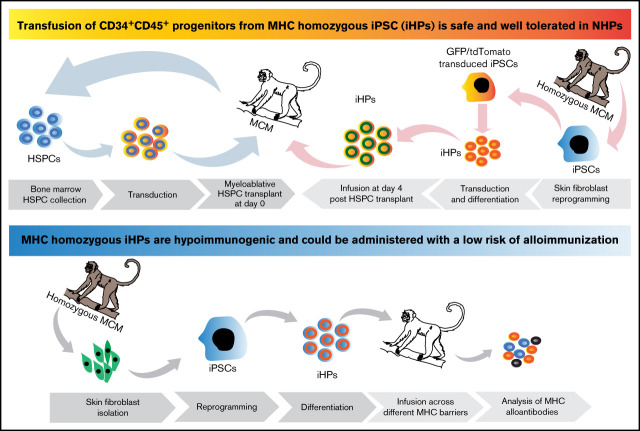
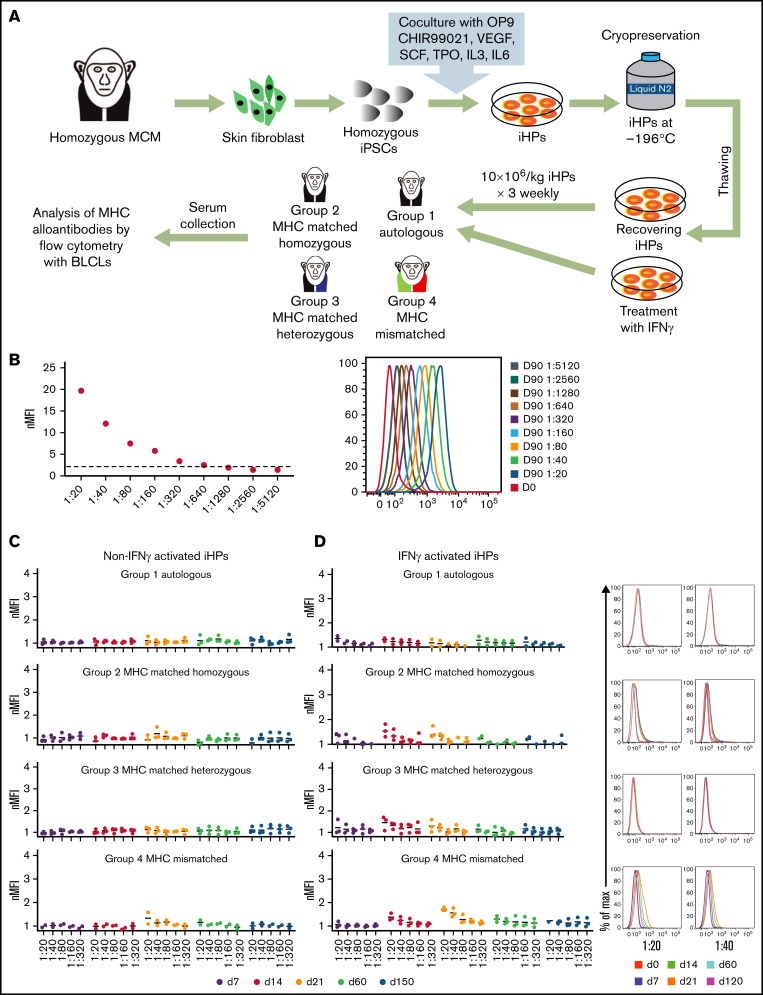
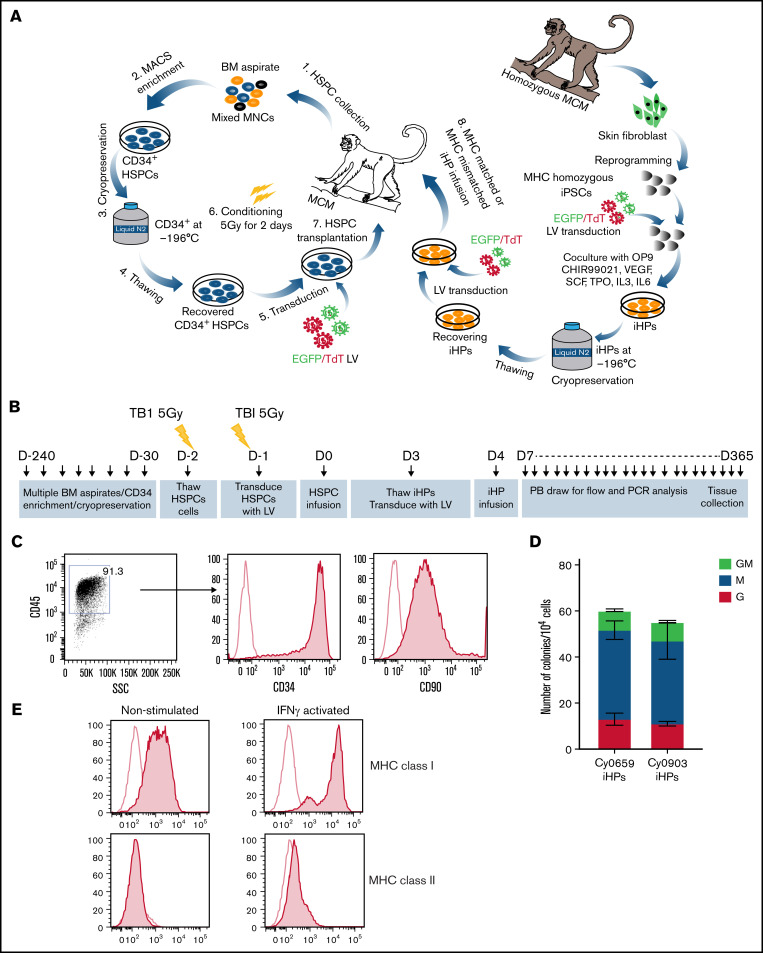
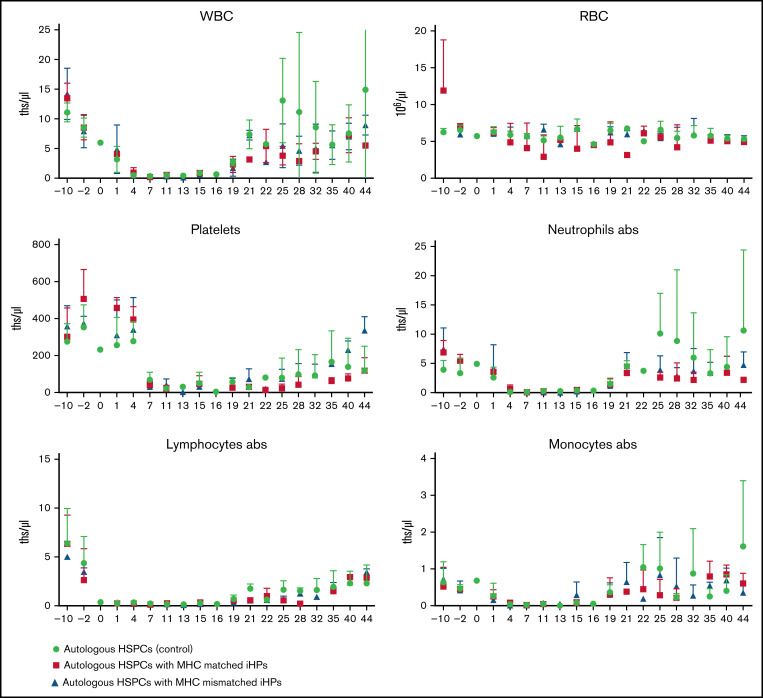
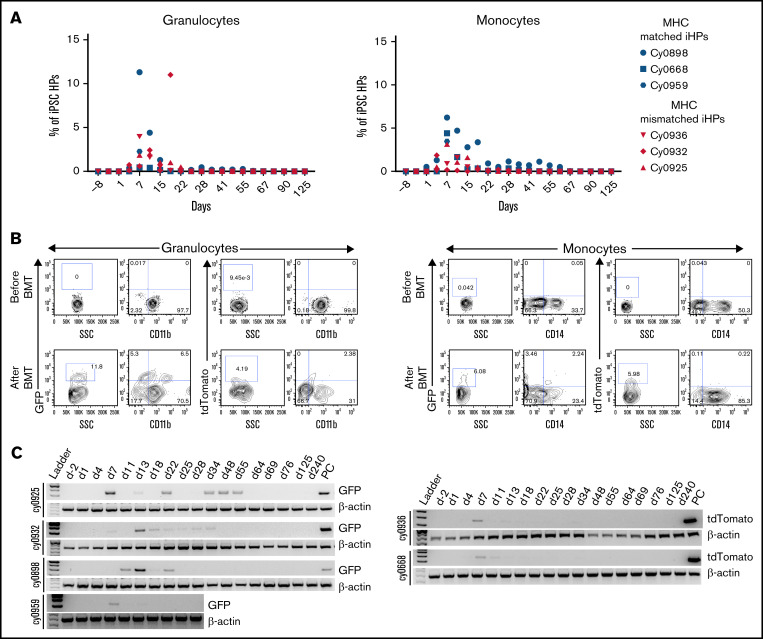
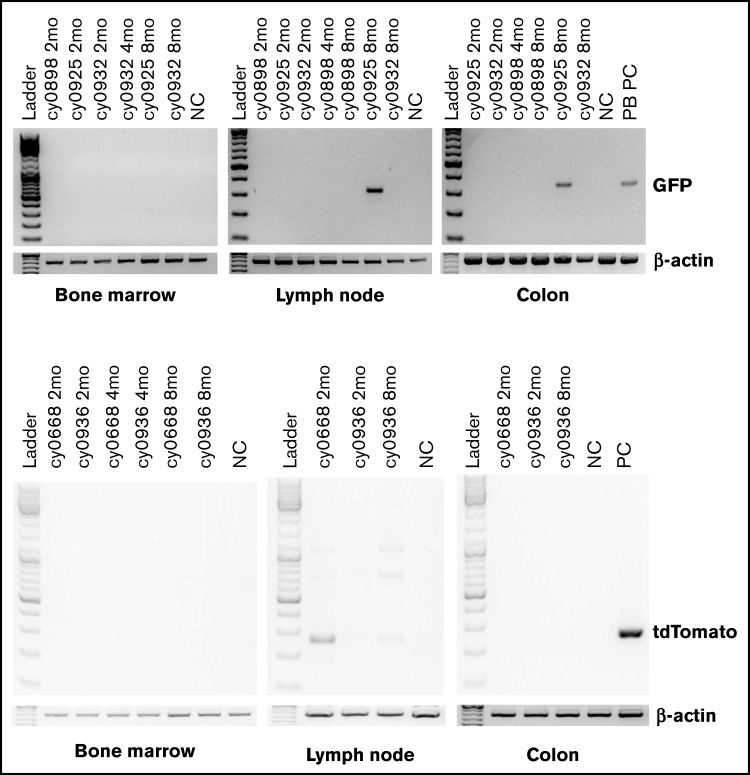
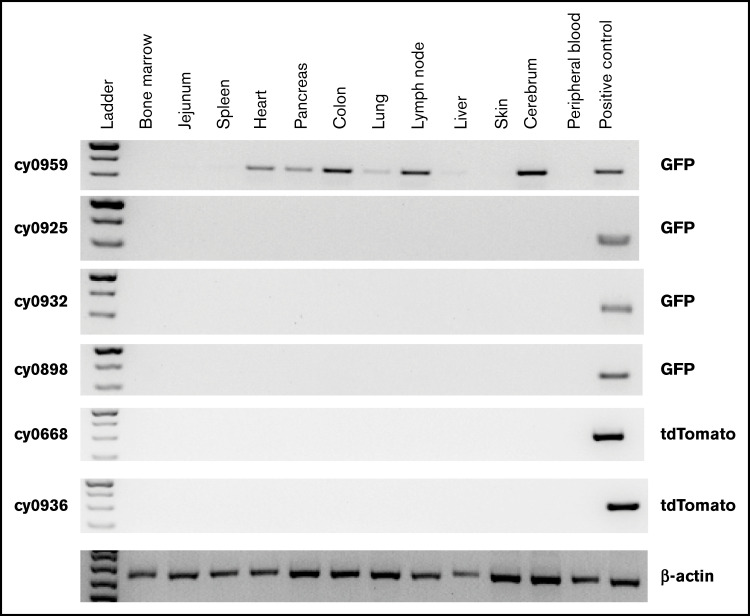
Administration of ex vivo expanded somatic myeloid progenitors has been explored as a way to facilitate a more rapid myeloid recovery and improve overall survival after myeloablation. Recent advances in induced pluripotent stem cell (iPSC) technologies have created alternative platforms for supplying off-the-shelf immunologically compatible myeloid progenitors, including cellular products derived from major histocompatibility complex (MHC) homozygous superdonors, potentially increasing the availability of MHC-matching cells and maximizing the utility of stem cell banking. However, the teratogenic and tumorigenic potential of iPSC-derived progenitor cells and whether they will induce alloreactive antibodies upon transfer remain unclear. We evaluated the safety and efficacy of using CD34+CD45+ hematopoietic progenitors derived from MHC homozygous iPSCs (iHPs) to treat cytopenia after myeloablative hematopoietic stem cell (HSC) transplantation in a Mauritian cynomolgus macaque (MCM) nonhuman primate (NHP) model. We demonstrated that infusion of iHPs was well tolerated and safe, observing no teratomas or tumors in the MCMs up to 1 year after HSC transplantation and iHP infusion. Importantly, the iHPs also did not induce significant levels of alloantibodies in MHC-matched or -mismatched immunocompetent MCMs, even after increasing MHC expression on iHPs with interferon-γ. These results support the feasibility of iHP use in the setting of myeloablation and suggest that iHP products pose a low risk of inducing alloreactive antibodies.
异体造血祖细胞的体外扩增已被探索用于促进骨髓清除后更快的髓系恢复和提高总生存率。诱导多能干细胞(iPSC)技术的最新进展为提供现成的免疫兼容的髓系祖细胞提供了替代平台,包括来自主要组织相容性复合物(MHC)纯合超供体的细胞产品,可能增加 MHC 匹配细胞的可用性,并最大限度地利用干细胞储存。然而,iPSC 衍生的祖细胞的致瘤性和肿瘤形成潜力,以及它们在转移后是否会引起同种反应性抗体,仍然不清楚。我们评估了使用 MHC 纯合 iPSC(iHP)衍生的 CD34+CD45+造血祖细胞治疗骨髓清除性造血干细胞(HSC)移植后细胞减少症的安全性和疗效,在毛里求斯猕猴(MCM)非人类灵长类动物(NHP)模型中。我们证明了 iHP 的输注耐受良好且安全,在 HSC 移植和 iHP 输注后长达 1 年的时间内,MCM 中未观察到畸胎瘤或肿瘤。重要的是,即使在用干扰素-γ增加 iHP 上的 MHC 表达后,iHP 也不会在 MHC 匹配或不匹配的免疫活性 MCM 中诱导产生显著水平的同种抗体。这些结果支持 iHP 在骨髓清除背景下使用的可行性,并表明 iHP 产品引起同种反应性抗体的风险较低。