• 文献检索
  • 文档翻译
  • 深度研究
  • 学术资讯
  • Suppr Zotero 插件Zotero 插件
  • 邀请有礼
  • 套餐&价格
  • 历史记录
应用&插件
Suppr Zotero 插件Zotero 插件浏览器插件Mac 客户端Windows 客户端微信小程序
定价
高级版会员购买积分包购买API积分包
服务
文献检索文档翻译深度研究API 文档MCP 服务
关于我们
关于 Suppr公司介绍联系我们用户协议隐私条款
关注我们

Suppr 超能文献

核心技术专利:CN118964589B侵权必究
粤ICP备2023148730 号-1Suppr @ 2026

文献检索

告别复杂PubMed语法,用中文像聊天一样搜索,搜遍4000万医学文献。AI智能推荐,让科研检索更轻松。

立即免费搜索

文件翻译

保留排版,准确专业,支持PDF/Word/PPT等文件格式,支持 12+语言互译。

免费翻译文档

深度研究

AI帮你快速写综述,25分钟生成高质量综述,智能提取关键信息,辅助科研写作。

立即免费体验

定义能量密集型、营养贫乏的食物和饮料,并估算可自由支配的能量量。

Defining Energy-Dense, Nutrient-Poor Food and Drinks and Estimating the Amount of Discretionary Energy.

机构信息

National Food Institute, Technical University of Denmark, 2800 Kongens Lyngby, Denmark.

出版信息

Nutrients. 2022 Apr 1;14(7):1477. doi: 10.3390/nu14071477.

DOI:10.3390/nu14071477
PMID:35406090
原文链接:https://pmc.ncbi.nlm.nih.gov/articles/PMC9002576/
Abstract

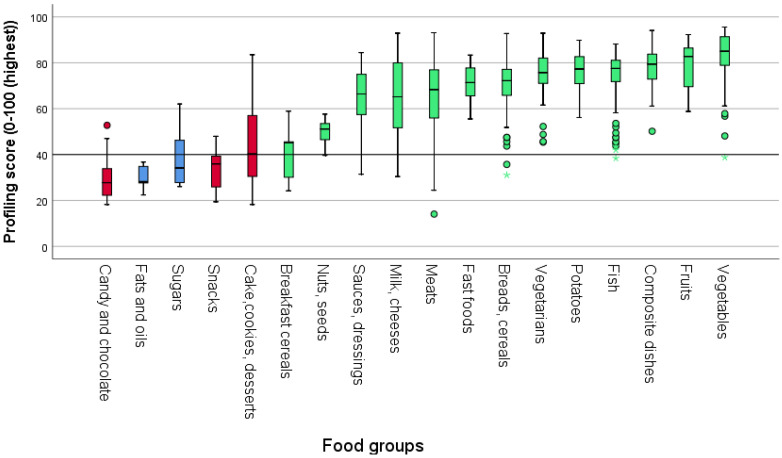
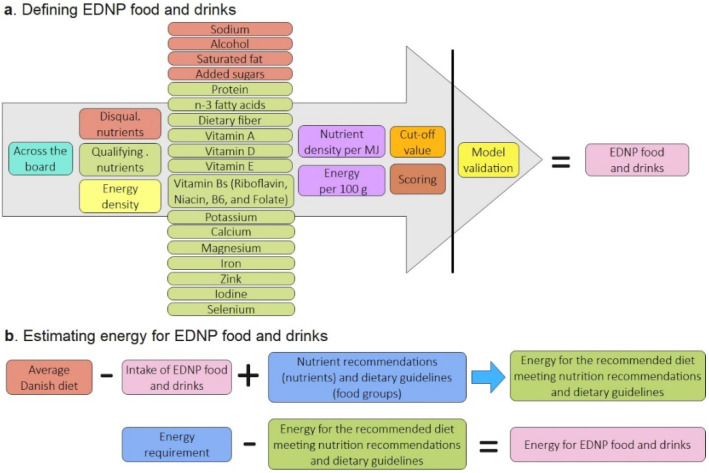
Overconsumption of energy provided by energy-dense, nutrient-poor (EDNP) food and drinks increases the risk of unhealthy weight gain and of obesity-related health outcomes. The aim of this study was to develop a nutrient profiling model for classifying EDNP food and drinks and to estimate the amount of discretionary energy for EDNP food and drinks in a recommended diet. A stepwise approach was used first to develop a nutrient profiling model for classifying EDNP food and drinks and then to estimate the amount of discretionary energy in a recommended diet using diet modeling. The nutrition profiling model comprised 24 macro- and micronutrients and energy density. The model classified 67% of 1482 foods and 73% of 161 drinks correctly as EDNP food and drinks compared with an expert-adjusted model. Sweets, chocolate, cake, cookies and biscuits, sweet and salty snacks, sugar-sweetened and artificially sweetened drinks, and alcoholic drinks were classified as EDNP food and drinks. The estimated amount of discretionary energy for EDNP food and drinks was 4-6% of the energy requirements for 4-75-year-old Danes. It seems prudent to have special attention on EDNP food and drinks in dietary guidelines and future public health initiatives to avoid overconsumption of energy.

摘要

能量密集、营养贫乏(EDNP)的食物和饮料摄入过多会增加不健康体重增加和肥胖相关健康后果的风险。本研究旨在开发一种用于分类 EDNP 食物和饮料的营养成分分析模型,并估计推荐饮食中 EDNP 食物和饮料的可自由支配能量。首先采用逐步方法开发了一种用于分类 EDNP 食物和饮料的营养成分分析模型,然后使用饮食建模来估计推荐饮食中的可自由支配能量。营养成分分析模型包括 24 种宏量和微量营养素以及能量密度。与专家调整模型相比,该模型正确分类了 1482 种食品中的 67%和 161 种饮料中的 73%为 EDNP 食品和饮料。甜食、巧克力、蛋糕、饼干和曲奇、甜咸小吃、含糖和人工甜味饮料以及含酒精饮料被归类为 EDNP 食品和饮料。EDNP 食物和饮料的可自由支配能量估计量占 4-75 岁丹麦人能量需求的 4-6%。在饮食指南和未来的公共卫生倡议中,似乎需要特别关注 EDNP 食物和饮料,以避免过度摄入能量。
https://cdn.ncbi.nlm.nih.gov/pmc/blobs/bdaf/9002576/9d6bb7b32d2f/nutrients-14-01477-g002.jpg
https://cdn.ncbi.nlm.nih.gov/pmc/blobs/bdaf/9002576/89678381f49f/nutrients-14-01477-g001.jpg
https://cdn.ncbi.nlm.nih.gov/pmc/blobs/bdaf/9002576/9d6bb7b32d2f/nutrients-14-01477-g002.jpg
https://cdn.ncbi.nlm.nih.gov/pmc/blobs/bdaf/9002576/89678381f49f/nutrients-14-01477-g001.jpg
https://cdn.ncbi.nlm.nih.gov/pmc/blobs/bdaf/9002576/9d6bb7b32d2f/nutrients-14-01477-g002.jpg

相似文献

1
Defining Energy-Dense, Nutrient-Poor Food and Drinks and Estimating the Amount of Discretionary Energy.定义能量密集型、营养贫乏的食物和饮料,并估算可自由支配的能量量。
Nutrients. 2022 Apr 1;14(7):1477. doi: 10.3390/nu14071477.
2
Consumption of energy-dense, nutrient-poor foods by adult Americans: nutritional and health implications. The third National Health and Nutrition Examination Survey, 1988-1994.美国成年人对能量密集、营养匮乏食物的消费:营养与健康影响。第三次全国健康和营养检查调查,1988 - 1994年。
Am J Clin Nutr. 2000 Oct;72(4):929-36. doi: 10.1093/ajcn/72.4.929.
3
Strategies to Reduce Consumption of Unhealthy Foods and Beverages: Scenario Modeling to Estimate the Impact on the Australian Population's Energy and Nutrient Intakes.减少食用不健康食品和饮料的策略:情景建模估计对澳大利亚人口能量和营养素摄入的影响。
J Acad Nutr Diet. 2021 Aug;121(8):1463-1483. doi: 10.1016/j.jand.2020.12.003. Epub 2021 Jan 22.
4
Energy-dense, nutrient-poor food and beverage sales in Australia: where and when products are sold, and how sales are changing over time.澳大利亚能量密集型、营养贫乏型食品和饮料销售:产品何时何地销售,以及销售随时间如何变化。
Public Health Nutr. 2021 Feb;24(2):193-202. doi: 10.1017/S1368980020002347. Epub 2020 Aug 12.
5
Dietary intake of energy-dense, nutrient-poor and nutrient-dense food sources in children with cystic fibrosis.囊性纤维化患儿能量密集型、营养贫乏型和营养密集型食物来源的饮食摄入。
J Cyst Fibros. 2018 Nov;17(6):804-810. doi: 10.1016/j.jcf.2018.03.011. Epub 2018 May 1.
6
An independent audit of the Australian food industry's voluntary front-of-pack nutrition labelling scheme for energy-dense nutrition-poor foods.澳大利亚食品行业自愿使用的高能量、低营养食品包装营养标签计划的独立审计。
Eur J Clin Nutr. 2013 Jan;67(1):31-5. doi: 10.1038/ejcn.2012.179. Epub 2012 Nov 21.
7
Beverage Consumption in Relation to Discretionary Food Intake and Diet Quality among US Adults, 2003 to 2012.2003年至2012年美国成年人饮料消费与自由支配食物摄入量及饮食质量的关系
J Acad Nutr Diet. 2016 Jan;116(1):28-37. doi: 10.1016/j.jand.2015.08.009. Epub 2015 Sep 11.
8
Not enough fruit and vegetables or too many cookies, candies, salty snacks, and soft drinks?水果和蔬菜摄入不足或饼干、糖果、咸零食和软饮料摄入过多?
Public Health Rep. 2010 Jan-Feb;125(1):88-95. doi: 10.1177/003335491012500112.
9
Children's consumption of energy-dense nutrient-poor foods, fruit and vegetables: are they related? An analysis of data from a cross sectional survey.儿童对高能量、低营养食物、水果和蔬菜的消费:它们之间有关联吗?对横断面调查数据的分析。
Health Promot J Austr. 2011 Dec;22(3):210-6. doi: 10.1071/he11210.
10
Socio-Psychological Factors Associated with Young Australian Adults' Consumption of Energy Dense and Nutrient Poor (EDNP) Foods.与澳大利亚年轻成年人食用能量密集型且营养不足(EDNP)食物相关的社会心理因素。
Nutrients. 2022 Feb 15;14(4):812. doi: 10.3390/nu14040812.

引用本文的文献

1
Discretionary Food Consumption Patterns of Polish Schoolchildren in Relation to Anthropometric, Socio-Demographic, and Lifestyle Factors: Report from the Junior-Edu-Żywienie (JEŻ) Project.波兰学童的自由支配食物消费模式与人体测量、社会人口统计学和生活方式因素的关系:来自Junior-Edu-Żywienie(JEŻ)项目的报告。
Nutrients. 2025 Apr 19;17(8):1378. doi: 10.3390/nu17081378.
2
Household food insecurity and symptoms of anxiety and depression during pregnancy: Systematic review and meta-analysis.孕期家庭食物不安全与焦虑和抑郁症状:系统评价与荟萃分析
Matern Child Nutr. 2025 Jan;21(1):e13714. doi: 10.1111/mcn.13714. Epub 2024 Sep 12.
3

本文引用的文献

1
Tolerable upper intake level for dietary sugars.膳食糖的可耐受最高摄入量水平。
EFSA J. 2022 Feb 28;20(2):e07074. doi: 10.2903/j.efsa.2022.7074. eCollection 2022 Feb.
2
Perspective: Why Whole Grains Should Be Incorporated into Nutrient-Profile Models to Better Capture Nutrient Density.观点:为何全谷物应纳入营养素分析模型以更好地体现营养素密度
Adv Nutr. 2021 Jun 1;12(3):600-608. doi: 10.1093/advances/nmaa172.
3
International approaches to developing healthy eating patterns for national dietary guidelines.国际上制定国家膳食指南中健康饮食模式的方法。
Reduction in intake of discretionary foods and drinks among Danish schoolchildren: dietary results from the real-life cluster-randomised controlled trial 'Are You Too Sweet?'.
丹麦学童减少随意性食物和饮料的摄入量:来自现实生活中的集群随机对照试验“你太甜了吗?”的饮食结果。
Public Health Nutr. 2024 Mar 26;27(1):e111. doi: 10.1017/S1368980024000740.
4
Sensing the Snacking Experience: Bodily Sensations Linked to the Consumption of Healthy and Unhealthy Snack Foods-A Comparison between Body Mass Index Levels.感知零食体验:与健康和不健康零食消费相关的身体感觉——体重指数水平之间的比较
Foods. 2024 Jan 29;13(3):438. doi: 10.3390/foods13030438.
5
Innovative Applications of Larvae in Food Product Development: A Comprehensive Review.幼虫在食品开发中的创新应用:综述
Foods. 2023 Nov 22;12(23):4223. doi: 10.3390/foods12234223.
6
Evaluation of Dietary and Alcohol Drinking Patterns in Patients with Excess Body Weight in a Spanish Cohort: Impact on Cardiometabolic Risk Factors.评估超重西班牙队列患者的饮食和饮酒模式:对心血管代谢危险因素的影响。
Nutrients. 2023 Nov 17;15(22):4824. doi: 10.3390/nu15224824.
7
Changes in Diet and Physical Activity among 18-65-Year-Olds after the First National COVID-19 Lockdown in Denmark.丹麦首次全国新冠封锁后 18-65 岁人群饮食和身体活动的变化。
Nutrients. 2023 Mar 20;15(6):1480. doi: 10.3390/nu15061480.
8
A Qualitative Evaluation of Social Aspects of Sugar-Rich Food and Drink Intake and Parental Strategies for Reductions.含糖食物和饮料摄入的社会方面的定性评估及父母减少摄入量的策略。
Int J Environ Res Public Health. 2022 Sep 15;19(18):11647. doi: 10.3390/ijerph191811647.
9
Evaluation of Parental Acceptability and Use of Intervention Components to Reduce Pre-School Children's Intake of Sugar-Rich Food and Drinks.评估家长对减少学龄前儿童含糖食物和饮料摄入量的干预措施的接受程度和使用情况。
Int J Environ Res Public Health. 2022 Jun 29;19(13):7967. doi: 10.3390/ijerph19137967.
Nutr Rev. 2019 Jun 1;77(6):388-403. doi: 10.1093/nutrit/nuy058.
4
Association between intake of non-sugar sweeteners and health outcomes: systematic review and meta-analyses of randomised and non-randomised controlled trials and observational studies.非糖甜味剂摄入与健康结局的关联:随机和非随机对照试验及观察性研究的系统评价和荟萃分析。
BMJ. 2019 Jan 2;364:k4718. doi: 10.1136/bmj.k4718.
5
Low-Calorie Sweetened Beverages and Cardiometabolic Health: A Science Advisory From the American Heart Association.低热量甜味饮料与心血管代谢健康:美国心脏协会科学咨询声明
Circulation. 2018 Aug 28;138(9):e126-e140. doi: 10.1161/CIR.0000000000000569.
6
Comparison of nutrient profiling models for assessing the nutritional quality of foods: a validation study.比较用于评估食品营养质量的营养成分分析模型:验证研究。
Br J Nutr. 2018 Sep;120(5):567-582. doi: 10.1017/S0007114518001575. Epub 2018 Jul 17.
7
Worldwide trends in body-mass index, underweight, overweight, and obesity from 1975 to 2016: a pooled analysis of 2416 population-based measurement studies in 128·9 million children, adolescents, and adults.全球 1975 年至 2016 年的体重指数、消瘦、超重和肥胖趋势:12890 万儿童、青少年和成年人 2416 项基于人群的测量研究的汇总分析。
Lancet. 2017 Dec 16;390(10113):2627-2642. doi: 10.1016/S0140-6736(17)32129-3. Epub 2017 Oct 10.
8
Health Effects of Overweight and Obesity in 195 Countries over 25 Years.25年间195个国家超重和肥胖对健康的影响
N Engl J Med. 2017 Jul 6;377(1):13-27. doi: 10.1056/NEJMoa1614362. Epub 2017 Jun 12.
9
Artificially Sweetened Beverages and the Response to the Global Obesity Crisis.人工甜味饮料与对全球肥胖危机的应对
PLoS Med. 2017 Jan 3;14(1):e1002195. doi: 10.1371/journal.pmed.1002195. eCollection 2017 Jan.
10
Reduction in pedometer-determined physical activity in the adult Danish population from 2007 to 2012.2007 年至 2012 年丹麦成年人计步器测定体力活动减少。
Scand J Public Health. 2015 Jul;43(5):525-33. doi: 10.1177/1403494815578321. Epub 2015 Mar 27.