Hou Chunyu, Li Na, Liu Mengyao, Chen Jingjing, Elango Jeevithan, Rahman Saeed Ur, Bao Bin, Wu Wenhui
Department of Marine Biopharmacology, College of Food Science and Technology, Shanghai Ocean University, 999 Hu Cheng Huan Road, Shanghai 201306, China.
Oral Biology, Institute of Basic Medical Sciences, Khyber Medical University, Peshawar 25000, Pakistan.
Polymers (Basel). 2022 Mar 22;14(7):1284. doi: 10.3390/polym14071284.
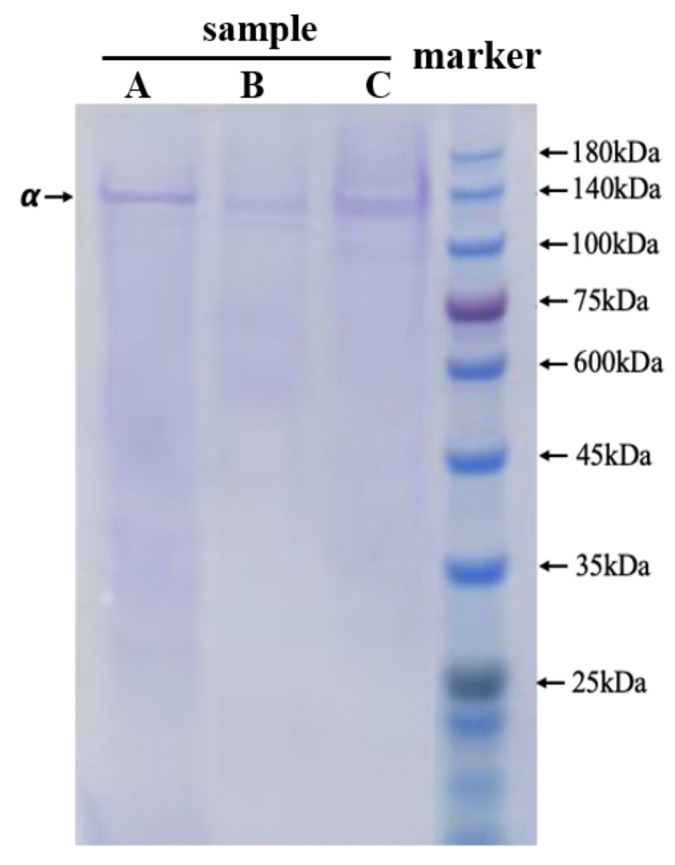
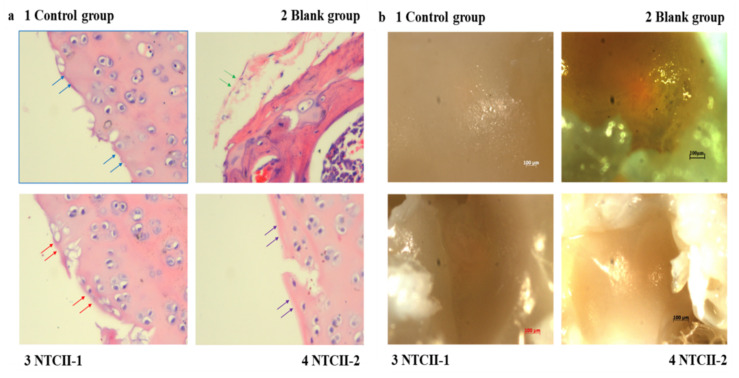
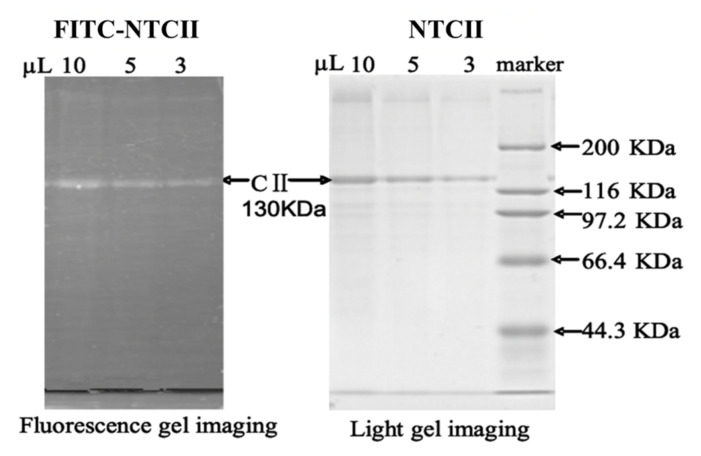
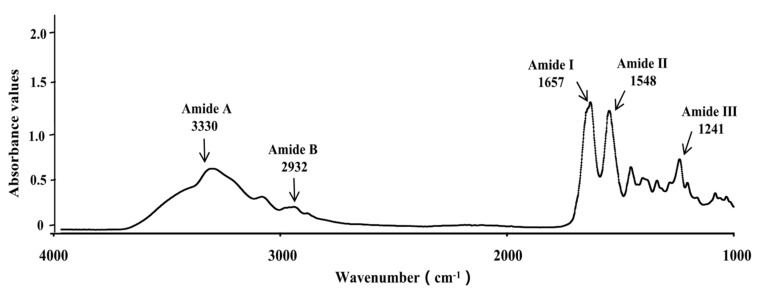
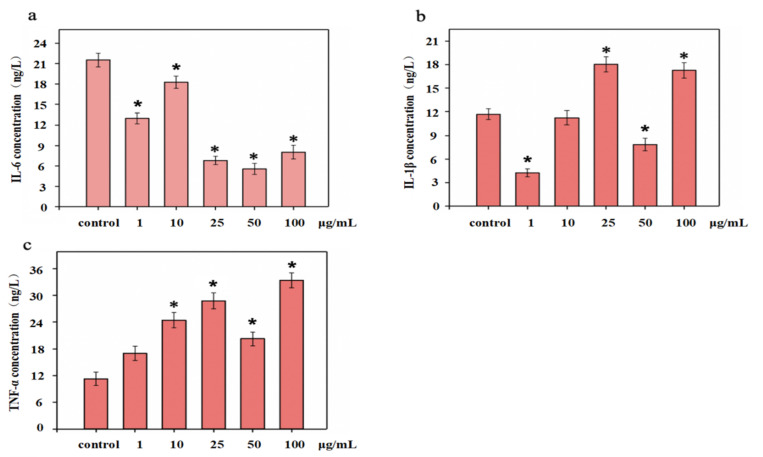
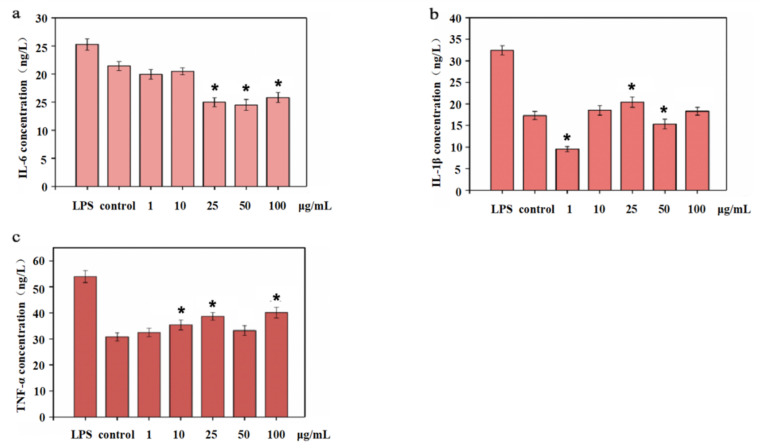
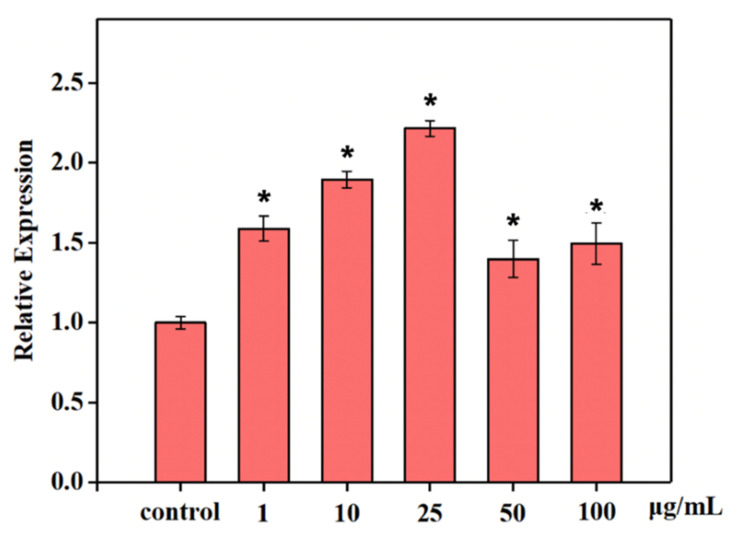
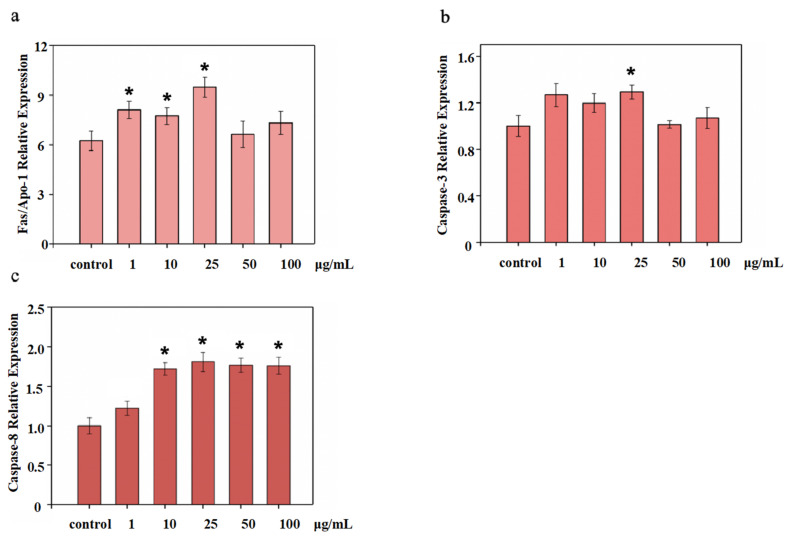
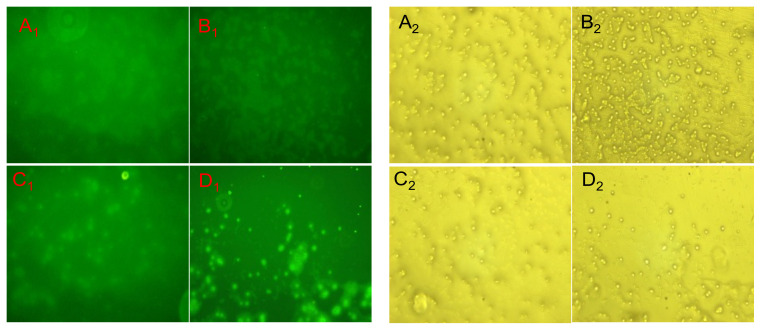
Fibrillins are microfibril-associated macro glycoproteins found in connective tissues and structurally related to latent TGF-β-binding proteins (LTBPs). The special cellular immunity and blocking glycoprotein receptors IIb and IIIa of fibrillins are emerging topics in recent years. In this study, Nile Tilapia type IIcollagen (NTCII) was extracted and purified from the skull cartilages by a pepsin-soluble method. Amino acid analysis indicated that NTCII consisted of 315/1000 glycine residues, 72/1000 hydroxyproline residues and 108/1000 proline residues. SDS-PAGE analysis showed that NTCII was composed of three identical 130 kDa α-chains. The results of glycoprotein/carbohydrate assay indicated that the total polysaccharide content of NTCII was 5.6-19.0%. The IR spectrum of NTCII displayed five characteristic peaks of amide I, II, III, A, B. NTCII at 10-100 μg/mL concentration downregulated the content of cytokines in the presence or absence of LPS, especially the secretion of cytokines IL-6, IL-1β and TNF-α. Interestingly, NTCII promoted the secretion of Fas/Apo-1 compared to the control group and 25 μg/mL of NTCII resulted in a higher Fas/Apo-1 secretion level in CD8 T cells. FITC-TCII fluorescence images confirmed that NTCII could bind to the membrane surface of CD8 T cells, leading to the induction of rigidity. NTCII could bind to the membrane surface of CD8 T cells that leads to the induction of rigidity, as evidenced by the FITC-NTCII fluorescence images. The qRT-PCR gene expression analysis of caspase-8 collected with Fas/Apo-1 was upregulated significantly in the 1 and 50 μg/mL NTCII-treated groups compared with the control group. Overall, the results conclude that the rigidity did not lead to an increase in inflammatory factors in CD8 T cells treated with NTCII. The oral administration of NTCII 3 mg/kg dosage caused more prominent repair of damaged ankle cartilage than the 1 mg/kg dosage in Freund's adjuvant-induced model of arthritis in rats. Therefore, this study disclosed the immunological and anti-arthritic effect of fibrillar collagen, which could be a potential biomaterial for practical applications with lower toxicity.
原纤维蛋白是存在于结缔组织中的微原纤维相关大糖蛋白,在结构上与潜伏性转化生长因子-β结合蛋白(LTBPs)相关。原纤维蛋白的特殊细胞免疫以及对糖蛋白受体IIb和IIIa的阻断作用是近年来新兴的研究课题。在本研究中,采用胃蛋白酶可溶法从尼罗罗非鱼的头骨软骨中提取并纯化了II型胶原蛋白(NTCII)。氨基酸分析表明,NTCII由315/1000个甘氨酸残基、72/1000个羟脯氨酸残基和108/1000个脯氨酸残基组成。SDS-PAGE分析显示,NTCII由三条相同的130 kDaα链组成。糖蛋白/碳水化合物含量测定结果表明,NTCII的总多糖含量为5.6 - 19.0%。NTCII的红外光谱显示出酰胺I、II、III、A、B的五个特征峰。在存在或不存在脂多糖(LPS)的情况下,浓度为10 - 100 μg/mL的NTCII下调了细胞因子的含量,尤其是细胞因子IL-6、IL-1β和TNF-α的分泌。有趣的是,与对照组相比,NTCII促进了Fas/Apo-1的分泌,并且25 μg/mL的NTCII在CD8 T细胞中导致了更高的Fas/Apo-1分泌水平。FITC-TCII荧光图像证实,NTCII可以结合到CD8 T细胞的膜表面,从而导致硬度的诱导。FITC-NTCII荧光图像证明,NTCII可以结合到CD8 T细胞的膜表面,从而导致硬度的诱导。与对照组相比,在1和50 μg/mL NTCII处理组中,与Fas/Apo-1一起收集的caspase-8的qRT-PCR基因表达分析显著上调。总体而言,结果表明,在NTCII处理的CD8 T细胞中,硬度不会导致炎症因子增加。在弗氏佐剂诱导的大鼠关节炎模型中,口服3 mg/kg剂量的NTCII比1 mg/kg剂量对受损踝关节软骨的修复更显著。因此,本研究揭示了纤维状胶原蛋白的免疫和抗关节炎作用,其可能是一种毒性较低、具有实际应用潜力的生物材料。