Department of Kinesiology & Health Sciences, College of William & Mary, Williamsburg, VA 23187, USA.
Cells. 2022 Mar 29;11(7):1150. doi: 10.3390/cells11071150.
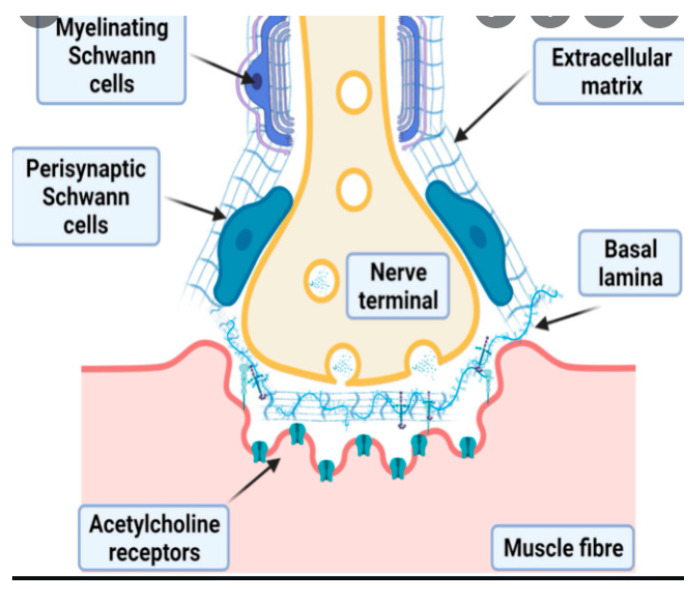
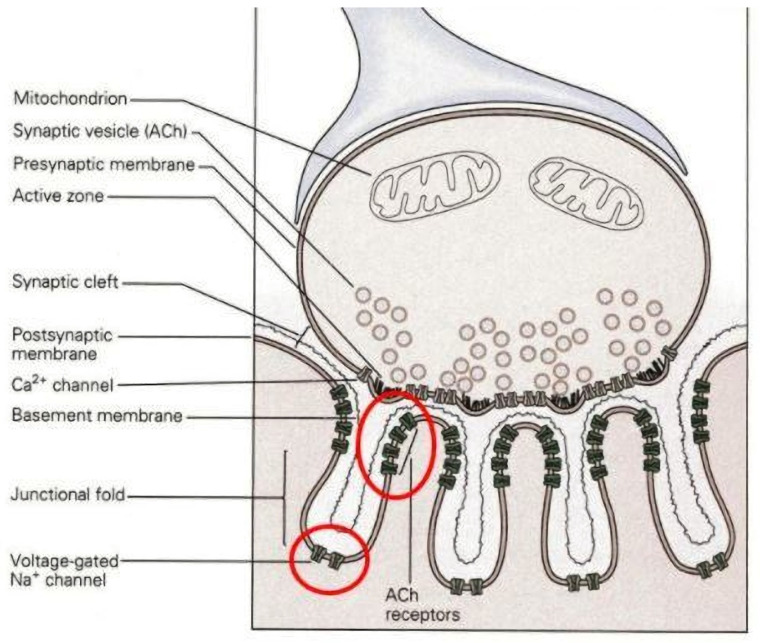
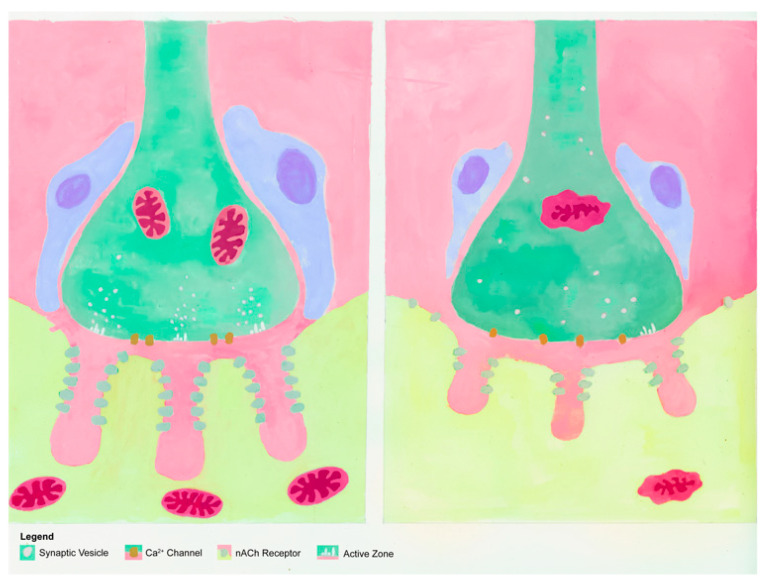
Aging is associated with gradual degeneration, in mass and function, of the neuromuscular system. This process, referred to as "sarcopenia", is considered a disease by itself, and it has been linked to a number of other serious maladies such as type II diabetes, osteoporosis, arthritis, cardiovascular disease, and even dementia. While the molecular causes of sarcopenia remain to be fully elucidated, recent findings have implicated the neuromuscular junction (NMJ) as being an important locus in the development and progression of that malady. This synapse, which connects motor neurons to the muscle fibers that they innervate, has been found to degenerate with age, contributing both to senescent-related declines in muscle mass and function. The NMJ also shows plasticity in response to a number of neuromuscular diseases such as amyotrophic lateral sclerosis (ALS) and Lambert-Eaton myasthenic syndrome (LEMS). Here, the structural and functional degradation of the NMJ associated with aging and disease is described, along with the measures that might be taken to effectively mitigate, if not fully prevent, that degeneration.
衰老是与神经肌肉系统的质量和功能逐渐退化相关的。这个过程被称为“肌肉减少症”,本身被认为是一种疾病,它与许多其他严重疾病有关,如 2 型糖尿病、骨质疏松症、关节炎、心血管疾病,甚至痴呆症。虽然肌肉减少症的分子原因仍有待充分阐明,但最近的研究结果表明,神经肌肉接点(NMJ)是该疾病发展和进展的一个重要部位。这个突触将运动神经元连接到它们支配的肌肉纤维上,随着年龄的增长而退化,导致与衰老相关的肌肉质量和功能下降。NMJ 还表现出对许多神经肌肉疾病的可塑性,如肌萎缩侧索硬化症(ALS)和 Lambert-Eaton 肌无力综合征(LEMS)。在这里,描述了与衰老和疾病相关的 NMJ 的结构和功能退化,以及可能采取的措施来有效减轻,如果不能完全预防,这种退化。