Division of Nephrology and Clinical Pharmacology, Department of Medicine, Indiana University School of Medicine, Indianapolis, IN 46202, USA.
Division of Nephrology, Department of Medicine, Indiana University School of Medicine, Indianapolis, IN 46202, USA.
Cells. 2022 Mar 30;11(7):1166. doi: 10.3390/cells11071166.
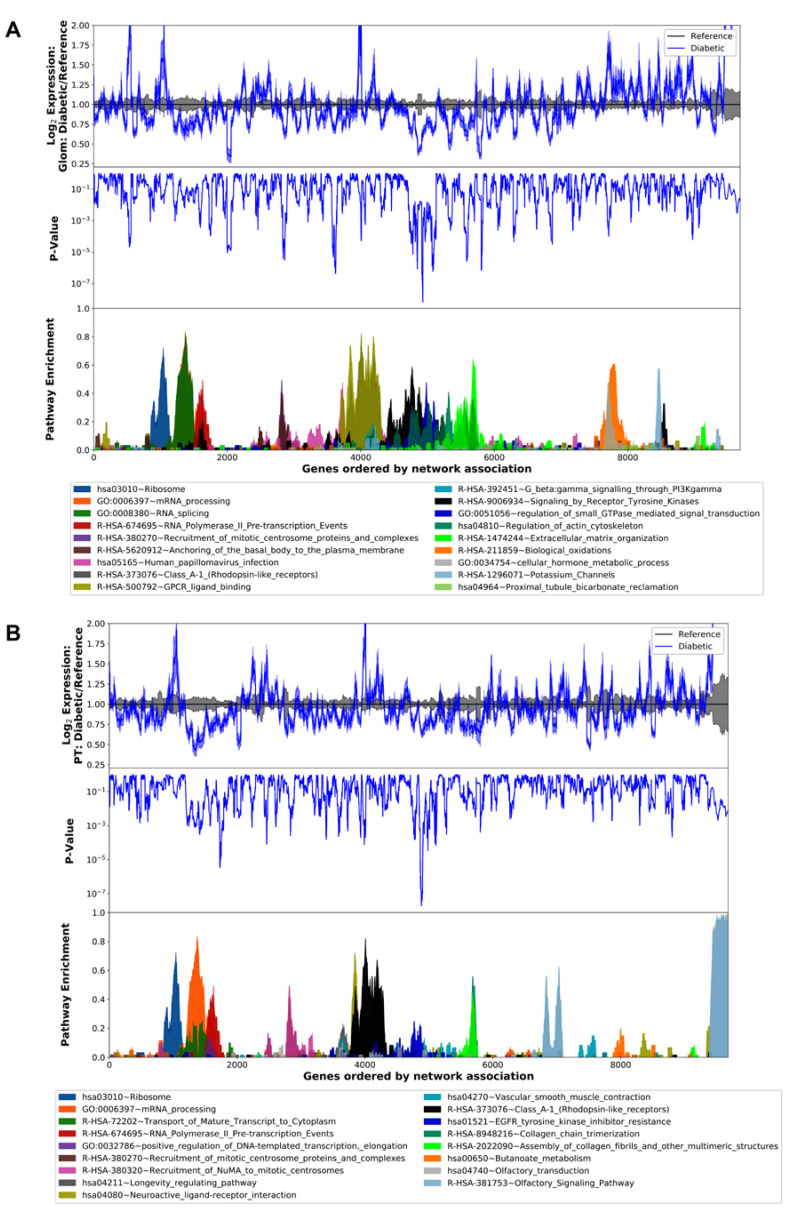
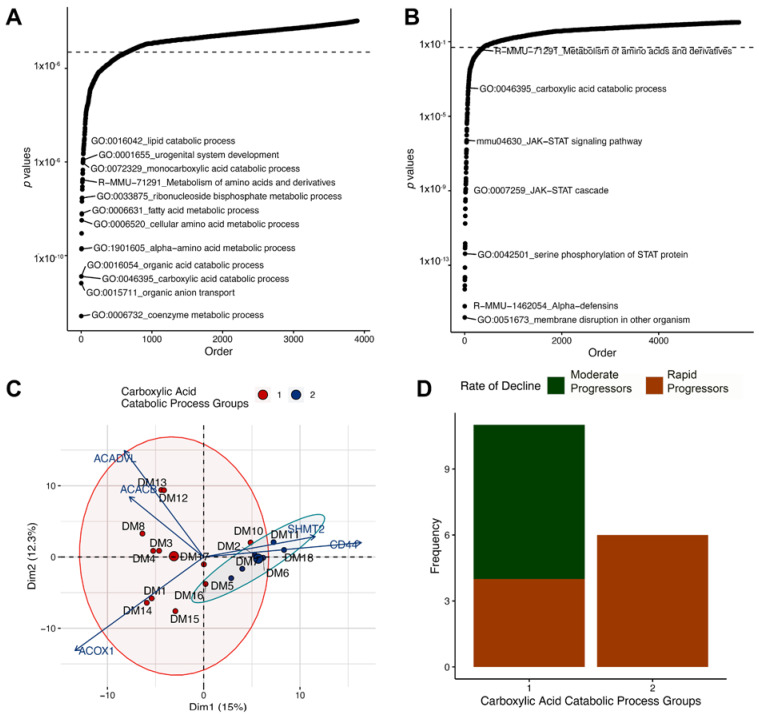
Diabetic kidney disease (DKD) remains the leading cause of end-stage kidney disease despite decades of study. Alterations in the glomerulus and kidney tubules both contribute to the pathogenesis of DKD although the majority of investigative efforts have focused on the glomerulus. We sought to examine the differential expression signature of human DKD in the glomerulus and proximal tubule and corroborate our findings in the db/db mouse model of diabetes. A transcriptogram network analysis of RNAseq data from laser microdissected (LMD) human glomerulus and proximal tubule of DKD and reference nephrectomy samples revealed enriched pathways including rhodopsin-like receptors, olfactory signaling, and ribosome (protein translation) in the proximal tubule of human DKD biopsy samples. The translation pathway was also enriched in the glomerulus. Increased translation in diabetic kidneys was validated using polyribosomal profiling in the db/db mouse model of diabetes. Using single nuclear RNA sequencing (snRNAseq) of kidneys from db/db mice, we prioritized additional pathways identified in human DKD. The top overlapping pathway identified in the murine snRNAseq proximal tubule clusters and the human LMD proximal tubule compartment was carboxylic acid catabolism. Using ultra-performance liquid chromatography-mass spectrometry, the fatty acid catabolism pathway was also found to be dysregulated in the db/db mouse model. The Acetyl-CoA metabolite was down-regulated in db/db mice, aligning with the human differential expression of the genes ACOX1 and ACACB. In summary, our findings demonstrate that proximal tubular alterations in protein translation and carboxylic acid catabolism are key features in both human and murine DKD.
尽管经过了几十年的研究,糖尿病肾病(DKD)仍然是导致终末期肾病的主要原因。尽管大多数研究都集中在肾小球上,但肾小球和肾小管的改变都导致了 DKD 的发病机制。我们试图研究人类 DKD 在肾小球和近端小管中的差异表达特征,并在糖尿病 db/db 小鼠模型中验证我们的发现。对激光微切割(LMD)的人类肾小球和近端小管的 RNAseq 数据进行转录组网络分析。来自 DKD 和参考肾切除术样本的 DKD 和参考肾切除术样本的 RNAseq 数据,揭示了富含途径,包括视蛋白样受体、嗅觉信号和核糖体(蛋白质翻译)在人类 DKD 活检样本的近端小管中。翻译途径在肾小球中也很丰富。使用糖尿病 db/db 小鼠模型中的多核糖体分析验证了糖尿病肾脏中翻译的增加。使用 db/db 小鼠肾脏的单个核 RNA 测序(snRNAseq),我们优先考虑了在人类 DKD 中确定的其他途径。在小鼠 snRNAseq 近端小管群和人类 LMD 近端小管区室中鉴定的最高重叠途径是羧酸代谢。使用超高效液相色谱-质谱法,还发现 db/db 小鼠模型中的脂肪酸代谢途径失调。乙酰辅酶 A 代谢物在 db/db 小鼠中下调,与人类 ACOX1 和 ACACB 基因的差异表达一致。总之,我们的研究结果表明,蛋白质翻译和羧酸代谢的近端肾小管改变是人类和鼠类 DKD 的关键特征。