Clinical Research Center for Hair and Skin Science, Department of Dermatology, Venerology and and Allergy, Charité-Universitaetsmedizin Berlin, Corporate Member of Freie Universität Berlin, Humboldt-Universität zu Berlin, and Berlin Institute of Health, 10117 Berlin, Germany.
Advanced Light and Electron Microscopy, Zentrum für Biologische Gefahren und Spezielle Pathogene 4 (ZBS4), Robert Koch Institute, 13353 Berlin, Germany.
Cells. 2022 Apr 2;11(7):1198. doi: 10.3390/cells11071198.
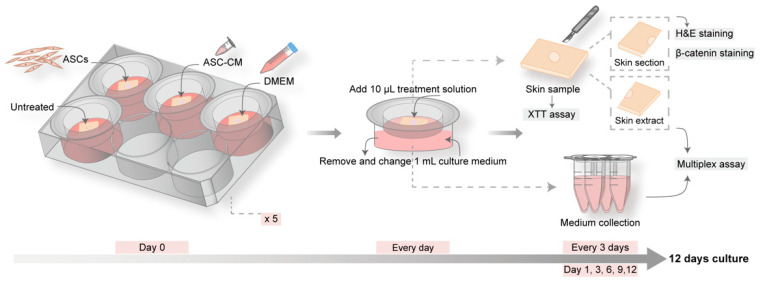
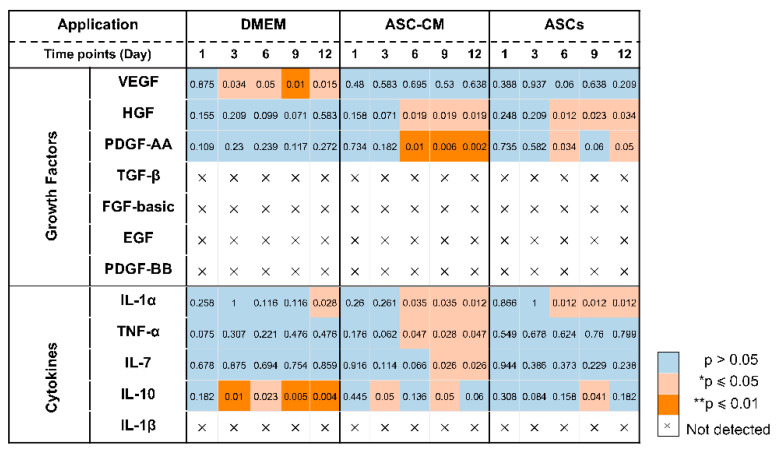
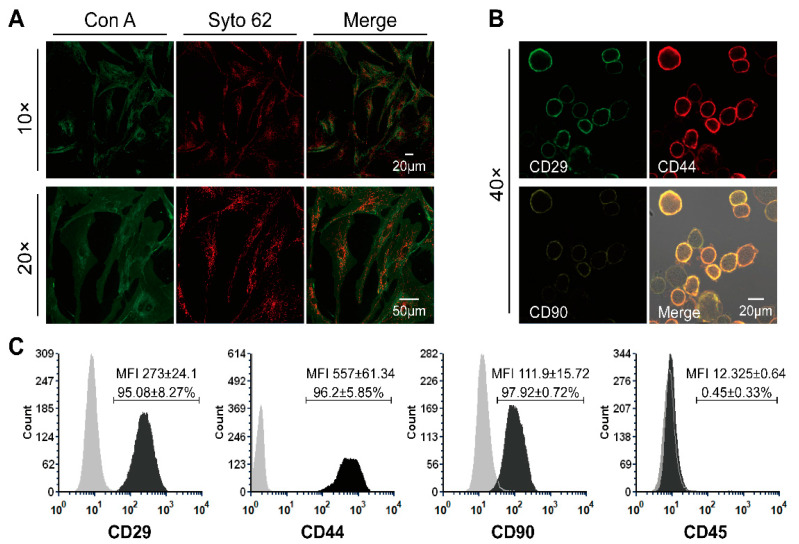
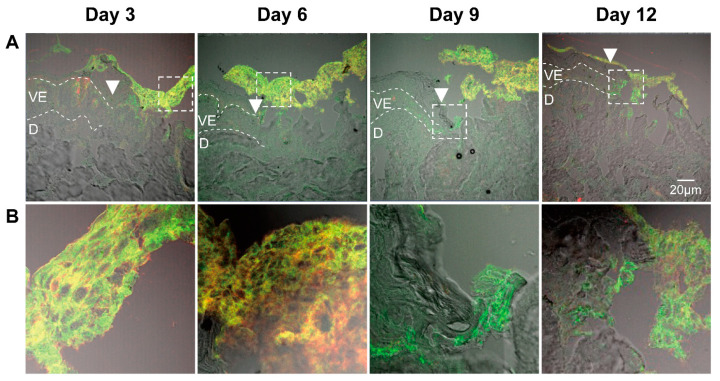
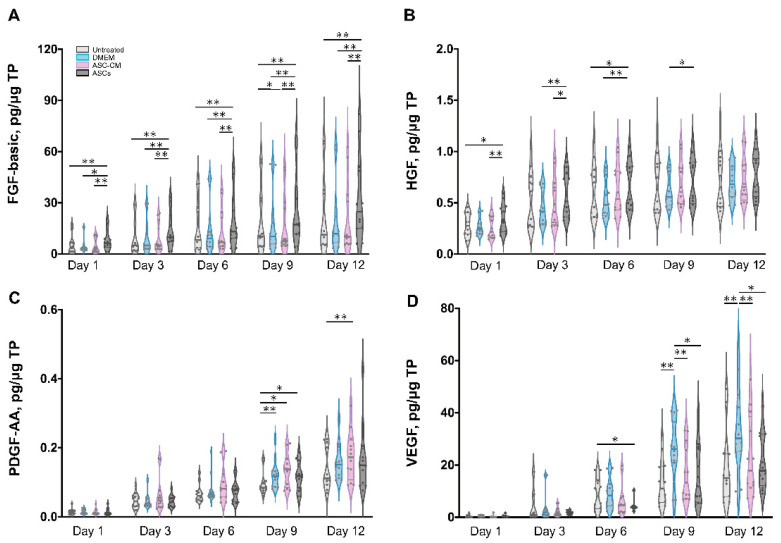
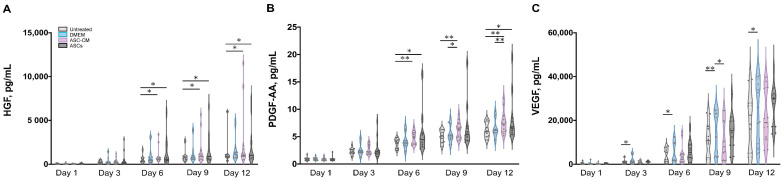
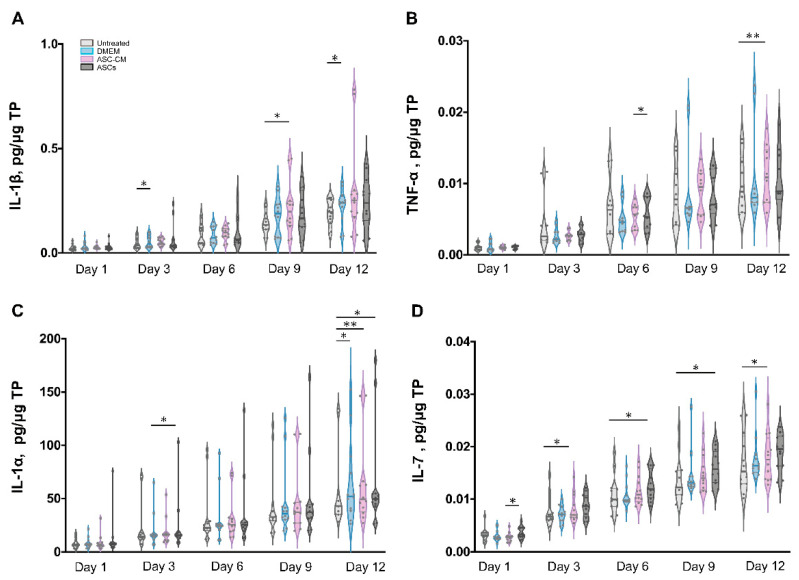
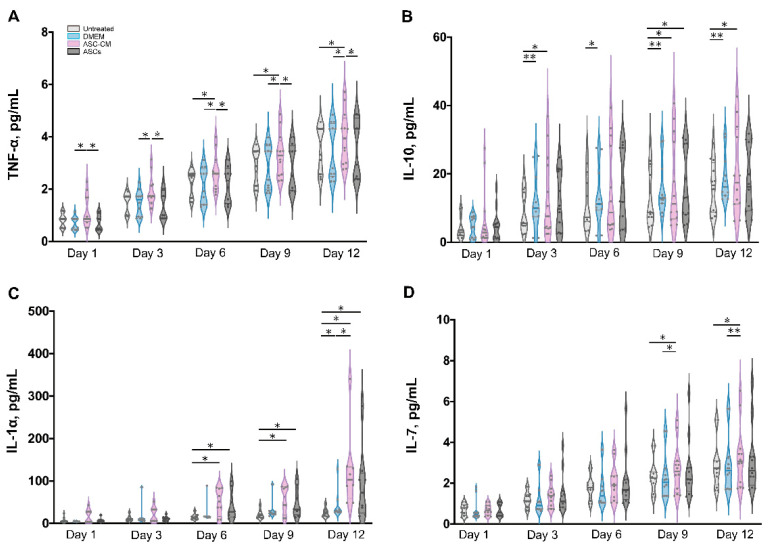
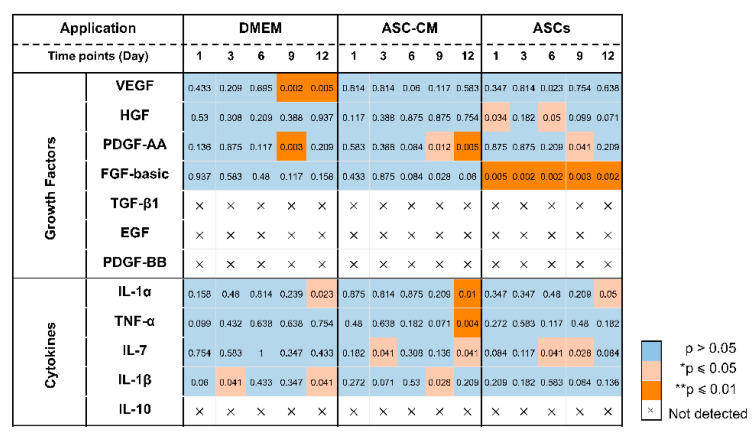
Adult stem cells have been extensively investigated for tissue repair therapies. Adipose-derived stem cells (ASCs) were shown to improve wound healing by promoting re-epithelialization and vascularization as well as modulating the inflammatory immune response. In this study, we used ex vivo human skin cultured in a six-well plate with trans-well inserts as a model for superficial wounds. Standardized wounds were created and treated with allogeneic ASCs, ASCs conditioned medium (ASC-CM), or cell culture medium (DMEM) supplemented with fetal calf serum (FCS). Skin viability (XTT test), histology (hematoxylin and eosin, H and E), β-catenin expression as well as inflammatory mediators and growth factors were monitored over 12 days of skin culture. We observed only a moderate time-dependent decrease in skin metabolic activity while skin morphology was preserved, and re-epithelialization occurred at the wound edges. An increase in β-catenin expression was observed in the newly formed epithelia, especially in the samples treated with ASC-CM. In general, increased growth factors and inflammatory mediators, e.g., hepatocytes growth factor (HGF), platelet-derived growth factor subunit AA (PDGF-AA), IL-1α, IL-7, TNF-α, and IL-10, were observed over the incubation time. Interestingly, different expression profiles were observed for the different treatments. Samples treated with ASC-CM significantly increased the levels of inflammatory cytokines and PDGF-AA with respect to control, whereas the treatment with ASCs in DMEM with 10% FCS resulted in significantly increased levels of fibroblast growth factor-basic (FGF-basic) and moderate increases of immunomodulatory cytokines. These results confirm that the wound microenvironment can influence the type of mediators secreted by ASCs and the mode as to how they improve the wound healing process. Comparative investigations with pre-activated ASCs will elucidate further aspects of the wound healing mechanism and improve the protocols of ACS application.
成体干细胞在组织修复治疗中得到了广泛的研究。脂肪来源的干细胞(ASCs)通过促进再上皮化和血管生成以及调节炎症免疫反应,被证明可以改善伤口愈合。在这项研究中,我们使用在六孔板中培养的带有 Trans-well 插入物的离体人皮肤作为浅伤口模型。创建标准化的伤口,并分别用同种异体 ASCs、ASC 条件培养基(ASC-CM)或补充胎牛血清(FCS)的细胞培养基(DMEM)处理。在皮肤培养的 12 天中,监测皮肤活力(XTT 试验)、组织学(苏木精和伊红,H 和 E)、β-连环蛋白表达以及炎症介质和生长因子。我们观察到皮肤代谢活性仅在时间上有适度的下降,而皮肤形态得以保留,并且在伤口边缘发生再上皮化。在新形成的上皮中观察到β-连环蛋白表达增加,尤其是在用 ASC-CM 处理的样本中。一般来说,在孵育过程中观察到生长因子和炎症介质的增加,例如肝细胞生长因子(HGF)、血小板衍生生长因子亚单位 AA(PDGF-AA)、IL-1α、IL-7、TNF-α 和 IL-10。有趣的是,不同的处理方式观察到不同的表达谱。与对照相比,用 ASC-CM 处理的样本显著增加了炎症细胞因子和 PDGF-AA 的水平,而用含 10% FCS 的 DMEM 中的 ASCs 处理则导致成纤维细胞生长因子-基本(FGF-basic)的水平显著增加,并适度增加免疫调节细胞因子。这些结果证实,伤口微环境可以影响 ASCs 分泌的介质类型以及它们改善伤口愈合过程的方式。与预激活的 ASCs 进行比较研究将阐明伤口愈合机制的进一步方面,并改进 ACS 应用的方案。