Bibi Nusrat, Shah Munir H, Khan Nadeem, Al-Hashimi Abdulrahman, Elshikh Mohamed Soliman, Iqbal Akhtar, Ahmad Shakeel, Abbasi Arshad Mehmood
Department of Environmental Sciences, COMSATS University Islamabad, Abbottabad 22060, Pakistan.
Department of Chemistry, Quaid-I-Azam University, Islamabad 45320, Pakistan.
Plants (Basel). 2022 Mar 31;11(7):950. doi: 10.3390/plants11070950.
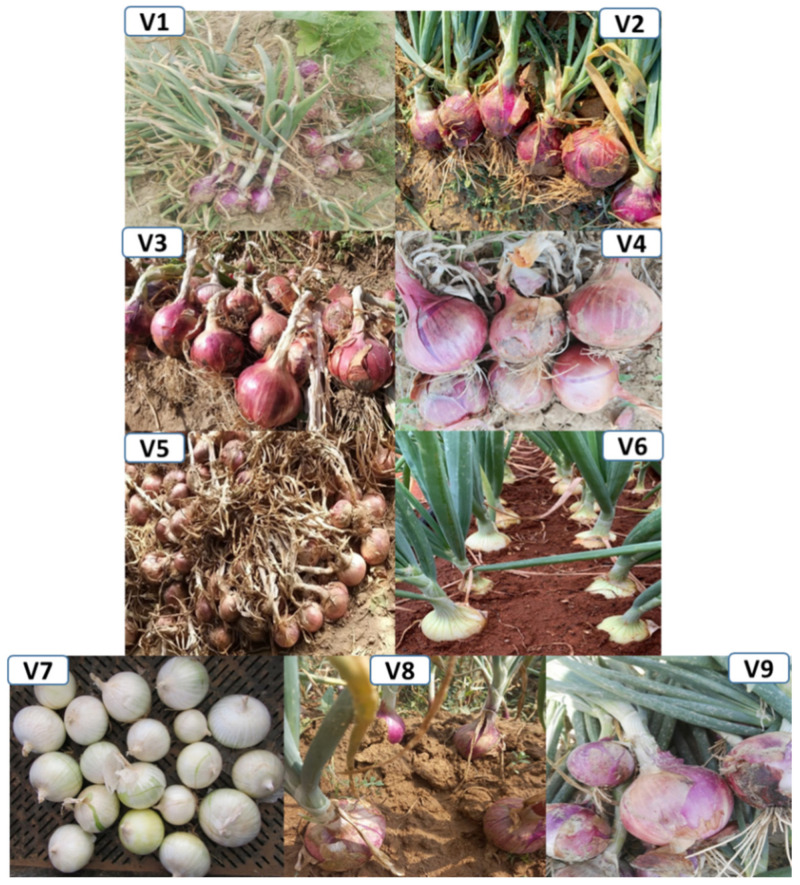
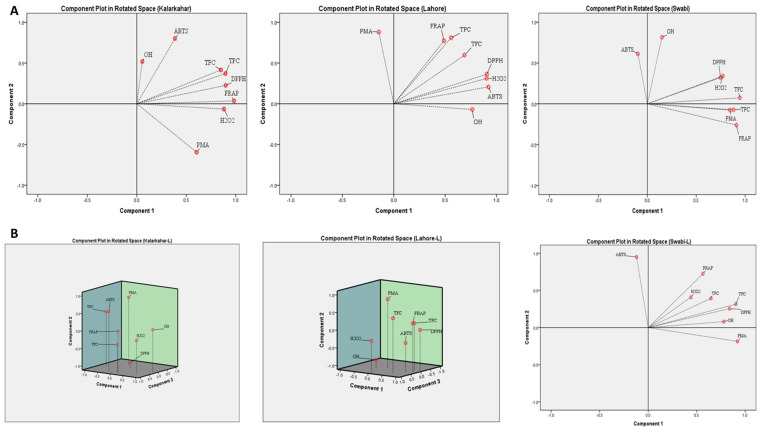
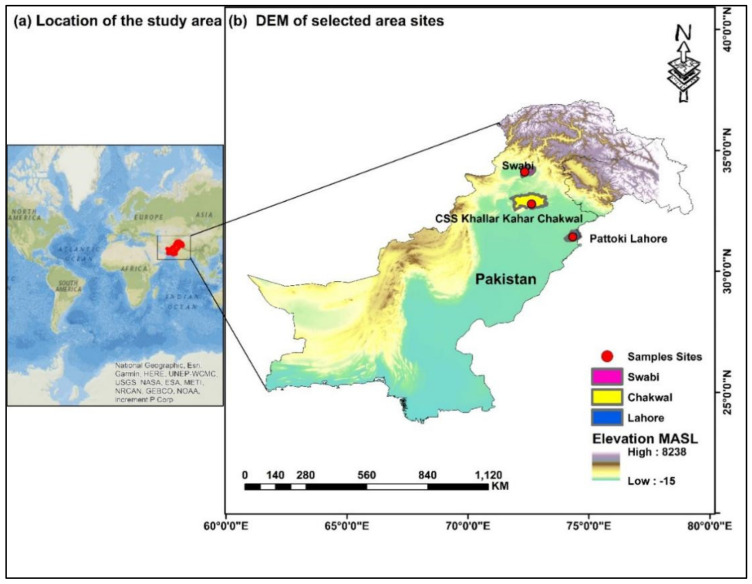
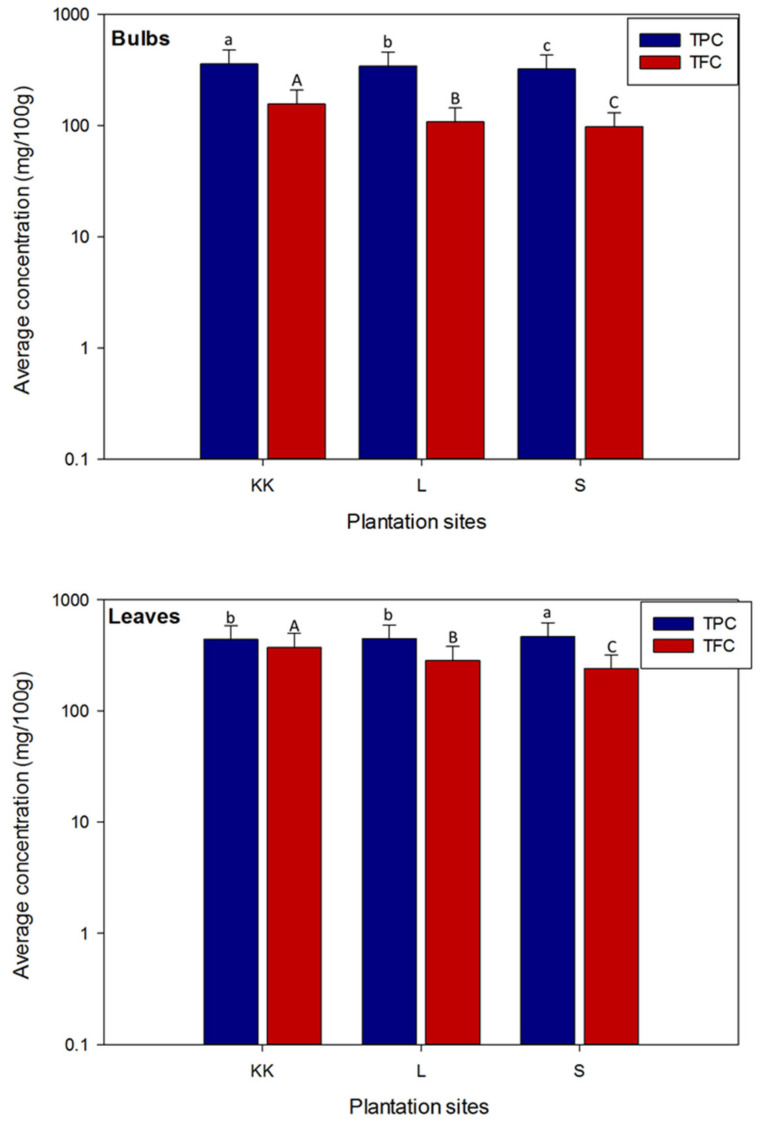
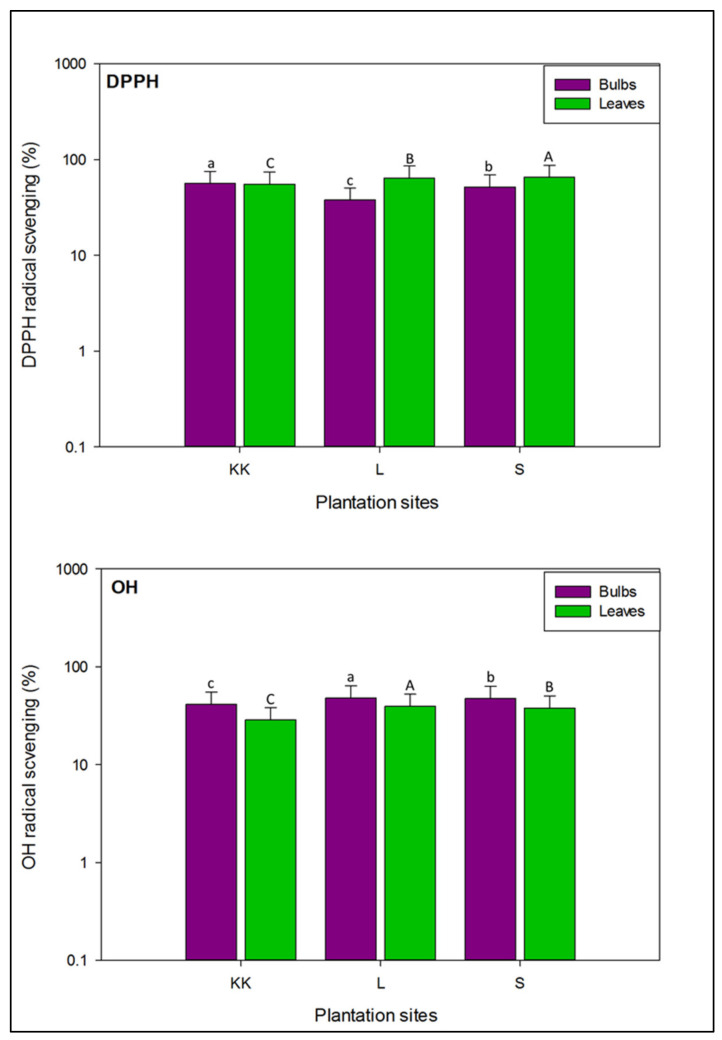
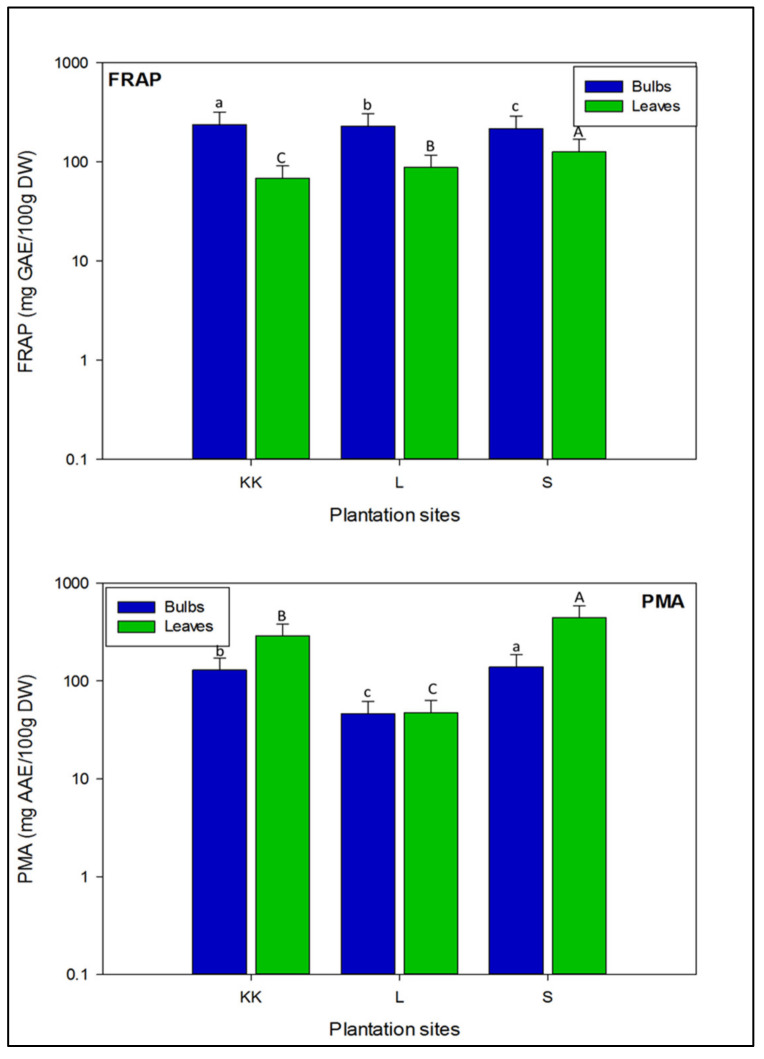
Genetic diversity and Agro-climatic conditions contribute significantly to the agronomic and morphological features of the food plant species, and their nutraceutical potential. The present study was intended to evaluate the impact of growing conditions on total phenolic and total flavonoid contents, and in vitro antioxidant potential in the bulbs and leaves of onion varieties planted under diverse environmental conditions. Standard analytical methods were used to quantify total phenolic content (TPC), total flavonoid content (TFC), and free radicals’ scavenging/antioxidant capacity. The impact of climatic and soil conditions was assessed using statistical tools. In general, onion varieties cultivated at three different locations viz. Kalar Kahar, Lahore and Swabi exhibited significant variations in TPC and TFC, and antioxidant activities. The bulbs and leaves of Mustang (V1) variety planted at Lahore and Swabi had significantly (p < 0.05), high levels of TPC (659.5 ± 6.59, and 631.1 ± 8.58 mg GAE/100 g, respectively). However, leaves of Red Orb (V2) and bulbs of Mustang (V1), and Golden Orb (V6), harvested from Kalar Kahar depicted the highest concentration of TFC (432.5 ± 10.3, 303.0 ± 6.67, and 303.0 ± 2.52 mg QE/100 g DW, respectively). Likewise, bulbs of V1 planted at Kalar Kahar, Lahore and Swabi exhibited maximum inhibition of DPPH, ABTS, and H2O2 radicals (79.01 ± 1.49, 65.38 ± 0.99, and 59.76 ± 0.90%, respectively). Golden Orb (V6) harvested from Lahore had the highest scavenging of OH radical (67.40 ± 0.09%). Likewise, bulbs of V1 variety planted at KalarKahar and Swabi had significant capacity to scavenge ferric ions (415.1 ± 10.6 mg GAE/100 g DW), and molybdate ions (213.7 ± 0.00 mg AAE/100 g DW). Conversely, leaves of Amazon (V8), planted at Lahore and Swabi depicted significant levels of DPPH, ABTS, H2O2 radical scavenging (90.69 ± 0.26, 63.55 ± 1.06, 51.86 ± 0.43%, respectively), and reduction of ferric ions (184.2 ± 6.75 mg GAE/100 g DW). V6 leaves harvested from Lahore and that of Super Sarhad (V3) from Swabi showed the highest inhibition of OH radical (61.21 ± 0.79%), and molybdate ions (623.6 ± 0.12 mg AAE/100 g DW), respectively. Pearson correlation and principal component analysis revealed strong relationships of climatic conditions, soil properties and elevation with TPC, TFC and free radicals’ scavenging potential in the bulbs and leaves of onion varieties. The variations in the total phenolic and flavonoid contents, and antioxidant potential of different varieties, and their associations with climatic and soil factors revealed the complexity of the growing conditions and genetic makeup that imposed significant impacts on the synthesis of secondary metabolites and nutraceutical potential of food and medicinal plant species.
遗传多样性和农业气候条件对食用植物物种的农艺和形态特征及其营养保健潜力有显著贡献。本研究旨在评估不同环境条件下种植的洋葱品种鳞茎和叶片中生长条件对总酚和总黄酮含量以及体外抗氧化潜力的影响。采用标准分析方法对总酚含量(TPC)、总黄酮含量(TFC)和自由基清除/抗氧化能力进行定量。使用统计工具评估气候和土壤条件的影响。总体而言,在卡拉尔卡哈尔、拉合尔和斯瓦比三个不同地点种植的洋葱品种在TPC、TFC和抗氧化活性方面表现出显著差异。在拉合尔和斯瓦比种植的野马(V1)品种的鳞茎和叶片中TPC含量显著较高(分别为659.5±6.59和631.1±8.58 mg GAE/100 g)(p<0.05)。然而,从卡拉尔卡哈尔收获的红圆(V2)叶片以及野马(V1)和金圆(V6)的鳞茎中TFC浓度最高(分别为432.5±10.3、303.0±6.67和303.0±2.52 mg QE/100 g DW)。同样,在卡拉尔卡哈尔、拉合尔和斯瓦比种植的V1鳞茎对DPPH、ABTS和H2O2自由基的抑制作用最大(分别为79.01±1.49%、65.38±0.99%和59.76±0.90%)。从拉合尔收获的金圆(V6)对OH自由基的清除率最高(67.40±0.09%)。同样,在卡拉尔卡哈尔和斯瓦比种植的V1品种鳞茎具有显著的清除铁离子(415.1±10.6 mg GAE/百克干重)和钼酸根离子(213.7±0.00 mg AAE/百克干重)的能力。相反,在拉合尔和斯瓦比种植的亚马逊(V8)叶片对DPPH、ABTS、H2O2自由基的清除率显著(分别为90.69±0.26%、63.55±1.06%、51.86±0.43%),并且对铁离子的还原能力(184.2±6.75 mg GAE/百克干重)。从拉合尔收获的V6叶片和从斯瓦比收获的超级萨哈德(V3)叶片对OH自由基的抑制作用最高(分别为为61.21±0.79%)和钼酸根离子(623.6±0.12 mg AAE/百克干重)。皮尔逊相关性和主成分分析表明,气候条件、土壤性质和海拔与洋葱品种鳞茎和叶片中的TPC、TFC和自由基清除潜力之间存在密切关系。不同品种的总酚和黄酮含量以及抗氧化潜力的变化,以及它们与气候和土壤因素的关联,揭示了生长条件和遗传组成的复杂性,这些因素对食用和药用植物物种的次生代谢产物合成和营养保健潜力产生了重大影响。