Suleria Hafiz A R, Barrow Colin J, Dunshea Frank R
School of Agriculture and Food, Faculty of Veterinary and Agricultural Sciences, The University of Melbourne, Parkville, VIC 3010, Australia.
Centre for Chemistry and Biotechnology, School of Life and Environmental Sciences, Deakin University, Waurn Ponds, VIC 3217, Australia.
Foods. 2020 Sep 1;9(9):1206. doi: 10.3390/foods9091206.
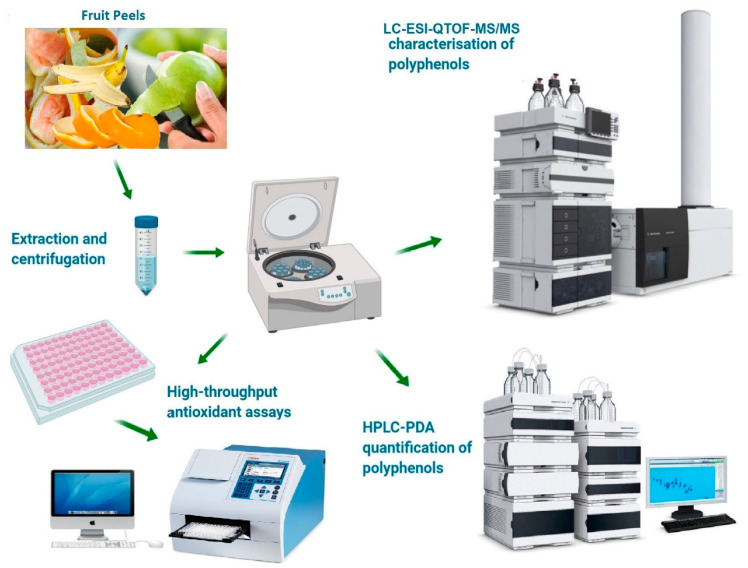
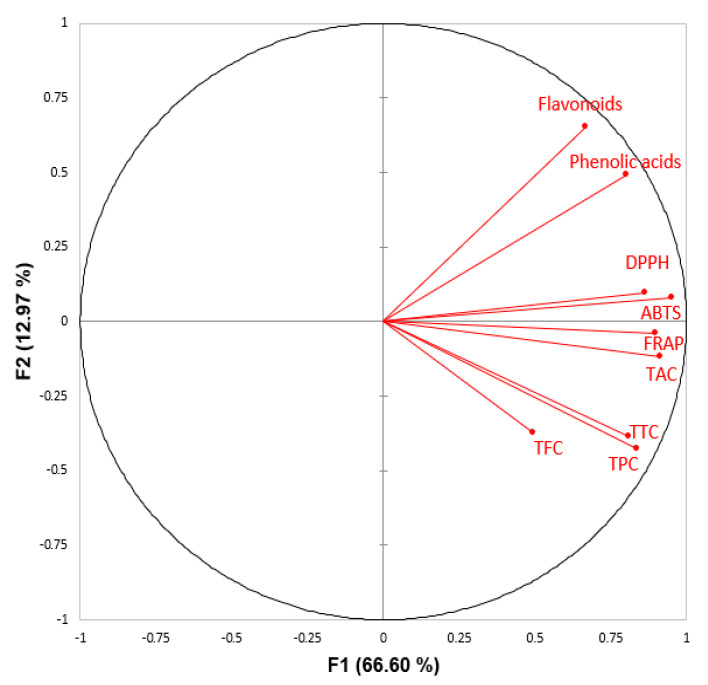
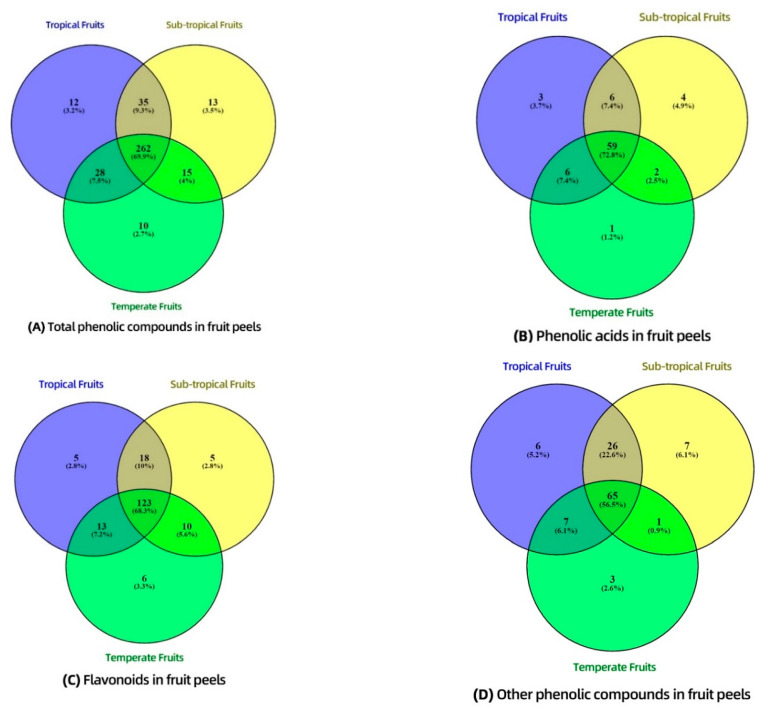
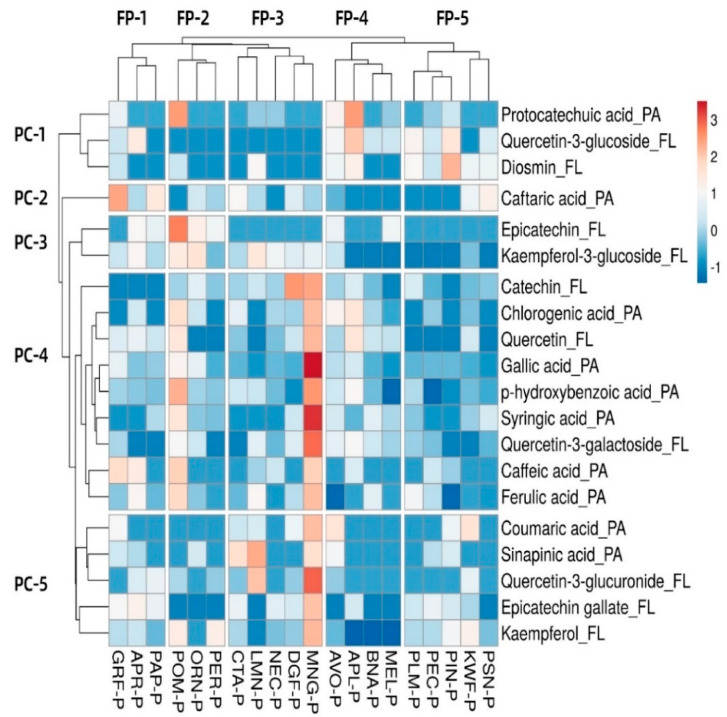
Fruit peels have a diverse range of phytochemicals including carotenoids, vitamins, dietary fibres, and phenolic compounds, some with remarkable antioxidant properties. Nevertheless, the comprehensive screening and characterization of the complex array of phenolic compounds in different fruit peels is limited. This study aimed to determine the polyphenol content and their antioxidant potential in twenty different fruit peel samples in an ethanolic extraction, including their comprehensive characterization and quantification using the LC-MS/MS and HPLC. The obtained results showed that the mango peel exhibited the highest phenolic content for TPC (27.51 ± 0.63 mg GAE/g) and TFC (1.75 ± 0.08 mg QE/g), while the TTC (9.01 ± 0.20 mg CE/g) was slightly higher in the avocado peel than mango peel (8.99 ± 0.13 mg CE/g). In terms of antioxidant potential, the grapefruit peel had the highest radical scavenging capacities for the DPPH (9.17 ± 0.19 mg AAE/g), ABTS (10.79 ± 0.56 mg AAE/g), ferric reducing capacity in FRAB (9.22 ± 0.25 mg AA/g), and total antioxidant capacity, TAC (8.77 ± 0.34 mg AAE/g) compared to other fruit peel samples. The application of LC-ESI-QTOF-MS/MS tentatively identified and characterized a total of 176 phenolics, including phenolic acids (49), flavonoids (86), lignans (11), stilbene (5) and other polyphenols (25) in all twenty peel samples. From HPLC-PDA quantification, the mango peel sample showed significantly higher phenolic content, particularly for phenolic acids (gallic acid, 14.5 ± 0.4 mg/g) and flavonoids (quercetin, 11.9 ± 0.4 mg/g), as compared to other fruit peel samples. These results highlight the importance of fruit peels as a potential source of polyphenols. This study provides supportive information for the utilization of different phenolic rich fruit peels as ingredients in food, feed, and nutraceutical products.
果皮含有多种植物化学物质,包括类胡萝卜素、维生素、膳食纤维和酚类化合物,其中一些具有显著的抗氧化特性。然而,对不同果皮中复杂酚类化合物的全面筛选和表征仍然有限。本研究旨在通过乙醇提取法测定20种不同果皮样品中的多酚含量及其抗氧化潜力,包括使用液相色谱-串联质谱法(LC-MS/MS)和高效液相色谱法(HPLC)对其进行全面表征和定量分析。所得结果表明,芒果皮的总酚含量(TPC)最高(27.51±0.63毫克没食子酸当量/克),总黄酮含量(TFC)为(1.75±0.08毫克芦丁当量/克),而鳄梨皮的总花色苷含量(TTC)(9.01±0.20毫克儿茶素当量/克)略高于芒果皮(8.99±0.13毫克儿茶素当量/克)。在抗氧化潜力方面,与其他果皮样品相比,葡萄柚皮对DPPH(9.17±0.19毫克抗坏血酸当量/克)、ABTS(10.79±0.56毫克抗坏血酸当量/克)的自由基清除能力最强,铁还原抗氧化能力(FRAB)(9.22±0.25毫克抗坏血酸/克)和总抗氧化能力(TAC)(8.77±0.34毫克抗坏血酸当量/克)最高。液相色谱-电喷雾-四极杆飞行时间串联质谱法(LC-ESI-QTOF-MS/MS)的应用初步鉴定并表征了所有20种果皮样品中的176种酚类化合物,包括酚酸(49种)、黄酮类化合物(86种)、木脂素(11种)、芪类化合物(5种)和其他多酚类化合物(25种)。通过HPLC-PDA定量分析,与其他果皮样品相比,芒果皮样品的酚类含量显著更高,尤其是酚酸(没食子酸,14.5±0.4毫克/克)和黄酮类化合物(槲皮素,11.9±0.4毫克/克)。这些结果突出了果皮作为多酚潜在来源的重要性。本研究为将不同富含酚类的果皮用作食品、饲料和营养保健品的成分提供了支持性信息。