Gur Lior, Cohen Yigal, Frenkel Omer, Schweitzer Ron, Shlisel Meir, Reuveni Moshe
Shamir Research Institute, University of Haifa, Haifa 3498838, Israel.
Faculty of Life Sciences, Bar-Ilan University, Ramat Gan 5290000, Israel.
Plants (Basel). 2022 Apr 4;11(7):978. doi: 10.3390/plants11070978.
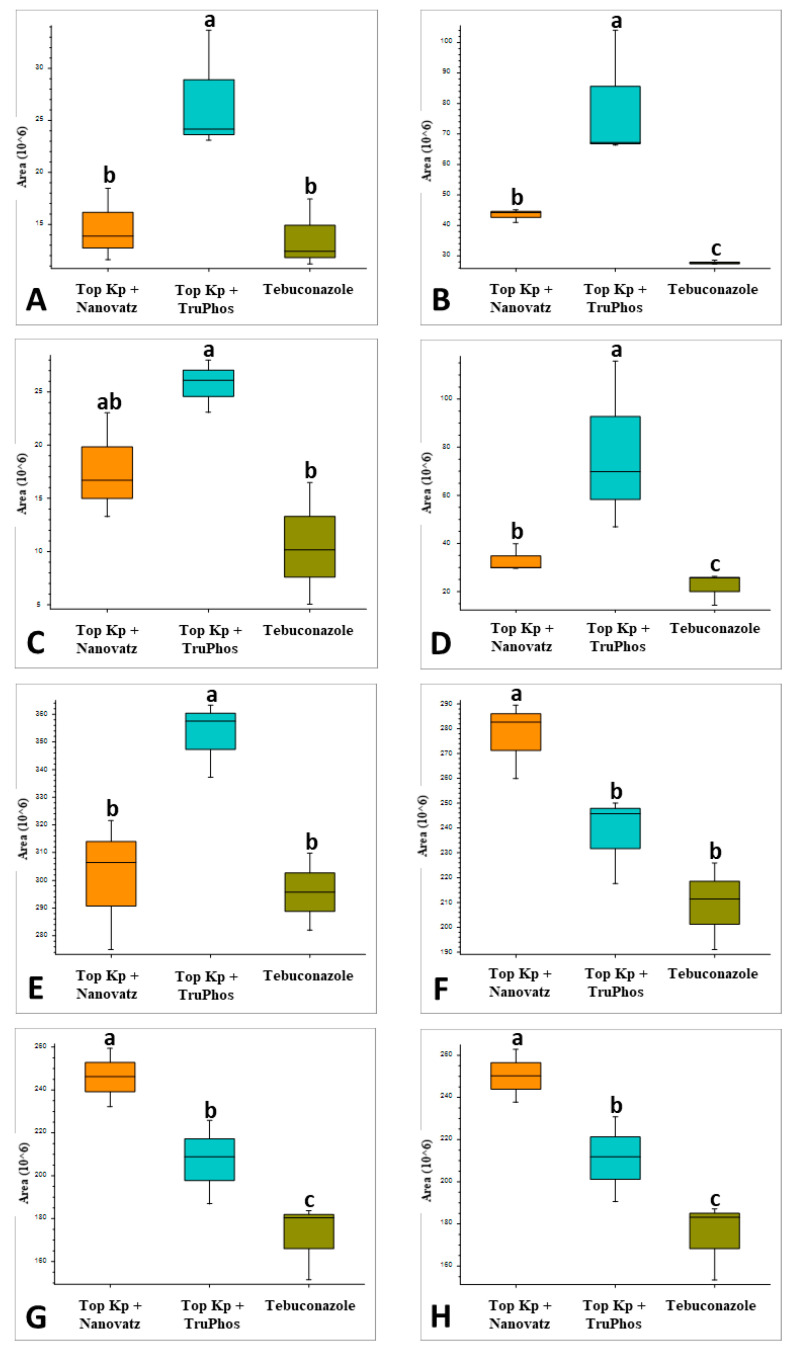
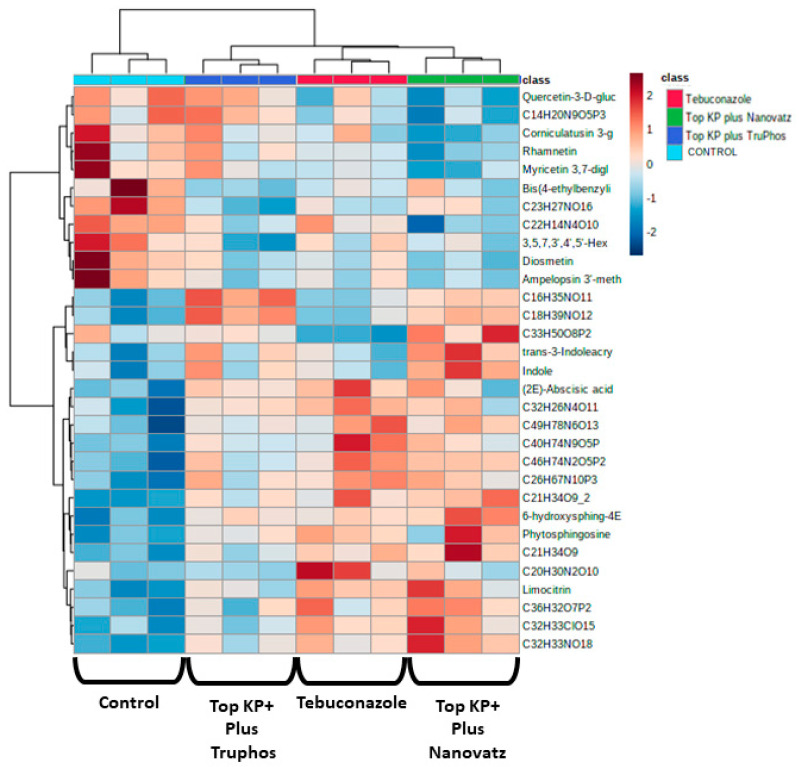
Powdery mildew caused by the fungus is a major grape disease worldwide. It attacks foliage and berries and reduces yield and wine quality. Fungicides are mainly used for combating the disease. Fungicide resistance and the global requisite to reduce pesticide deployment encourage the use of environment-friendly alternatives for disease management. Our field experiments showed that the foliar application of the potassium phosphate fertilizer Top-KP+ (1-50-33 NPK) reduced disease incidence on leaves and clusters by 15-65% and severity by 75-90%, compared to untreated vines. Top-KP+ mixed with Nanovatz (containing the micronutrients boron (B) and zinc (Zn)) or with TruPhos Platinum (a mixture containing N, PO, KO, Zn, B, Mg, Fe, Mn, Cu, Mo, and CO) further reduced disease incidence by 30-90% and disease severity by 85-95%. These fertilizers were as effective as the fungicide tebuconazole. Tank mixtures of fertilizers and tebuconazole further enhanced control efficacy in the vineyards. The modes of action of fertilizers in disease control were elucidated via tests with grape seedlings, microscopy, and berry metabolomics. Fertilizers applied preventively to the foliage of grape seedlings inhibited powdery mildew development. Application onto existing mildew colonies plasmolyzed mycelia and conidia and arrested the development of the disease. Berries treated with fertilizers or with a fungicide showed a significant increase in anti-fungal and antioxidant metabolites. Twenty-two metabolites, including non-protein amino acids and carbohydrates, known for their anti-fungal and bioactive effects, were significantly upregulated in grapes treated with fertilizers as compared to grapes treated with a fungicide, suggesting possible indirect activity against the pathogen. Esters and organic acids that contribute to wine quality were also upregulated. We conclude that integrating macro and micronutrients in spray programs in commercial vineyards shall control powdery mildew, reduce fungicide deployment, delay the buildup of fungicide resistance, and may improve wine quality.
由这种真菌引起的白粉病是全球范围内一种主要的葡萄病害。它侵袭叶片和浆果,会降低产量和葡萄酒品质。杀菌剂主要用于防治这种病害。杀菌剂抗性以及全球减少农药使用的必要性促使人们使用环境友好型的替代方法来管理病害。我们的田间试验表明,与未处理的葡萄藤相比,叶面喷施磷酸钾肥Top-KP+(1-50-33氮磷钾)可使叶片和果穗的发病率降低15%-65%,病情严重程度降低75%-90%。Top-KP+与Nanovatz(含微量营养素硼(B)和锌(Zn))或与TruPhos Platinum(一种含有氮、磷、钾、锌、硼、镁、铁、锰、铜、钼和钴的混合物)混合使用,可进一步使发病率降低30%-90%,病情严重程度降低85%-95%。这些肥料与杀菌剂戊唑醇的效果相当。肥料与戊唑醇的桶混制剂在葡萄园中的防治效果进一步增强。通过对葡萄幼苗进行试验、显微镜观察和浆果代谢组学研究,阐明了肥料在病害防治中的作用方式。预防性地施用于葡萄幼苗叶片上的肥料可抑制白粉病的发展。施用于现有的白粉病菌落上会使菌丝体和分生孢子质壁分离,并阻止病害发展。用肥料或杀菌剂处理过的浆果显示出抗真菌和抗氧化代谢物显著增加。与用杀菌剂处理的葡萄相比,用肥料处理的葡萄中有22种代谢物,包括非蛋白质氨基酸和碳水化合物,因其抗真菌和生物活性作用而显著上调,这表明可能对病原体具有间接活性。对葡萄酒品质有贡献的酯类和有机酸也上调了。我们得出结论,在商业葡萄园的喷雾方案中整合大量和微量营养素应能控制白粉病,减少杀菌剂的使用,延缓杀菌剂抗性的产生,并可能改善葡萄酒品质。