Department of Surgery, Konkuk University School of Medicine, Seoul 05030, Korea.
Research Institute of Medical Science, Konkuk University School of Medicine, Seoul 05030, Korea.
Int J Mol Sci. 2022 Mar 29;23(7):3754. doi: 10.3390/ijms23073754.
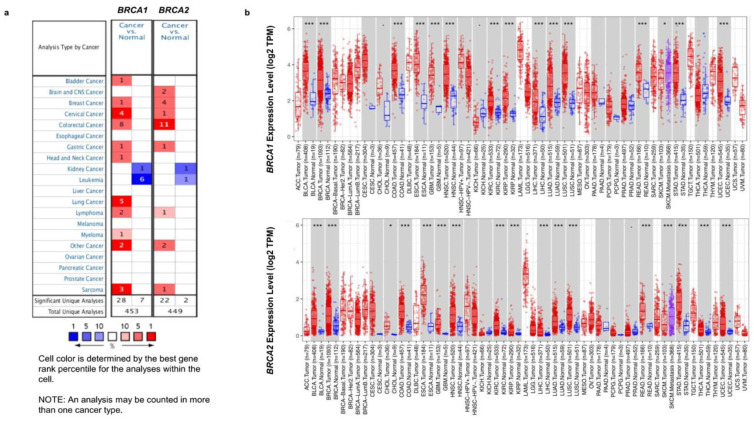
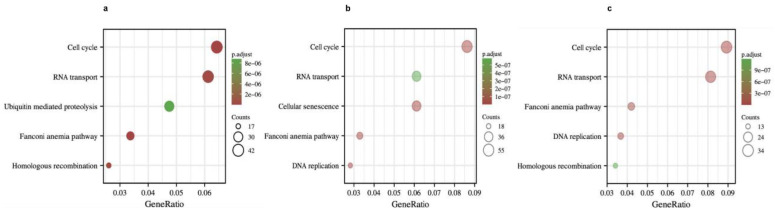
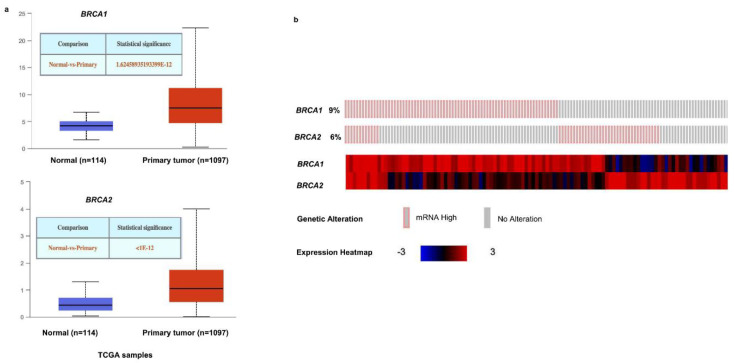
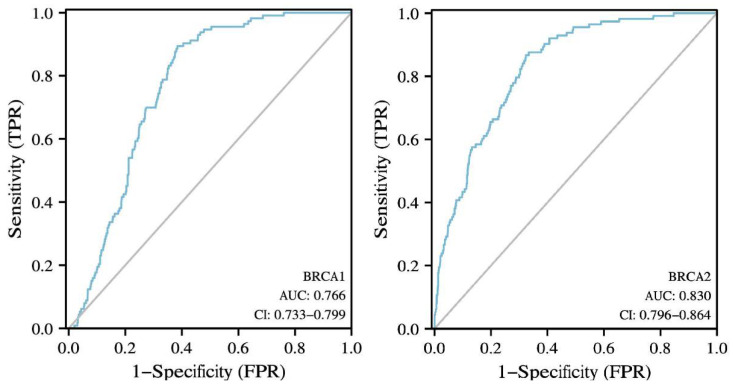
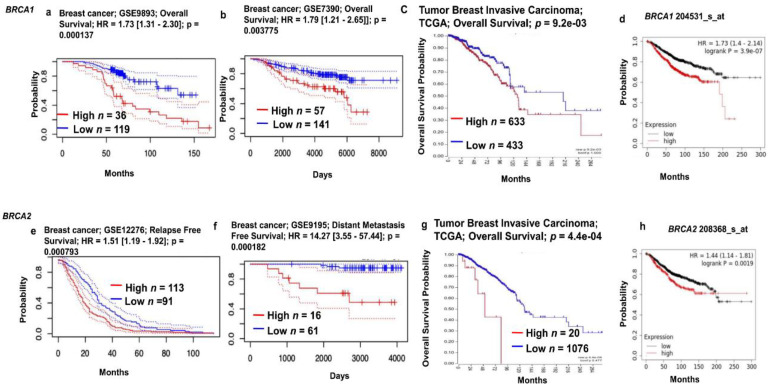
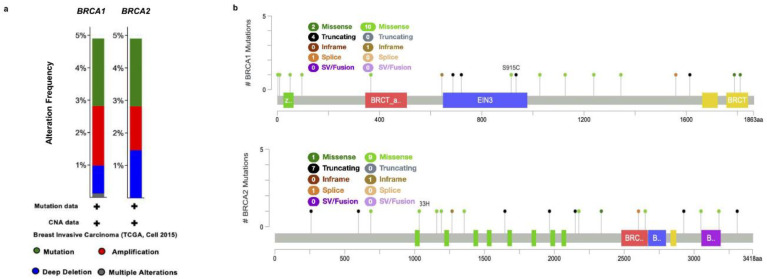
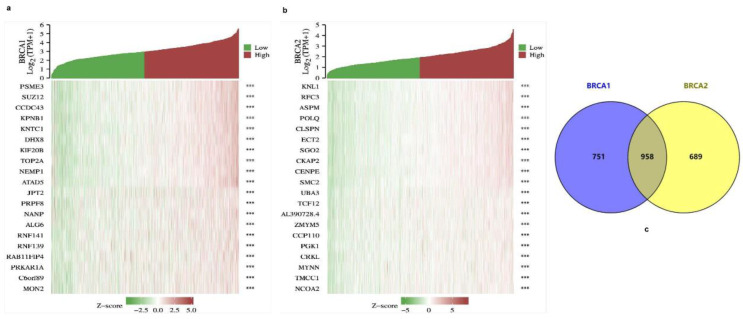
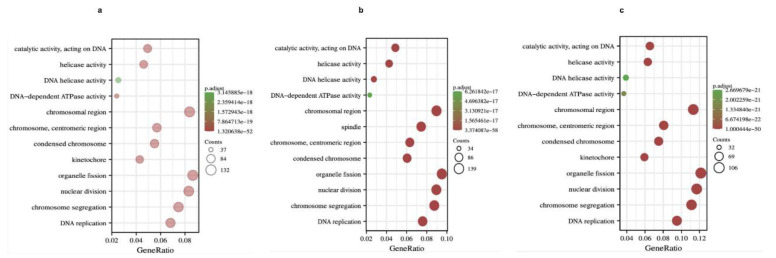
BRCA1/2 are breast cancer susceptibility genes that are involved in DNA repair and transcriptional control. They are dysregulated in breast cancer, making them attractive therapeutic targets. Here, we performed a systematic multiomics analysis to expound BRCA1/2 functions as prognostic biomarkers in breast cancer. First, using different web-based bioinformatics platforms (Oncomine, TIMER 2.0, UALCAN, and cBioportal), the expression of BRCA1/2 was assessed. Then, the R package was used to analyze the diagnostic value of BRCA1/2 in patients. Next, we determined the relationship between BRCA1/2 mRNA expression and prognosis in patients (PrognoScan Database, R2: Kaplan Meier Scanner and Kaplan−Meier Plotter). Subsequently, the association of BRCA1/2 with mutation frequency alteration and copy number alterations in breast cancer was investigated using the cBioportal platform. After that, we identified known and predicted structural genes and proteins essential for BRCA1/2 functions using GeneMania and STRING db. Finally, GO and KEGG pathway enrichment analyses were performed to elucidate the potential biological functions of the co-expression genes of BRCA1/2. The BRCA1/2 mRNA level in breast cancer tissues was considerably higher than in normal tissues, with AUCs of 0.766 and 0.829, respectively. Overexpression of BRCA1/2 was significantly related to the worse overall survival (p < 0.001) and was correlated to clinicopathological characteristics including lymph nodes, estrogen receptors, and progesterone receptors (p < 0.01). The alteration frequencies of both the gens have been checked, and the results show that BRCA1 and BRCA2 show different alteration frequencies. Their mutation sites differ from each other. GO and KEGG showed that BRCA1/2 was mainly enriched in catalytic activity, acting on DNA, chromosomal region, organelle fission, cell cycle, etc. The 20 most frequently changed genes were closely related to BRCA1/2, including PALB2 and RAD51 relatively. Our study provides suggestive evidence of the prognostic role of BRCA1/2 in breast cancer and the therapeutic target for breast cancer. Furthermore, BRCA1/2 may influence BRCA prognosis through catalytic activity, acting on DNA, chromosomal regions, organelle fission, and the cell cycle. Nevertheless, further validation is warranted.
BRCA1/2 是乳腺癌易感基因,参与 DNA 修复和转录调控。它们在乳腺癌中失调,使其成为有吸引力的治疗靶点。在这里,我们进行了系统的多组学分析,以阐述 BRCA1/2 作为乳腺癌预后生物标志物的功能。首先,使用不同的基于网络的生物信息学平台(Oncomine、TIMER 2.0、UALCAN 和 cBioportal)评估 BRCA1/2 的表达。然后,使用 R 包分析 BRCA1/2 在患者中的诊断价值。接下来,我们确定了 BRCA1/2 mRNA 表达与患者预后之间的关系(PrognoScan 数据库、R2:Kaplan Meier Scanner 和 Kaplan-Meier Plotter)。随后,使用 cBioportal 平台研究 BRCA1/2 与乳腺癌中突变频率改变和拷贝数改变的关系。之后,我们使用 GeneMania 和 STRING db 鉴定了对 BRCA1/2 功能至关重要的已知和预测结构基因和蛋白质。最后,进行 GO 和 KEGG 通路富集分析以阐明 BRCA1/2 共表达基因的潜在生物学功能。BRCA1/2 在乳腺癌组织中的 mRNA 水平明显高于正常组织,AUC 分别为 0.766 和 0.829。BRCA1/2 的过表达与总生存期较差显著相关(p<0.001),并与包括淋巴结、雌激素受体和孕激素受体在内的临床病理特征相关(p<0.01)。已经检查了这两个基因的改变频率,结果表明 BRCA1 和 BRCA2 具有不同的改变频率。它们的突变位点彼此不同。GO 和 KEGG 显示 BRCA1/2 主要富集在催化活性、作用于 DNA、染色体区域、细胞器分裂、细胞周期等方面。最常改变的 20 个基因与 BRCA1/2 密切相关,包括 PALB2 和 RAD51 相对较多。我们的研究为 BRCA1/2 在乳腺癌中的预后作用和乳腺癌的治疗靶点提供了有价值的证据。此外,BRCA1/2 可能通过催化活性、作用于 DNA、染色体区域、细胞器分裂和细胞周期影响 BRCA 预后。然而,需要进一步验证。