Renal, Vascular and Diabetes Research Laboratory, IIS-Fundación Jiménez Díaz, Universidad Autónoma de Madrid, Spanish Biomedical Research Centre in Diabetes and Associated Metabolic Disorders (CIBERDEM), 28040 Madrid, Spain.
Facultad de Ciencias de la Salud, Universidad de Las Américas, Concepción-Talcahuano 4301099, Chile.
Int J Mol Sci. 2022 Apr 2;23(7):3965. doi: 10.3390/ijms23073965.
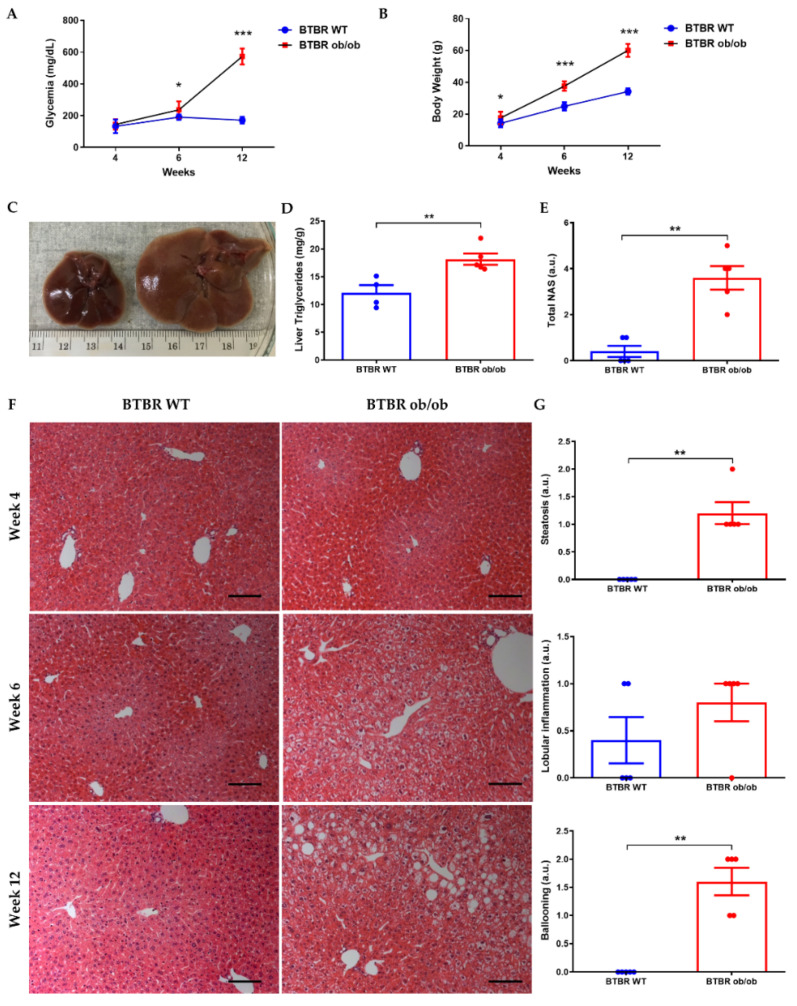
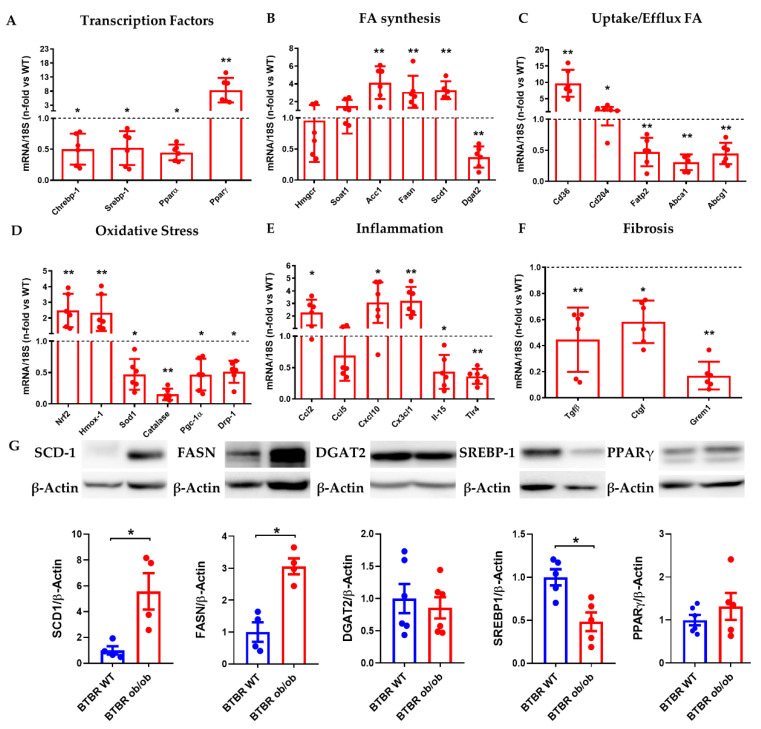
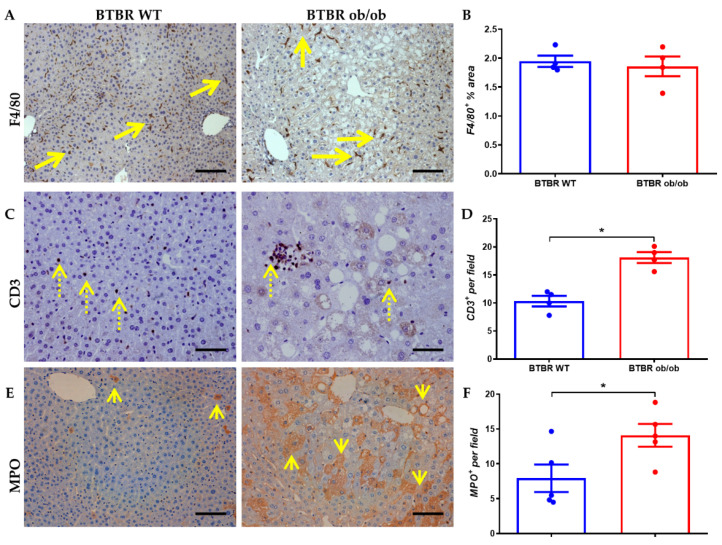
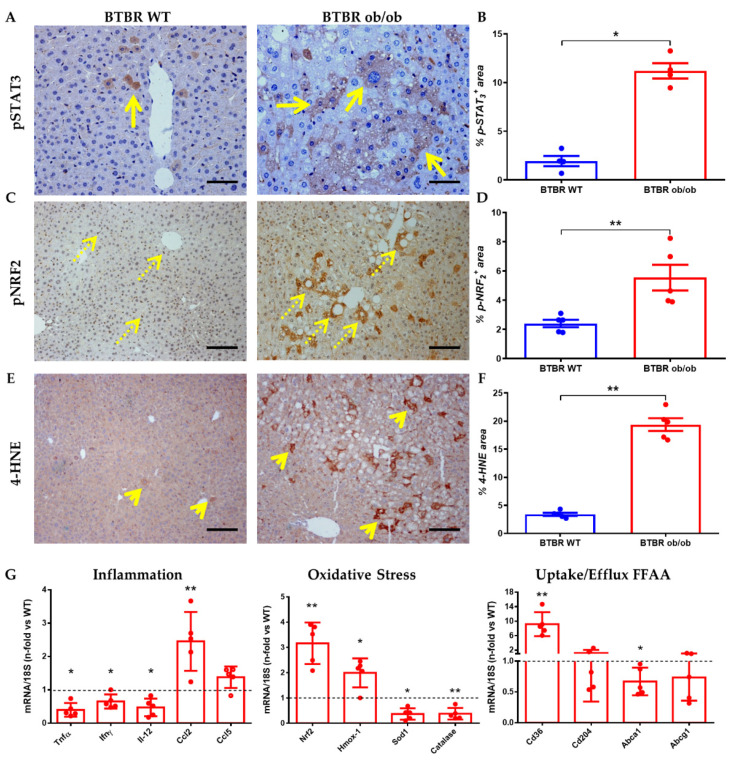
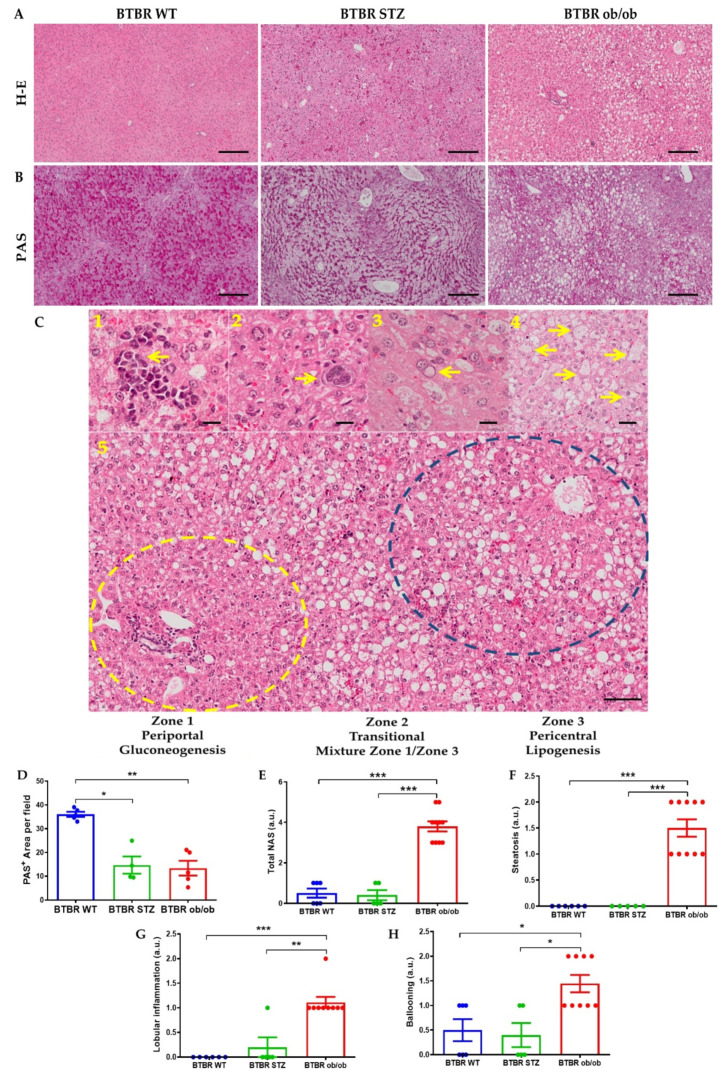
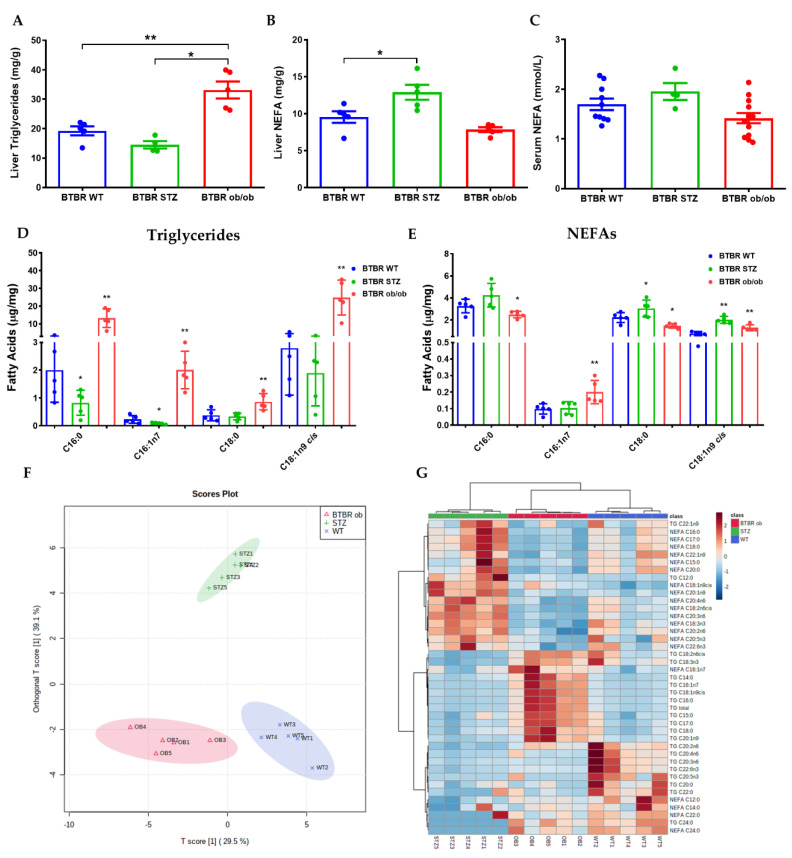
Metabolic associated fatty liver disease (MAFLD) is a hepatic manifestation of metabolic syndrome and usually associated with obesity and diabetes. Our aim is to characterize the pathophysiological mechanism involved in MAFLD development in Black Tan and brachyuric (BTBR) insulin-resistant mice in combination with leptin deficiency (ob/ob). We studied liver morphology and biochemistry on our diabetic and obese mice model (BTBR ob/ob) as well as a diabetic non-obese control (BTBR + streptozotocin) and non-diabetic control mice (BTBR wild type) from 4-22 weeks. Lipid composition was assessed, and lipid related pathways were studied at transcriptional and protein level. Microvesicular steatosis was evident in BTBR ob/ob from week 6, progressing to macrovesicular in the following weeks. At 12th week, inflammatory clusters, activation of STAT3 and Nrf2 signaling pathways, and hepatocellular ballooning. At 22 weeks, the histopathological features previously observed were maintained and no signs of fibrosis were detected. Lipidomic analysis showed profiles associated with de novo lipogenesis (DNL). BTBR ob/ob mice develop MAFLD profile that resemble pathological features observed in humans, with overactivation of inflammatory response, oxidative stress and DNL signaling pathways. Therefore, BTBR ob/ob mouse is an excellent model for the study of the steatosis to steatohepatitis transition.
代谢相关性脂肪性肝病(MAFLD)是代谢综合征的肝脏表现,通常与肥胖和糖尿病有关。我们的目的是研究肥胖和胰岛素抵抗的黑褐色和短毛(BTBR)小鼠与瘦素缺乏(ob/ob)结合时 MAFLD 发展中涉及的病理生理机制。我们研究了我们的糖尿病和肥胖小鼠模型(BTBR ob/ob)的肝脏形态和生化,以及糖尿病非肥胖对照(BTBR + 链脲佐菌素)和非糖尿病对照小鼠(BTBR 野生型)从 4-22 周。评估了脂质组成,并在转录和蛋白质水平研究了与脂质相关的途径。从第 6 周开始,BTBR ob/ob 中出现微泡性脂肪变性,随后进展为大泡性脂肪变性。在第 12 周,观察到炎症簇、STAT3 和 Nrf2 信号通路的激活以及肝细胞气球样变。在第 22 周,先前观察到的组织病理学特征得以维持,未发现纤维化迹象。脂质组学分析显示与从头合成(DNL)相关的谱。BTBR ob/ob 小鼠发展出 MAFLD 谱,与人类观察到的病理特征相似,炎症反应、氧化应激和 DNL 信号通路过度激活。因此,BTBR ob/ob 小鼠是研究脂肪变性向脂肪性肝炎转变的理想模型。