Dunne Cody L, Osman Selena, Viguers Kayla, Queiroga Ana Catarina, Szpilman David, Peden Amy E
Department of Emergency Medicine, University of Calgary, Calgary, AB T2N2T9, Canada.
International Drowning Researchers' Alliance, Kuna, ID 83634, USA.
Int J Environ Res Public Health. 2022 Mar 24;19(7):3846. doi: 10.3390/ijerph19073846.
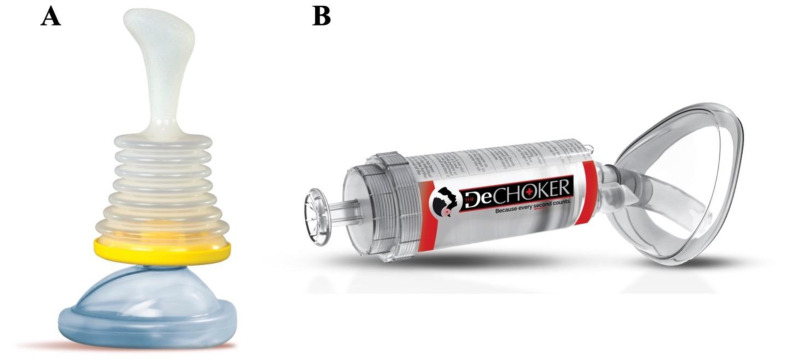
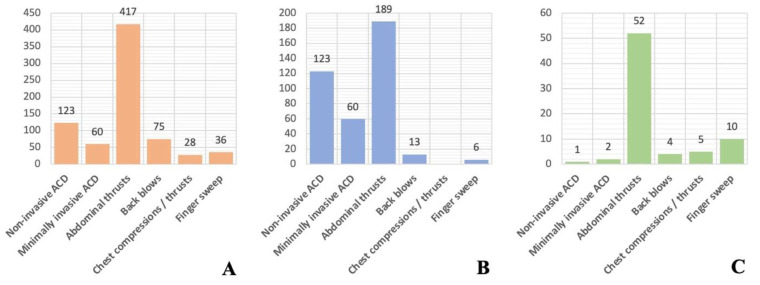
Background: Choking is a prevalent source of injury and mortality worldwide. Traditional choking interventions, including abdominal thrusts and back blows, have remained the standard of care for decades despite limited published data. Suction-based airway clearance devices (ACDs) are becoming increasingly popular and there is an urgent need to evaluate their role in choking intervention. The aim of this study was to describe the effectiveness (i.e., resolution of choking symptoms) and safety (i.e., adverse events) of identified airway clearance devices interventions to date. Methods: This retrospective descriptive analysis included any individual who self-identified to manufacturers as having used an ACD as a choking intervention prior to 1 July 2021. Records were included if they contained three clinical variables (patient’s age, type of foreign body, and resolution of choking symptoms). Researchers performed data extraction using a standardized form which included patient, situational, and outcome variables. Results: The analysis included 124 non-invasive (LifeVac©) and 61 minimally invasive (Dechoker©) ACD interventions. Median patient age was 40 (LifeVac©, 2−80) and 73 (Dechoker©, 5−84) with extremes of age being most common [<5 years: LifeVac© 37.1%, Dechoker© 23.0%; 80+ years: 27.4%, 37.7%]. Food was the most frequent foreign body (LifeVac© 84.7%, Dechoker© 91.8%). Abdominal thrusts (LifeVac© 37.9%, Dechoker© 31.1%) and back blows (LifeVac© 39.5%, Dechoker© 41.0%) were often co-interventions. Resolution of choking symptoms occurred following use of the ACD in 123 (LifeVac©) and 60 (Dechoker©) cases. Three adverse events (1.6%) were reported: disconnection of bellows/mask during intervention (LifeVac©), a lip laceration (Dechoker©), and an avulsed tooth (Dechoker©). Conclusion: Initial available data has shown ACDs to be promising in the treatment of choking. However, limitations in data collection methods and quality exist. The second phase of this evaluation will be an industry independent, prospective assessment in order to improve data quality, and inform future choking intervention algorithms.
窒息是全球范围内常见的损伤和死亡原因。尽管公开数据有限,但包括腹部冲击法和背部叩击法在内的传统窒息干预措施数十年来一直是护理标准。基于吸引的气道清理装置(ACD)越来越受欢迎,迫切需要评估其在窒息干预中的作用。本研究的目的是描述迄今为止已确定的气道清理装置干预措施的有效性(即窒息症状的缓解)和安全性(即不良事件)。方法:这项回顾性描述性分析纳入了在2021年7月1日前向制造商自我报告曾使用ACD进行窒息干预的任何个体。如果记录包含三个临床变量(患者年龄、异物类型和窒息症状的缓解情况),则纳入研究。研究人员使用标准化表格进行数据提取,该表格包括患者、情境和结果变量。结果:分析包括124例非侵入性(LifeVac©)和61例微创性(Dechoker©)ACD干预。患者年龄中位数分别为40岁(LifeVac©,2至80岁)和73岁(Dechoker©,5至84岁),极端年龄最为常见[<5岁:LifeVac©占37.1%,Dechoker©占23.0%;80岁以上:27.4%,37.7%]。食物是最常见的异物(LifeVac©占84.7%,Dechoker©占91.8%)。腹部冲击法(LifeVac©占37.9%,Dechoker©占31.1%)和背部叩击法(LifeVac©占39.5%,Dechoker©占41.0%)经常作为联合干预措施。使用ACD后,123例(LifeVac©)和60例(Dechoker©)患者的窒息症状得到缓解。报告了3例不良事件(1.6%):干预期间风箱/面罩断开连接(LifeVac©)、唇部撕裂伤(Dechoker©)和牙齿脱落(Dechoker©)。结论:初步可得数据表明ACD在窒息治疗方面很有前景。然而,数据收集方法和质量存在局限性。本评估的第二阶段将是一项行业独立的前瞻性评估,以提高数据质量,并为未来的窒息干预算法提供依据。