Han Yang, Jia Zhilong, Shi Jinlong, Wang Weidong, He Kunlun
Key Laboratory of Biomedical Engineering and Translational Medicine, Ministry of Industry and Information Technology, Medical Innovation Research Division of Chinese PLA General Hospital, Beijing, China.
Beijing Key Laboratory for Precision Medicine of Chronic Heart Failure, Medical Innovation Research Division of Chinese PLA General Hospital, Beijing, China.
Bioimpacts. 2022;12(2):139-146. doi: 10.34172/bi.2021.23378. Epub 2021 Oct 9.
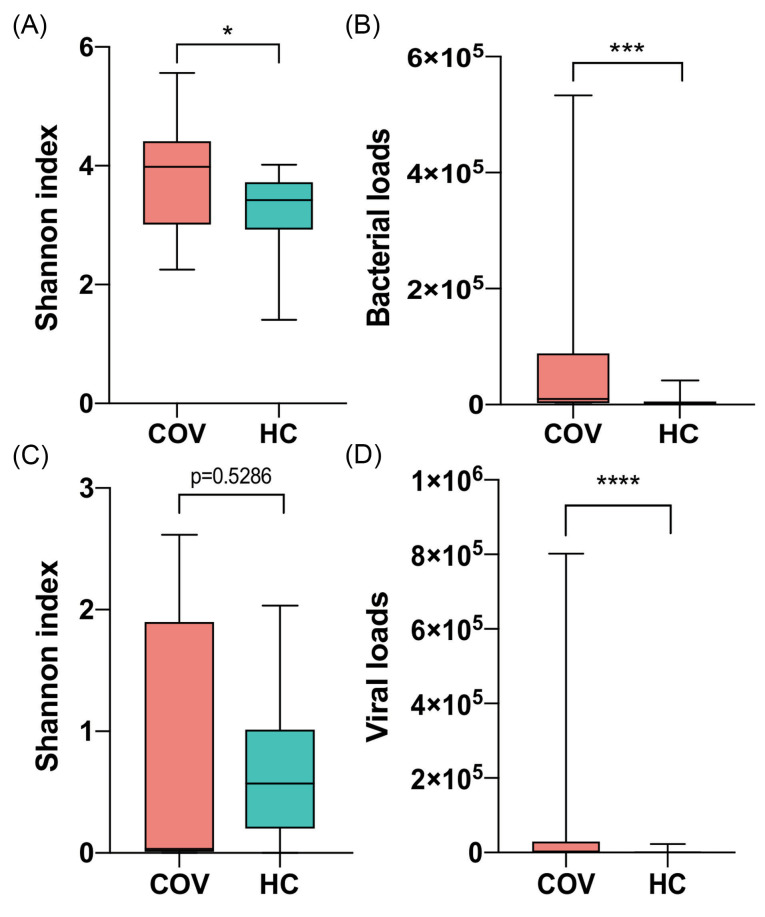
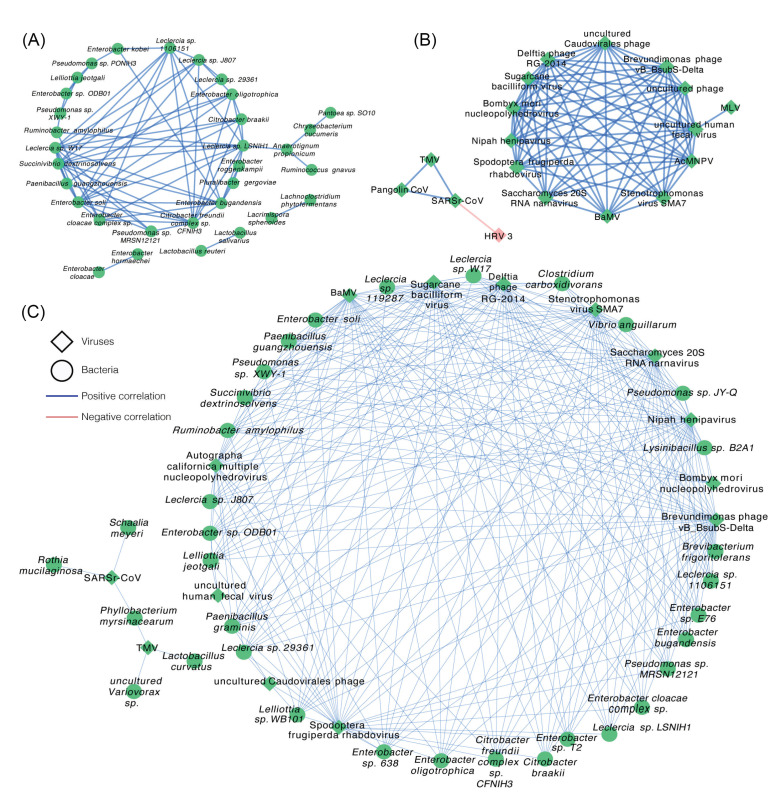
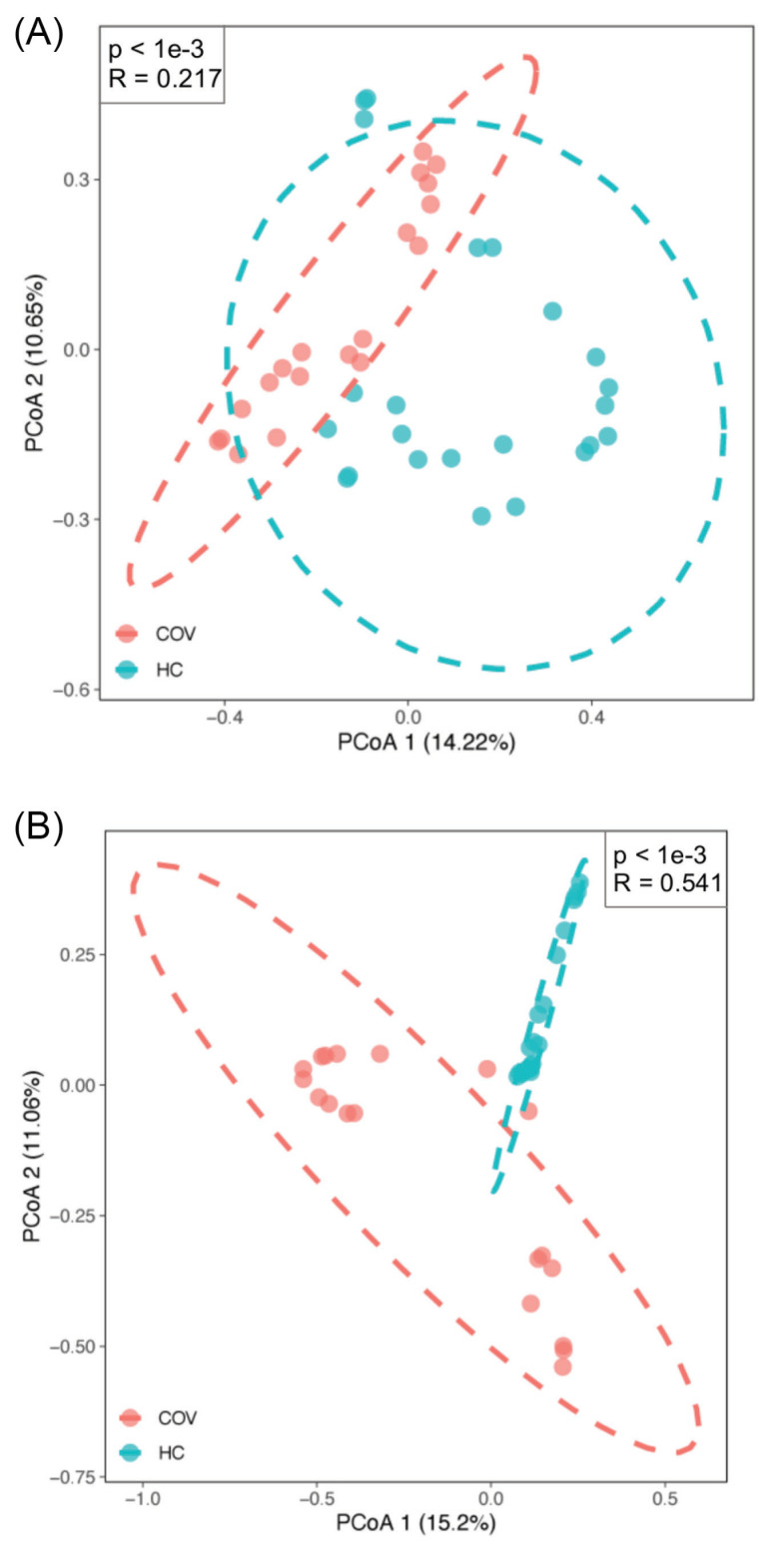
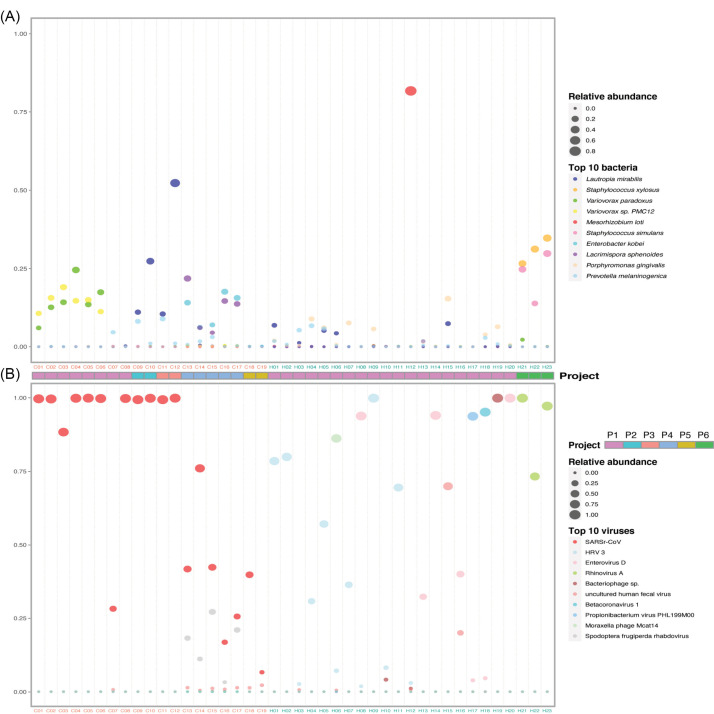
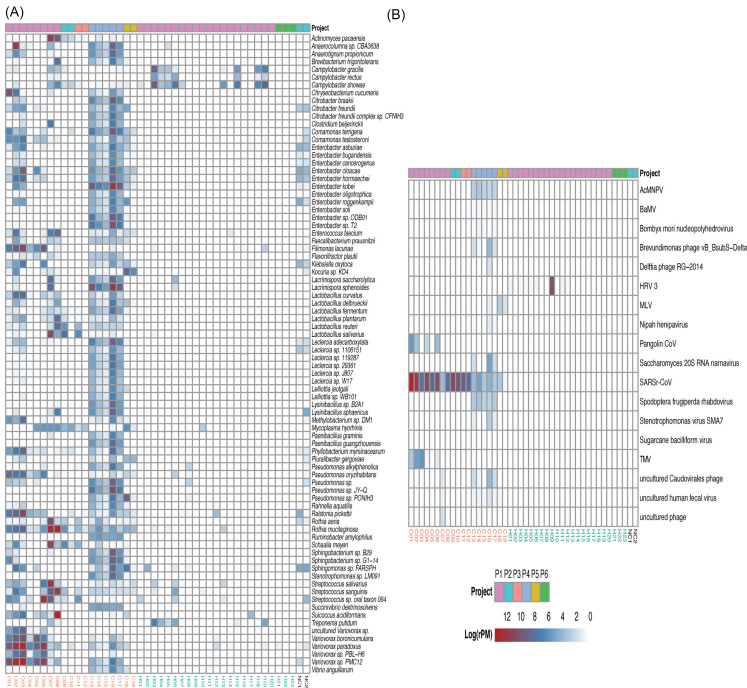
With the outbreak of coronavirus disease 2019 (COVID-19) caused by severe acute respiratory syndrome coronavirus 2 (SARS-CoV-2), the interaction between the host and SARS-CoV-2 was widely studied. However, it is unclear whether and how SARS-CoV-2 infection affects lung microflora, which contribute to COVID-19 complications. Here, we analyzed the metatranscriptomic data of bronchoalveolar lavage fluid (BALF) of 19 COVID-19 patients and 23 healthy controls from 6 independent projects and detailed the active microbiota landscape in both healthy individuals and COVID-19 patients. The infection of SARS-CoV-2 could deeply change the lung microbiota, evidenced by the α-diversity, β-diversity, and species composition analysis based on bacterial microbiota and virome. Pathogens (e.g., causing pneumonia as well), immunomodulatory probiotics (e.g., lactic acid bacteria and , a butyrate producer), and Tobacco mosaic virus (TMV) were enriched in the COVID-19 group, suggesting a severe microbiota dysbiosis. The significant correlation between , TMV, and SARS-CoV-2 revealed drastic inflammatory battles between the host, SARS-CoV-2, and other microbes in the lungs. Notably, TMV only existed in the COVID-19 group, while human respirovirus 3 (HRV 3) only existed in the healthy group. Our study provides insights into the active microbiota in the lungs of COVID-19 patients and would contribute to the understanding of the infection mechanism of SARS-CoV-2 and the treatment of the disease and complications. SARS-COV-2 infection deeply altered the lung microbiota of COVID-19 patients. The enrichment of several other pathogens, immunomodulatory probiotics (lactic acid or butyrate producers), and TMV in the COVID-19 group suggests a complex and active lung microbiota disorder.
随着严重急性呼吸综合征冠状病毒2(SARS-CoV-2)引发的2019冠状病毒病(COVID-19)的爆发,宿主与SARS-CoV-2之间的相互作用得到了广泛研究。然而,尚不清楚SARS-CoV-2感染是否以及如何影响肺部微生物群,而肺部微生物群与COVID-19并发症有关。在此,我们分析了来自6个独立项目的19例COVID-19患者和23名健康对照者的支气管肺泡灌洗液(BALF)的宏转录组数据,并详细阐述了健康个体和COVID-19患者体内活跃的微生物群景观。基于细菌微生物群和病毒组的α多样性、β多样性和物种组成分析表明,SARS-CoV-2感染可深刻改变肺部微生物群。COVID-19组中富集了病原体(如也可导致肺炎的病原体)、免疫调节益生菌(如乳酸菌和一种丁酸盐产生菌)以及烟草花叶病毒(TMV),这表明存在严重的微生物群失调。[此处原文缺失部分内容]、TMV与SARS-CoV-2之间的显著相关性揭示了宿主、SARS-CoV-2与肺部其他微生物之间激烈的炎症斗争。值得注意的是,TMV仅存在于COVID-19组中,而人呼吸道病毒3型(HRV 3)仅存在于健康组中。我们的研究为了解COVID-19患者肺部活跃的微生物群提供了见解,并将有助于理解SARS-CoV-2的感染机制以及该疾病和并发症的治疗。SARS-CoV-2感染深刻改变了COVID-19患者的肺部微生物群。COVID-19组中几种其他病原体、免疫调节益生菌(乳酸或丁酸盐产生菌)和TMV的富集表明存在复杂且活跃的肺部微生物群紊乱。