Special Infectious Agents Unit, King Fahd Medical Research Center, King Abdulaziz University, Jeddah 21589, Saudi Arabia; Department of Medical Laboratory Sciences, Faculty of Applied Medical Sciences, King Abdulaziz University, Jeddah 21589, Saudi Arabia.
Special Infectious Agents Unit, King Fahd Medical Research Center, King Abdulaziz University, Jeddah 21589, Saudi Arabia.
J Infect Public Health. 2023 May;16(5):680-688. doi: 10.1016/j.jiph.2023.03.001. Epub 2023 Mar 4.
Infection with SARS-CoV-2 may perturb normal microbiota, leading to secondary infections that can complicate the viral disease. The aim of this study was to probe the alteration of nasopharyngeal (NP) microbiota in the context of SARS-CoV-2 infection and obesity and to identify other respiratory pathogens among COVID-19 cases that may affect patients' health.
A total of 107 NP swabs, including 22 from control subjects and 85 from COVID-19 patients, were processed for 6S amplicon sequencing. The respiratory pathogens causing secondary infections were identified by RT-PCR assay, using a kit that contained specific primers and probes combinations to amplify 33 known respiratory pathogens.
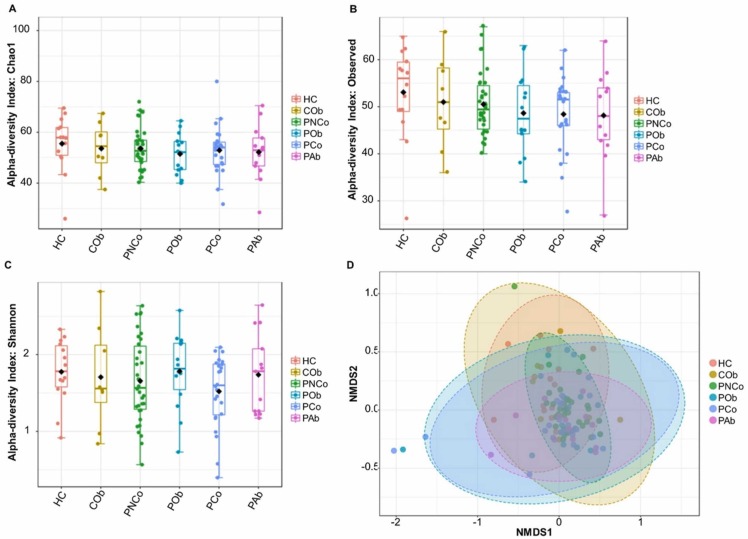
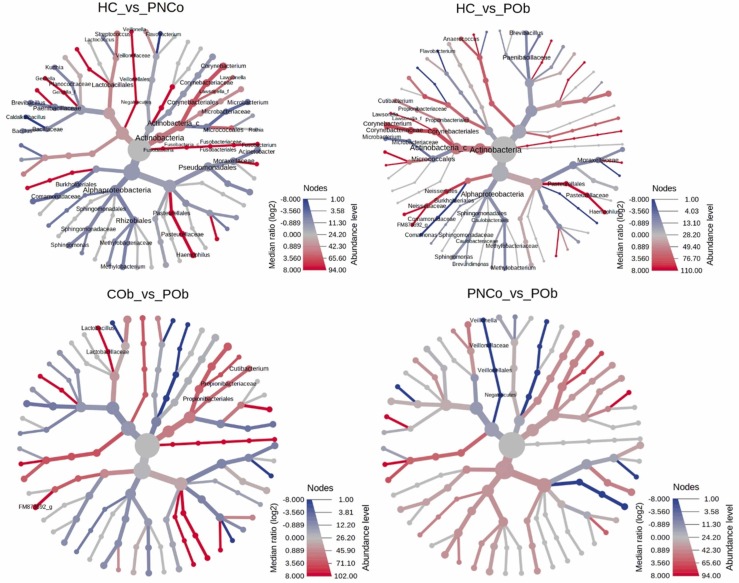
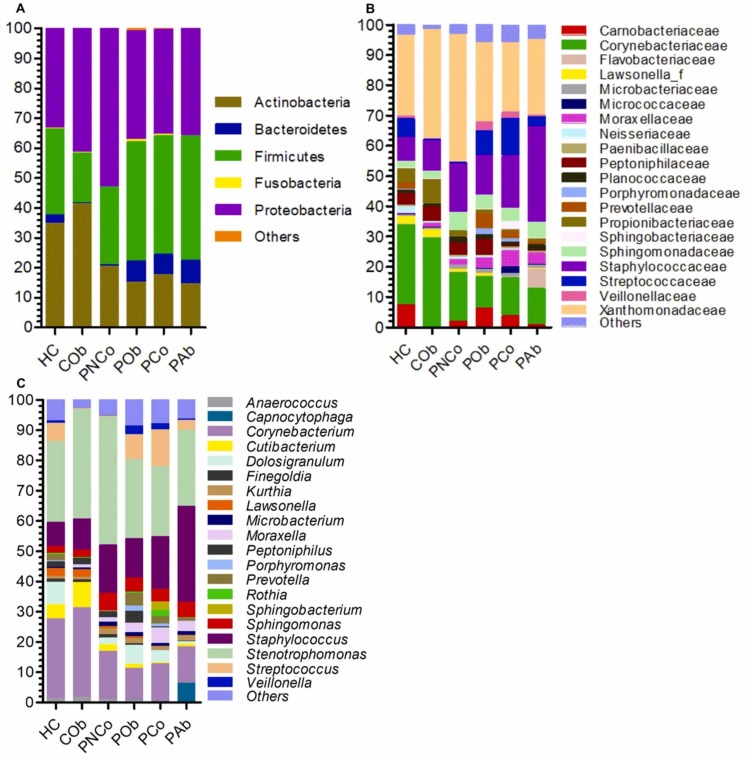
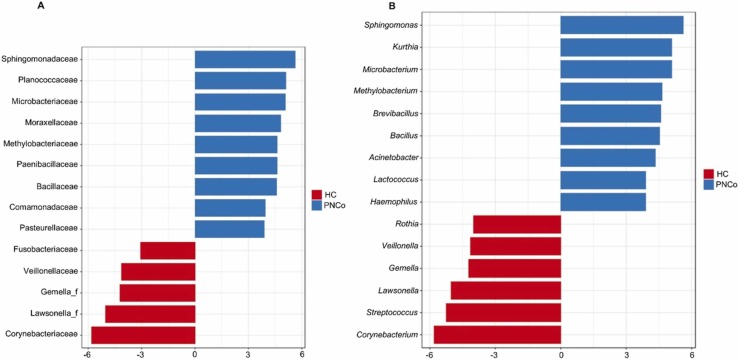
No significant (p > 0.05) difference was observed in the alpha and beta diversity analysis, but specific taxa differed significantly between the control and COVID-19 patient groups. Genera of Sphingomonas, Kurthia, Microbacterium, Methylobacterium, Brevibacillus, Bacillus, Acinetobacter, Lactococcus, and Haemophilus was significantly abundant (p < 0.05) in COVID-19 patients compared with a healthy control group. Staphylococcus was found in relatively high abundance (35.7 %) in the COVID-19 patient groups, mainly those treated with antibiotics. A relatively high percentage of Streptococcus was detected in COVID-19 patient groups with obesity or other comorbidities. Respiratory pathogens, including Staphylococcus aureus, Streptococcus pneumoniae, Haemophilus influenzae, Moraxella catarrhalis, and Salmonella species, along with Pneumocystis jirovecii fungal species were detected by RT-PCR mainly in the COVID-19 patients. Klebsiella pneumoniae was commonly found in most of the samples from the control and COVID-19 patients. Four COVID-19 patients had viral coinfections with human adenovirus, human rhinovirus, enterovirus, and human parainfluenza virus 1.
Overall, no substantial difference was observed in the predominant NP bacterial community, but specific taxa were significantly changed between the healthy control and COVID-19 patients. Comparatively, an increased number of respiratory pathogens were identified in COVID-19 patients, and NP colonization by K. pneumoniae was probably occurring in the local population.
感染 SARS-CoV-2 可能会扰乱正常的微生物群,导致继发感染,从而使病毒病复杂化。本研究的目的是探究 SARS-CoV-2 感染和肥胖背景下鼻咽(NP)微生物群的变化,并确定 COVID-19 病例中的其他呼吸道病原体,这些病原体可能会影响患者的健康。
共处理了 107 个 NP 拭子,包括 22 个对照和 85 个 COVID-19 患者,进行 6S 扩增子测序。通过 RT-PCR 检测鉴定引起继发感染的呼吸道病原体,该试剂盒包含特定的引物和探针组合,可扩增 33 种已知的呼吸道病原体。
在 alpha 和 beta 多样性分析中未观察到显著差异(p>0.05),但对照组和 COVID-19 患者组之间的特定分类群存在显著差异。与健康对照组相比,COVID-19 患者中 Sphingomonas、Kurthia、Microbacterium、Methylobacterium、Brevibacillus、Bacillus、Acinetobacter、Lactococcus 和 Haemophilus 的属明显丰富(p<0.05)。金黄色葡萄球菌在 COVID-19 患者中相对较高(35.7%),主要存在于接受抗生素治疗的患者中。在肥胖或合并症的 COVID-19 患者中,链球菌的检出率相对较高。通过 RT-PCR 主要在 COVID-19 患者中检测到呼吸道病原体,包括金黄色葡萄球菌、肺炎链球菌、流感嗜血杆菌、卡他莫拉菌和沙门氏菌以及真菌耶氏肺孢子菌。肺炎克雷伯菌在大多数对照和 COVID-19 患者的样本中均常见。4 例 COVID-19 患者合并人腺病毒、人鼻病毒、肠道病毒和人副流感病毒 1 病毒感染。
总体而言,健康对照组和 COVID-19 患者之间,NP 细菌群落的主要组成没有明显差异,但特定分类群有明显变化。相比之下,COVID-19 患者中鉴定出更多的呼吸道病原体,肺炎克雷伯菌可能在当地人群中定植于 NP。