Service of Molecular Virology, Department of Molecular Biology (DBM), Université Libre de Bruxelles (ULB), Gosselies 6041, Belgium.
Department of Medical Microbiology, Amsterdam UMC, University of Amsterdam, Laboratory of Experimental Virology, Amsterdam 1105 AZ, the Netherland.
EBioMedicine. 2022 May;79:103985. doi: 10.1016/j.ebiom.2022.103985. Epub 2022 Apr 14.
The multiplicity, heterogeneity, and dynamic nature of human immunodeficiency virus type-1 (HIV-1) latency mechanisms are reflected in the current lack of functional cure for HIV-1. Accordingly, all classes of latency-reversing agents (LRAs) have been reported to present variable ex vivo potencies. Here, we investigated the molecular mechanisms underlying the potency variability of one LRA: the DNA methylation inhibitor 5-aza-2'-deoxycytidine (5-AzadC).
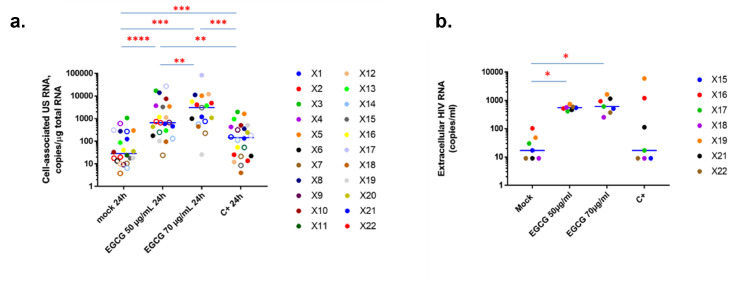
We employed epigenetic interrogation methods (electrophoretic mobility shift assays, chromatin immunoprecipitation, Infinium array) in complementary HIV-1 infection models (latently-infected T-cell line models, primary CD4 T-cell models and ex vivo cultures of PBMCs from HIV individuals). Extracellular staining of cell surface receptors and intracellular metabolic activity were measured in drug-treated cells. HIV-1 expression in reactivation studies was explored by combining the measures of capsid p24 protein, green fluorescence protein signal, intracellular and extracellular viral RNA and viral DNA.
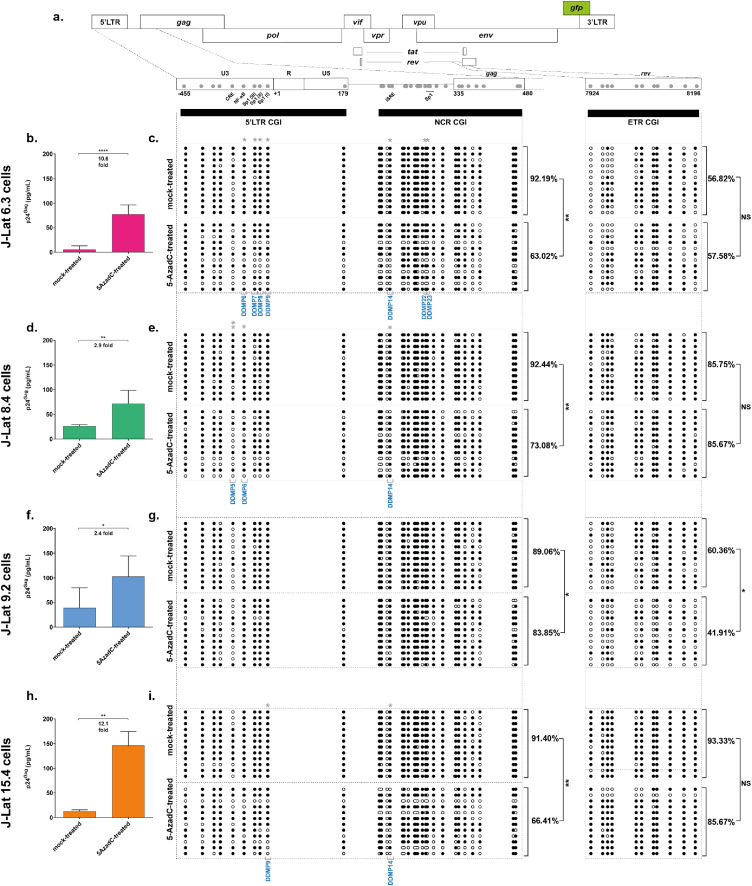
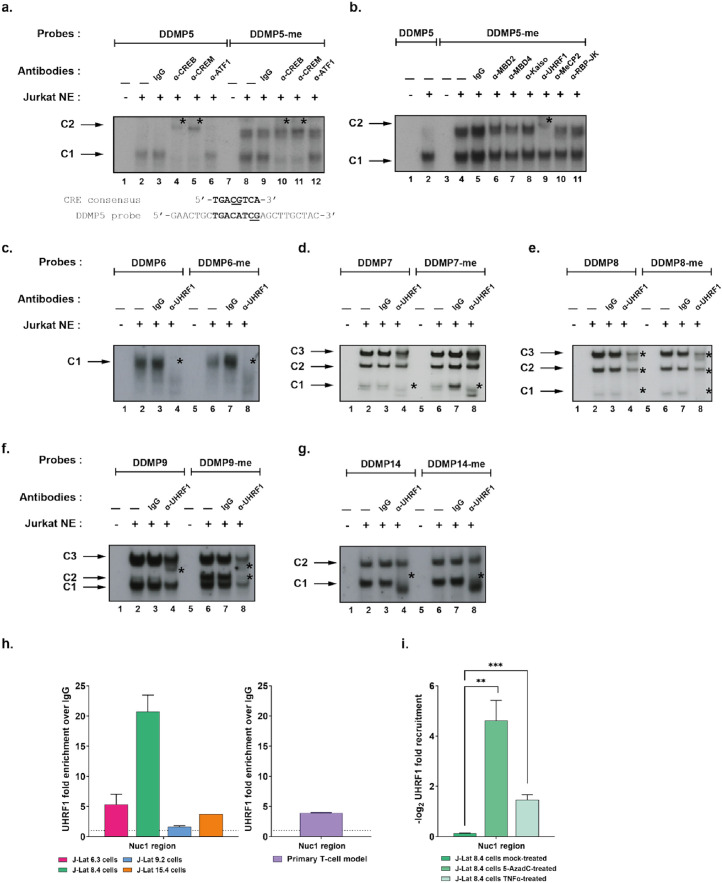
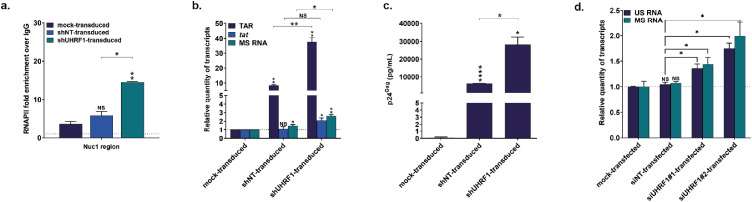
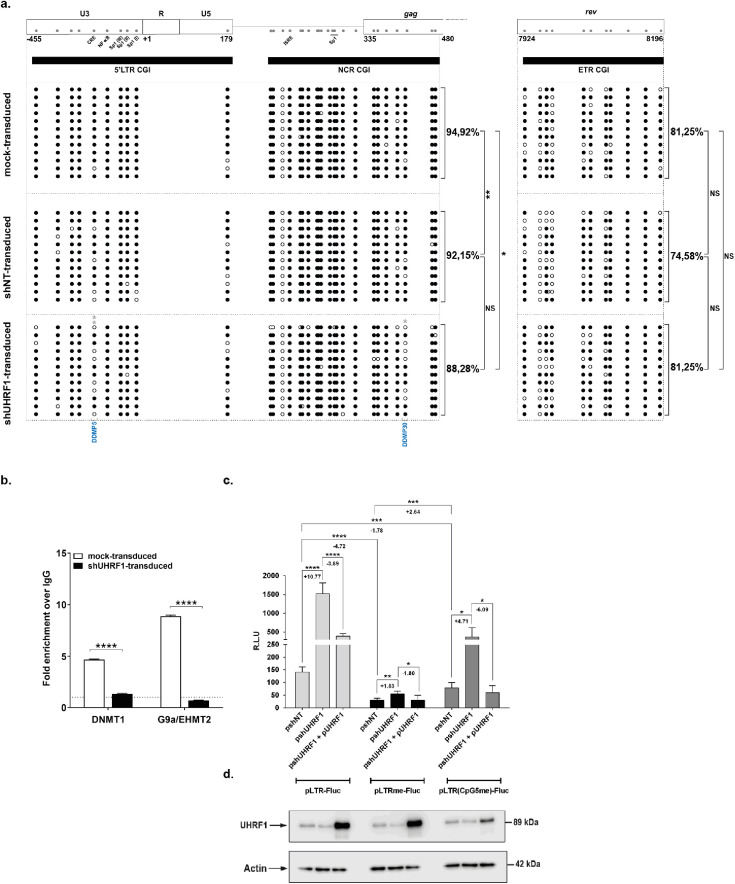
We uncovered specific demethylation CpG signatures induced by 5-AzadC in the HIV-1 promoter. By analyzing the binding modalities to these CpG, we revealed the recruitment of the epigenetic integrator Ubiquitin-like with PHD and RING finger domain 1 (UHRF1) to the HIV-1 promoter. We showed that UHRF1 redundantly binds to the HIV-1 promoter with different binding modalities where DNA methylation was either non-essential, essential or enhancing UHRF1 binding. We further demonstrated the role of UHRF1 in the epigenetic repression of the latent viral promoter by a concerted control of DNA and histone methylations.
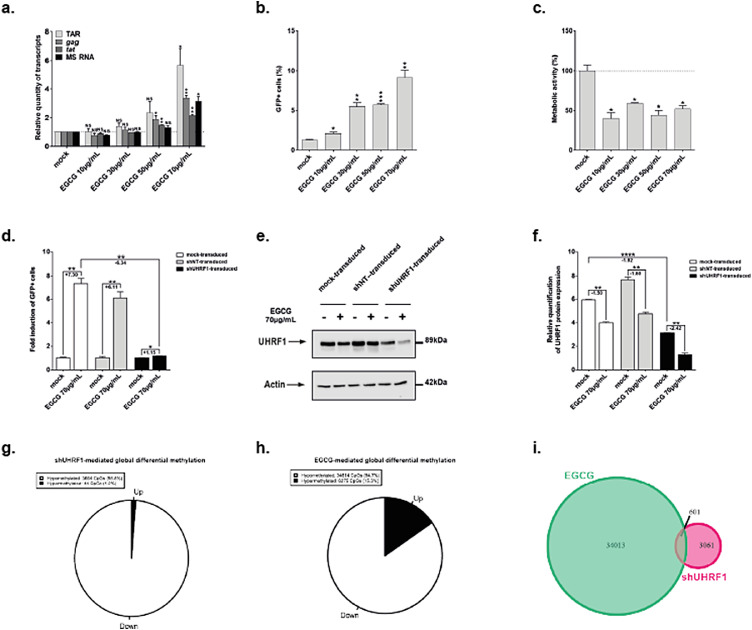
A better understanding of the molecular mechanisms of HIV-1 latency allows for the development of innovative antiviral strategies. As a proof-of-concept, we showed that pharmacological inhibition of UHRF1 in ex vivo HIV patient cell cultures resulted in potent viral reactivation from latency. Together, we identify UHRF1 as a novel actor in HIV-1 epigenetic silencing and highlight that it constitutes a new molecular target for HIV-1 cure strategies.
Funding was provided by the Belgian National Fund for Scientific Research (F.R.S.-FNRS, Belgium), the « Fondation Roi Baudouin », the NEAT (European AIDS Treatment Network) program, the Internationale Brachet Stiftung, ViiV Healthcare, the Télévie, the Walloon Region (« Fonds de Maturation »), « Les Amis des Instituts Pasteur à Bruxelles, asbl », the University of Brussels (Action de Recherche Concertée ULB grant), the Marie Skodowska Curie COFUND action, the European Union's Horizon 2020 research and innovation program under grant agreement No 691119-EU4HIVCURE-H2020-MSCA-RISE-2015, the French Agency for Research on AIDS and Viral Hepatitis (ANRS), the Sidaction and the "Alsace contre le Cancer" Foundation. This work is supported by 1UM1AI164562-01, co-funded by National Heart, Lung and Blood Institute, National Institute of Diabetes and Digestive and Kidney Diseases, National Institute of Neurological Disorders and Stroke, National Institute on Drug Abuse and the National Institute of Allergy and Infectious Diseases.
人类免疫缺陷病毒 1 型(HIV-1)潜伏期机制的多样性、异质性和动态性质反映在目前缺乏 HIV-1 的功能性治愈方法上。因此,所有类别的潜伏逆转剂(LRAs)都被报道具有不同的体外效力。在这里,我们研究了一种 LRA:DNA 甲基化抑制剂 5-氮杂-2'-脱氧胞苷(5-AzadC)的效力变异性的分子机制。
我们采用表观遗传检测方法(电泳迁移率变动分析、染色质免疫沉淀、Infinium 阵列)在互补的 HIV-1 感染模型(潜伏感染的 T 细胞系模型、原代 CD4 T 细胞模型和来自 HIV 个体的外周血单核细胞的体外培养物)中进行研究。在药物处理的细胞中测量细胞表面受体的细胞外染色和细胞内代谢活性。通过结合衣壳 p24 蛋白、绿色荧光蛋白信号、细胞内和细胞外病毒 RNA 和病毒 DNA 的测量,研究了再激活研究中的 HIV-1 表达。
我们揭示了 5-AzadC 在 HIV-1 启动子中诱导的特定去甲基化 CpG 特征。通过分析这些 CpG 的结合方式,我们揭示了表观遗传整合因子泛素样与 PH 和环指域 1(UHRF1)募集到 HIV-1 启动子。我们表明,UHRF1 通过不同的结合方式冗余地与 HIV-1 启动子结合,其中 DNA 甲基化要么是非必需的,要么是必需的,要么是增强 UHRF1 的结合。我们进一步证明了 UHRF1 通过协同控制 DNA 和组蛋白甲基化在潜伏病毒启动子的表观遗传抑制中的作用。
更好地了解 HIV-1 潜伏期的分子机制可以为开发创新的抗病毒策略提供帮助。作为概念验证,我们表明,在来自 HIV 患者的体外细胞培养物中,UHRF1 的药理学抑制导致潜伏病毒从潜伏期的有效再激活。综上所述,我们确定 UHRF1 是 HIV-1 表观遗传沉默的一个新因子,并强调它是 HIV-1 治愈策略的一个新的分子靶点。
这项工作得到了比利时国家科学研究基金会(F.R.S.-FNRS,比利时)、“Roi Baudouin 基金会”、“NEAT(欧洲艾滋病治疗网络)计划”、“Internationale Brachet 基金会”、ViiV Healthcare、Télévie、瓦隆大区(“Fonds de Maturation”)、“Les Amis des Instituts Pasteur à Bruxelles,asbl”、布鲁塞尔自由大学(ULB 合作研究行动)、玛丽·斯克多斯基居里 COFUND 行动、欧盟地平线 2020 研究与创新计划(通过协议号 691119-EU4HIVCURE-H2020-MSCA-RISE-2015 授予的赠款)、法国艾滋病和病毒性肝炎研究署(ANRS)、Sidaction 和“阿尔萨斯反对癌症”基金会的资助。这项工作得到了 1UM1AI164562-01 的支持,该项目由美国国立卫生研究院的国家心脏、肺和血液研究所、国家糖尿病和消化与肾脏疾病研究所、国家神经紊乱和中风研究所、国家药物滥用研究所和国家过敏和传染病研究所共同资助。