Department of Gene Vectors, Helmholtz Zentrum München, German Research Center for Environmental Health, Munich, Germany.
PLoS Pathog. 2012 Sep;8(9):e1002902. doi: 10.1371/journal.ppat.1002902. Epub 2012 Sep 6.
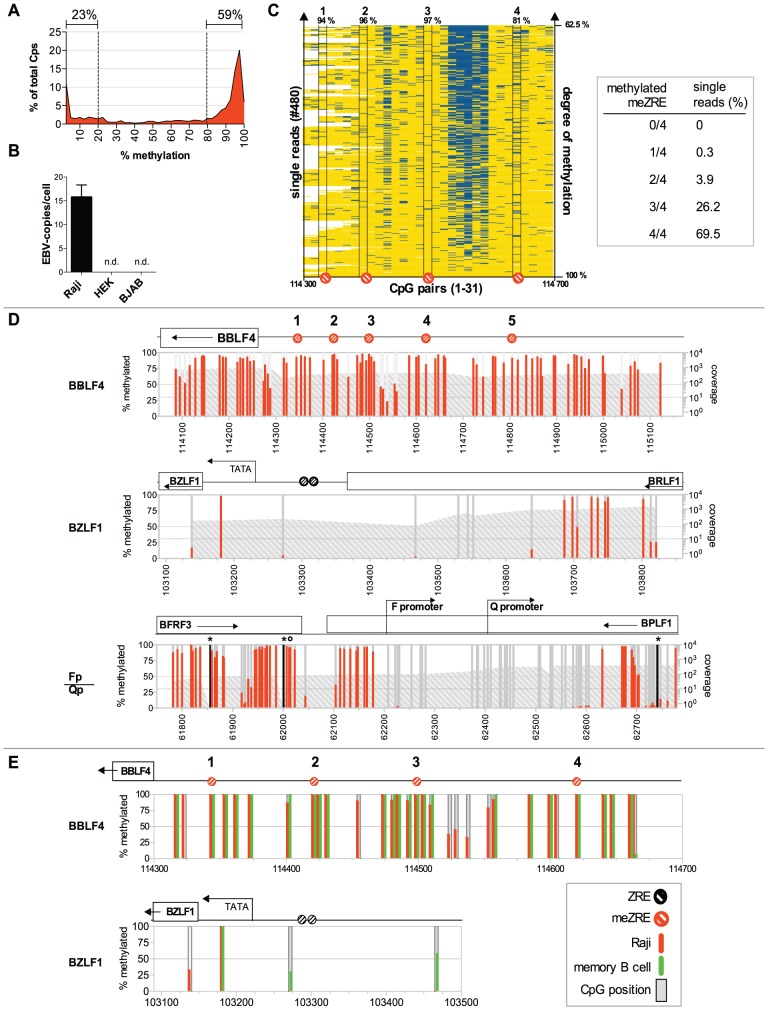
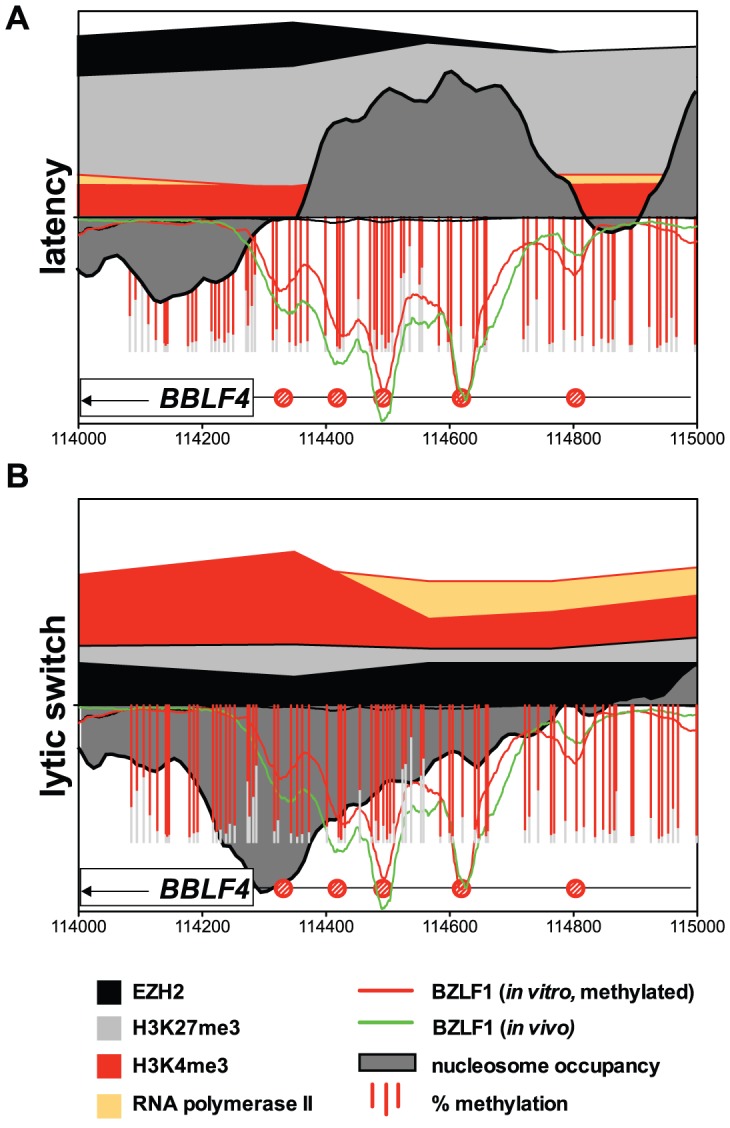
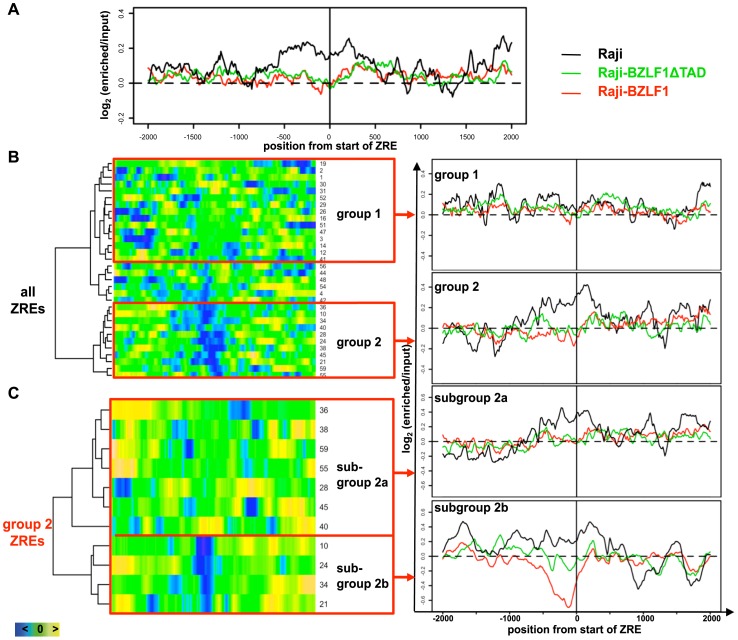
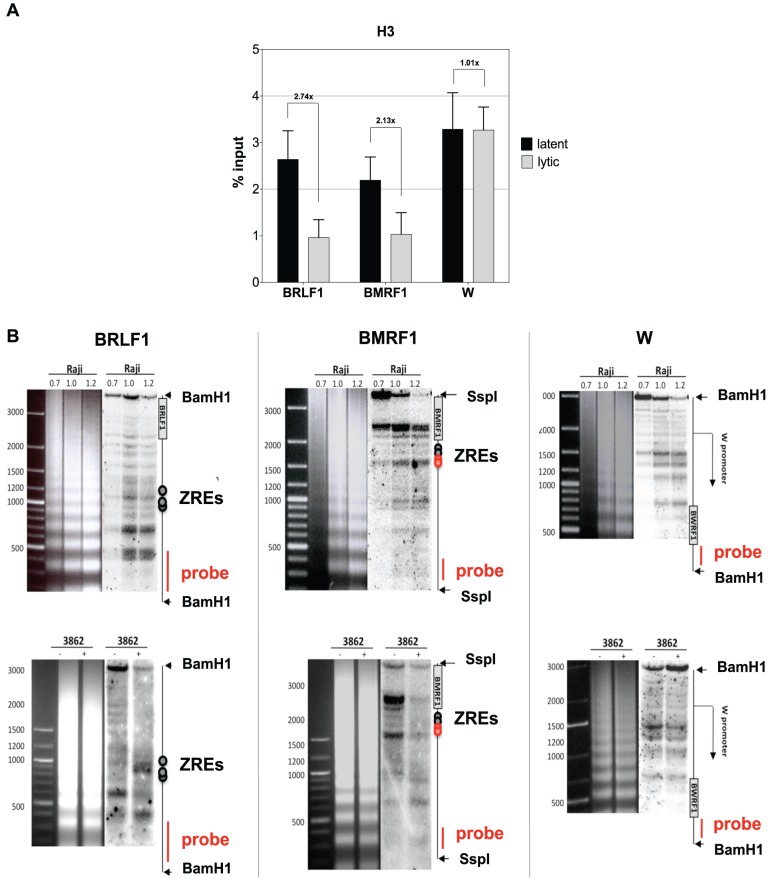
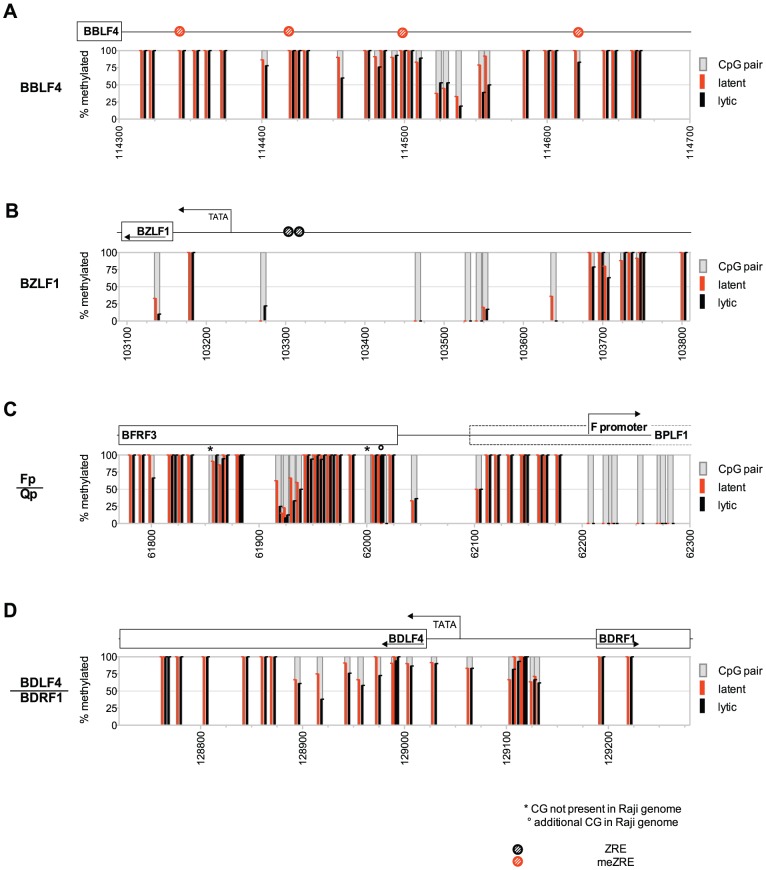
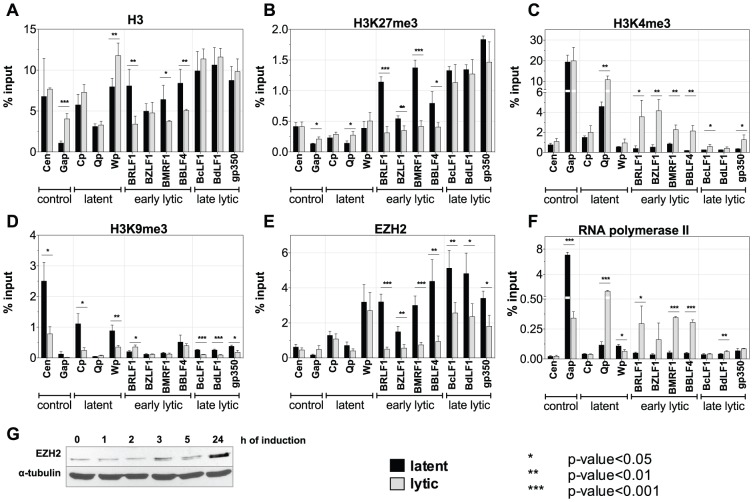
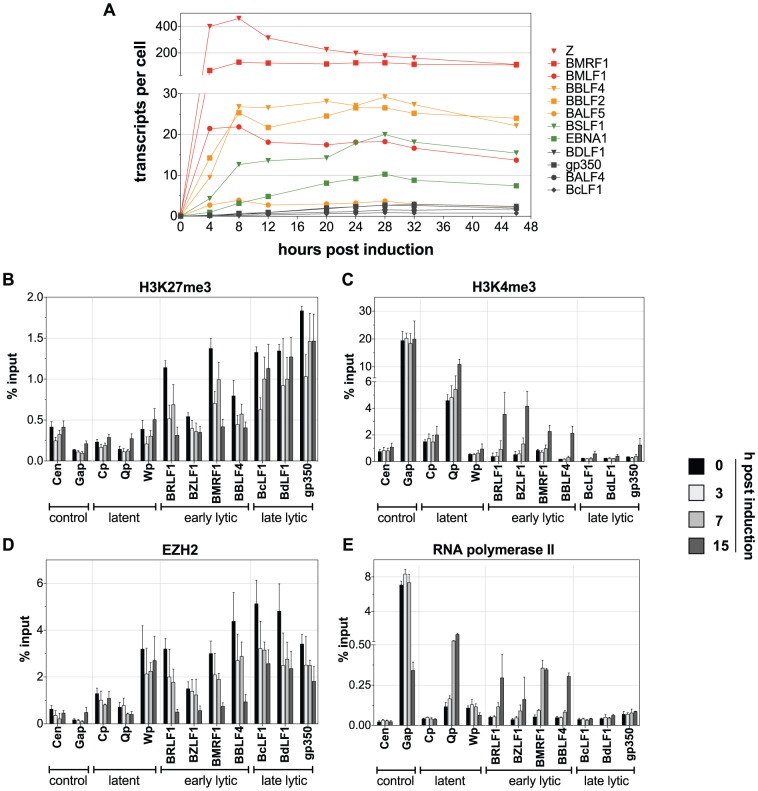
Epigenetic mechanisms are essential for the regulation of all genes in mammalian cells but transcriptional repression including DNA methylation are also major epigenetic mechanisms of defense inactivating potentially harmful pathogens. Epstein-Barr Virus (EBV), however, has evolved to take advantage of CpG methylated DNA to regulate its own biphasic life cycle. We show here that latent EBV DNA has an extreme composition of methylated CpG dinucleotides with a bimodal distribution of unmethylated or fully methylated DNA at active latent genes or completely repressed lytic promoters, respectively. We find this scenario confirmed in primary EBV-infected memory B cells in vivo. Extensive CpG methylation of EBV's DNA argues for a very restricted gene expression during latency. Above-average nucleosomal occupancy, repressive histone marks, and Polycomb-mediated epigenetic silencing further shield early lytic promoters from activation during latency. The very tight repression of viral lytic genes must be overcome when latent EBV enters its lytic phase and supports de novo virus synthesis in infected cells. The EBV-encoded and AP-1 related transcription factor BZLF1 overturns latency and initiates virus synthesis in latently infected cells. Paradoxically, BZLF1 preferentially binds to CpG-methylated motifs in key viral promoters for their activation. Upon BZLF1 binding, we find nucleosomes removed, Polycomb repression lost, and RNA polymerase II recruited to the activated early promoters promoting efficient lytic viral gene expression. Surprisingly, DNA methylation is maintained throughout this phase of viral reactivation and is no hindrance to active transcription of extensively CpG methylated viral genes as thought previously. Thus, we identify BZLF1 as a pioneer factor that reverses epigenetic silencing of viral DNA to allow escape from latency and report on a new paradigm of gene regulation.
表观遗传机制对于哺乳动物细胞中所有基因的调控至关重要,但转录抑制包括 DNA 甲基化也是使潜在有害病原体失活的主要表观遗传防御机制。然而,Epstein-Barr 病毒(EBV)已经进化为利用 CpG 甲基化 DNA 来调节其自身的双相生命周期。我们在这里表明,潜伏 EBV DNA 具有极端的甲基化 CpG 二核苷酸组成,在活性潜伏基因或完全抑制的裂解启动子处,未甲基化或完全甲基化的 DNA 呈现双峰分布。我们在体内原发性 EBV 感染的记忆 B 细胞中发现了这种情况。EBV 的 DNA 广泛的 CpG 甲基化表明在潜伏期内的基因表达受到非常严格的限制。高核小体占有率、抑制性组蛋白标记和 Polycomb 介导的表观遗传沉默进一步保护早期裂解启动子免受潜伏期激活。当潜伏 EBV 进入裂解期并支持感染细胞中的新病毒合成时,必须克服病毒裂解基因的严格抑制。EBV 编码的和 AP-1 相关转录因子 BZLF1 颠覆潜伏期并启动潜伏感染细胞中的病毒合成。矛盾的是,BZLF1 优先结合关键病毒启动子中的 CpG 甲基化基序以激活它们。在 BZLF1 结合后,我们发现核小体被移除,Polycomb 抑制物丢失,RNA 聚合酶 II 被募集到激活的早期启动子上,促进有效的裂解病毒基因表达。令人惊讶的是,在这个病毒重新激活阶段,DNA 甲基化被维持,并且不会像以前认为的那样阻碍广泛 CpG 甲基化病毒基因的活跃转录。因此,我们确定 BZLF1 为一种先驱因子,它可以逆转病毒 DNA 的表观遗传沉默,从而逃避潜伏期,并报告一个新的基因调控范例。