Zhang Changliang, Zhang Yu, Ma Kai, Wang Guangxian, Tang Min, Wang Runxin, Xia Ziyue, Xu Zhiyan, Sun Miao, Bao Xiaofeng, Gui Hongxing, Wang Hui
Department of Pharmacology, School of Pharmacy, Nantong University, Nantong, China.
Department of Gastroenterology, Renmin Hospital of Wuhan University, Wuhan, China.
Ann Transl Med. 2022 Mar;10(6):316. doi: 10.21037/atm-22-458.
Functional constipation (FC) is a common gastrointestinal (GI) disorder characterized by symptoms of constipation without a clear physiologic or anatomic cause. Gut microbiome dysbiosis has been postulated to be a factor in the development of FC, and treatment with probiotic regimens, including strains of , has demonstrated efficacy in managing symptoms. To further understand the role of in GI health, we conducted an animal study and a randomized, double-blind, placebo-controlled clinical trial to evaluate the effect of a specific sub-strain, Lp3a, on FC.
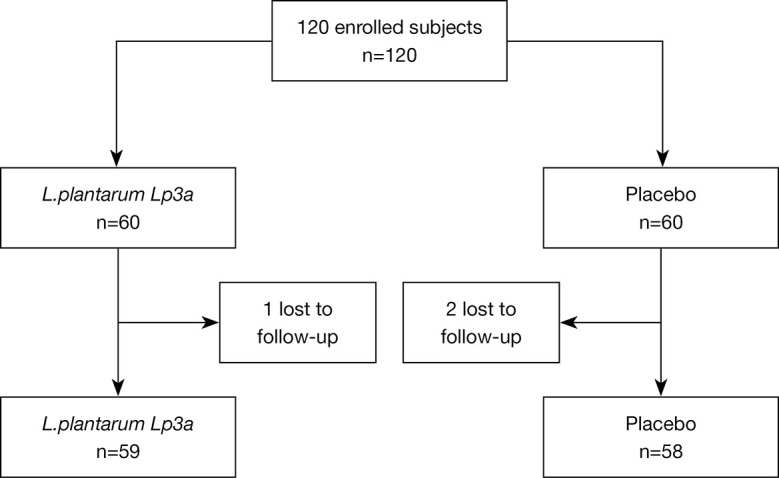
For the animal study, male Kunming mice were treated with doses of Lp3a ranging from 0.67 to 2.00 g/kg or an equivalent amount of placebo for 15 days prior to the induction of constipation via 20 mL/kg of 25% diphenoxylate solution. GI motility parameters including intestinal motion and stool amount were then assessed. In the human study, 120 patients with FC were randomized to treatment [ Lp3a; 2×1.0×10 (colony forming units; CFU) ×7 days] or control groups (n=60 each). The primary endpoint was survey information on FC signs/symptoms. Participants and observers were blinded to group allocation. A subset of 20 Lp3a treated patients underwent pre- and post-treatment 16 s ribosomal ribonucleic acid (rRNA) gene sequencing. Whole genome sequencing (WGS) of Lp3a was also performed.
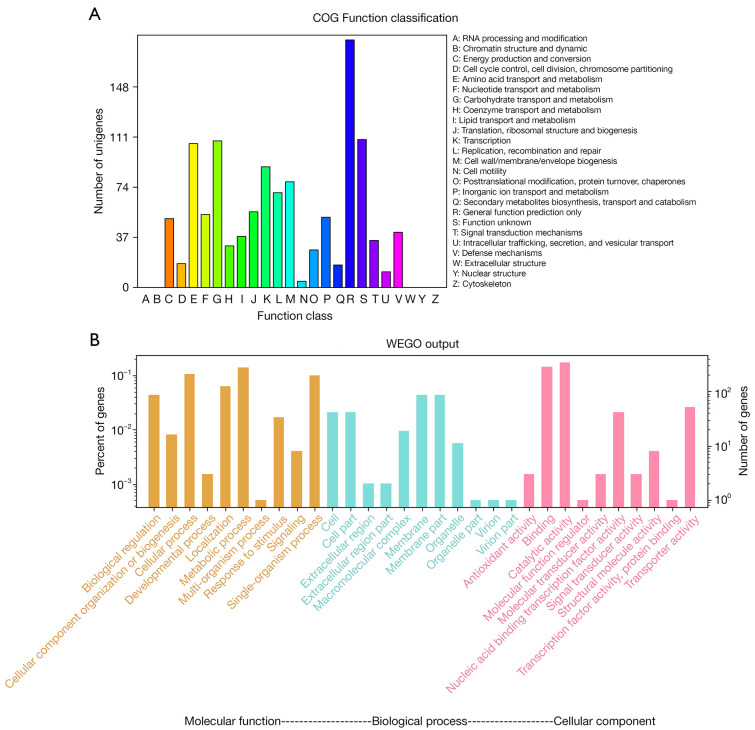
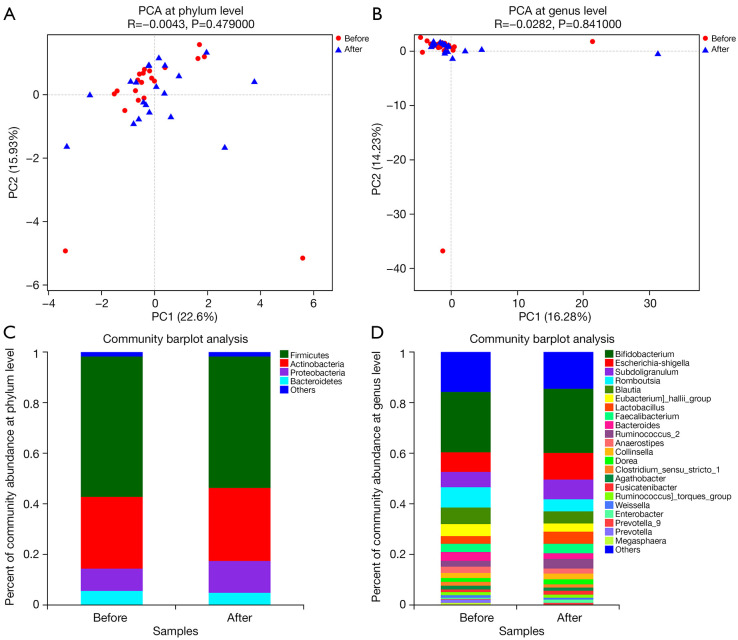
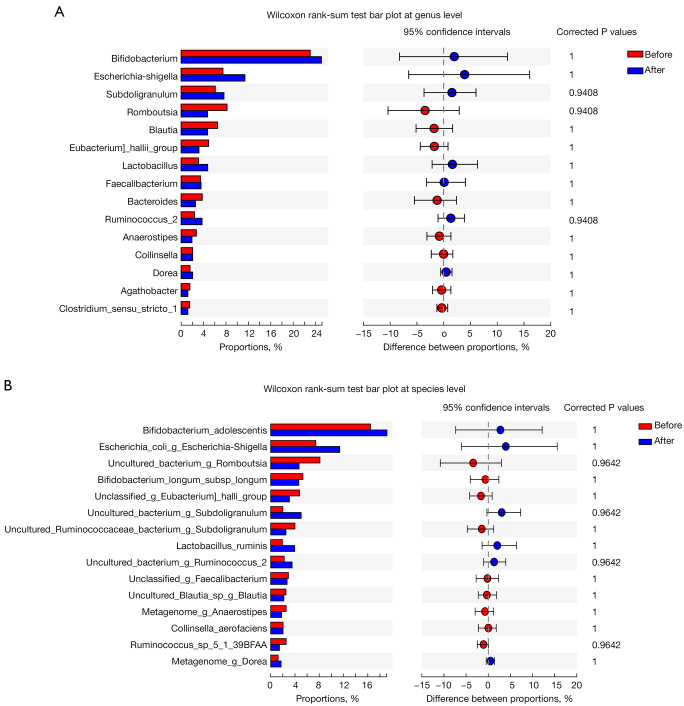
Lp3a-treated mice showed significantly improved intestinal motion, reduced time to first defecation, and increased stool amounts. Similarly, patients in the treatment group (n=59) reported significant improvements in FC signs/symptoms compared to controls (n=58; all P<0.05). Although 16 s rRNA sequencing revealed no significant variations between pre- and post-treatment samples, WGS of Lp3a itself revealed several biological pathways that may underlie the relief of FC symptoms in animals and humans, including methane and fatty acid metabolism and bile acid biosynthesis.
We found that the use of the novel probiotic sub-strain, Lp3a, led to clinically significant improvements in FC in both mice and humans, and identified the potential biological mechanisms underlying this activity.
功能性便秘(FC)是一种常见的胃肠道(GI)疾病,其特征为便秘症状但无明确的生理或解剖学原因。肠道微生物群失调被认为是FC发生发展的一个因素,使用益生菌方案(包括 菌株)进行治疗已证明对症状管理有效。为了进一步了解 在胃肠道健康中的作用,我们进行了一项动物研究和一项随机、双盲、安慰剂对照的临床试验,以评估特定亚菌株Lp3a对FC的影响。
在动物研究中,雄性昆明小鼠在通过20 mL/kg的25%地芬诺酯溶液诱导便秘前15天,用剂量范围为0.67至2.00 g/kg的Lp3a或等量安慰剂进行治疗。然后评估包括肠道运动和粪便量在内的胃肠道动力参数。在人体研究中,120例FC患者被随机分为治疗组[Lp(3a); 2×1.0×10(菌落形成单位;CFU)×7天]或对照组(每组n = 60)。主要终点是关于FC体征/症状的调查信息。参与者和观察者对分组情况不知情。20例接受Lp3a治疗的患者亚组进行了治疗前和治疗后的16 s核糖体核糖核酸(rRNA)基因测序。还对Lp3a进行了全基因组测序(WGS)。
接受Lp3a治疗的小鼠肠道运动明显改善,首次排便时间缩短,粪便量增加。同样,治疗组(n = 59)的患者与对照组(n = 58;所有P<0.05)相比,FC体征/症状有显著改善。虽然16 s rRNA测序显示治疗前和治疗后样本之间无显著差异,但Lp3a本身的WGS揭示了几条可能是动物和人类FC症状缓解基础的生物学途径,包括甲烷和脂肪酸代谢以及胆汁酸生物合成。
我们发现,使用新型益生菌亚菌株Lp3a可使小鼠和人类的FC在临床上得到显著改善,并确定了这种活性背后的潜在生物学机制。