Ghazizadeh Zaniar, Zhu Jiajun, Fattahi Faranak, Tang Alice, Sun Xiaolu, Amin Sadaf, Tsai Su-Yi, Khalaj Mona, Zhou Ting, Samuel Ryan M, Zhang Tuo, Ortega Francis A, Gordillo Miriam, Moroziewicz Dorota, Paull Daniel, Noggle Scott A, Xiang Jenny Zhaoying, Studer Lorenz, Christini David J, Pitt Geoffrey S, Evans Todd, Chen Shuibing
Department of Surgery, Weill Cornell Medical College, New York, NY 10065, USA.
The Center for Stem Cell Biology, Memorial Sloan Kettering Cancer Center, New York, NY 10065, USA.
iScience. 2022 Mar 25;25(4):104153. doi: 10.1016/j.isci.2022.104153. eCollection 2022 Apr 15.
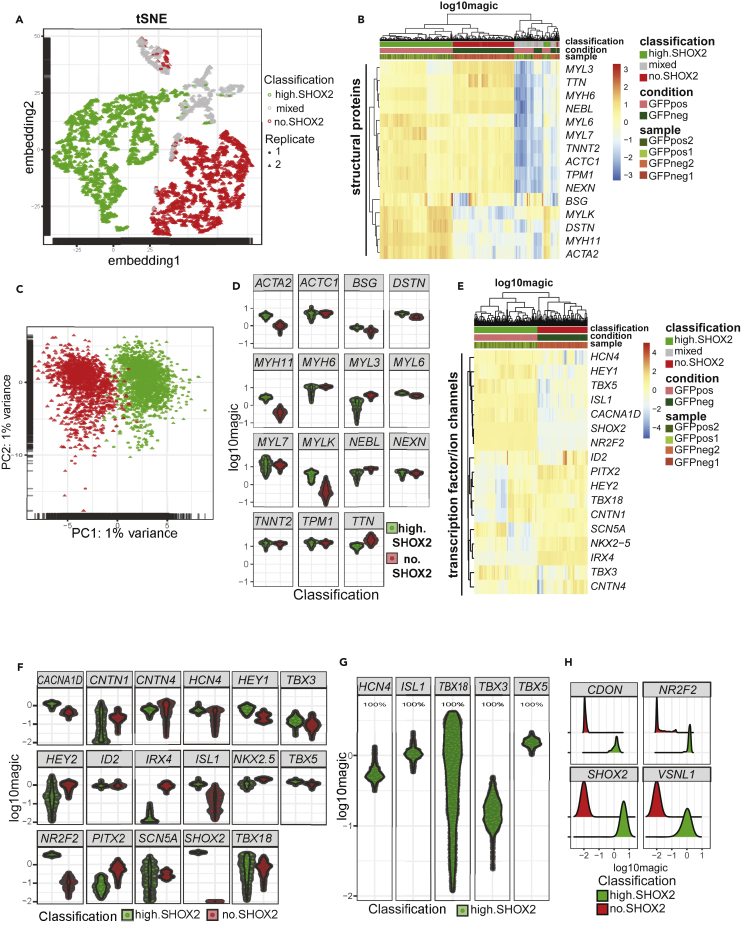
The sinoatrial node (SAN) is the primary pacemaker of the heart. The human SAN is poorly understood due to limited primary tissue access and limitations in robust derivation methods. We developed a dual knockin human embryonic stem cell (hESC) reporter line, which allows the identification and purification of SAN-like cells. Using this line, we performed several rounds of chemical screens and developed an efficient strategy to generate and purify hESC-derived SAN-like cells (hESC-SAN). The derived hESC-SAN cells display molecular and electrophysiological characteristics of bona fide nodal cells, which allowed exploration of their transcriptional profile at single-cell level. In sum, our dual reporter system facilitated an effective strategy for deriving human SAN-like cells, which can potentially be used for future disease modeling and drug discovery.
窦房结(SAN)是心脏的主要起搏点。由于获取原代组织有限以及强大的衍生方法存在局限性,人们对人类窦房结了解甚少。我们开发了一种双敲入人类胚胎干细胞(hESC)报告系,可用于鉴定和纯化类窦房结细胞。利用该细胞系,我们进行了多轮化学筛选,并开发出一种高效策略来生成和纯化hESC衍生的类窦房结细胞(hESC-SAN)。所衍生的hESC-SAN细胞表现出真正节点细胞的分子和电生理特征,这使得我们能够在单细胞水平上探索其转录谱。总之,我们的双报告系统促进了一种有效的策略来衍生人类类窦房结细胞,这些细胞可能用于未来的疾病建模和药物发现。