Beijing National Laboratory for Molecular Sciences, Radiochemistry and Radiation Chemistry Key Laboratory of Fundamental Science, College of Chemistry and Molecular Engineering, Peking University, Beijing, 100871, China.
Peking University-Tsinghua University Center for Life Sciences, Beijing, 100871, China.
Nat Commun. 2022 Apr 19;13(1):2143. doi: 10.1038/s41467-022-29780-w.
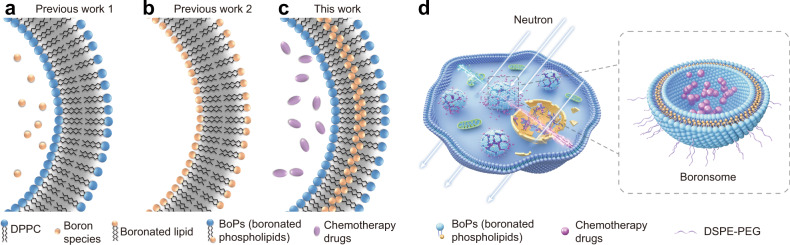
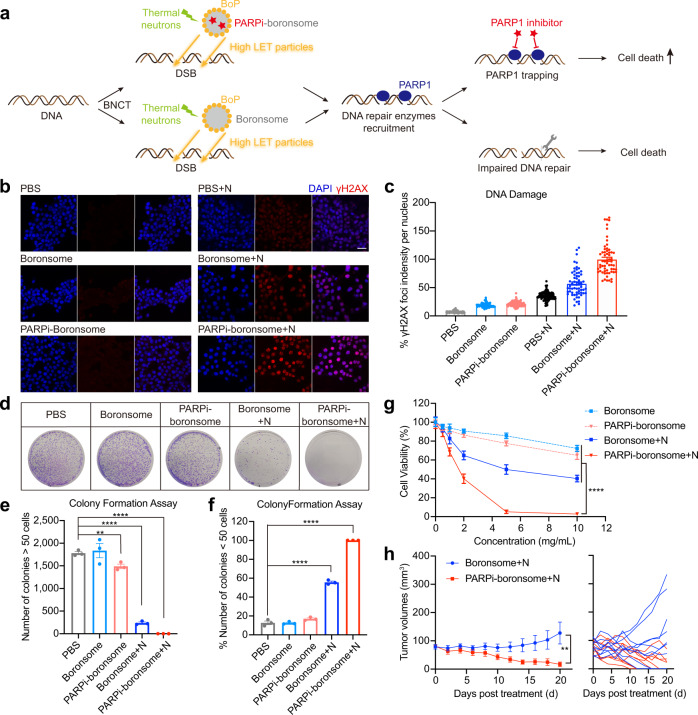
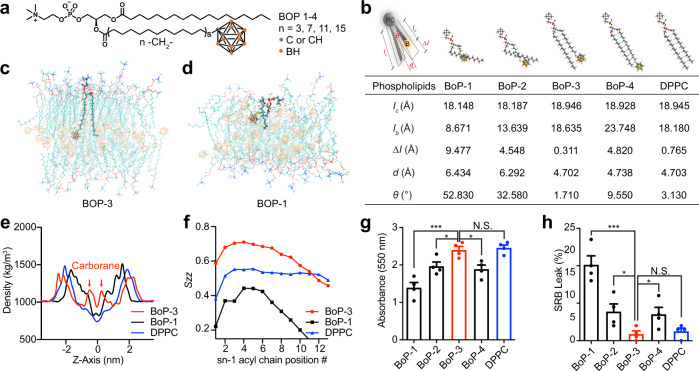
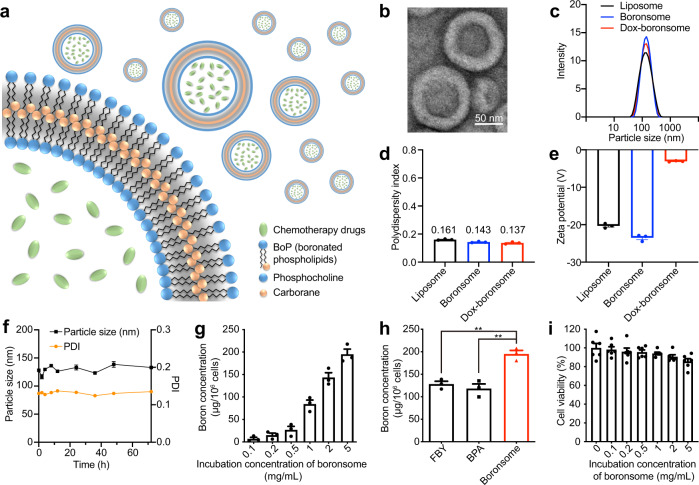
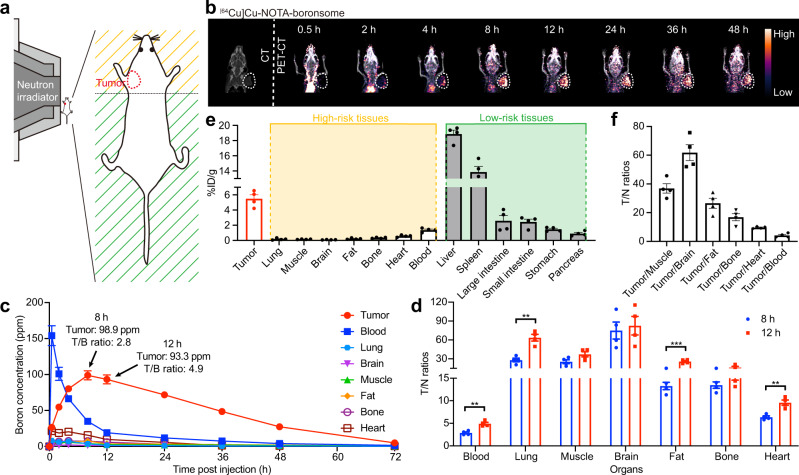
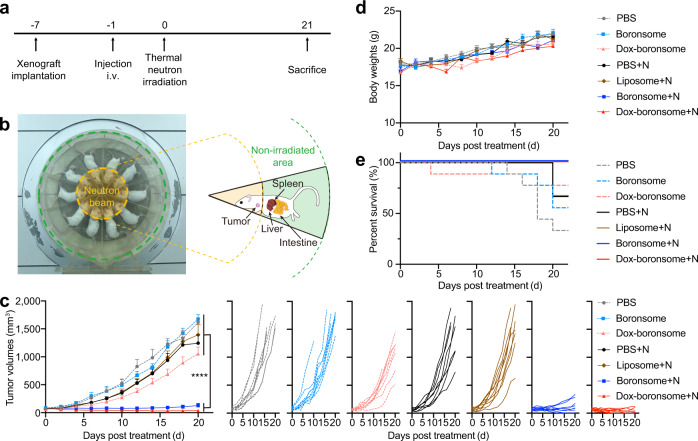
Boron neutron capture therapy (BNCT) is an attractive approach to treat invasive malignant tumours due to binary heavy-particle irradiation, but its clinical applications have been hindered by boron delivery agents with low in vivo stability, poor biocompatibility, and limited application of combinational modalities. Here, we report boronsome, a carboranyl-phosphatidylcholine based liposome for combinational BNCT and chemotherapy. Theoretical simulations and experimental approaches illustrate high stability of boronsome. Then positron emission tomography (PET) imaging with Cu-64 labelled boronsome reveals high-specific tumour accumulation and long retention with a clear irradiation background. In particular, we show the suppression of tumour growth treated with boronsome with neutron irradiation and therapeutic outcomes are further improved by encapsulation of chemotherapy drugs, especially with PARP1 inhibitors. In sum, boronsome may be an efficient agent for concurrent chemoradiotherapy with theranostic properties against malignancies.
硼中子俘获治疗(BNCT)是一种有吸引力的治疗侵袭性恶性肿瘤的方法,因为它是二元重粒子辐照,但由于硼供体在体内稳定性低、生物相容性差以及组合方式的应用有限,其临床应用受到了阻碍。在这里,我们报告了一种基于碳硼烷-磷脂酰胆碱的脂质体硼索美,用于联合 BNCT 和化疗。理论模拟和实验方法表明硼索美的高稳定性。然后,用 Cu-64 标记的硼索美进行正电子发射断层扫描(PET)成像,显示出高特异性的肿瘤积累和长时间保留,并有清晰的辐照背景。特别是,我们展示了硼索美与中子辐照联合治疗抑制肿瘤生长的效果,并且通过封装化疗药物,特别是 PARP1 抑制剂,进一步改善了治疗效果。总之,硼索美可能是一种有效的联合放化疗药物,具有治疗恶性肿瘤的治疗诊断特性。