School of Pharmacy, Queen's University Belfast, 97 Lisburn Road, Belfast, BT9 7BL, UK.
Research and Technology Center for Radioisotope and Radiopharmaceutical, National Research and Innovation Agency, South Tangerang, Indonesia.
Pharm Res. 2022 Jun;39(6):1215-1232. doi: 10.1007/s11095-022-03256-4. Epub 2022 Apr 19.
Gene therapy via pulmonary delivery holds the potential to treat various lung pathologies. To date, spray drying has been the most promising method to produce inhalable powders. The present study determined the parameters required to spray dry nanoparticles (NPs) that contain the delivery peptide, termed RALA (N-WEARLARALARALARHLARALARALRACEA-C), complexed with plasmid DNA into a dry powder form designed for inhalation.
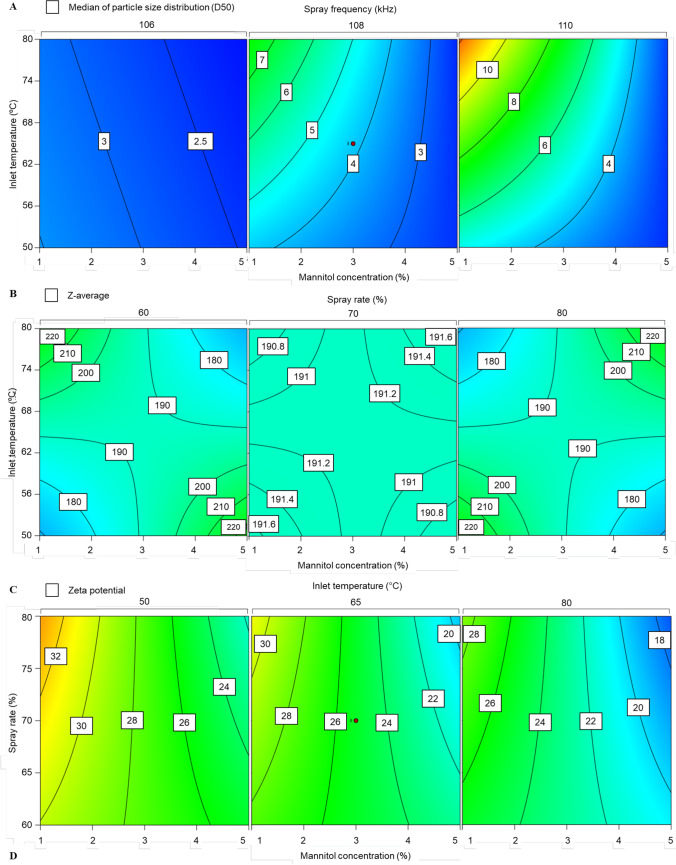
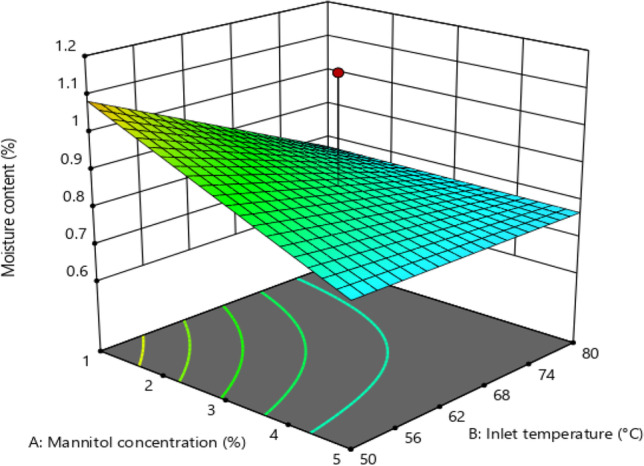
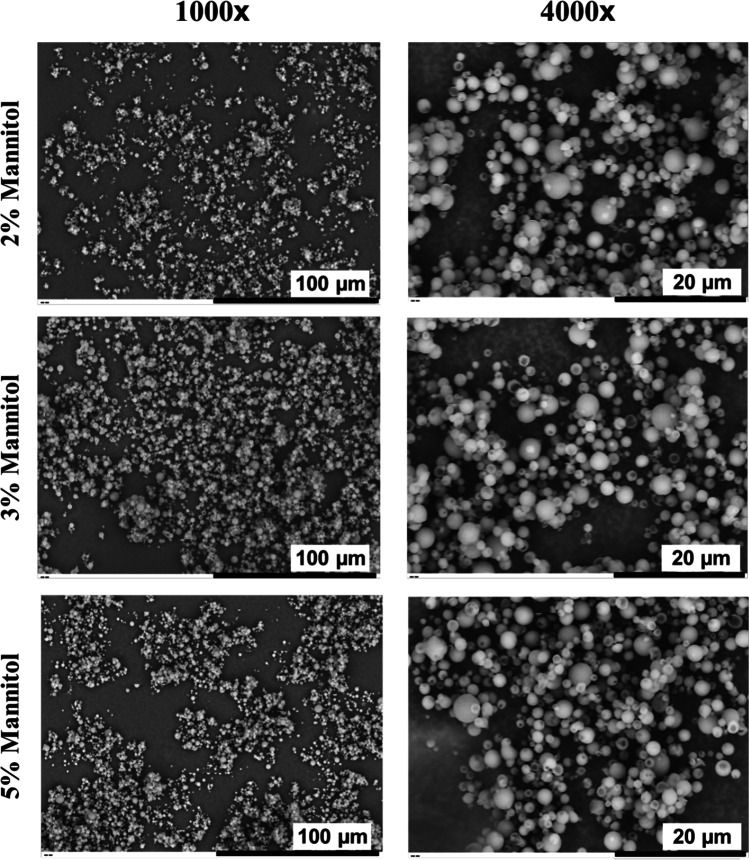
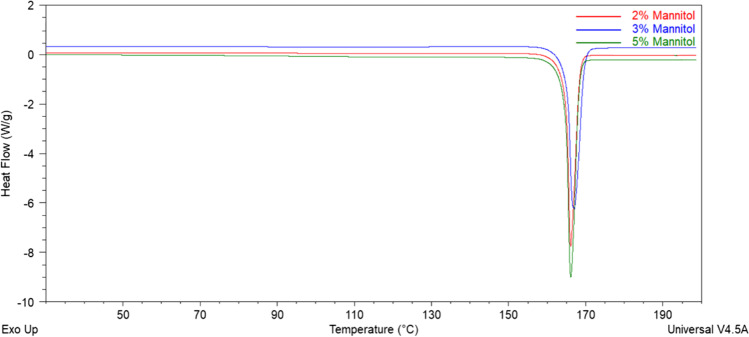
The spray drying process was optimised using full factorial design with 19 randomly ordered experiments based on the combination of four parameters and three centre points per block. Specifically, mannitol concentration, inlet temperature, spray rate, and spray frequency were varied to observe their effects on process yield, moisture content, a median of particle size distribution, Z-average, zeta potential, encapsulation efficiency of DNA NPs, and DNA recovery. The impact of mannitol concentration was also examined on the spray-dried NPs and evaluated via biological functionality in vitro.
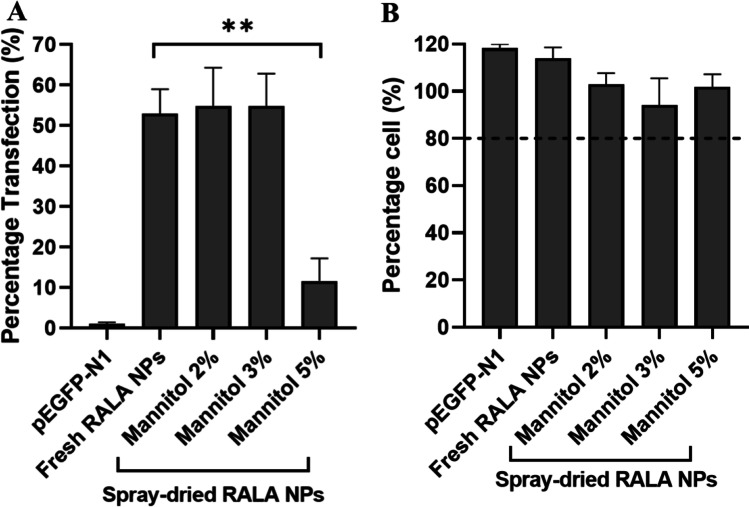
The results demonstrated that mannitol concentration was the strongest variable impacting all responses apart from encapsulation efficiency. All measured responses demonstrated a strong dependency on the experimental variables. Furthermore, spray drying with the optimal variables in combination with a low mannitol concentration (1% and 3%, w/v) produced functional RALA/pDNA NPs.
The optimal parameters have been determined to spray dry RALA/pDNA NPs into an dry powder with excellent biological functionality, which have the potential to be used for gene therapy applications via pulmonary delivery.
通过肺部给药的基因治疗有可能治疗各种肺部疾病。迄今为止,喷雾干燥已成为生产可吸入粉末最有前途的方法。本研究确定了将含有递药肽的纳米颗粒(NPs)喷雾干燥成干粉的参数,递药肽命名为 RALA(N-WEARLARALARALARHLARALARALRACEA-C),与质粒 DNA 复合,设计用于吸入。
使用完全析因设计优化喷雾干燥工艺,根据四个参数和每个块的三个中心点的组合进行 19 次随机有序实验。具体来说,改变甘露醇浓度、入口温度、喷雾速率和喷雾频率,观察它们对工艺产率、水分含量、粒径分布中位数、Z 均粒径、zeta 电位、DNA NPs 包封效率和 DNA 回收率的影响。还研究了甘露醇浓度对喷雾干燥 NPs 的影响,并通过体外生物功能进行了评估。
结果表明,甘露醇浓度是除包封效率外影响所有反应的最强变量。所有测量的反应都强烈依赖于实验变量。此外,在优化变量的条件下,与低甘露醇浓度(1%和 3%,w/v)联合喷雾干燥可产生具有生物功能的 RALA/pDNA NPs。
已确定喷雾干燥 RALA/pDNA NPs 成干粉的最佳参数,干粉具有优异的生物功能,有可能通过肺部给药用于基因治疗应用。