Guo Huiduo, Liu Riliang, He Jianwen, Yao Wen, Zheng Weijiang
College of Animal Science and Technology, Nanjing Agricultural University, Nanjing, China.
College of Biotechnology, Jiangsu University of Science and Technology, Zhenjiang, China.
Front Physiol. 2022 Apr 4;13:841149. doi: 10.3389/fphys.2022.841149. eCollection 2022.
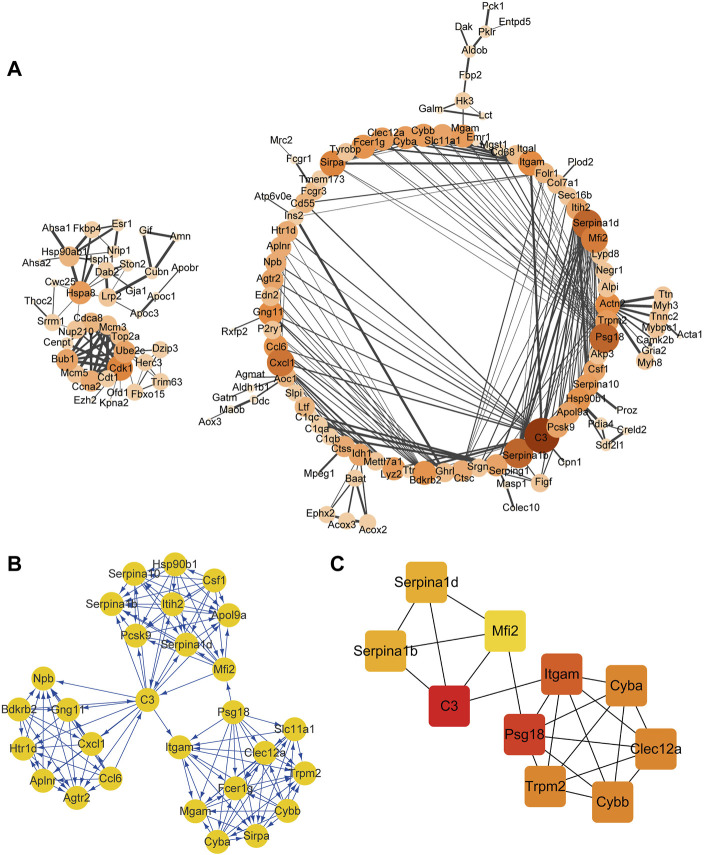
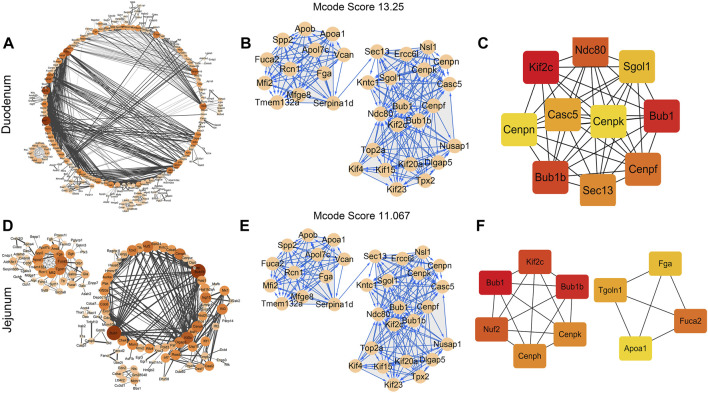
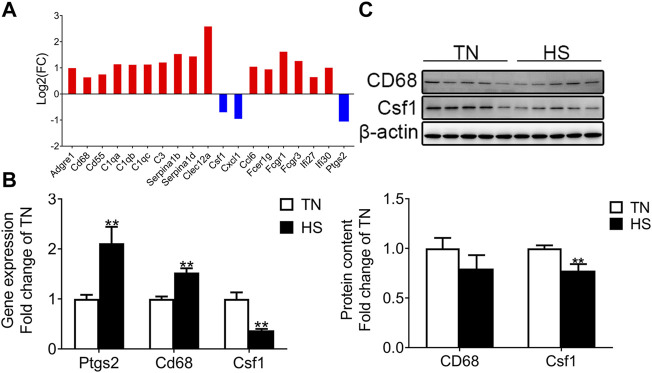
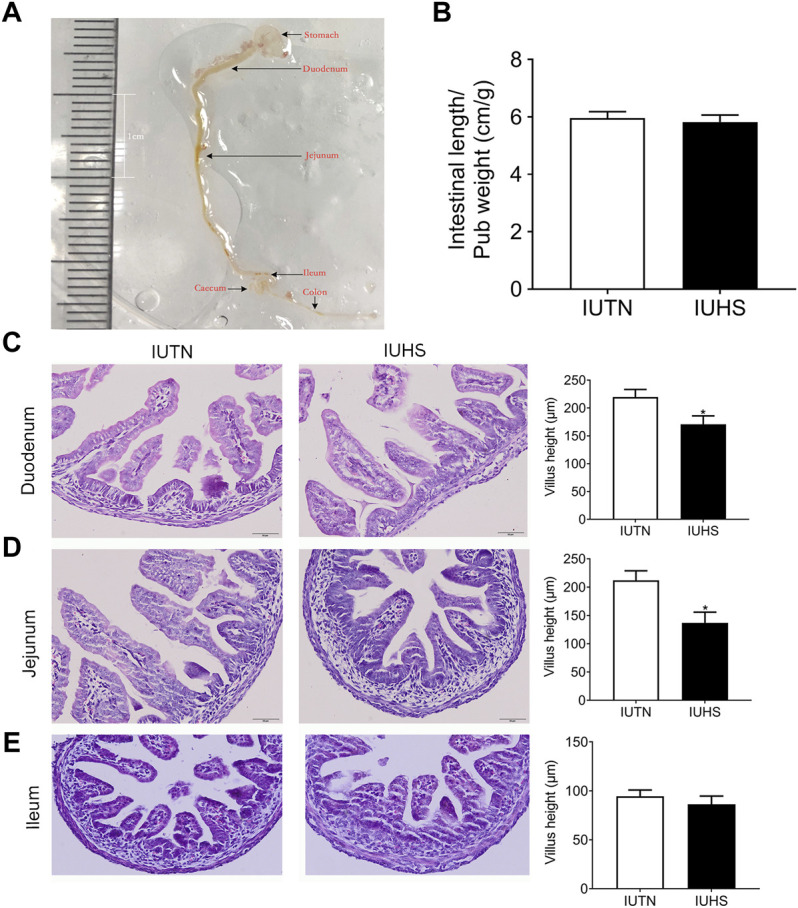
The placenta is critical for the regulation of fetal innate immune function. Maternal heat stress (HS) impairs the immune function and the intestinal barrier in the offspring. However, the effects of maternal HS on the placental immune response and the development of the fetal intestine and its innate immune system remain unclear. Fetal mice were divided into the utero control (IUTN) and heat stress (IUHS) groups according to the maternal ambient temperature. Transcriptome analysis revealed that the expressions of placental immune response-related genes such as macrophage antigen CD68 and Fc gamma receptors 1 and 3 ( and ) were increased, but the mRNA expression and protein levels of colony-stimulating factor-1 (Csf1) were decreased in the HS group compared with the TN group ( < 0.05). Furthermore, there was no significant difference in the intestinal length normalized to pup weight between the IUTN and IUHS groups. The expression of genes (such as and ) involved in fetal duodenum and jejunum development was downregulated by maternal HS, whereas the expression of genes enriched in the cell cycle was increased. The mRNA expression and protein levels of cell division cycle 6 (Cdc6) in the fetal duodenum and jejunum were much higher in the IUHS group than in the IUTN group ( < 0.05). Maternal HS also down-regulated the expression of genes enriched in the innate immune system in the fetal duodenum and jejunum. The mRNA expression and protein levels of interleukin 1 alpha (IL1a) were reduced in the IUHS group compared with the IUTN group ( < 0.05). Taken together, these data demonstrated that maternal HS modulated the expression of genes in the placenta related to the immune response and inhibited the development of the fetal intestine and its innate immune system.
胎盘对于胎儿固有免疫功能的调节至关重要。母体热应激(HS)会损害后代的免疫功能和肠道屏障。然而,母体HS对胎盘免疫反应以及胎儿肠道及其固有免疫系统发育的影响仍不清楚。根据母体环境温度,将胎鼠分为子宫内对照(IUTN)组和热应激(IUHS)组。转录组分析显示,与TN组相比,HS组中胎盘免疫反应相关基因如巨噬细胞抗原CD68和Fcγ受体1和3( 和 )的表达增加,但集落刺激因子-1(Csf1)的mRNA表达和蛋白水平降低( < 0.05)。此外,IUTN组和IUHS组之间以幼崽体重标准化的肠道长度没有显著差异。母体HS下调了参与胎儿十二指肠和空肠发育的基因(如 和 )的表达,而在细胞周期中富集的基因表达增加。IUHS组胎儿十二指肠和空肠中细胞分裂周期6(Cdc6)的mRNA表达和蛋白水平远高于IUTN组( < 0.05)。母体HS还下调了胎儿十二指肠和空肠中固有免疫系统富集基因的表达。与IUTN组相比,IUHS组中白细胞介素1α(IL1a)的mRNA表达和蛋白水平降低( < 0.05)。综上所述,这些数据表明母体HS调节了胎盘中与免疫反应相关的基因表达,并抑制了胎儿肠道及其固有免疫系统的发育。