Pudjiadi Antonius Hocky, Putri Nina Dwi, Sjakti Hikari Ambara, Yanuarso Piprim Basarah, Gunardi Hartono, Roeslani Rosalina Dewi, Pasaribu Ade Djanwardi, Nurmalia Lies Dewi, Sambo Catharine Mayung, Habibah Lathiefatul, Utami Indriyanti Natasya Ayu, Prawira Yogi, Kaswandani Nastiti, Alam Anggraini, Kadafi Kurniawan Taufiq, Hanafi Gryselda, Tjahjadi Angela Kimberly, Aprianti Shindy Claudya, Salma Nabila Maudy, Wijaya Stephanie, Alatas Fatima Safira, Pulungan Aman Bhakti
Indonesian Pediatric Society, Jakarta, Indonesia.
Department of Child Health, Cipto Mangunkusumo National Central Hospital, Faculty of Medicine Universitas Indonesia, Jakarta, Indonesia.
Front Public Health. 2022 Apr 4;10:757328. doi: 10.3389/fpubh.2022.757328. eCollection 2022.
All sectors are affected due to COVID-19 pandemic occurring worldwide, including the education industry. School closure had been taking place for more than a year in Indonesia. Despite the controversies, Indonesian government had decided to begin school reopening.
This study aims to assess parental readiness for school reopening, and factors affecting parental attitude toward school reopening.
A cross-sectional study using online questionnaire distributed official Indonesian Pediatric Society (IPS) official social media account collected between March and April 2021. The questionnaire contained the general characteristics of study participants, parents' knowledge, and perspectives on COVID-19, and health protocols for school reopening.
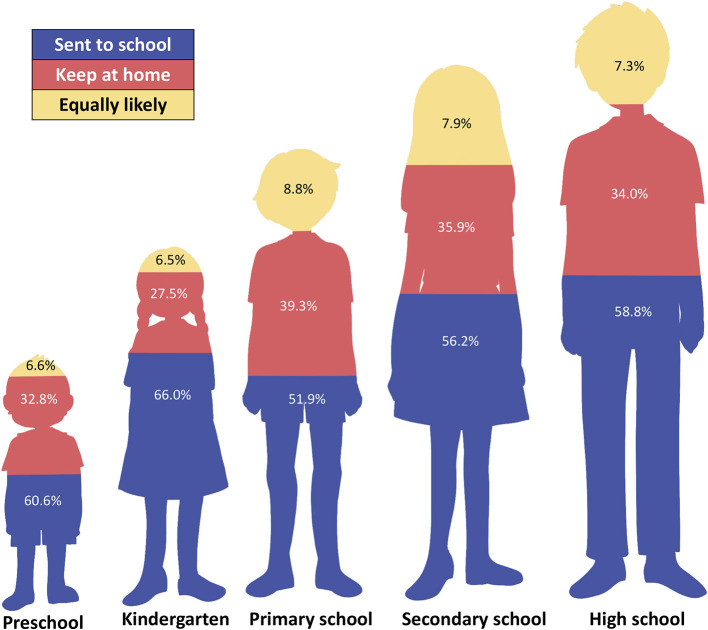
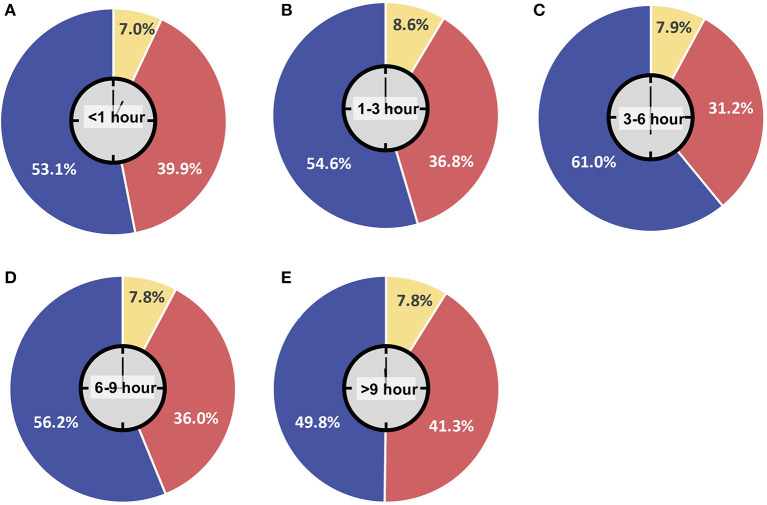
A total of 17,562 responses were collected, of which 55.7% parents were ready to send their children to school should school reopens. Factors significantly contribute to parental decision to keep their child at home were: presence of vulnerable population at home [OR = 1.18 (1.10-1.27), < 0.001], children with comorbidities [OR = 2.56 (2.29-2.87), < 0.001], perception of COVID-19 as a dangerous disease [OR = 28.87 (14.29-58.33), < 0.001], experience with COVID-19 positive cases in the community [OR = 1.75 (1.61-1.90), < 0.001], COVID-19 related death in the community [OR = 2.05 (1.90-2.21), < 0.001], approval for adult COVID-19 vaccination [OR = 1.69 (1.53-1.87), < 0.001], and ownership of private transportation [OR = 1.46 (1.30-1.66), <0.001].
We identified several factors affecting parental perception on school reopening during COVID-19 pandemic that should be addressed. This study can be used for policy-maker to make further recommendations and health educations prior to school reopening in Indonesia.
全球范围内发生的新冠疫情影响了所有行业,包括教育行业。印度尼西亚学校停课已持续一年多。尽管存在争议,印度尼西亚政府仍决定开始重新开学。
本研究旨在评估家长对学校重新开学的准备情况,以及影响家长对学校重新开学态度的因素。
采用横断面研究,通过在2021年3月至4月期间在印度尼西亚儿科学会(IPS)官方社交媒体账号上发布在线问卷进行收集。问卷包含研究参与者的一般特征、家长对新冠病毒的知识和看法,以及学校重新开学的健康协议。
共收集到17562份回复,其中55.7%的家长表示如果学校重新开学愿意送孩子上学。显著影响家长决定让孩子居家的因素包括:家中有弱势群体[比值比(OR)=1.18(1.10 - 1.27),P<0.001]、孩子患有合并症[OR = 2.56(2.29 - 2.87),P<0.001]、认为新冠病毒是危险疾病[OR = 28.87(14.29 - 58.33),P<0.001]、社区中有新冠病毒阳性病例的经历[OR = 1.75(1.61 - 1.90),P<0.001]、社区中有与新冠病毒相关的死亡病例[OR = 2.05(1.90 - 2.21),P<0.001]、赞成成人接种新冠疫苗[OR = 1.69(1.53 - 1.87),P<0.001],以及拥有私人交通工具[OR = 1.46(1.30 - 1.66),P<0.001]。
我们确定了新冠疫情期间影响家长对学校重新开学看法的几个因素,这些因素应得到解决。本研究可用于为政策制定者提供参考,以便在印度尼西亚学校重新开学前提出进一步建议并开展健康教育。