Department of Pathology, University of California, San Francisco, San Francisco, CA.
Biomedical Sciences Graduate Program, University of California, San Francisco, San Francisco, CA.
J Cell Biol. 2022 Jun 6;221(6). doi: 10.1083/jcb.202110151. Epub 2022 Apr 21.
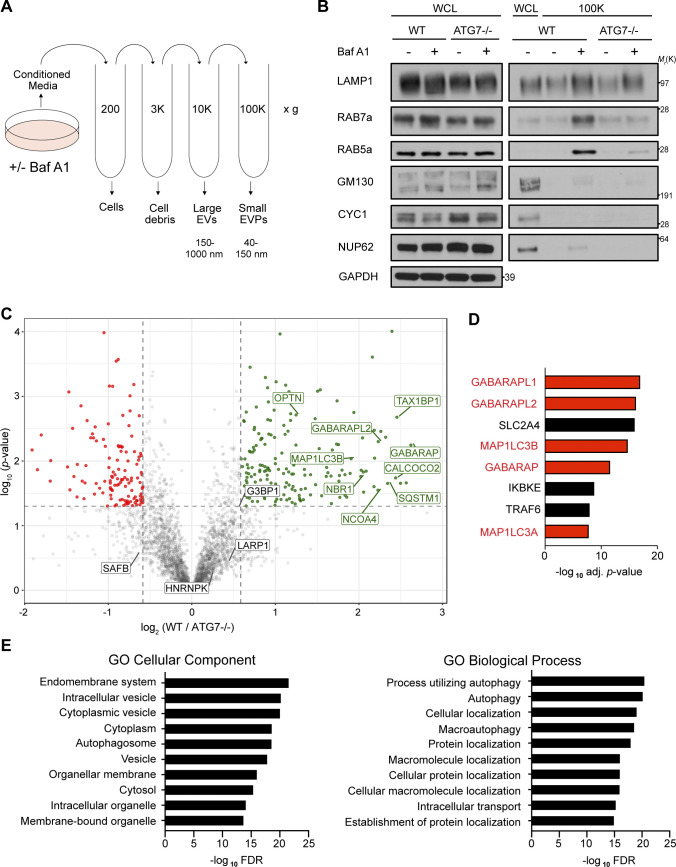
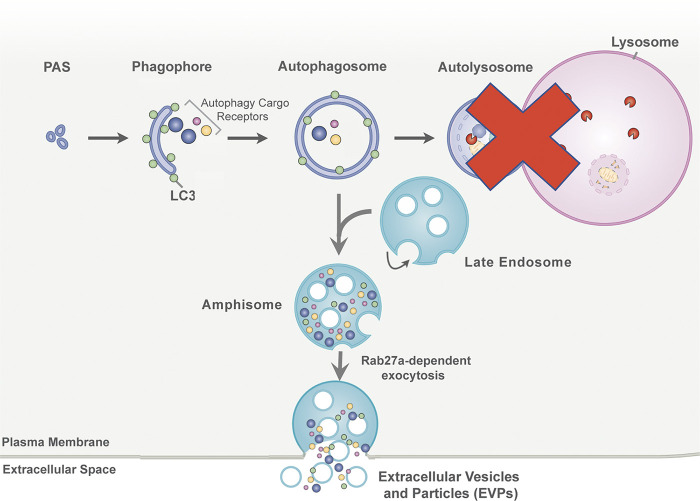
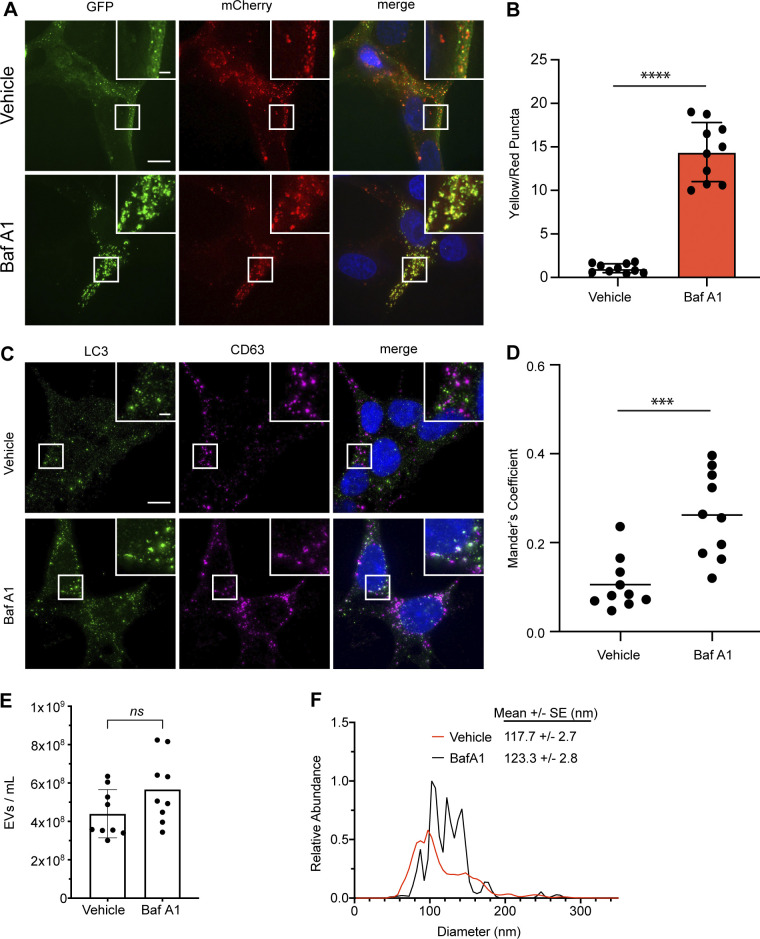
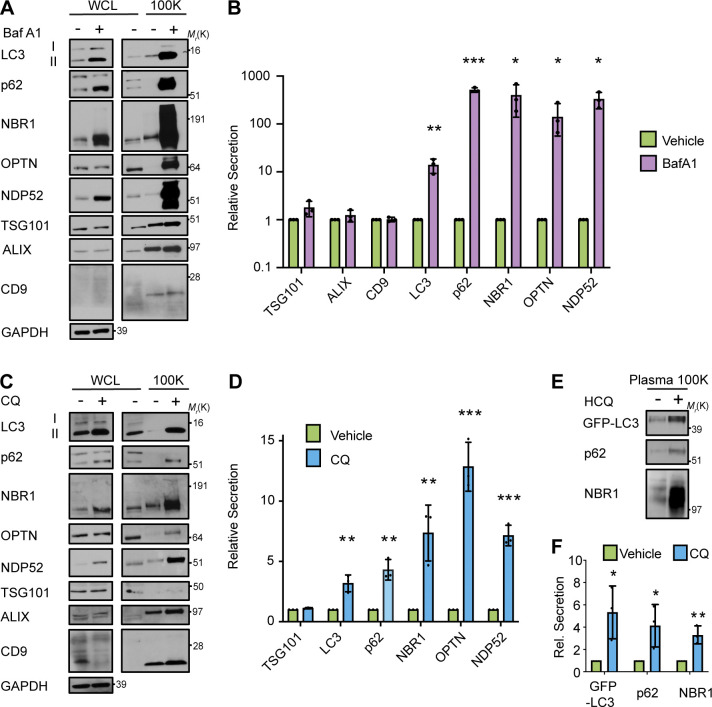
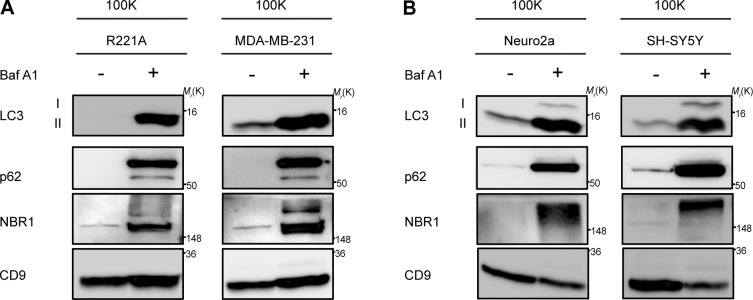
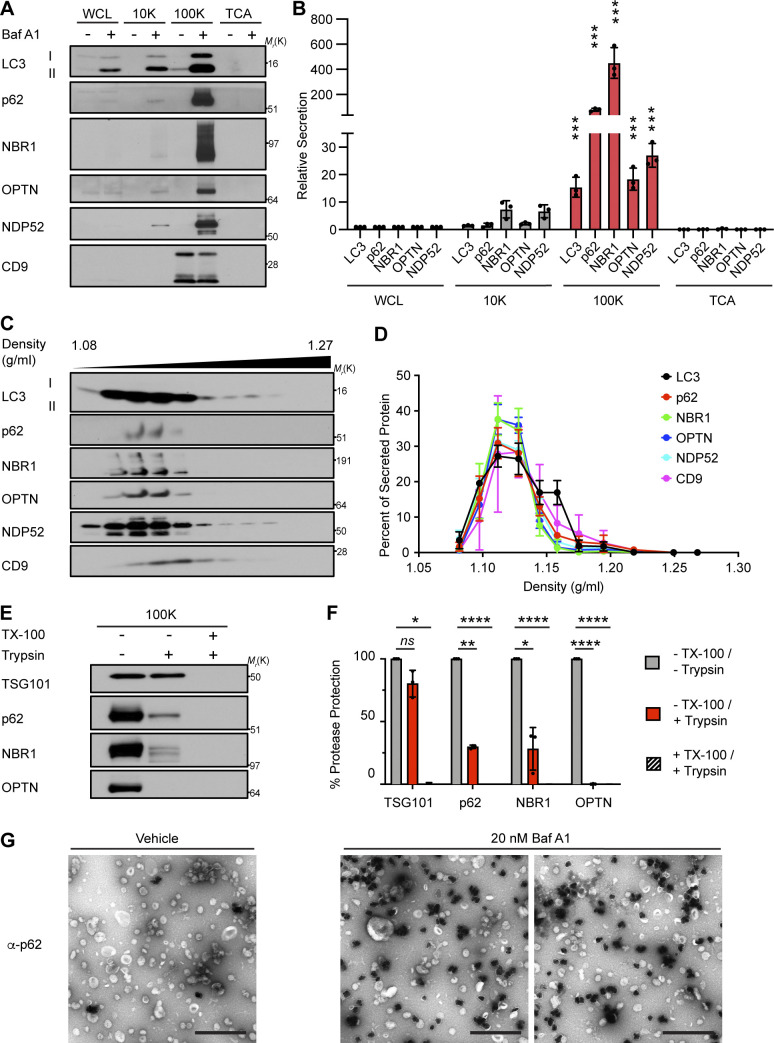
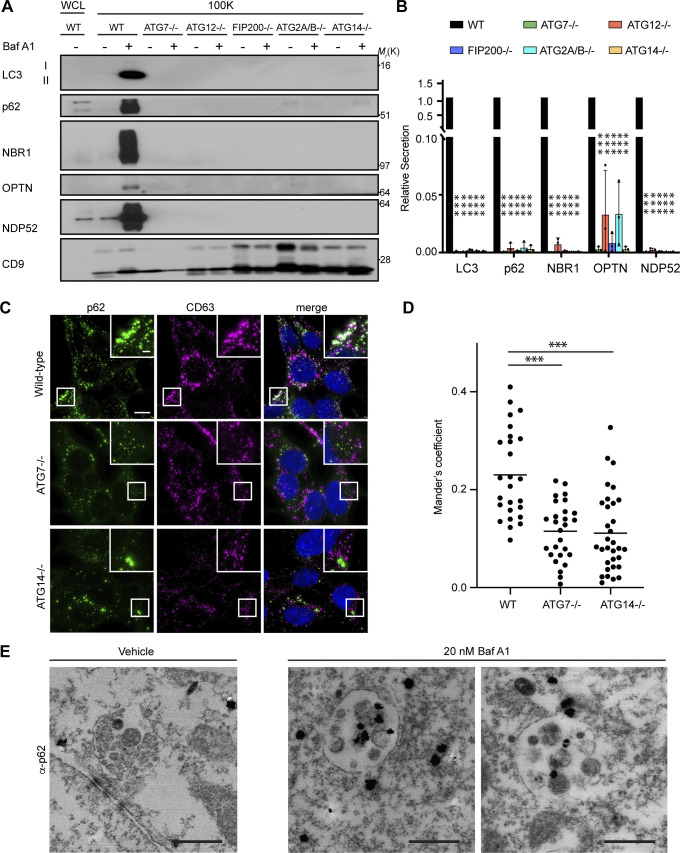
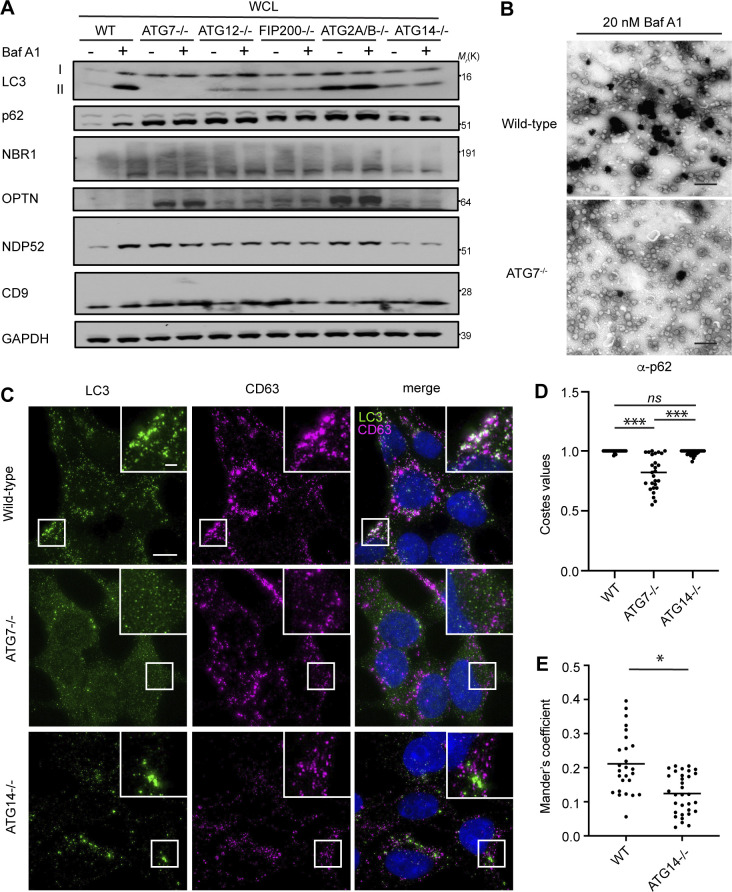
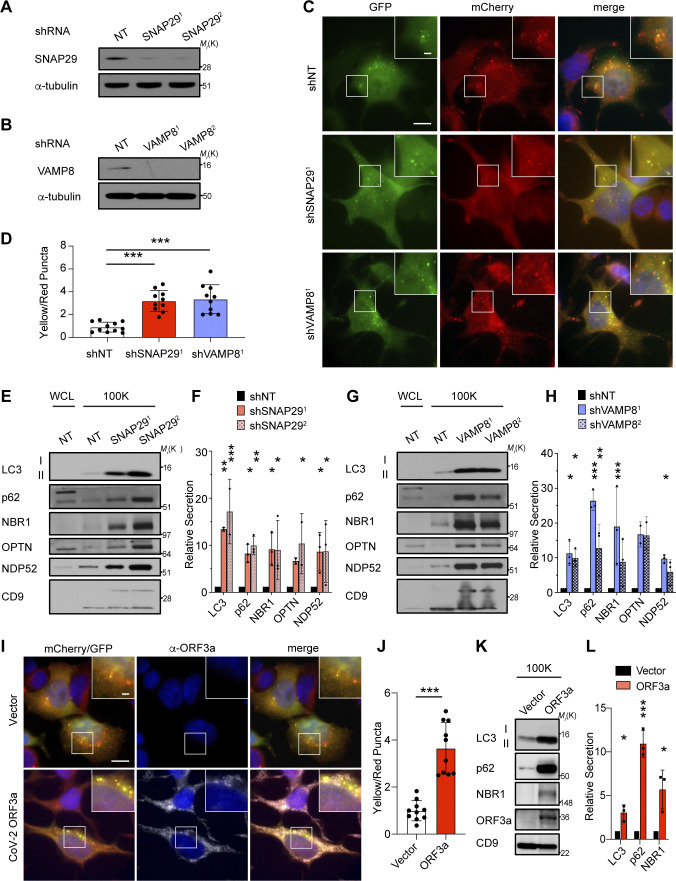
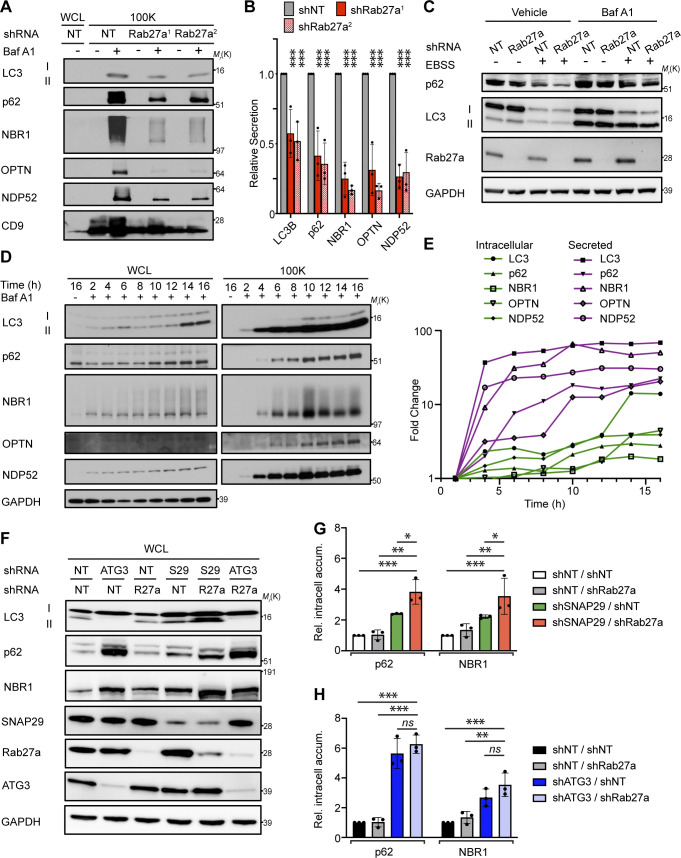
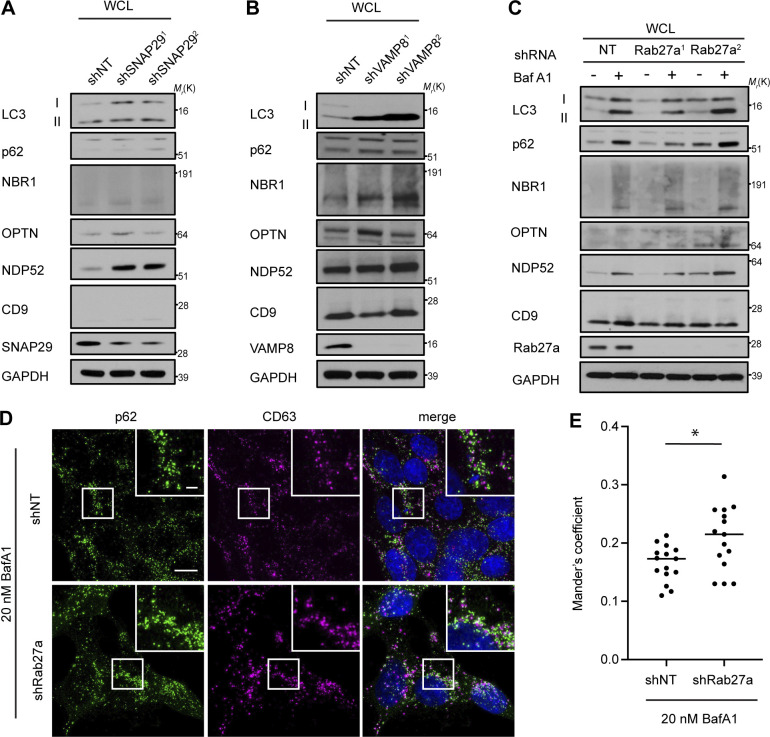
The endolysosome system plays central roles in both autophagic degradation and secretory pathways, including the release of extracellular vesicles and particles (EVPs). Although previous work reveals important interconnections between autophagy and EVP-mediated secretion, our understanding of these secretory events during endolysosome inhibition remains incomplete. Here, we delineate a secretory autophagy pathway upregulated in response to endolysosomal inhibition, which mediates EVP-associated release of autophagic cargo receptors, including p62/SQSTM1. This secretion is highly regulated and dependent on multiple ATGs required for autophagosome formation, as well as the small GTPase Rab27a. Furthermore, disrupting autophagosome maturation, either via genetic inhibition of autophagosome-to-autolysosome fusion or expression of SARS-CoV-2 ORF3a, is sufficient to induce EVP secretion of autophagy cargo receptors. Finally, ATG-dependent EVP secretion buffers against the intracellular accumulation of autophagy cargo receptors when classical autophagic degradation is impaired. Thus, we propose secretory autophagy via EVPs functions as an alternate route to clear sequestered material and maintain proteostasis during endolysosomal dysfunction or impaired autophagosome maturation.
内溶酶体系统在自噬降解和分泌途径中都起着核心作用,包括细胞外囊泡和颗粒(EVPs)的释放。尽管先前的工作揭示了自噬和 EVP 介导的分泌之间的重要联系,但我们对这些在内溶酶体抑制期间发生的分泌事件的理解仍然不完整。在这里,我们描述了一种在对内溶酶体抑制做出反应时上调的分泌自噬途径,该途径介导了与 EVPs 相关的自噬货物受体的释放,包括 p62/SQSTM1。这种分泌受到高度调控,依赖于多个形成自噬体所必需的 ATGs,以及小 GTPase Rab27a。此外,通过遗传抑制自噬体向自溶酶体的融合或表达 SARS-CoV-2 ORF3a 来破坏自噬体成熟,足以诱导自噬货物受体的 EVP 分泌。最后,在经典自噬降解受损时,ATG 依赖性 EVP 分泌可缓冲自噬货物受体在细胞内的积累。因此,我们提出通过 EVPs 的分泌自噬作为一种清除隔离物质的替代途径,并在溶酶体功能障碍或自噬体成熟受损时维持蛋白质稳态。