Department of Infection, Immunity and Cardiovascular disease, Bateson Centre and Florey Institute, University of Sheffield, United Kingdom.
Institute of Molecular and Cell Biology, Agency of Science, Technology and Research (A-Star), Singapore.
PLoS Pathog. 2022 Apr 21;18(4):e1010389. doi: 10.1371/journal.ppat.1010389. eCollection 2022 Apr.
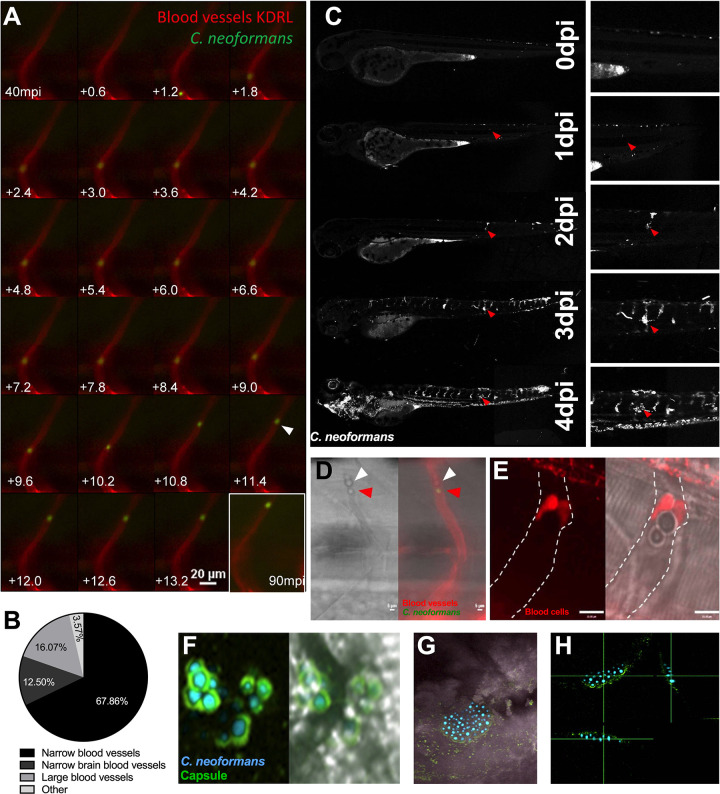
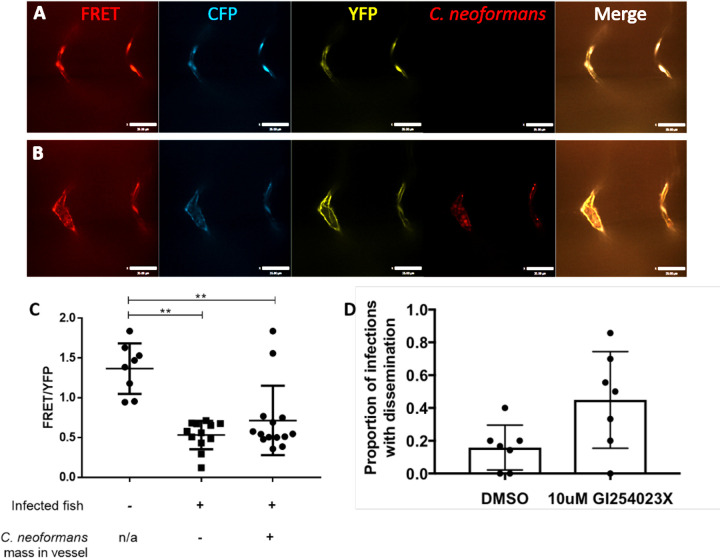
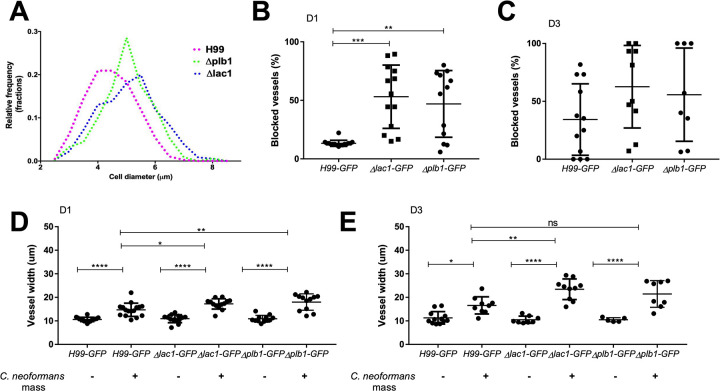
Meningitis caused by infectious pathogens is associated with vessel damage and infarct formation, however the physiological cause is often unknown. Cryptococcus neoformans is a human fungal pathogen and causative agent of cryptococcal meningitis, where vascular events are observed in up to 30% of patients, predominantly in severe infection. Therefore, we aimed to investigate how infection may lead to vessel damage and associated pathogen dissemination using a zebrafish model that permitted noninvasive in vivo imaging. We find that cryptococcal cells become trapped within the vasculature (dependent on their size) and proliferate there resulting in vasodilation. Localised cryptococcal growth, originating from a small number of cryptococcal cells in the vasculature was associated with sites of dissemination and simultaneously with loss of blood vessel integrity. Using a cell-cell junction tension reporter we identified dissemination from intact blood vessels and where vessel rupture occurred. Finally, we manipulated blood vessel tension via cell junctions and found increased tension resulted in increased dissemination. Our data suggest that global vascular vasodilation occurs following infection, resulting in increased vessel tension which subsequently increases dissemination events, representing a positive feedback loop. Thus, we identify a mechanism for blood vessel damage during cryptococcal infection that may represent a cause of vascular damage and cortical infarction during cryptococcal meningitis.
由传染性病原体引起的脑膜炎与血管损伤和梗死形成有关,但生理原因通常未知。新型隐球菌是一种人类真菌病原体,也是隐球菌性脑膜炎的病原体,高达 30%的患者(主要是严重感染的患者)观察到血管事件。因此,我们旨在使用允许非侵入性体内成像的斑马鱼模型来研究感染如何导致血管损伤和相关病原体传播。我们发现隐球菌细胞(取决于其大小)被困在脉管系统中并在那里增殖,导致血管扩张。局部隐球菌生长起源于血管中少量的隐球菌细胞,与传播部位同时发生血管完整性丧失。使用细胞-细胞连接张力报告器,我们确定了从完整血管和血管破裂处发生的传播。最后,我们通过细胞连接操纵血管张力,发现张力增加导致传播增加。我们的数据表明,感染后会发生全身性血管扩张,导致血管张力增加,从而增加传播事件,这代表一个正反馈循环。因此,我们确定了新型隐球菌感染期间血管损伤的一种机制,这可能是新型隐球菌性脑膜炎期间血管损伤和皮质梗死的原因。