Stecco Antonio, Cowman Mary, Pirri Nina, Raghavan Preeti, Pirri Carmelo
Rusk Rehabilitation, New York University School of Medicine, New York, NY 10016, USA.
Department of Biomedical Engineering, New York University Tandon School of Engineering, New York, NY 10016, USA.
Bioengineering (Basel). 2022 Apr 5;9(4):159. doi: 10.3390/bioengineering9040159.
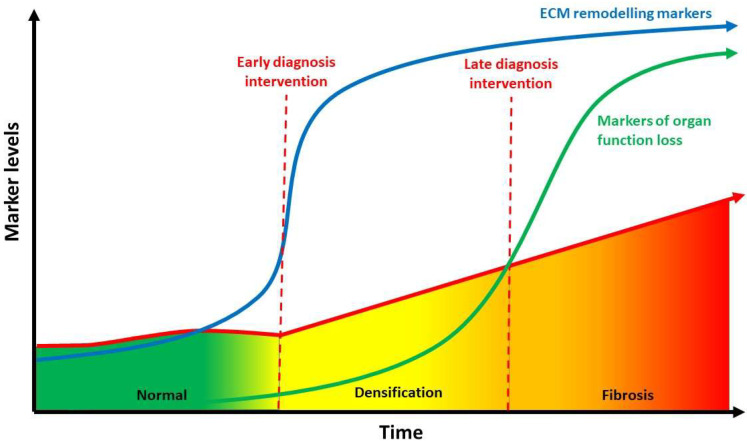
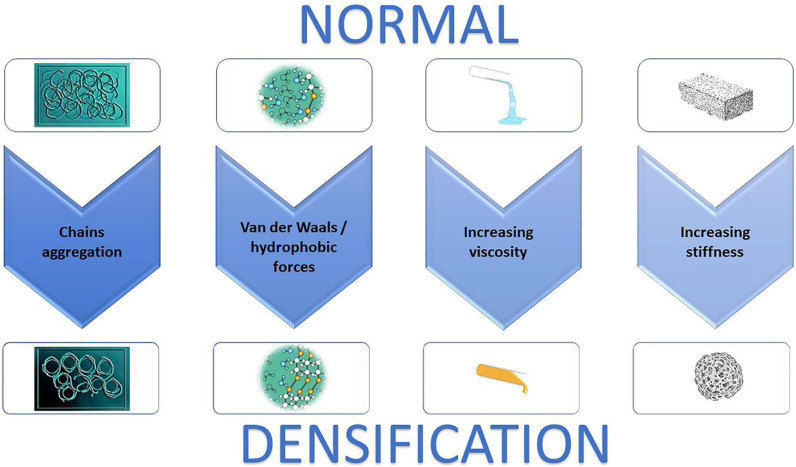
Hyaluronan (HA) has complex biological roles that have catalyzed clinical interest in several fields of medicine. In this narrative review, we provide an overview of HA aggregation, also called densification, in human organs. The literature suggests that HA aggregation can occur in the liver, eye, lung, kidney, blood vessel, muscle, fascia, skin, pancreatic cancer and malignant melanoma. In all these organs, aggregation of HA leads to an increase in extracellular matrix viscosity, causing stiffness and organ dysfunction. Fibrosis, in some of these organs, may also occur as a direct consequence of densification in the long term. Specific imaging evaluation, such dynamic ultrasonography, elasto-sonography, elasto-MRI and T1ρ MRI can permit early diagnosis to enable the clinician to organize the treatment plan and avoid further progression of the pathology and dysfunction.
透明质酸(HA)具有复杂的生物学作用,这引发了医学多个领域的临床关注。在这篇叙述性综述中,我们概述了HA在人体器官中的聚集,也称为致密化。文献表明,HA聚集可发生在肝脏、眼睛、肺、肾脏、血管、肌肉、筋膜、皮肤、胰腺癌和恶性黑色素瘤中。在所有这些器官中,HA的聚集导致细胞外基质粘度增加,引起僵硬和器官功能障碍。从长期来看,其中一些器官的纤维化也可能是致密化的直接后果。特定的影像学评估,如动态超声检查、弹性超声检查、弹性磁共振成像和T1ρ磁共振成像,可以实现早期诊断,使临床医生能够制定治疗计划,避免病情和功能障碍的进一步发展。