Tavianatou Anastasia-Gerasimoula, Piperigkou Zoi, Barbera Carlo, Beninatto Riccardo, Masola Valentina, Caon Ilaria, Onisto Maurizio, Franchi Marco, Galesso Devis, Karamanos Nikos K
Biochemistry, Biochemical Analysis & Matrix Pathobiology Research Group, Laboratory of Biochemistry, Department of Chemistry, University of Patras, Greece.
Foundation for Research and Technology-Hellas (FORTH/ICE-HT), Patras, Greece.
Matrix Biol Plus. 2019 Jun 5;3:100008. doi: 10.1016/j.mbplus.2019.100008. eCollection 2019 Aug.
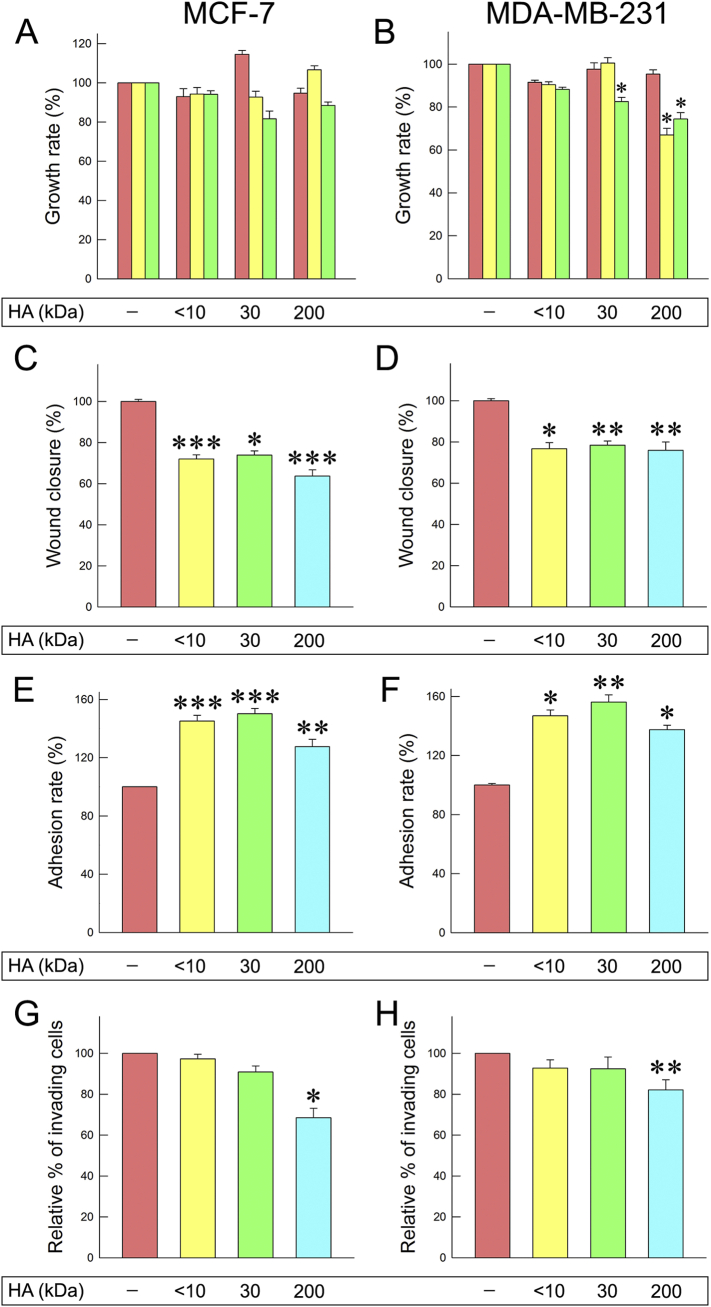
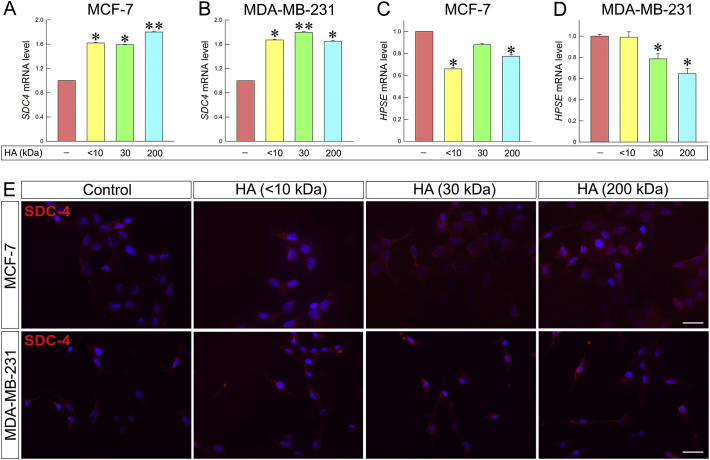
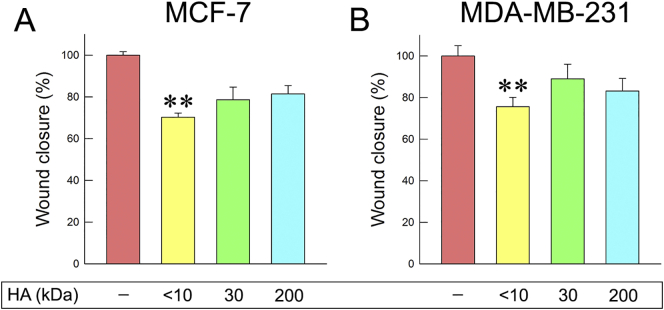
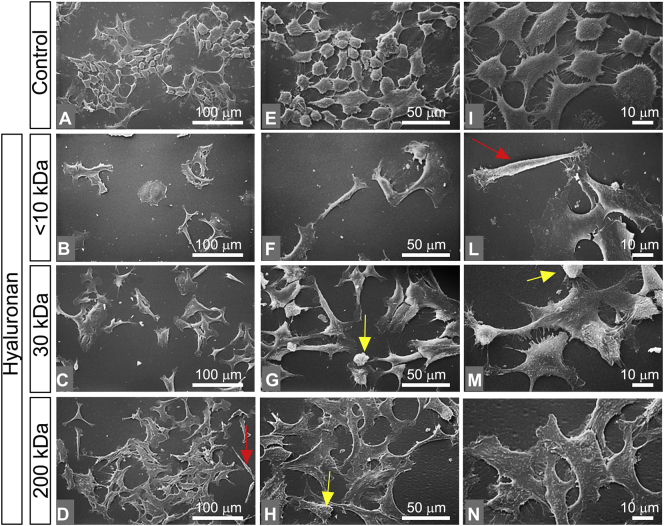
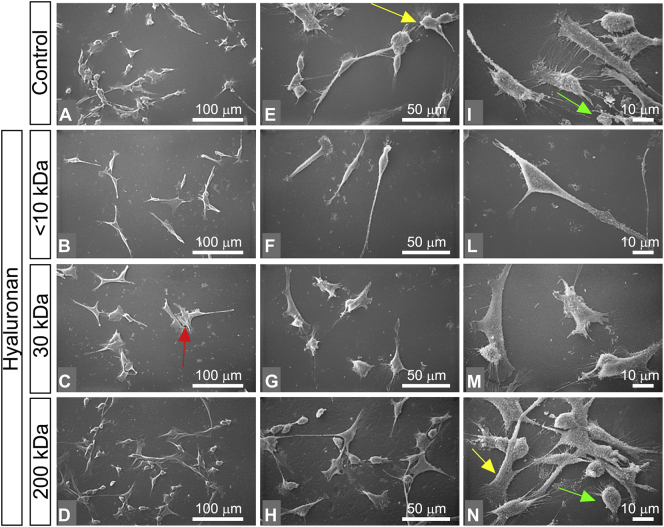
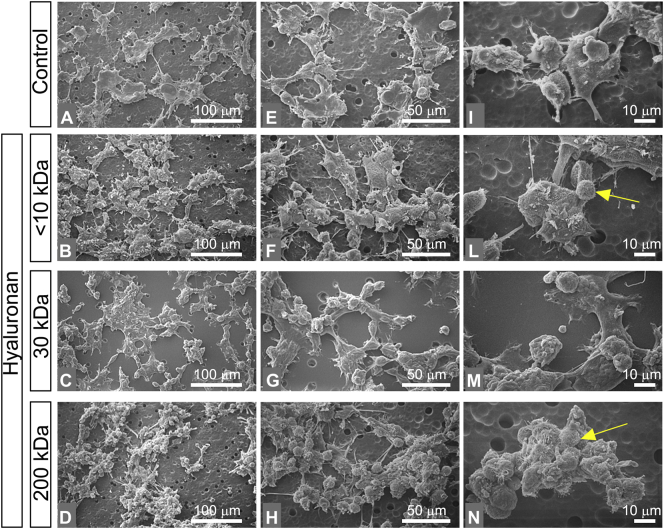
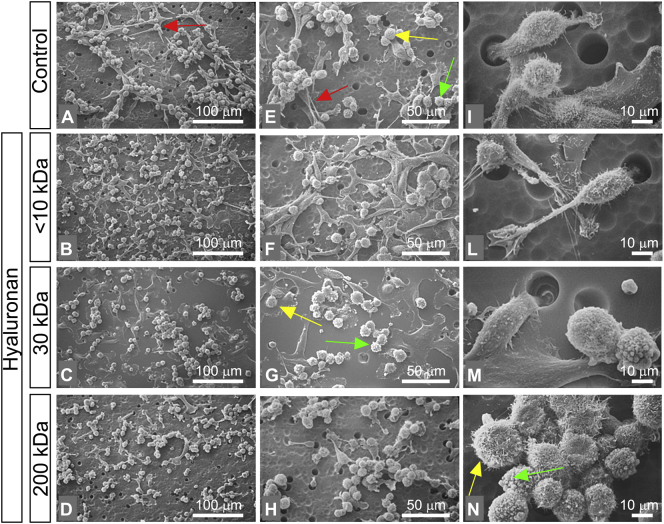
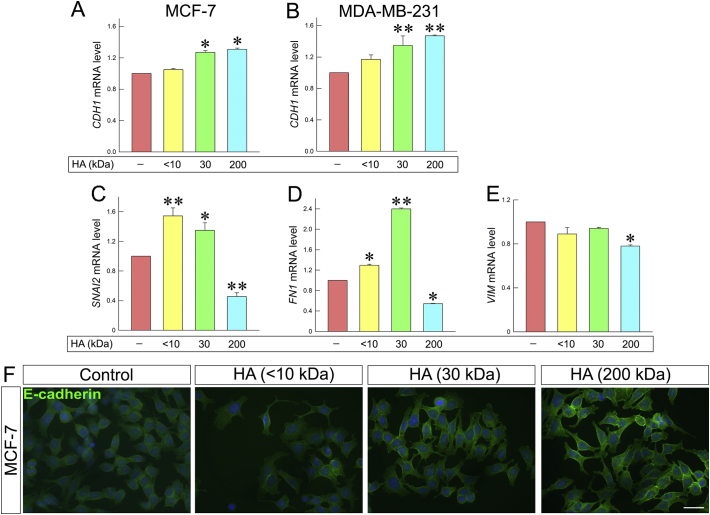
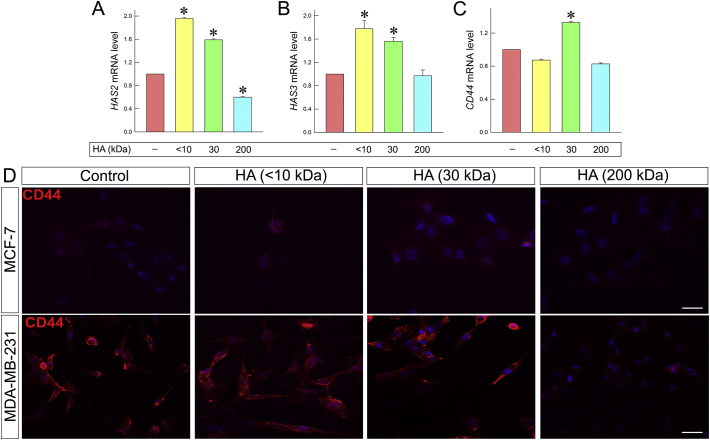
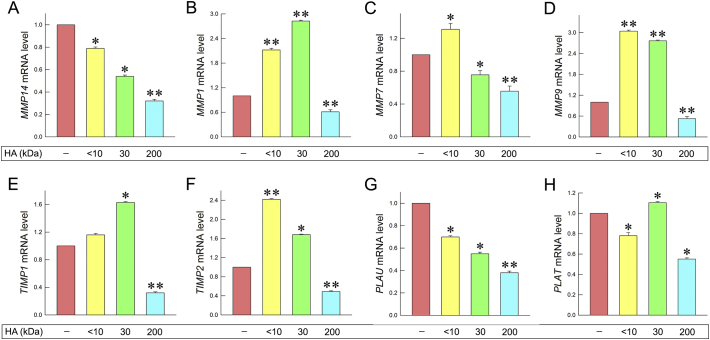
High levels of hyaluronan (ΗΑ), a major extracellular matrix (ECM) glycosaminoglycan, have been correlated with poor clinical outcome in several malignancies, including breast cancer. The high and low molecular weight HΑ forms exert diverse biological functions. Depending on their molecular size, ΗΑ forms either promote or attenuate signaling cascades that regulate cancer progression. In order to evaluate the effects of different ΗΑ forms on breast cancer cells' behavior, ΗΑ fragments of defined molecular size were synthesized. Breast cancer cells of different estrogen receptor (ER) status - the low metastatic, ERα-positive MCF-7 epithelial cells and the highly aggressive, ERβ-positive MDA-MB-231 mesenchymal cells - were evaluated following treatment with HA fragments. Scanning electron microscopy revealed that HA fragments critically affect the morphology of breast cancer cells in a molecular-size dependent mode. Moreover, the ΗΑ fragments affect cell functional properties, the expression of major ECM mediators and epithelial-to-mesenchymal transition (ΕΜΤ) markers. Notably, treatment with 200 kDa ΗΑ increased the expression levels of the epithelial marker Ε-cadherin and reduced the expression levels of HA synthase 2 and mesenchymal markers, like fibronectin and snail2/slug. These novel data suggest that the effects of HA in breast cancer cells depend on the molecular size and the ER status. An in-depth understanding on the mechanistic basis of these effects may contribute on the development of novel therapeutic strategies for the pharmacological targeting of aggressive breast cancer.
高水平的透明质酸(HA)是一种主要的细胞外基质(ECM)糖胺聚糖,在包括乳腺癌在内的几种恶性肿瘤中,其水平与不良临床预后相关。高分子量和低分子量的HA形式具有不同的生物学功能。根据其分子大小,HA形式要么促进要么减弱调节癌症进展的信号级联反应。为了评估不同HA形式对乳腺癌细胞行为的影响,合成了确定分子大小的HA片段。在用HA片段处理后,评估了不同雌激素受体(ER)状态的乳腺癌细胞——低转移性、ERα阳性的MCF-7上皮细胞和高侵袭性、ERβ阳性的MDA-MB-231间充质细胞。扫描电子显微镜显示,HA片段以分子大小依赖的方式严重影响乳腺癌细胞的形态。此外,HA片段影响细胞功能特性、主要ECM介质的表达以及上皮-间质转化(EMT)标志物。值得注意的是,用200 kDa HA处理可增加上皮标志物E-钙黏蛋白的表达水平,并降低HA合酶2和间充质标志物(如纤连蛋白和蜗牛2/蛞蝓)的表达水平。这些新数据表明,HA对乳腺癌细胞的影响取决于分子大小和ER状态。对这些效应的机制基础进行深入了解可能有助于开发针对侵袭性乳腺癌的新型治疗策略。