College of Physics & Optoelectronic Engineering, Ocean University of China, Qingdao 266100, China.
College of Marine Life Sciences, Ocean University of China, Qingdao 266003, China.
Biosensors (Basel). 2022 Apr 15;12(4):246. doi: 10.3390/bios12040246.
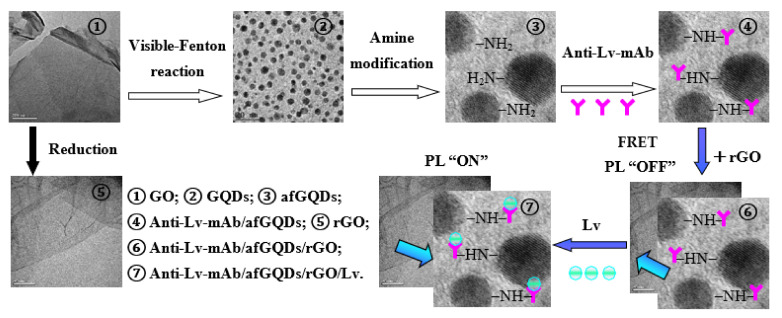
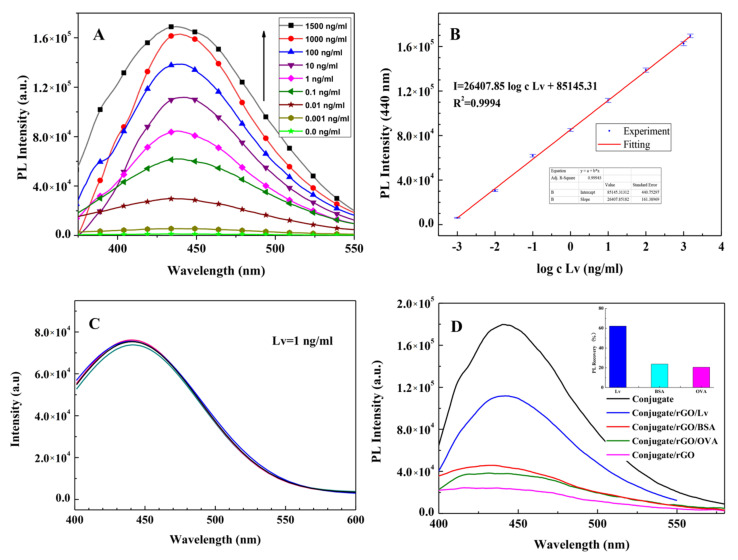
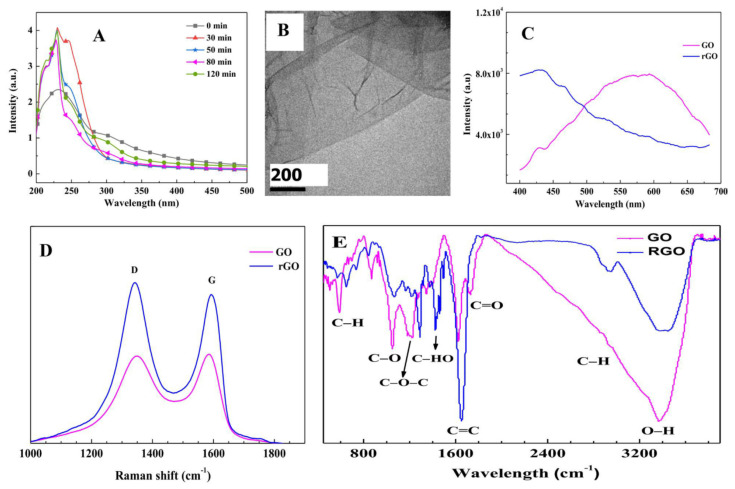
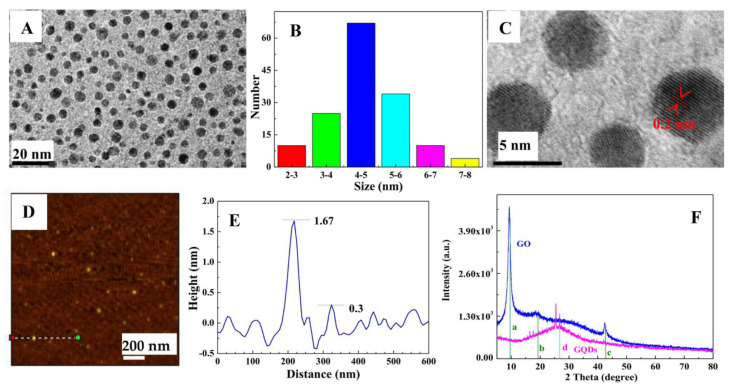
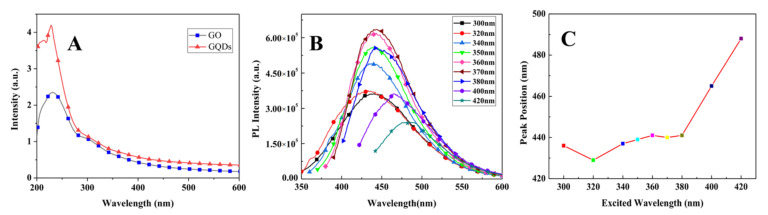
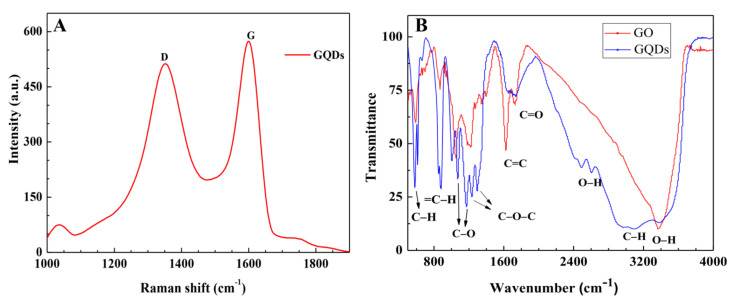
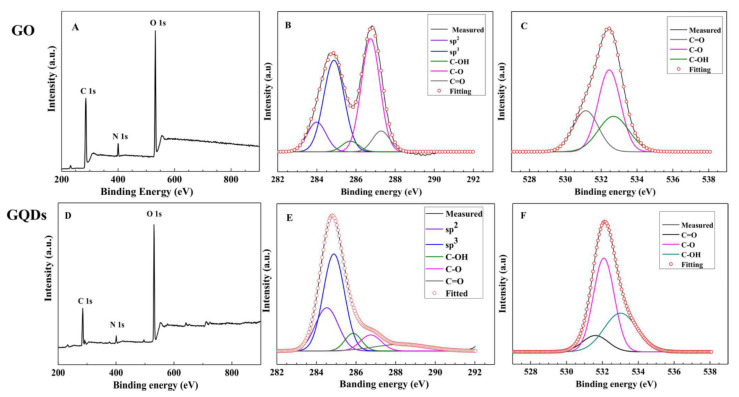
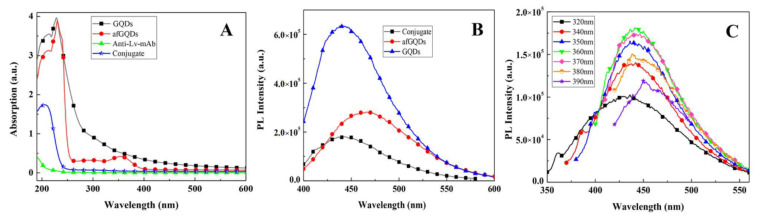
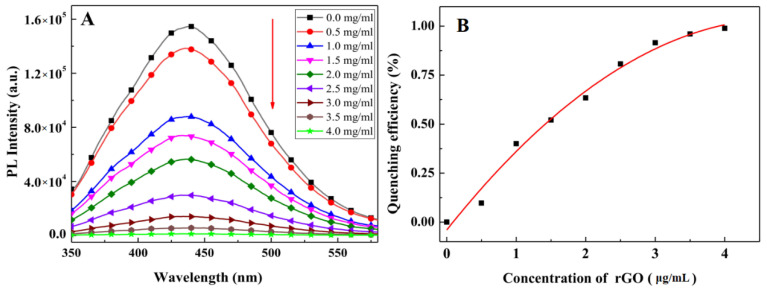
The increasing levels of environmental estrogens are causing negative effects on water, soil, wildlife, and human beings; label-free immunosensors with high specificities and sensitivities are being developed to test estrogeneous chemicals in complex environmental conditions. For the first time, highly fluorescent graphene quantum dots (GQDs) were prepared using a visible-Fenton catalysis reaction with graphene oxide (GO) as a precursor. Different microscopy and spectroscopy techniques were employed to characterize the physical and chemical properties of the GQDs. Based on the fluorescence resonance energy transfer (FRET) between amino-functionalized GQDs conjugated with anti-lipovitellin monoclonal antibodies (Anti-Lv-mAb) and reduced graphene oxide (rGO), an ultrasensitive fluorescent "ON-OFF" label-free immunosensor for the detection of lipovitellin (Lv), a sensitive biomarker derived from Paralichthys olivaceus for environmental estrogen, has been established. The immunosensor has a wide linear test range (0.001-1500 ng/mL), a lower limit of detection (LOD, 0.9 pg/mL), excellent sensitivity (26,407.8 CPS/(ng/mL)), and high selectivity and reproducibility for Lv quantification. The results demonstrated that the visible-Fenton is a simple, mild, green, efficient, and general approach to fabricating GQDs, and the fluorescent "ON-OFF" immunosensor is an easy-to-use, time-saving, ultrasensitive, and accurate detection method for weak estrogenic activity.
环境雌激素水平的不断升高对水、土壤、野生生物和人类造成了负面影响;为了在复杂的环境条件下检测雌激素类化学物质,正在开发具有高特异性和灵敏度的无标记免疫传感器。首次使用可见芬顿催化反应以氧化石墨烯 (GO) 为前体制备了高荧光石墨烯量子点 (GQDs)。采用不同的显微镜和光谱技术来表征 GQDs 的物理和化学性质。基于与抗卵黄蛋白单克隆抗体 (Anti-Lv-mAb) 偶联的氨基功能化 GQDs 与还原氧化石墨烯 (rGO) 之间的荧光共振能量转移 (FRET),建立了一种用于检测卵黄蛋白 (Lv) 的超灵敏荧光“开-关”无标记免疫传感器,Lv 是一种来自牙鲆的敏感生物标志物,可作为环境雌激素。该免疫传感器具有较宽的线性测试范围 (0.001-1500 ng/mL)、较低的检测限 (LOD,0.9 pg/mL)、出色的灵敏度 (26,407.8 CPS/(ng/mL)) 以及对 Lv 定量分析的高选择性和重现性。结果表明,可见芬顿法是一种简单、温和、绿色、高效且通用的制备 GQDs 的方法,而荧光“开-关”免疫传感器是一种易于使用、节省时间、超灵敏且准确的弱雌激素活性检测方法。