Tri-Chandra Multiple College, Tribhuvan University, Kathmandu, Nepal.
Central Department of Microbiology, Tribhuvan University, Kathmandu, Nepal.
BMC Microbiol. 2022 Apr 21;22(1):109. doi: 10.1186/s12866-022-02529-7.
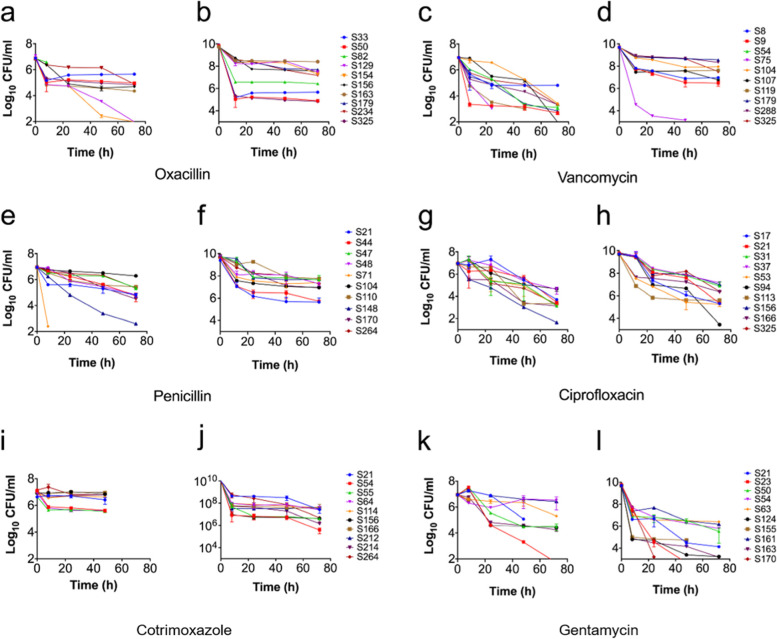
Staphylococcus aureus is a notorious human pathogen that causes often lethal systemic conditions that are mostly medical device associated biofilm infections. Similarly, coagulase negative staphylococci are emerging as leading pathogen for nosocomial infections owing to their ability to form biofilm on implanted medical equipment. Chronic in nature, these infections are difficult to treat. Such recalcitrance of these infections is caused mainly due to the presence of persister cells, which exhibit transient yet extreme tolerance to antibiotics. Despite tremendous clinical significance, there is lack of studies on persister cells formation among clinical bacterial isolates. Considering the importance of factors influencing persister formation, in this study, we evaluate the association of antibiotic tolerance with biofilm production, antibiotic stress, growth phase, specimen type, and dependency on staphylococcal species. Biofilm formation was detected among 375 clinical staphylococcal isolates by quantitative tissue culture plate method (TCP) and icaAD genes by genotypic method. The antibiotic susceptibility was determined by Kirby Bauer disc diffusion method while minimum inhibitory concentration values were obtained by agar dilution method. Persister cells were measured in the susceptible staphylococcal isolates in the presence of clinically relevant antibiotics.
In the study, 161 (43%) S. aureus and 214 (57%) coagulase negative staphylococci (CNS) were isolated from different clinical samples. TCP method detected biofilm production in 84 (52.2%) S. aureus and 90 (42.1%) CNS isolates. The genotypic method detected icaAD genes in 86 (22.9%) isolates. Majority (> 90%) of both the biofilm producers and non-producers were sensitive to chloramphenicol and tetracycline but were resistant to penicillin. Interestingly, all isolates were sensitive to vancomycin irrespective of biofilm production. While high persister frequency was observed among all staphylococci isolates in the stationary growth phase, the persister frequency in exponential growth phase was statistically high among isolates possessing icaAD genes compared to icaAD negative isolates.
The research findings provide strong evidence that the clinical staphylococcal isolates exhibit extreme antibiotic tolerance suggesting their causal link with treatment failures. Understanding the factors influencing the formation and maintenance of persister cells are of utmost important aspect to design therapeutics and control recalcitrant bacterial infections.
金黄色葡萄球菌是一种臭名昭著的人类病原体,它会导致通常致命的全身性疾病,主要与医疗器械相关的生物膜感染有关。同样,凝固酶阴性葡萄球菌由于能够在植入的医疗设备上形成生物膜,因此成为医院感染的主要病原体。这些感染是慢性的,难以治疗。这些感染的顽固性主要是由于存在持久性细胞,它们对抗生素表现出短暂但极端的耐受性。尽管这些感染具有巨大的临床意义,但缺乏对临床分离细菌中持久性细胞形成的研究。考虑到影响持久性细胞形成的因素的重要性,在这项研究中,我们评估了抗生素耐药性与生物膜形成、抗生素应激、生长阶段、标本类型以及对葡萄球菌物种的依赖性之间的关系。通过定量组织培养平板法(TCP)和基因方法检测 375 株临床葡萄球菌分离株的生物膜形成。通过 Kirby Bauer 纸片扩散法测定抗生素敏感性,通过琼脂稀释法测定最小抑菌浓度值。在临床相关抗生素存在的情况下,在敏感的葡萄球菌分离株中测量持久性细胞。
在这项研究中,从不同的临床样本中分离出 161 株(43%)金黄色葡萄球菌和 214 株(57%)凝固酶阴性葡萄球菌(CNS)。TCP 法检测到 84 株(52.2%)金黄色葡萄球菌和 90 株(42.1%)CNS 分离株的生物膜形成。基因方法检测到 86 株(22.9%)分离株的 icaAD 基因。生物膜产生者和非产生者的大多数(>90%)分离株对氯霉素和四环素敏感,但对青霉素耐药。有趣的是,所有分离株对万古霉素均敏感,无论生物膜的形成情况如何。虽然在静止生长阶段所有葡萄球菌分离株中均观察到高持久性细胞频率,但与 icaAD 阴性分离株相比,在具有 icaAD 基因的分离株中,指数生长阶段的持久性细胞频率统计学上较高。
研究结果提供了强有力的证据,表明临床分离的葡萄球菌表现出极端的抗生素耐药性,这表明它们与治疗失败有关。了解影响持久性细胞形成和维持的因素是设计治疗方法和控制顽固性细菌感染的最重要方面。