Public Health Foundation of India, Plot No. 47, Sector 44, Institutional Area, Gurugram, Haryana, 122002, India.
Institute for Health Metrics and Evaluation, University of Washington, Seattle, USA.
BMC Womens Health. 2022 Apr 21;22(1):128. doi: 10.1186/s12905-022-01703-3.
Prevalence of self-reported domestic violence against women in India is high. This paper investigates the national and sub-national trends in domestic violence in India to prioritise prevention activities and to highlight the limitations to data quality for surveillance in India.
Data were extracted from annual reports of National Crimes Record Bureau (NCRB) under four domestic violence crime-headings-cruelty by husband or his relatives, dowry death, abetment to suicide, and protection of women against domestic violence act. Rate for each crime is reported per 100,000 women aged 15-49 years, for India and its states from 2001 to 2018. Data on persons arrested and legal status of the cases were extracted.
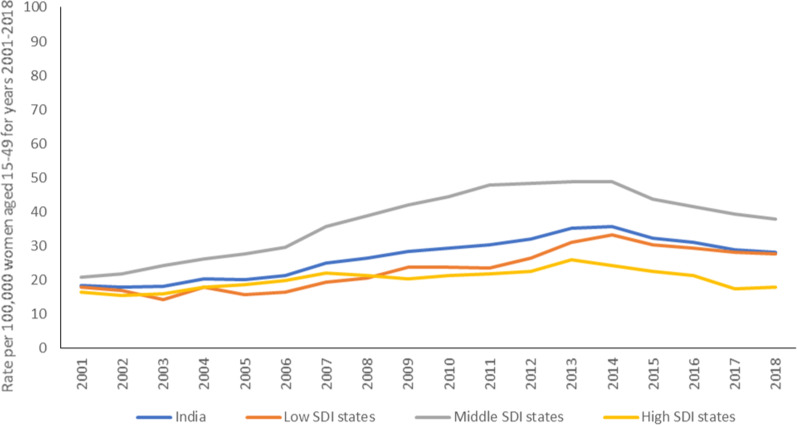
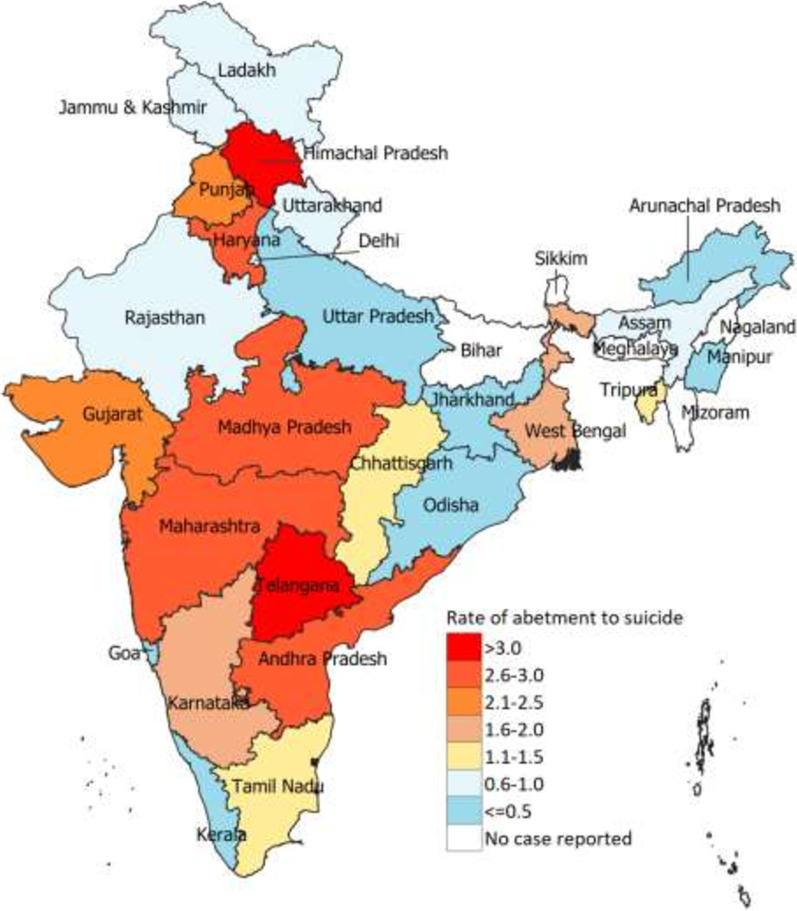
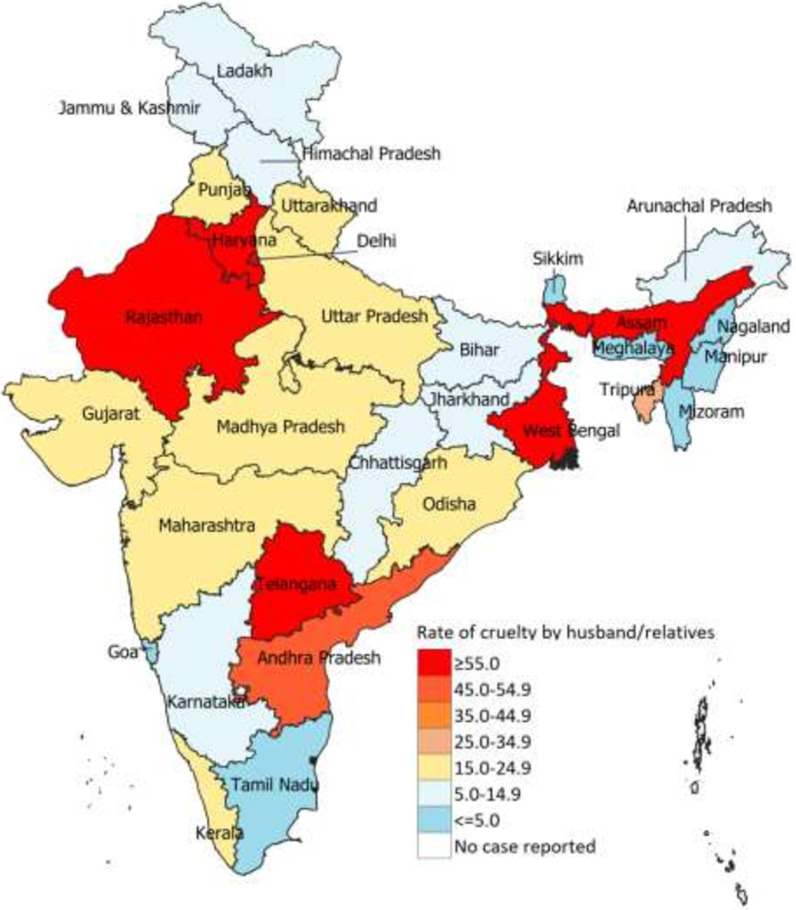
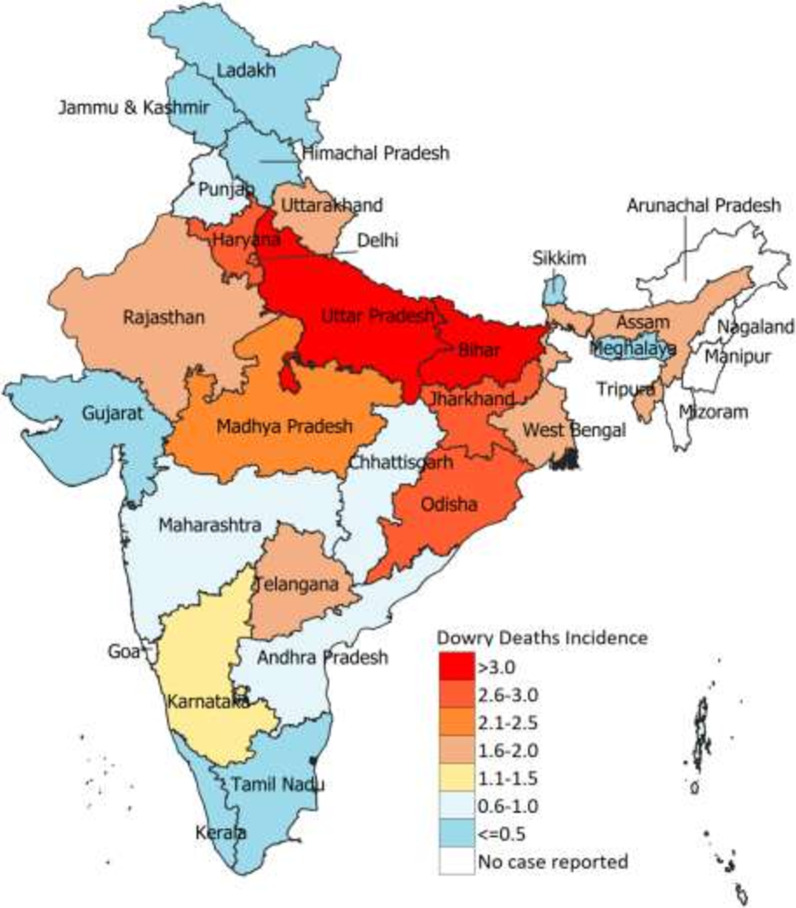
Rate of reported cases of cruelty by husband or relatives in India was 28.3 (95% CI 28.1-28.5) in 2018, an increase of 53% from 2001. State-level variations in this rate ranged from 0.5 (95% CI - 0.05 to 1.5) to 113.7 (95% CI 111.6-115.8) in 2018. Rate of reported dowry deaths and abetment to suicide was 2.0 (95% CI 2.0-2.0) and 1.4 (95% CI 1.4-1.4) in 2018 for India, respectively. Overall, a few states accounted for the temporal variation in these rates, with the reporting stagnant in most states over these years. The NCRB reporting system resulted in underreporting for certain crime-headings. The mean number of people arrested for these crimes had decreased over the period. Only 6.8% of the cases completed trials, with offenders convicted only in 15.5% cases in 2018. The NCRB data are available in heavily tabulated format with limited usage for intervention planning. The non-availability of individual level data in public domain limits exploration of patterns in domestic violence that could better inform policy actions to address domestic violence.
Urgent actions are needed to improve the robustness of NCRB data and the range of information available on domestic violence cases to utilise these data to effectively address domestic violence against women in India.
印度报告的针对妇女的家庭暴力发生率很高。本文调查了印度国内家庭暴力的国家和次国家趋势,以便优先开展预防活动,并突出印度监测数据质量的局限性。
从国家犯罪记录局(NCRB)的年度报告中提取了四项家庭暴力犯罪类别的数据-丈夫或其亲属的虐待、嫁妆死亡、教唆自杀和保护妇女免受家庭暴力法案。报告了 2001 年至 2018 年印度及其各州每 10 万名 15-49 岁妇女的每种犯罪的比率。提取了被捕人员和案件法律地位的数据。
印度报告的丈夫或亲属虐待案件发生率在 2018 年为 28.3(95%置信区间 28.1-28.5),比 2001 年增加了 53%。该比率在各州的差异范围从 2018 年的 0.5(95%置信区间 -0.05 至 1.5)到 113.7(95%置信区间 111.6-115.8)。2018 年印度报告的嫁妆死亡和教唆自杀的比率分别为 2.0(95%置信区间 2.0-2.0)和 1.4(95%置信区间 1.4-1.4)。总体而言,有几个州导致了这些比率的时间变化,而在这些年中,大多数州的报告都停滞不前。NCRB 报告系统导致某些犯罪类别的报告不足。这些犯罪的被捕人数在这段时间内有所减少。2018 年,只有 6.8%的案件完成审判,只有 15.5%的案件罪犯被判有罪。NCRB 数据以大量表格形式提供,可用于干预规划的用途有限。公共领域中没有个人层面的数据,限制了对家庭暴力模式的探索,而这些模式可以更好地为解决家庭暴力的政策行动提供信息。
需要采取紧急行动,以提高 NCRB 数据的稳健性和家庭暴力案件可用信息的范围,以便利用这些数据有效解决印度针对妇女的家庭暴力问题。