Department of Soil System Science, Helmholtz-Centre for Environmental Research UFZ, Halle, Germany.
Chair of Soil Science, TUM School of Life Sciences, TU Munich, Freising, Germany.
Nat Commun. 2022 Apr 21;13(1):2098. doi: 10.1038/s41467-022-29605-w.
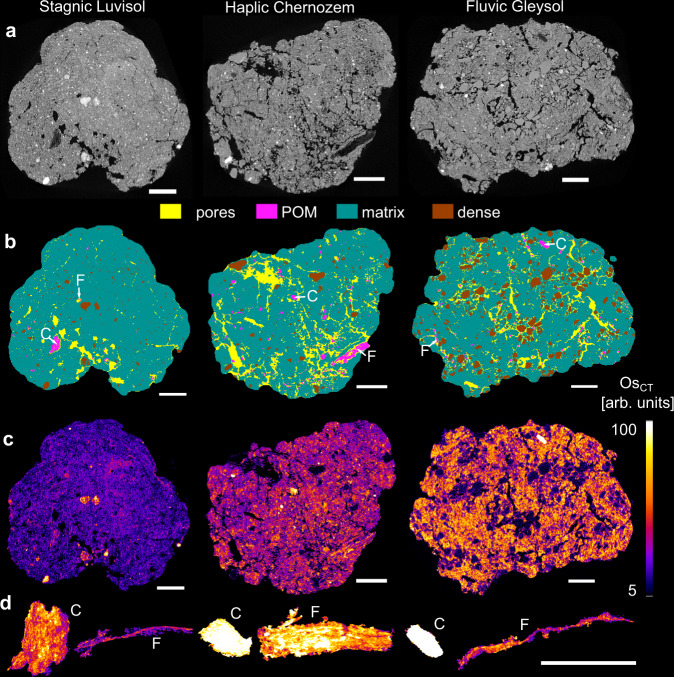
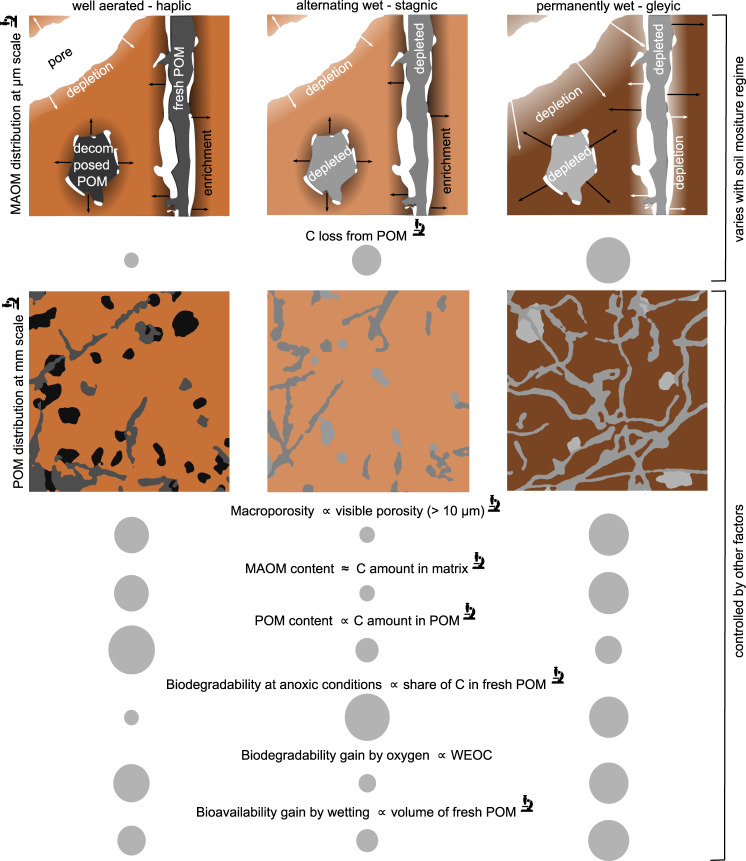
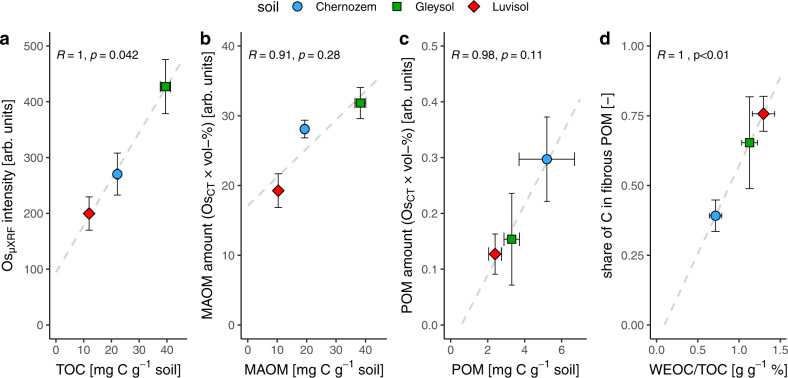
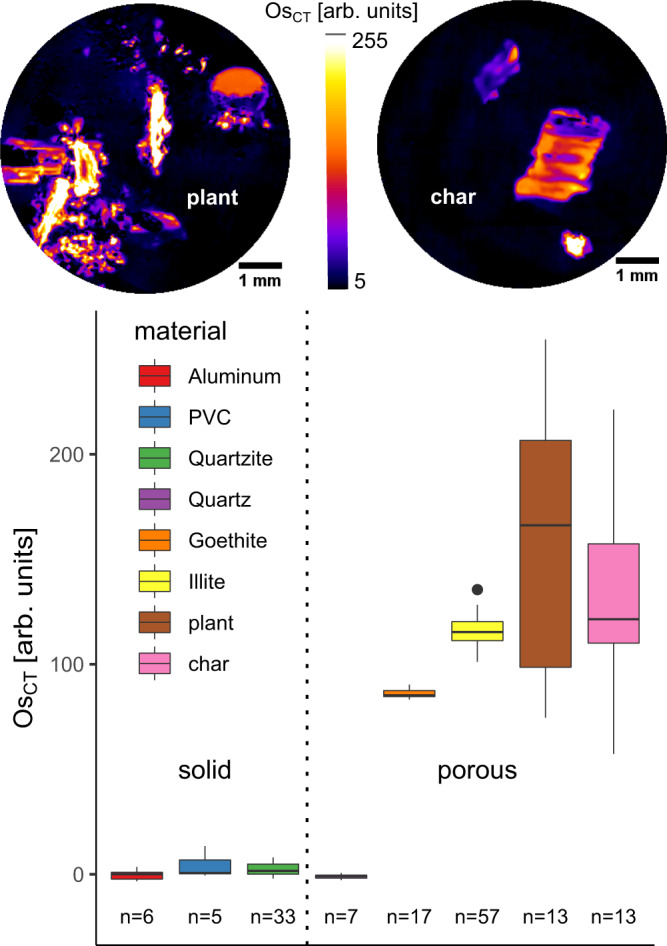
Soil carbon sequestration arises from the interplay of carbon input and stabilization, which vary in space and time. Assessing the resulting microscale carbon distribution in an intact pore space, however, has so far eluded methodological accessibility. Here, we explore the role of soil moisture regimes in shaping microscale carbon gradients by a novel mapping protocol for particulate organic matter and carbon in the soil matrix based on a combination of Osmium staining, X-ray computed tomography, and machine learning. With three different soil types we show that the moisture regime governs C losses from particulate organic matter and the microscale carbon redistribution and stabilization patterns in the soil matrix. Carbon depletion around pores (aperture > 10 µm) occurs in a much larger soil volume (19-74%) than carbon enrichment around particulate organic matter (1%). Thus, interacting microscale processes shaped by the moisture regime are a decisive factor for overall soil carbon persistence.
土壤碳固存源于碳输入和稳定化之间的相互作用,这种相互作用在空间和时间上是不同的。然而,评估完整孔隙空间中由此产生的微观碳分布一直难以实现方法上的可及性。在这里,我们通过一种基于锇染色、X 射线计算机断层扫描和机器学习相结合的新型土壤基质中颗粒有机物质和碳的映射方案,探索了土壤水分条件对微尺度碳梯度形成的作用。通过三种不同的土壤类型,我们表明水分条件控制着颗粒有机物质中的 C 损失以及土壤基质中微尺度碳再分配和稳定化模式。在孔径(>10μm)周围的土壤中发生的碳消耗(19-74%)比颗粒有机物质(1%)周围的碳富集更大。因此,由水分条件塑造的相互作用的微观过程是整体土壤碳持久性的决定性因素。