Department of Plant, Soil and Microbial Sciences, Michigan State University, East Lansing, MI, 48824, USA.
DOE Great Lakes Bioenergy Research Center, Michigan State University, East Lansing, MI, USA.
Nat Commun. 2019 Jul 16;10(1):3121. doi: 10.1038/s41467-019-11057-4.
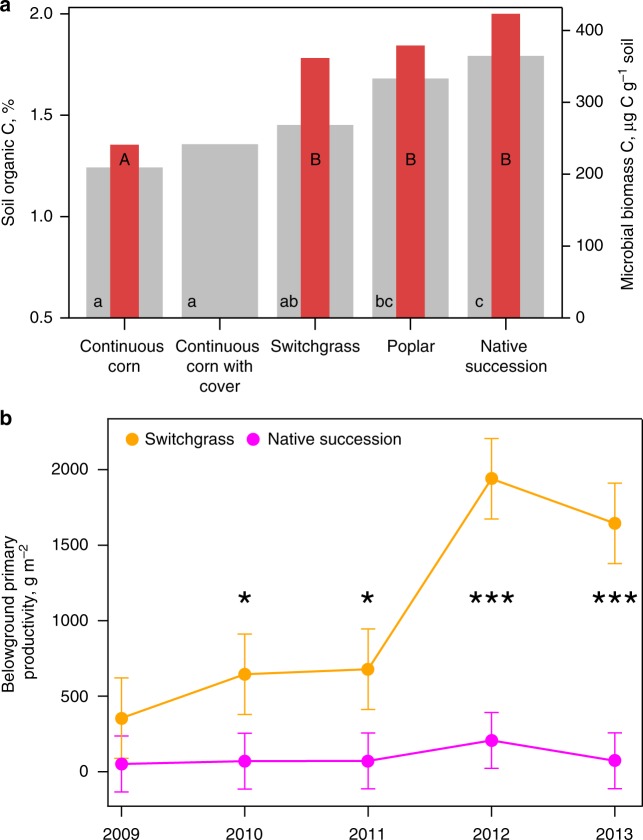
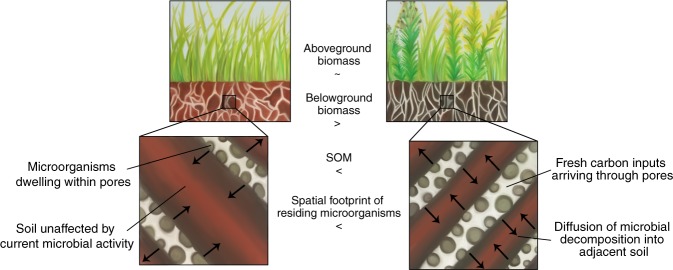
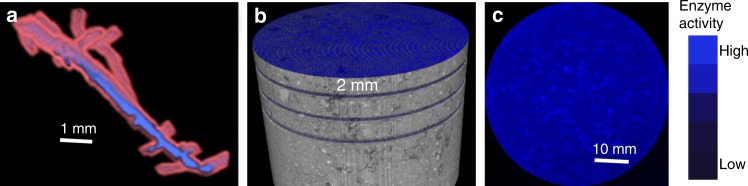
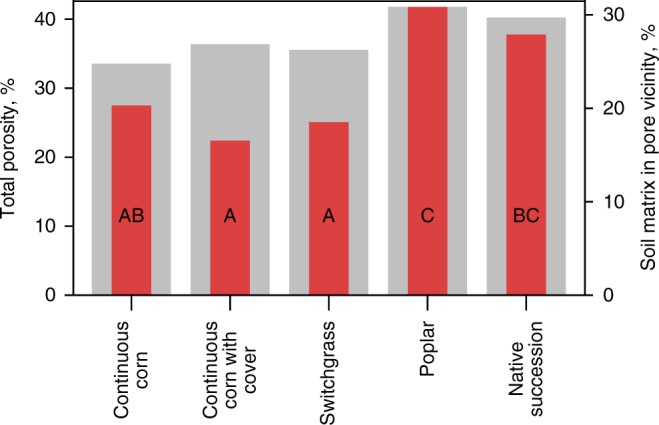
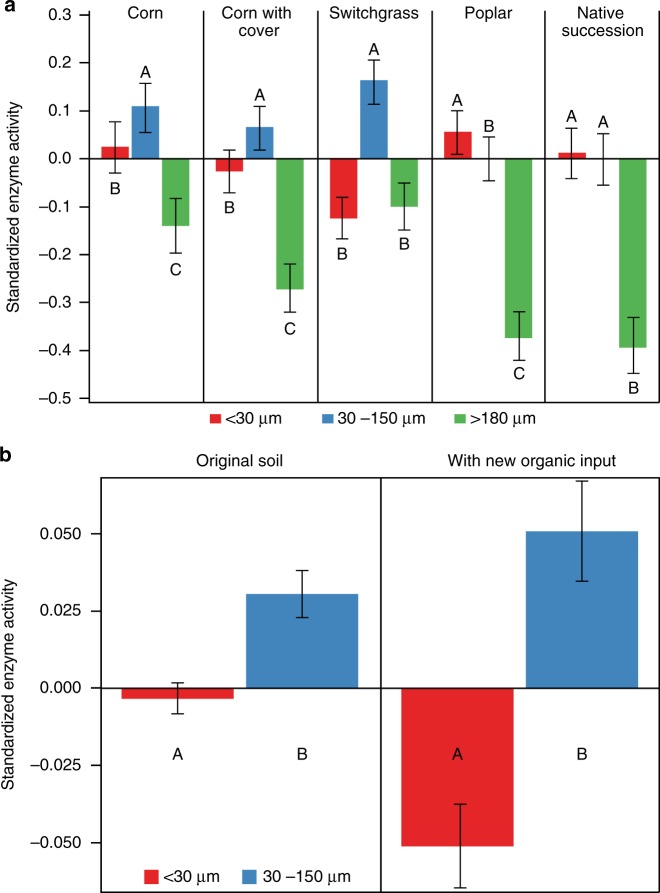
Increasing the potential of soil to store carbon (C) is an acknowledged and emphasized strategy for capturing atmospheric CO. Well-recognized approaches for soil C accretion include reducing soil disturbance, increasing plant biomass inputs, and enhancing plant diversity. Yet experimental evidence often fails to support anticipated C gains, suggesting that our integrated understanding of soil C accretion remains insufficient. Here we use a unique combination of X-ray micro-tomography and micro-scale enzyme mapping to demonstrate for the first time that plant-stimulated soil pore formation appears to be a major, hitherto unrecognized, determinant of whether new C inputs are stored or lost to the atmosphere. Unlike monocultures, diverse plant communities favor the development of 30-150 µm pores. Such pores are the micro-environments associated with higher enzyme activities, and greater abundance of such pores translates into a greater spatial footprint that microorganisms make on the soil and consequently soil C storage capacity.
提高土壤储存碳(C)的潜力是捕获大气 CO 的公认和强调的策略。增加土壤碳积累的公认方法包括减少土壤干扰、增加植物生物量输入和增强植物多样性。然而,实验证据往往不能支持预期的 C 增益,这表明我们对土壤 C 积累的综合理解仍然不足。在这里,我们首次使用 X 射线微断层扫描和微尺度酶图谱的独特组合来证明,植物刺激的土壤孔隙形成似乎是新输入的 C 是被储存还是释放到大气中的一个主要的、迄今为止尚未被认识到的决定因素。与单一栽培不同,多样化的植物群落有利于 30-150μm 孔隙的形成。这种孔隙是与更高酶活性相关的微观环境,更多这样的孔隙意味着微生物在土壤上的空间足迹更大,从而增加了土壤的碳储存能力。