Dobiasová Simona, Szemerédi Nikoletta, Kučerová Denisa, Koucká Kamila, Václavíková Radka, Gbelcová Helena, Ruml Tomáš, Domínguez-Álvarez Enrique, Spengler Gabriella, Viktorová Jitka
Department of Biochemistry and Microbiology, Faculty of Food and Biochemical Technology, University of Chemistry and Technology Prague, Technická 3, 166 28, Prague 6, Czechia.
Department of Medical Microbiology, Albert Szent-Györgyi Medical School, University of Szeged, Semmelweis utca 6, Szeged, 6725, Hungary.
Sci Rep. 2022 Apr 21;12(1):6548. doi: 10.1038/s41598-022-10311-y.
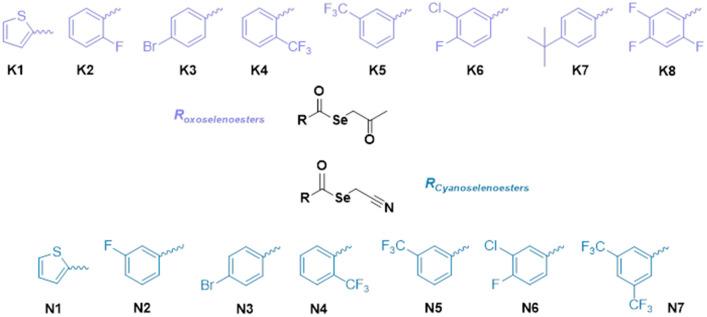
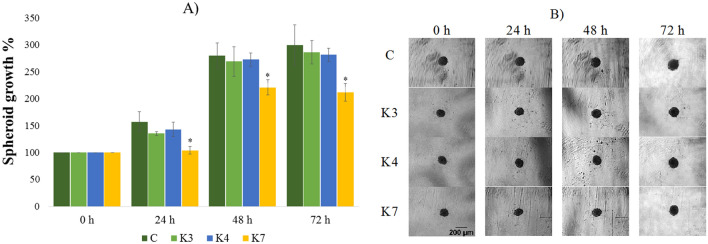
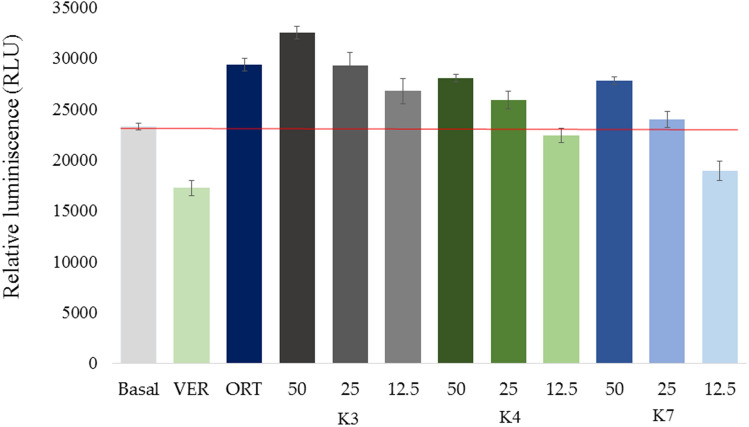
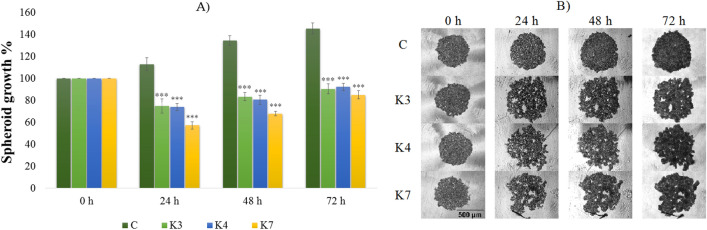
Long-term treatment of cancer with chemotherapeutics leads to the development of resistant forms that reduce treatment options. The main associated mechanism is the overexpression of transport proteins, particularly P-glycoprotein (P-gp, ABCB1). In this study, we have tested the anticancer and multidrug resistance (MDR) modulation activity of 15 selenocompounds. Out of the tested compounds, K3, K4, and K7 achieved the highest sensitization rate in ovarian carcinoma cells (HOC/ADR) that are resistant to the action of the Adriamycin. These compounds induced oxidation stress, inhibited P-gp transport activity and altered ABC gene expression. To verify the effect of compounds, 3D cell models were used to better mimic in vivo conditions. K4 and K7 triggered the most significant ROS release. All selected selenoesters inhibited P-gp efflux in a dose-dependent manner while simultaneously altering the expression of the ABC genes, especially P-gp in paclitaxel-resistant breast carcinoma cells (MCF-7/PAX). K4, and K7 demonstrated sensitization potential in resistant ovarian spheroids. Additionally, all selected selenoesters achieved a high cytotoxic effect in 3D breast and ovarian models, which was comparable to that in 2D cultures. K7 was the only non-competitive P-gp inhibitor, and therefore appears to have considerable potential for the treatment of drug-resistant cancer.
用化疗药物对癌症进行长期治疗会导致耐药形式的出现,从而减少治疗选择。主要相关机制是转运蛋白的过度表达,尤其是P-糖蛋白(P-gp,ABCB1)。在本研究中,我们测试了15种硒化合物的抗癌和多药耐药(MDR)调节活性。在测试的化合物中,K3、K4和K7在对阿霉素作用耐药的卵巢癌细胞(HOC/ADR)中实现了最高的致敏率。这些化合物诱导氧化应激,抑制P-gp转运活性并改变ABC基因表达。为了验证化合物的效果,使用3D细胞模型来更好地模拟体内条件。K4和K7引发了最显著的活性氧释放。所有选定的硒酯均以剂量依赖性方式抑制P-gp外排,同时改变ABC基因的表达,尤其是在耐紫杉醇的乳腺癌细胞(MCF-7/PAX)中的P-gp表达。K4和K7在耐药卵巢球体中显示出致敏潜力。此外,所有选定的硒酯在3D乳腺和卵巢模型中均具有高细胞毒性作用,这与在2D培养物中的作用相当。K7是唯一的非竞争性P-gp抑制剂,因此似乎在治疗耐药性癌症方面具有相当大的潜力。